- 416 pages
- English
- ePUB (mobile friendly)
- Available on iOS & Android
eBook - ePub
About this book
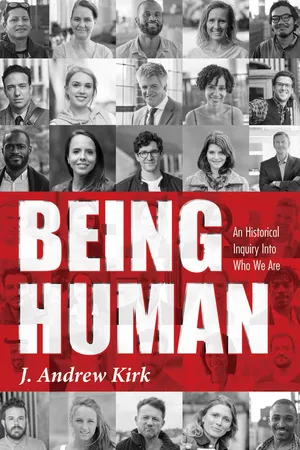
This book offers an introductory review to a wide range of thinking, formulated over the last half-millennium in the Western world, about the meaning of human existence. It will touch on a variety of issues of contemporary significance, such as the origin and uniqueness of the human species, freedom and determinism, the nature of good and evil, and the possibilities and limits of the sciences. The book will supply a number of explanatory comments, from a Christian perspective, on the various views uncovered. Insofar as human beings are fascinated by exploring the reality of their own selves, in relation to history, culture, the natural environment, and a variety of worldviews, this book will afford readers plenty of material to stimulate them in their own exploration.
Information
Topic
PhilosophySubtopic
Modern PhilosophyChapter 1
Initiating the Inquiry
Asking Questions, Searching for Answers
Never before has the human species been subjected to so much interest and analysis from such a diverse collection of disciplines as it is today. We are, quite rightly, fascinated by who we are within the vast array of living creatures that inhabit planet earth. Such natural curiosity is one of the distinguishing marks of homo sapiens. Humans are inclined to ask many questions about themselves in relation to previous history, the environment, their amazing ability to reason, reflect, discuss, and debate. Sometimes, although probably not that frequently, they will ask genuinely fundamental questions about their existence: How have human beings arrived on earth? From where have they come? How should they live? What constitutes right and wrong action? Do individual lives have an inherent purpose, or can people simply invent their own? What should one believe about religious claims, suffering, life beyond the grave? How can we justify the assertion that “all human beings are born free and equal in dignity and rights,”4 seeing that such a pronouncement does not seem to accord with real life? Why do human beings have so many different, and often contradictory, beliefs?
More often, however, humans ask comparatively mundane questions. Most are not inclined to explore deep philosophical issues. They are immersed in the day-to-day round of actual living. Their questions are more likely to focus on earning enough to support themselves and their family: to secure adequate housing, food, clothing, access to medical care, and a satisfactory education for their children. If they are parents, they will probably ask many questions about the best ways to nurture their offspring, so that the latter become fully mature adults. If their children are being bullied at school or intimidated on social media, they are more likely to ask “How may this be overcome?” rather than “Why does it happen in the first place?”
Nevertheless, despite the ordinariness of daily life, with both its struggles and joyful moments, there are more fundamental matters that do exercise many people. General questions about economic life and how either growth or stagnation is going to effect one’s long-term financial prospects, such as job expectations, are prevalent. Many are concerned about environmental matters such as climate change, the effect of human exploitation of natural resources on the continuing existence of many animal and plant species, the health risks associated with atmospheric pollution, or unsustainable population growth in some parts of the world. There are questions about terrorism and the use made of gratuitous violence for perverted ideological, political, and religious ends. The increase in corruption, fraud, cheating, forgery, double-dealing, and any other kind of dishonest means to deceive people and take advantage of their ignorance, weakness, or distraction, worries many, particularly when it affects the use of electronic technology. In recent years, the increase in migration and its effects on native populations has become a divisive issue.
Whatever the question, whether intellectually profound or practically urgent, human beings are searching for answers. Humans are distinguished by their need and ability to discover, where possible, explanations for many of the events that happen in their lives. As far as can be ascertained, not even the most advanced primates have the capacity to deliberate on life’s enigmas or wish to be satisfied by the solution to simple or complicated challenges to existence. Humans are questioning creatures. In this they are entirely distinct and unique within the animal kingdom.
Distinguishing Features of Being Human
The Process of Learning
Human beings are complex entities. If one were, for example, to keep a detailed record of the development of a baby into a child and to compare his or her progress with that which is exhibited by any other young mammal, enormous differences would soon be noted. Physically, the baby takes much longer to grow into full adulthood, when it can become independent of its parents. The reason for this is clear: people need an extended time to learn to take responsibility for their own lives. They are brought into a world of enormous variety, where they need to acquire knowledge and understanding to be able to make responsible choices about their own lives and how they are going to relate to other people. The situation of all other mammals is quite different. They have a limited capacity to learn what is required to survive in the wild and to reproduce their kind. Certain habits will be passed on by the parents to their offspring, such as how to avoid danger or where to find food appropriate to their species. Largely, however, the learning is by instinct; they are born with an innate awareness of how to fit successfully into their environment.
On the other hand, humans learn through close interaction with other humans who have already gained information, intelligence, and discernment through their various experiences of life. This interaction happens through the medium of language, by which young children begin to express themselves and pick up interpersonal skills. Just because children have so much to understand about themselves, the situation in which they live, and what is required for them to attain a healthy, well-integrated personality, a long period of guidance has to take place. In the first place, parents are responsible for instructing, training, and counseling their children. At a certain stage, formal education in a public institution we call school is also involved. The value of the school is largely threefold: children learn how to act and react in a social context among those they encounter initially as strangers; they have begun a journey toward an eventual separation from the close supervision of their father and mother and begin to make crucial choices for themselves; they interact with a wider world of adults, which will undoubtedly bring an enlarged and distinct perspective to the learning process.
From an early age, then, humans grow in knowledge and understanding through their mental ability to think and ask questions about their lives in relation to the circumstances in which they find themselves. Of course, this is not a straightforward, uncomplicated, upward progression, as any parent well knows. Children hover between an innate desire to follow their own inclinations and desires and dependence on the care and oversight of older people who are better able to know what really leads to their well-being. The result is quite often a clash of wills, whose resolution is in itself part of the learning process. How adults deal with these altercations will directly influence the child’s emotional and psychological well-being.
Self-Consciousness
In describing this process, we are now quite far removed from the way in which the rest of the animal kingdom grows to maturity. The main reason for this is that humans possess uniquely a consciousness of themselves as individuals. The progress from childhood to adulthood is one in which this self-awareness is shaped by how the person interacts with the circumstances of their life. Through this interaction, a certain identity is formed. It certainly is not a smooth path. The onset of puberty and adolescence are turbulent years, in which young people are discovering more about themselves physically and emotionally. They are beginning a more intense period of separation from the control of their immediate family, whilst at the same time trying to build appropriate relationships with their peers. In spite of a certain amount of bravado, teenagers are still remarkably vulnerable to a loss of self-confidence. They are in the midst of trying to discover who they really are, a process made more difficult by the many discordant theories and ideas to which they are increasingly exposed.
Moral Values
At this juncture, humans are trying to come to terms with what they should believe about right and wrong behavior, and why. From infancy, humans begin implicitly, and later explicitly, to recognize within themselves a certain moral compass that we call the conscience.5 This is perhaps most obvious in a child’s innate championing of fairness and in the ability to appreciate the need to deal with others on a reciprocal basis (i.e., to treat them as you wish to be treated yourself). In other words, a child can understand that there is no justification for asserting that they should be made an exception to the “golden rule,” or that rules which they approve for other people (e.g., bullying is not tolerated) should not also apply to them. Whether or not conscience is directed in a selfless or self-centered way is another matter, which we will have to consider in more depth throughout this study.
The predisposition to ask questions, the existence of humans’ self-consciousness, the reality of an innate conscience, and the gift of language are common to all human beings. They are distinguishing marks. There are other characteristics that make humans stand out from the rest of the natural world, although these may vary much more in relationship to culture, personality, inheritance, age, and belief systems.
Aesthetic Appreciation
Most, if not all, people have an inborn sense of beauty. There are events in the world that people will spontaneously call beautiful: the exquisite mixture of colors of a sunrise or sunset; a favorite piece of music; a striking landscape; an intricate movement in sport; the grandeur of wildlife like a pride of lions, a polar bear with her cubs, swans in full flight, and many more; an arrangement of flowers; a painting; certain architectural features; the flowers of trees like magnolia, jacaranda, bougainvillea, and ornamental cherries; a smile of contentment, and so on. The point is not that all humans agree about what should be termed beautiful, but that all have the capacity to appreciate beauty of one kind or another.
Reasoning
Humans, in normal circumstances, have the power to reason. Intelligence may differ owing to genetic inheritance or mental stimulation from an early age, but everyone6 can think, work out solutions to problems, refer to the past for clues to the present, reflect on possibilities in the future, and plan for their realization. All possess a sense of time beyond the mere chronology of hours, days, months, and years. Humans appreciate the reality of timing (i.e., of taking hold of a particular moment as an opportunity for progress or change). All have the ability to think rationally about aims and objectives, the means to reach them,...
Table of contents
- Title Page
- Preface
- Acknowledgments
- Prologue
- Chapter 1: Initiating the Inquiry
- Chapter 2: Human Life in Renaissance Humanism
- Chapter 3: Human Reality in the Thought of John Locke
- Chapter 4: The Humanism of the Enlightenment
- Chapter 5: David Hume and Denis Diderot: Two Prominent Figures of the Enlightenment
- Chapter 6: Diagnosing the Human in the Thinking of Karl Marx and His Followers
- Chapter 7: The Human Species According to Charles Darwin
- Chapter 8: Friedrich Nietzsche and the Human Predicament
- Chapter 9: Sigmund Freud and Human Pathologies
- Chapter 10: Human Existence in the Thought of Secular Humanism
- Chapter 11: The Nature and Destiny of Humanity and the Messianic Hope
- Chapter 12: The Gaining of Wisdom?
- Bibliography
Trusted by 375,005 students
Access to over 1.5 million titles for a fair monthly price.
Study more efficiently using our study tools.
Frequently asked questions
Yes, you can cancel anytime from the Subscription tab in your account settings on the Perlego website. Your subscription will stay active until the end of your current billing period. Learn how to cancel your subscription
No, books cannot be downloaded as external files, such as PDFs, for use outside of Perlego. However, you can download books within the Perlego app for offline reading on mobile or tablet. Learn how to download books offline
Perlego offers two plans: Essential and Complete
- Essential is ideal for learners and professionals who enjoy exploring a wide range of subjects. Access the Essential Library with 800,000+ trusted titles and best-sellers across business, personal growth, and the humanities. Includes unlimited reading time and Standard Read Aloud voice.
- Complete: Perfect for advanced learners and researchers needing full, unrestricted access. Unlock 1.5M+ books across hundreds of subjects, including academic and specialized titles. The Complete Plan also includes advanced features like Premium Read Aloud and Research Assistant.
We are an online textbook subscription service, where you can get access to an entire online library for less than the price of a single book per month. With over 1.5 million books across 990+ topics, we’ve got you covered! Learn about our mission
Look out for the read-aloud symbol on your next book to see if you can listen to it. The read-aloud tool reads text aloud for you, highlighting the text as it is being read. You can pause it, speed it up and slow it down. Learn more about Read Aloud
Yes! You can use the Perlego app on both iOS and Android devices to read anytime, anywhere — even offline. Perfect for commutes or when you’re on the go.
Please note we cannot support devices running on iOS 13 and Android 7 or earlier. Learn more about using the app
Please note we cannot support devices running on iOS 13 and Android 7 or earlier. Learn more about using the app
Yes, you can access Being Human by J. Andrew Kirk in PDF and/or ePUB format, as well as other popular books in Philosophy & Modern Philosophy. We have over 1.5 million books available in our catalogue for you to explore.