eBook - ePub
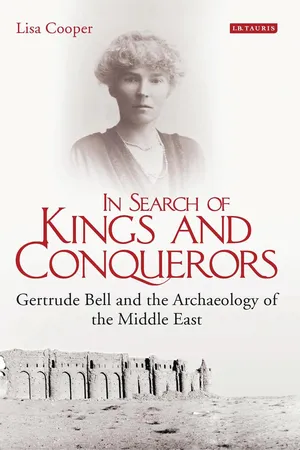
In Search of Kings and Conquerors
Gertrude Bell and the Archaeology of the Middle East
- 336 pages
- English
- ePUB (mobile friendly)
- Available on iOS & Android
eBook - ePub
About this book
At the height of her career, Bell journeyed into the heart of the Middle East retracing the steps of the ancient rulers who left tangible markers of their presence in the form of castles, palaces, mosques, tombs and temples. Among the many sites she visited were Ephesus, Binbirkilise and Carchemish in modern-day Turkey as well as Ukhaidir, Babylon and Najaf within the borders of modern Iraq. Lisa Cooper here explores Bell's achievements, emphasizing the tenacious, inquisitive side of her extraordinary personality, the breadth of her knowledge and her overall contribution to the archaeology of the Middle East. Featuring many of Bell's own photographs, this is a unique portrait of a remarkable life.
Information
CHAPTER 1
EARLY LIFE AND FIRST STEPS IN ARCHAEOLOGY
Gertrude Bell’s interests in history and archaeology were very much propelled by her fortunate upbringing. She came from a life of privilege, this allowing her to pursue a higher education and exposing her to the wider world through travel. Further encouragement from a number of key scholars, and Bell’s own love of ancient ruins and the remote, desert landscapes in which they were often located, gradually led to her sole focus on the archaeology of the ancient Near East. As her knowledge of this field grew, so did her confidence, and she began to pursue the field as a serious scholar. This activity would absorb much of her attention for several years and lead her further and further into the unknown, unexplored parts of the Near East and its fascinating past.
Born in 1868 in northern England, Gertrude Margaret Lowthian Bell was the daughter of Hugh Bell and the granddaughter of the famous Isaac Lowthian Bell. Lowthian Bell, as he liked to be called, was one of England’s leading industrialists during the Victorian era.1 At a young age he had joined his father’s ironworks in Newcastle, shortly afterwards pioneering the use of blast furnaces and rolling mills for iron production and operating a chemical factory used to manufacture aluminium.2 By 1844, Lowthian and his brothers had established a company known as Bell Brothers, and by the 1870s, this firm had become one of the leading ironworks in the English north-east.3 The company also had colliery properties, steel mills, quarries and mines, and built a railway to convey raw materials, enabling Lowthian to control his own supplies of coal, ironstone and limestone.4 Not only was Gertrude’s grandfather a successful businessman, but he was well educated and a gifted scientist. He had studied physics, chemistry and metallurgy in Germany, Denmark, France and Britain before the age of 24, and had gone on to win many medals over the course of his life for his scientific work, especially in the fields of engineering and industry.5 He was, for example, recognized as a world authority on blast-furnace technology.6 As a man with a deep interest in his community, Lowthian Bell also entered into politics. He was elected twice as the mayor of Newcastle, served as high sheriff of the county of Durham, and held a Liberal seat in Parliament for five years. This great man, with his exceptional mind, natural curiosity and limitless vitality, had a tremendous influence on his offspring, and it is to him that we may attribute some of the same qualities seen in his granddaughter.7 Of course, Gertrude also had the advantage of inheriting much of Lowthian Bell’s fortune, and this wealth would contribute significantly to her pursuit of a higher education, her extensive travels around the world and her archaeological endeavours.
In her youth, Gertrude Bell had demonstrated a passion for literature and the arts as well as world affairs and history, and so it was decided that she would be sent up to Oxford University in 1886 to continue her studies. Although Oxford was for men only, a women’s college (Lady Margaret Hall) had recently opened, and it allowed a small number of women, including Bell, to attend the university’s lectures and sit for its examinations. Despite being one of only a handful of women in lecture halls filled with hundreds of men, Bell flourished in the academic environment. By the end of her second year, in 1888, she had succeeded in receiving a ‘first’ in Modern History, the first woman at Oxford to achieve that honour.8
Travel featured heavily in Bell’s young adult life, particularly in the years following university. Her academic pursuits and her interest in history filled her with a desire to journey to the places that she had studied and whose pasts had come alive for her in books and the lecture halls of Oxford. Many early trips, often with family members, featured European destinations such as Germany (1886, 1896), France (1889, 1894), Romania (1888), Italy (1894, 1896) and Switzerland (1894, 1895, 1896). She even travelled as far as Constantinople on one occasion (1889).9 It was also in Europe that Bell became enamoured with mountains, the Swiss and Austrian Alps holding a particular fascination for her. Lured by the snow-capped peaks and her sense of daring and adventure, she actually established herself as a capable mountaineer. Between 1897 and 1904, Bell climbed no fewer than ten mountain peaks or ranges, each of them more challenging than the previous. These mountains included Mont Blanc (in France), the highest summit in the Alps. This was followed by the Schreckhorn, one of the more rugged and difficult of the 13,000-foot peaks in the Alps, and the seven peaks of the Engelhörner range, none of them having been climbed before. To her tremendous pleasure, one of these peaks was christened after her, and it remains Gertrudespitze – Gertrude’s Peak. She also climbed the Matterhorn (1904), but her most death-defying climb was the Finsteraarhorn (1902). Rising to 14,022 feet, it is notorious for bad weather and frequent avalanches. She and her male climbing companions actually got within the final few hundred feet of the peak when terrible weather – a blizzard, a violent electrical storm and blinding mist – forced them to turn back. By the end of their ordeal, they had spent 53 hours on the rope, and Bell suffered frostbite in her hands and feet. Although this ascent was a failure, it earned her tremendous respect within the climbing community.10
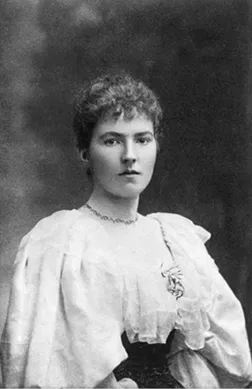
Fig. 1.1 Gertrude Bell, taken around 1895, when she was about 26 years old. By this time, Bell had already travelled widely and had published her first book, based on her impressions of Persia, visited in 1892.
While the Alps satisfied some of Bell’s physical needs, her emotional and mental capacities continued to be stimulated by travel, and she began looking farther afield, to exotic places that provided fresh landscapes upon which to marvel and peoples and cultures whose poetry, art and literature dazzled her in ways that were not satisfied by the confining, commonplace character of her native northern England. Her wanderlust is perhaps best expressed in her embarking on two world tours, in 1897–8 and 1902–3. The latter trip included a long stop in India, where she witnessed the imperial Durbar celebrating Edward VII’s accession to the throne as Emperor of India. Further stops included Singapore, China, Korea and Japan before she returned to England via Canada and the United States.11
Above all other places in the world, however, Bell seems to have felt the allure of the lands of the Near East, ignited by one of her earlier lengthy trips to Persia in 1892. Staying in Tehran with her aunt Mary and her uncle Frank Lascelles, the latter having been appointed British envoy to the Persian Shah,12 she found herself enchanted with the country around her, its breathtaking contrasts of mountains, deserts and gardens, fountains, silvery water streams and luxuriant roses. She also found its people hospitable and Persian art, music and poetry captivating. The sensations aroused within Bell in this exotic land were perhaps all the more keenly felt because she had fallen in love with a junior diplomat in the staff of the British Embassy in Tehran, Henry Cadogan. Their shared passion for poetry and literature, and the excitement of walking or riding together beyond Tehran to rapturously take in Persia’s impressive landscapes, only served to heighten and draw out Bell’s romantic nature. Sadly, Bell’s parents rejected Cagodan’s request to marry Bell – they considered him too poor and flawed in character to be an appropriate match. Compounding Bell’s bitter disappointment and grief, Cadogan died of pneumonia a year later, dashing any remaining hopes that he might have earned a promotion and thereby increased his eligibility in her parents’ eyes.13
Despite this grievous setback in Bell’s personal life, her love for Persia and the ‘East’ did not fade, and it may be that she hoped to hold on, as best she could, to the memory of Cadogan by immersing herself in all things associated with Persia and her sojourn there. Upon her return to England, she wrote of her Persian experiences with a ‘glowing eagerness’14 in her first book, Safar Nameh: Persian Pictures (London, 1894), and energetically studied the Persian language; after only a few short years, she completed a commendable English translation of the Poems from the Divan of Hafiz (London, 1897), which celebrates the verses of that great and highly revered fourteenth-century Persian poet.15
If Bell’s trip to Persia provided the first spark for her interest in the Near East, her subsequent journeys to the Levant around the turn of the century and in the years that followed consolidated a passion for the ‘East’ that would continue for the rest of her life. Each trip took her further off the beaten track, developing her self-reliance and resolve, testing her physical endurance and piquing her curiosity for new landscapes, peoples and built-spaces from the past and present. Bell’s first major Near Eastern trip, which began in late 1899 and extended to June 1900, included a long stay with family friends in Jerusalem, where she threw herself into the study of Arabic, a language in which she would eventually become fluent.16 Highlights of this trip included a side visit to Petra (in present-day Jordan; 29–31 March 1900), a venture up through the Hauran and the Jebel Druze to Damascus (25 April–14 May 1900), and a momentous solo journey to Palmyra in the Syrian desert before returning to Beirut on the Mediterranean coast (15 May–9 June 1900).17
Other Near Eastern trips followed (in 1902 to Haifa and Mount Carmel), and then a particularly ambitious journey in 1905 (January–May). Aimed at ‘wild travel’,18 this trip through Palestine and Syria saw Bell exploring beyond the well-trod paths of tourists, into remoter places, where the well-watered, cultivated fields of the coastal plain gave way to mountains and then the steppe and desert lands of the interior. She retraced some of the earlier steps she had taken in 1900, this time pausing longer in the desert regions around Amman and Damascus, exploring the Jebel Druze at greater length and then moving up through the central part of Syria, taking in the towns and ancient ruined settlements of the Orontes Valley and the rocky hills of the Limestone Massif. She travelled almost entirely independently of other Europeans, escorted only by a small entourage of native guards, guides and a cook.19 Overcoming obstructive Ottoman authorities through her quick wit and abilities in Turkish and Arabic, Bell managed to visit, document and photograph a wealth of peoples and places over the space of four months. The exhilaration she felt in this journey is reflected in her travel account The Desert and the Sown, written upon her return to England, which enjoyed favourable reviews upon its publication in 1907. ‘Charming’20 and ‘enchanting’21 were some of the adjectives used to describe this book, in which nearly every page is filled with colourful descriptions of the people and places she encountered over the course of the journey. Readers were particularly enamoured with her ability to provide ‘snapshots’ of conversations with the people she met, and in so doing present a vivid and often humorous picture of the speakers and their activities, opinions and customs.22 Her accounts described her dealings with people of all occupations and ethnicities, from Turkish officials to shopkeepers, soldiers, shepherds, priests, desert sheikhs, ‘those who sit around our campfires and those who ride with us across deserts and mountains, for their words are like straws on the flood of Asiatic politics, showing which way the streams are running’.23
As one might expect in the writings of an early twentieth-century traveller from Britain, The Desert and the Sown contains an Orientalist undertone in Bell’s description of the peoples of the Near East and her interactions with them. Confident in her intellectual and moral superiority as an Englishwoman, she sometimes characterized Arabs as existing in a perpetually primitive state, petty, impractical, prone to conflict, and unable to progress towards a state of civilization like the West.24 A passage in Bell’s account, describing an ‘Oriental’ as being ‘like a very old child’,25 underscores her patronizing tone. Nevertheless, she also had the capacity to both admire and respect the people she encountered, accepting differences between West and East and, at her best, recognizing the relative nature of value systems, morals and human organization across cultures.26 That she was a woman and thus in some ways marginalized within her own English society may have made her sensitive to attitudes of inequality and difference,27 but it may simply be that as a highly observant individual, her keen recognition and appreciation of human behaviour in its myriad forms often prevailed over other attitudes she might have had about empire, race and gender.
Bell’s 1905 Near Eastern journey had another important aspect: it drew into sharp focus her interest in the antiquity of the regions she passed through. She enjoyed contemplating the cultures and peoples who had been here before her and had left their mark through art, architecture and inscriptions. Archaeology and a...
Table of contents
- Front Cover
- Title
- Copyright
- Dedication
- Contents
- List of Illustrations
- Preface and Acknowledgements
- Introduction
- 1. Early Life and First Steps in Archaeology
- 2. Euphrates Journey
- 3. Ukhaidir – Desert Splendour
- 4. Encounters in the Heart of Mesopotamia
- 5. Further Travels and Archaeological Research, 1910–14
- 6. Mesopotamia and Iraq – Past and Present Entwined
- Notes
- Bibliography
- Back Cover
Trusted by 375,005 students
Access to over 1.5 million titles for a fair monthly price.
Study more efficiently using our study tools.
Frequently asked questions
Yes, you can cancel anytime from the Subscription tab in your account settings on the Perlego website. Your subscription will stay active until the end of your current billing period. Learn how to cancel your subscription
No, books cannot be downloaded as external files, such as PDFs, for use outside of Perlego. However, you can download books within the Perlego app for offline reading on mobile or tablet. Learn how to download books offline
Perlego offers two plans: Essential and Complete
- Essential is ideal for learners and professionals who enjoy exploring a wide range of subjects. Access the Essential Library with 800,000+ trusted titles and best-sellers across business, personal growth, and the humanities. Includes unlimited reading time and Standard Read Aloud voice.
- Complete: Perfect for advanced learners and researchers needing full, unrestricted access. Unlock 1.5M+ books across hundreds of subjects, including academic and specialized titles. The Complete Plan also includes advanced features like Premium Read Aloud and Research Assistant.
We are an online textbook subscription service, where you can get access to an entire online library for less than the price of a single book per month. With over 1.5 million books across 990+ topics, we’ve got you covered! Learn about our mission
Look out for the read-aloud symbol on your next book to see if you can listen to it. The read-aloud tool reads text aloud for you, highlighting the text as it is being read. You can pause it, speed it up and slow it down. Learn more about Read Aloud
Yes! You can use the Perlego app on both iOS and Android devices to read anytime, anywhere — even offline. Perfect for commutes or when you’re on the go.
Please note we cannot support devices running on iOS 13 and Android 7 or earlier. Learn more about using the app
Please note we cannot support devices running on iOS 13 and Android 7 or earlier. Learn more about using the app
Yes, you can access In Search of Kings and Conquerors by Lisa Cooper in PDF and/or ePUB format, as well as other popular books in History & 20th Century History. We have over 1.5 million books available in our catalogue for you to explore.