Adaptations in the Franchise Era re-evaluates adaptation's place in a popular culture marked by the movement of content and audiences across more media borders than ever before. While adaptation has historically been understood as the transfer of stories from one medium to another-more often than not, from novel to film-the growing interconnectedness of media and media industries in the early twenty-first century raises new questions about the form and function of adaptation as both a product and a process. Where does adaptation fit within massive franchises that span pages, stages, screens, and theme parks?
Rising scholar Kyle Meikle illuminates adaptation's enduring and essential role in the rise of franchises in the 2000s and 2010s. During that decade-and-a-half, adaptations set the foundation for multiplexed, multiplied film series, piloted streaming television's forays into original programming, found their way into audiences' hands in apps and video games, and went live in theatrical experiences on Broadway and beyond. The proliferation of adaptations was matched only by a proliferation of adaptation, as fans remixed and remade their favourite franchises online and off-. This volume considers how producers and consumers defined adaptations-and how adaptations defined themselves-through the endless intertextual play of the franchise era.
- 192 pages
- English
- ePUB (mobile friendly)
- Available on iOS & Android
eBook - ePub
About this book
Information
1
Introduction: Franchised Adaptations
Warner Bros.’s Harry Potter and the Sorcerer’s Stone, adapted from the bestselling 1997 young adult (YA) novel by J.K. Rowling, opened in November 2001, grossing over $974 million worldwide and launching an expensive, expansive eight-film series that added some $6 billion to the studio’s coffers. In November 2016, a full five years after the conclusion of that series (with 2011’s Harry Potter and the Deathly Hallows, Part Two earning $1.34 billion), Warner Bros. released Fantastic Beasts and Where to Find Them, a movie based on a standalone Harry Potter book from 2001 and set sixty years before Sorcerer’s Stone. Rowling, who wrote Fantastic Beasts’s screenplay herself, announced in the lead-up to the adaptation’s debut that it was only the first of a planned five-film series – a somewhat surprising commitment, given that the source material was little more than a tie-in textbook sold (along with the equally slim invented history Quidditch Through the Ages) to benefit the UK charity Comic Relief. Rowling assured a BBC reporter that ‘it’s exactly the way I did it with Potter, in that I know what my endpoint is, I know who lives and who dies, but I don’t know absolutely every detail’.1 The big-screen Fantastic Beasts certainly came close to matching Sorcerer’s Stone’s success, garnering a ‘Certified Fresh’ 73 per cent rating on Rotten Tomatoes and making $814 million worldwide; Fantastic Beasts was republished with a cover, foreword, and added creatures in keeping with the movie. If the first chapter of Sorcerer’s Stone introduced Harry Potter as ‘The Boy Who Lived’, then this latest chapter in the wizarding saga revived Harry Potter as The Franchise That Lived – or, more cynically, recast the franchise as Voldemort, slowly but surely regaining its full strength after several dormant years.2
In lifting a minor spin-off as its figurative Horcrux, Harry Potter became the kind of franchise that it had inspired in its wake: one as much concerned with developing ‘content’, to use Warner Bros. CEO Kevin Tsujihara’s preferred term,3 as with strict literary adaptation. Indeed, Fantastic Beasts features no credit mentioning its ostensible source text (in contrast, Sorcerer’s Stone’s fourth credit reads, ‘Based on the Novel by J.K. Rowling’), and the marketing materials for the movie emphasize that it is inspired by the sum total of ‘J.K. Rowling’s Wizarding World’ rather than any one of Rowling’s books. Sorcerer’s Stone begins on Privet Drive – the first shot of the series is of that street sign – while Fantastic Beasts zooms out on the Wizarding World, with a literally intertextual montage animating and overlaying a series of newspapers (The New York Ghost, The Daily Prophet) dense with headlines (‘DARK WIZARD STRIKES AGAIN IN EUROPE’; ‘HOGWARTS SCHOOL INCREASES SECURITY’) and advertisements (for ‘Pinnock’s Giggle Water’ and ‘House-Elf Training’). In retrospect, Sorcerer’s Stone offers only a single route through the wider Wizarding World from which Fantastic Beasts unfurls. The original series is driven by an individual (Harry Potter and …), the new series by a less distinct plurality of Beasts.
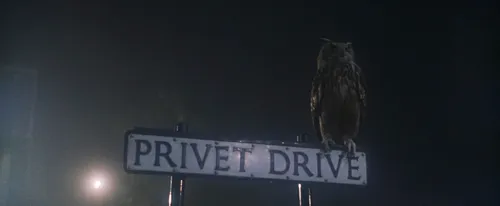
Figure 1.1 Harry Potter and the Sorcerer’s Stone (Warner Bros., Chris Columbus, 2001).
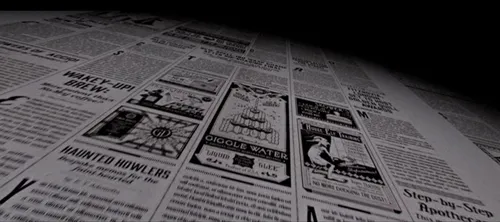
Figure 1.2 Fantastic Beasts and Where to Find Them (Warner Bros., David Yates, 2016).
Sorcerer’s Stone and Fantastic Beasts bookended a remarkable decade and a half for both adaptations and the study thereof, a decade in which adaptation critics grappled with precisely the shift from ‘Now a Major Motion Picture’ to ‘Now a Major Motion Picture Franchise’. In her introduction to The Adaptation Industry, Simone Murray locates a sea change for adaptation studies around 2005, marked in part by a wave of monographs that regard adaptation not as the one-to-one transfer of (most often) novels into films but rather as ‘a process of endless intertextual citation’.4 As Harry Potter evinces, the major adaptations of the early aughts could hardly be read otherwise, caught up as they were in the grander configurations of franchising and world-building that Fantastic Beasts celebrates in its opening. Clare Parody asserts that in franchise adaptation, intertextuality ‘is the rule, rather than the exception’;5 in the aughts, adaptations foregrounded this fact by moving across many instalments, many media, and offering many entry points to the worlds depicted therein. Harry Potter extended from multiple novels into not only multiple films but also multiple video games, including eight titles based on those films; to theme parks, including Wizarding Worlds at Universal Studios Florida, Japan, and Hollywood; to the web, on Pottermore.com, a site featuring mini-histories and quizzes written by Rowling; and to the stage, where 2016 also saw the debut of Harry Potter and the Cursed Child, the sequel to Fantastic Beasts’s prequel, a play picking up where the book’s and film’s epilogues leave off (the script was even given a hardcover release in the style of previous HP books).
The Amazon product description for the PlayStation 4’s LEGO Harry Potter Collection, released in 2016 and itself a remastered adaptation of an earlier version of the video game for the PlayStation 3, exemplifies this intertextuality, boasting ‘content from seven books and eight films … a perfect gift for those eagerly anticipating the upcoming film, Fantastic Beasts and Where to Find Them, a prequel to the Harry Potter film series’.6 The description is eminently citational, defining LEGO Harry Potter in relation to other Harry Potter intertexts as well as elsewhere to the ‘creative prowess’7 of the LEGO franchise with which it intersects, a franchise encompassing its own shows, websites, theme parks, games, and movies. The ‘Customers who bought this item also bought’ section underneath Amazon’s LEGO Harry Potter listing even defines the game in relation to other such franchise adaptations: LEGO Star Wars: The Force Awakens (2016), LEGO Jurassic World (2015), and LEGO Marvel Superheroes (2013).
This emphasis on endless intertextual adaptation happily coincided with adaptation critics’ interest in the same. As Christine Geraghty wagers in 2008’s Now a Major Motion Picture, every adaptation is intertextual insofar as it can only be recognized as an adaptation depending upon ‘memories, understandings, and associations with other versions of the original, in a variety of media’, as well as upon the extratextual work of ‘publicity material and reviews’ identifying any given adaptation as such.8 The Amazon description of the LEGO Harry Potter Collection makes the game’s adaptational associations public and proliferous; it banks both on memories of Harry Potter (in a variety of media) and that most adaptive and variable of playthings, LEGO. This endless ricochet of recall explains why Thomas Leitch, in the title of a 2012 essay on ‘Adaptation and Intertextuality’, almost resignedly asks, ‘What Isn’t an Adaptation, and What does it Matter?’9 In the context of massive, media-spanning franchises, that is a particularly difficult question to answer.
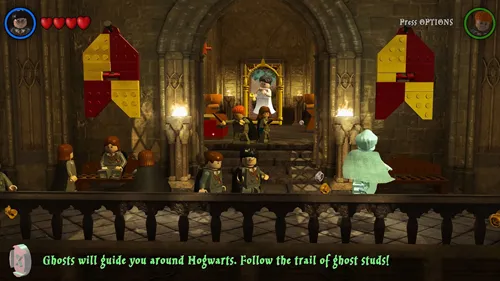
Figure 1.3 LEGO Harry Potter Collection (TT Games, WB Games, 2016).
This book looks at how producers and consumers defined adaptations – and how adaptations defined themselves – in the years between Sorcerer’s Stone and Fantastic Beasts , as the franchise logics and logistics of what Kamilla Elliott has called ‘tie-intertextuality’10 became the default in Hollywood. Elliott notes that while literary and film scholars have historically posited intertextuality as ‘a democratizing force, dispersing agency, meaning, and authority from producers to consumers’, franchise intertextuality ‘is just as likely to foster conservatism, monopolies, and corporate capitalism, with its quest for global domination’.11 Adaptation often found itself caught between these competing meanings in the early aughts. As producers pushed huge fantasy worlds like Harry Potter’s across as many platforms as possible in a never-ending quest for profit, digitally savvy consumers pushed back, rerouting and rebuilding those worlds as they saw fit. LEGO Harry Potter, which offers audiences a specifically ‘interactive journey through iconic locations from the beloved books and films’12 (my emphasis), neatly illustrates this split. Hogwarts’ famous ghosts usher players through each level by leaving a trail of translucent studs behind him, but players are just as welcome to ignore the ghosts’ leads and explore the level themselves (or return to those levels for free play once they have completed the story mode). Just as adaptations may or may not remain true to the spirit of their source texts, audiences may or may not remain true to the LEGO adaptation’s spirit, striking out in different or indifferent directions – though always bound by the game’s design. Somewhat outside those bounds, though, lies the unofficial, unaffiliated ‘LEGO Harry Potter In 90 Seconds’, a YouTube video posted by How It Should Have Ended on 15 Novem ber 2016, featuring analogue Potter figures in a series of stop-motion scenes: ‘In the spirit of Fantastic Beasts and Where to Find them, Brotherhood Workshop animates an epic recap of the entire Harry Potter series.’13 The video (3.2 million views and counting as of July 2017) features a coda in which Harry muses, ‘Seven books. Eight movies. One stage play. What do you think is next?’ Hermione, holding a miniature copy of Fantastic Beasts, responds: ‘I think they should make a film series based on this text book.’ Ron chimes in: ‘Ha! A film [series] based on a textbook. That will never happen.’14 The video lovingly adapts the Harry Potter canon – intertextually citing the series’s defining moments, much like the LEGO Harry Potter does – before smirking at that canon’s further adaptation.
This intertextual network suggests that in the early aughts, franchises not only multiplied adaptations but adaptations’ audiences and audiences’ adaptations. Adaptations expanded from both the top down and the bottom up, as producers used proven properties to catalyse multipart franchises and consumers reacted to those franchises multifariously, through fan vids, fan fiction, fan art, mash-ups, remixes, sweding, and cos...
Table of contents
- Cover
- Half-Title
- Series
- Title
- Contents
- Acknowledgements
- 1 Introduction: Franchised Adaptations
- 2 Streaming Adaptations
- 3 Fannish Adaptations
- 4 Game Adaptations
- 5 Live-Action Adaptations
- 6 Conclusion: Dimensional Adaptations
- Select Bibliography
- Index
- Copyright
Trusted by 375,005 students
Access to over 1.5 million titles for a fair monthly price.
Study more efficiently using our study tools.
Frequently asked questions
Yes, you can cancel anytime from the Subscription tab in your account settings on the Perlego website. Your subscription will stay active until the end of your current billing period. Learn how to cancel your subscription
No, books cannot be downloaded as external files, such as PDFs, for use outside of Perlego. However, you can download books within the Perlego app for offline reading on mobile or tablet. Learn how to download books offline
Perlego offers two plans: Essential and Complete
- Essential is ideal for learners and professionals who enjoy exploring a wide range of subjects. Access the Essential Library with 800,000+ trusted titles and best-sellers across business, personal growth, and the humanities. Includes unlimited reading time and Standard Read Aloud voice.
- Complete: Perfect for advanced learners and researchers needing full, unrestricted access. Unlock 1.5M+ books across hundreds of subjects, including academic and specialized titles. The Complete Plan also includes advanced features like Premium Read Aloud and Research Assistant.
We are an online textbook subscription service, where you can get access to an entire online library for less than the price of a single book per month. With over 1.5 million books across 990+ topics, we’ve got you covered! Learn about our mission
Look out for the read-aloud symbol on your next book to see if you can listen to it. The read-aloud tool reads text aloud for you, highlighting the text as it is being read. You can pause it, speed it up and slow it down. Learn more about Read Aloud
Yes! You can use the Perlego app on both iOS and Android devices to read anytime, anywhere — even offline. Perfect for commutes or when you’re on the go.
Please note we cannot support devices running on iOS 13 and Android 7 or earlier. Learn more about using the app
Please note we cannot support devices running on iOS 13 and Android 7 or earlier. Learn more about using the app
Yes, you can access Adaptations in the Franchise Era by Kyle Meikle in PDF and/or ePUB format, as well as other popular books in Medios de comunicación y artes escénicas & Arte general. We have over 1.5 million books available in our catalogue for you to explore.