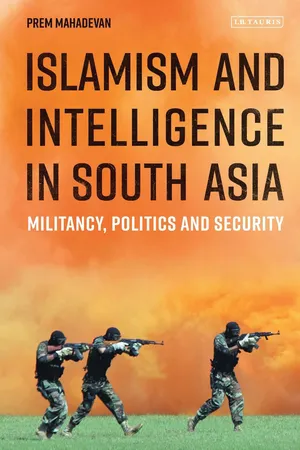
State sponsorship of terrorism is a complex and important topic in today's international affairs - and especially pertinent in the regional politics of the Middle East and South Asia, where Pakistan has long been a flashpoint of Islamist politics and terrorism. In Islamism and Intelligence in South Asia, Prem Mahadevan demonstrates how over several decades, radical Islamists, sometimes with the tacit support of parts of the military establishment, have weakened democratic governance in Pakistan and acquired progressively larger influence over policy-making.
Mahadevan traces this history back to the anti-colonial Deobandi movement, which was born out of the post-partition political atmosphere and a rediscovery of the thinking of Ibn Taymiyyah, and partially ennobled the idea of `jihad' in South Asia as a righteous war against foreign oppression. Using Pakistani media and academic sources for the bulk of its raw data, and reinforcing this with scholarly analysis from Western commentators, the book tracks Pakistan's trajectory towards a `soft' Islamic revolution. Envisioned by the country's intelligence community as a solution to chronic governance failures, these narratives called for a re-orientation away from South Asia and towards the Middle East. In the process, Pakistan has become a sanctuary for Arab jihadist groups, such as Al-Qaeda, who had no previous ethnic or linguistic connection with South Asia. Most alarmingly, official discourse on terrorism has been partly silenced by the military-intelligence complex. The result is a slow drift towards extremism and possible legitimation of internationally proscribed terrorist organizations in Pakistan's electoral politics.
- 288 pages
- English
- ePUB (mobile friendly)
- Available on iOS & Android
eBook - ePub
About this book
Information
PART I
ISLAMISM
CHAPTER 1
JIHADISM
Over the last 200 years, the concept of ‘jihad’ in South Asia has morphed from an indigenous, nation-protecting asset into a foreign, nation-destroying instrument. This transformation is all the more remarkable because it has hitherto been unnoticed by regional scholars. Jihad originally meant resistance to British colonial depredations—an undertaking which reached its apogee in 1857. Described as ‘the greatest armed challenge to imperialism the world over during the entire course of the nineteenth century’, the 1857 Uprising was a time where ‘jihadi’ or ‘mujahid’ were not threatening terms, as they are today, but badges of honour for Muslim civilians who volunteered to fight for the freedom of their country and the defence of their community.1
Stung by the unity which some—but not all—Hindus and Muslims (the latter included both Shias and Sunnis) had demonstrated during the Uprising, the British subsequently portrayed jihadis as foreign agents. Advocacy of religious war against the colonial regime was attributed to conspiracies by the Arabian-inspired, Sunni supremacist ‘Wahhabi’ movement. In a classic example of narrative shaping intended to divide the Indian populace, British writers airbrushed the fact that jihadi calls for annihilation of the foreign occupier had been accompanied in many places by exhortations for continued Hindu-Muslim harmony.2 Instead, the jihadis were depicted as enemies of both Christianity and Hinduism, a perception which endures to this day. For instance, the assassination in 1882 of the Viceroy of India, Lord Mayo, has been cited as an act of jihad. It remains little known that the killer—who had previously collaborated with the British against his countrymen—spent his last earnings in jail purchasing flour cakes for Muslim prisoners and sugar for the Hindu ones. While there is still a statue to Lord Mayo at the place of his death, independent India has as yet paid no tribute to the assassin.3
Pakistani spymaster Hamid Gul, known for vitriolic post-retirement tirades against the West, argued in 1995 that a deliberate effort was being made to conflate ‘jihad’ with ‘terrorism’. Citing the Soviet-Afghan War—in which he played an important role—he pointed out that covert operations which served Western strategic interests during the Cold War had been legitimized as part of a global ‘jihad’, while those that did not were labelled as international ‘terrorism’ in the 1990s. In Gul's interpretation, ‘jihad’ retained its original purpose—‘to fight for one's rights.’4 His views were shared by many, who ennobled jihad as representing the patriotic defence of one's homeland against a militarily stronger (and usually foreign) opponent.
Gul overlooked the fact that time did not stand still within the framework of his analysis and that the world had undergone seismic changes in 1989–91. The end of the Cold War and the breakup of the Soviet Union meant there was no longer a need for the West to tolerate ultra-rightist political forces in the developing world, particularly when these obstructed free market economics. His argument does, however, make a valid point in that it notes a reflexive hostility on the part of the West towards militant Islamism. The resulting storyline, which has gained credibility after 9/11, holds that jihad is a purely retrograde concept seeking to preserve or remake Muslim societies along medieval lines. As part of this storyline, the Dar-ul Uloom (House of Learning) in the town of Deoband in northern India has been associated with not only jihad but also ‘jihadism’—a new association that is mostly untrue.5 This chapter argues that ‘jihad’—the defence of an invaded or occupied Muslim homeland—is different from ‘terrorism’—the killing of noncombatants by indigenous rebels or foreign-born mercenaries to a measure greater than the number of active-duty security personnel killed.
When ‘terrorism’ attempts to masquerade as a popularly supported and religiously sanctioned ‘jihad’, the result is a peculiar hybrid called ‘jihadism’. Denounced by its critics and venerated by its practitioners, jihadism captures the sympathy of a large demographic who denounce its methods but praise its objectives. In South Asia, jihadism has come to occupy this middle space partly because it has an illustrious pedigree of anti-colonial resistance. It is viewed as a means to preserve a hard-won sense of sovereignty. However, the permeation of fascist and Bolshevik ideas into political Islam during the twentieth century, together with the use of Islamists for domestic control and foreign policy, has made jihad an instrument of statecraft. It has since become more a tool of elite intrigues than a step towards personal and collective self-defence.
Jihad in South Asia was a response to the slow erosion of Muslim supremacy by British encroachment. The Dar-ul Uloom played a crucial role in keeping alive the spirit of resistance even after all hope of victory was crushed in 1857–8. However, the emergence of Jamaat-e-Islami and anti-Hindu sentiments among a fringe of the Indian Muslim community switched the focus of jihad from defence to offence. Fantasies about an Islamic Utopia led to Sharia law being touted as the best form of government for all mankind.6 After Pakistan was created in 1947, the military and intelligence establishment of that country used Islamists to discredit mainstream civilian politicians and manipulate popular opinion in favour of military rule. In the process, the army itself became radicalized to the point where it partly adopted the worldview of its clients. Thus, in the 1970s, a Pakistani brigadier could write a book called The Quranic Concept of War, which legitimized the sustained use of terror as an instrument of military strategy. According to one American reviewer, this book stands out among contemporary jihadist literature as a visionary treatise for terrorist groups fighting the West.7
Surviving the Devil's Wind
There is little doubt that the 1857 Uprising featured brutality by all sides. Partly out of a need to impose order by any means, and partly due to sheer savagery, the British by far exceeded their Indian adversaries in terms of war crimes committed. By winning the military conflict, they also won the right to craft a meta-narrative that glossed over their transgressions. Yet, historical events do not unmake themselves just because they are excluded from the meta-narrative of a particular era, nor does their impact disappear. Rather, the impact is felt after a generational gap when changed political circumstances facilitate the telling of an alternative story, to make better sense of current realities. In the twenty-first century, it is necessary to revisit the legacy of 1857 upon Islamism in India, to understand how deep runs the idea of jihad.
First, a crucial falsehood has to be corrected: that the Aligarh school of religion-based politics is more moderate than the Deobandi school. This is true only through the long-distance telescope of Western scholars, but has no validity in the indigenous Indian context. Both schools share a belief that Islam is a foreign entity in South Asia. Their founders, whether Anglophile or Anglophobe, were afflicted by the Andalusia Syndrome, which equated the loss of India to infidels in the nineteenth century with the Christian reconquest of Spain in 1492 CE.8 Sir Saiyid Ahmed Khan, the leading ideologue of the Aligarh school, emphasized his non-Indian genealogy.9 To some extent, he did so out of status anxiety because it was common for ruling classes of the Mughal Empire to look down on indigenous converts to Islam. But it is also possible that Sir Saiyid was motivated by a larger sense of Muslim identity, which he valued more than any emotional connection with the land and native culture of India.
In contrast, Deobandi scholars emphasized patriotic identification with one's native soil, which after 1947 has tied them to the Indian nation-building project. As early as 1938, they issued a fatwa stating that loyalty to country and loyalty to religion were not mutually exclusive.10 It was possible, according to the Deobandi school, for Muslims to live in a multi-faith and secular state, without striving for political supremacy as long as they were free to practise their religion. The physical and the spiritual realms were to be kept sufficiently apart, to allow for a greater degree of political accommodation than that afforded by the Aligarh school. This point is important, because it explains why Indian Muslims—to the limited extent they even follow the edicts of Deobandi clerics—have remained much more moderate than Pakistani Muslims. The latter live in a country whose founding fathers subscribed to the Aligarh school's Two Nation Theory—an exclusivist belief that different religions cannot coexist in harmony.
To be sure, there have long been clerics in South Asia who held that syncretic policies corrupted Islam and made it vulnerable to a steady erosion of power. Sheikh Ahmed Sirhindi (1564–1624), for instance, criticized Mughal Emperor Akbar for allowing Hindu customs to be absorbed into Muslim daily life. Sirhindi called for a revivalist pushback against religious over-tolerance, which he felt was destroying the moral fabric of the Islamic realm. His ideas influenced the Naqshabandi strain of Sufism to such a degree that Naqshbandis become committed advocates for the purification of Islam in late-medieval India. They called for a revival of old traditions, which had been displaced by Hindu-Muslim assimilation.11 The most distinguished of them was Shah Waliullah (1703–62) from Delhi. Although not an Arab, Waliullah is often identified as the man who imported ‘Wahhabism’ into South Asia. He and the actual founder of the Wahhabi movement, Muhammad ibn Abdul Wahhab, had been students in Medina under the Indian Naqshbandi scholar Muhammad Hayat of Sindh. Upon completion of their studies, which had encouraged them to re-interpret religious law, both returned to their places of origin to start social movements. Wahhab went to the Nejd in Arabia, while Waliullah returned to Delhi. Unlike his Saudi counterpart, who faced a barren ideological climate in which to preach, Waliullah had to contend with the highly charged courtly discourse of the Indian subcontinent's imperial centre. His reform movement provided an answer to the burning question of the time—why had Muslim power been in decline since the death of Emperor Aurangzeb in 1707? According to Waliullah's explanation, the decline occurred because the Mughal Empire had deviated from its Arabic origins and become contaminated by indigenous practices absorbed from the lands of India. As a reform movement with an Arabist slant but native roots, the Waliullah movement was indeed a forerunner of Deobandism. However, it was not, strictly speaking, the South Asian version of Wahhabism because it subscribed to the Hanafi school (madhab) of Islamic jurisprudence (fiqh). In contrast, Wahhabism became a reform movement within the much smaller and more austere Hanbali madhab.12
When the 1857 Uprising broke out, it was proclaimed as a jihad by leading Islamic scholars in Delhi. The overall aim was to restore Muslim rule over the Mughal Empire, which had been usurped by the British over many decades. As early as 1803, Shah Waliullah's son, Shah Abdul Aziz, had declared that Delhi could no longer be considered Dar-ul Islam (House of Islam) because the Mughal Emperor was a figurehead of British rule. The city was henceforth deemed Dar-ul Harb (House of War). Readers may discern an attempt here to copy the famous Mardin fatwa, which was issued by the medieval cleric Ibn Taymiyyah following the Mongol occupation of the Middle East in the thirteenth century. The fatwa is generally held to have made a rigid distinction between Muslim-ruled lands and those occupied by non-Muslim invaders. The proclamation of a similar fatwa a full 54 years before 1857 shows that European colonization of the Islamic world, no matter how well-disguised, was both noticed and resented by native elites. Similar resistance movements would also be mounted throughout the nineteenth century in Russia and the Nile Valley in Africa.13 In India, the banner of revolt was first raised by Saiyid Ahmad Barelvi (1786–1831), a charismatic preacher from the town of Rae Bareli, in 1826. After a two-year stay in Arabia, he returned to India determined to restore Islam to its past glory. He first spent two years building a clandestine infrastructure for political and religious subversion in occupied territories, with its headquarters at Patna in central India. Then, when he judged that preparations for an insurrection were complete, he emigrated to the borderlands near Afghanistan to launch a holy war.
The immediate enemy of Saiyid Ahmed Barelvi was the Sikh kingdom of Ranjit Singh, which he viewed as an easier prize than British-occupied territory. At first, the British were happy to allow Saiyid Ahmed to harass the Sikh ruler, having calculated that this could hasten their own conquest of India. However, when Barelvi proved altogether too popular among Indian Muslims for their comfort, they supported Ranjit Singh in crushing the jihadi army at the Battle of Balakot in 1831. Saiyid Ahmed died on the battlefield, but fear of a Muslim rebellion seeped into the British psyche. Colonial administrators became vigilant against further uprisings.14
During the fighting of 1857, the most feared and capable opponent of the British was a Qadiri Sufi named Ahmadullah Shah (1810–57). Originally from a princely state near modern-day Chennai (a south Indian city also known as Madras), he spent two decades travelling in Europe and became a skilled military commander, before turning to religion. He had already been identified as a potential threat by the British and arrested. He was awaiting execution when the first clashes between British and Indian soldiers erupted in May 1857. Within a short while, he organized a resistance force and inflicted a humiliating battlefield defeat upon the British. His most important act during the Uprising was to issue a statement calling for the restoration of Islamic rule in India, preferably with a sovereign of Arab descent. Given that Ahmadullah Shah himself was most likely of Afghan lineage yet born in southern India, his statement shows the depth of religious solidarity that existed among Islamic forces fighting the colonial occupier. Similar commitment may have been lacking among some Hindus, who either supported the colonizers or were prepared to switch sides depending on how the fighting went.15
After the British had extracted their revenge (known as the Devil's Wind), by instituting mass hangings of suspected opponents, the Muslim revival launched by Shah Waliullah and Shah Abdul Aziz, forged in blood by Saiyid Ahmed Barelvi, and ably defended by Ahmadullah Shah, collapsed. One of the leading supporters of the 1857 jihad declaration, Maulana Fazlul Haq Khairabadi (1798–1861), later wrote about its failure while in exile. His book Al-Thurat al-Hindiya (The Agitation of India) was written in Arabic but translated into Urdu. In a marked slight, Khairabadi used the term ‘shahadat’ (martyrdom) while referring to the deaths of Muslim fighters but not to Hindu ones killed by the British. He described those who refused to participate in the revolt as apostates. He perceived the conflict as a war between true Muslims and a Christian-Hindu alliance. To account for the fact that not all Hindus supported the British, he described the collaborators as Hindus who had been Westernized.16
Thus, suspicion of Western education and culture has a long tradition among South Asian Islamists. It is seen as a way of r...
Table of contents
- Front Cover
- Title Page
- Copyright
- Dedication
- Contents
- List of Illustrations
- Foreword
- Preface Unpacking Layers of Concealment
- Introduction
- Part I Islamism
- Part II Intelligence
- Reflections and Conclusion
- Notes
- Select Bibliography
Trusted by 375,005 students
Access to over 1.5 million titles for a fair monthly price.
Study more efficiently using our study tools.
Frequently asked questions
Yes, you can cancel anytime from the Subscription tab in your account settings on the Perlego website. Your subscription will stay active until the end of your current billing period. Learn how to cancel your subscription
No, books cannot be downloaded as external files, such as PDFs, for use outside of Perlego. However, you can download books within the Perlego app for offline reading on mobile or tablet. Learn how to download books offline
Perlego offers two plans: Essential and Complete
- Essential is ideal for learners and professionals who enjoy exploring a wide range of subjects. Access the Essential Library with 800,000+ trusted titles and best-sellers across business, personal growth, and the humanities. Includes unlimited reading time and Standard Read Aloud voice.
- Complete: Perfect for advanced learners and researchers needing full, unrestricted access. Unlock 1.5M+ books across hundreds of subjects, including academic and specialized titles. The Complete Plan also includes advanced features like Premium Read Aloud and Research Assistant.
We are an online textbook subscription service, where you can get access to an entire online library for less than the price of a single book per month. With over 1.5 million books across 990+ topics, we’ve got you covered! Learn about our mission
Look out for the read-aloud symbol on your next book to see if you can listen to it. The read-aloud tool reads text aloud for you, highlighting the text as it is being read. You can pause it, speed it up and slow it down. Learn more about Read Aloud
Yes! You can use the Perlego app on both iOS and Android devices to read anytime, anywhere — even offline. Perfect for commutes or when you’re on the go.
Please note we cannot support devices running on iOS 13 and Android 7 or earlier. Learn more about using the app
Please note we cannot support devices running on iOS 13 and Android 7 or earlier. Learn more about using the app
Yes, you can access Islamism and Intelligence in South Asia by Prem Mahadevan in PDF and/or ePUB format, as well as other popular books in History & Indian & South Asian History. We have over 1.5 million books available in our catalogue for you to explore.