The must-read summary of Eric Reis' book: "The Lean Startup: How Today's Entrepreneurs Use Continuous Innovation to Create Radically Successful Businesses"
This complete summary of the ideas in Eric Reis' book "The Lean Startup" shows that most startups tend to burn through their resources and then disappear because they never get around to seeing what their potential customers think of what they're developing. With this accessible summary, you will learn how to do just that in a fast and effective way, using the Build-Measure-Learn loop. In the end, you will be able to offer your customers a fully-featured product, which they will love.
Added-value of this summary:
• Save time
• Understand key concepts
• Expand your business knowledge
To learn more, read "The Lean Startup" and discover how to focus efficiently on what your customer really want.
- English
- ePUB (mobile friendly)
- Available on iOS & Android
eBook - ePub
About this book
Information
Subtopic
Business GeneralIndex
BusinessSummary of The Lean Startup (Eric Ries)
The Lean Startup methodology - Vision
Never forget that learning is the true measure of progress for a startup. The aim of any startup should be first and foremost to use scientific experimentation to discover how to build a sustainable business. Anything else is a bonus.
The standard approach to building a startup usually goes something like this:
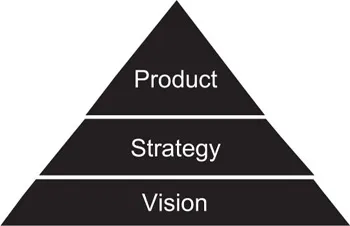
- Someone comes along with a vision which is often a variation of “Let’s go build a thriving business which produces a world-class product that consumers ove.”
- To achieve that vision, a strategy gets developed along the lines of:
- This is the business model we will use.
- Here is our planned product and service lineup.
- We’d like to work with these partners.
- Our competitors will be these firms.
- Our target customers will have these traits.
- The end result of that strategy is a product or service then gets made and sold in the marketplace.
Using this model, the conventional view of an entrepreneur is someone who is hard driving, not easily distracted by detours along the way and who has a “Just do it” attitude and determination. Entrepreneurs come on board and steer the startup through to where the product is in the marketplace and marketing is working its magic. Setbacks are merely learning opportunities along the way to ultimate success.
In real life, being an entrepreneur is more of an exercise in management skills than anything else. Any startup is a portfolio of activities, all happening simultaneously. At any time:
- New customers are being acquired.
- Existing customers are being supported.
- The innovation initiative is happening in the background.
- Fine-tuning of the marketing is going on.
- A decision is being made on whether to change the strategy.
- The product is still being optimized.
It’s safe to say the emphasis for most startups is on results achieved more than on anything else. Any learning which arises out of the startup is just a happy by-product of the process but it’s getting a product made and then to market that constitutes the measure of success for most startups.
Therefore it should come as no real surprise many startups end up accidentally building something nobody wants. If that happens, it really doesn’t matter whether your startup has hit its targets and come in under budget or not. Those items are just of passing interest in the bigger picture view. Job #1 for any startup should be to figure out what customers want and will pay for as quickly and cost effectively as possible.
In talking about startups, it might be useful to define the term first. A good working definition of a startup is:
A startup is a human
institution designed to create a new
product or service under conditions
of extreme uncertainty
institution designed to create a new
product or service under conditions
of extreme uncertainty
A few key points to note about this definition are:
- Startups are institutions or bureaucracies whether they like the term or not – they develop processes (often haphazard) for hiring new creative employees, for coordinating their activities, for developing their product and for putting together everything else which will be required to get results. Successful startups are good at processes.
- Startups focus on creating new products and services – by making use of scientific discoveries, new technology, or perhaps repurposing an existing technology for a new use. Sometimes startups will develop new business models which unlock previously hidden value, bring products or services to a new location or to serve a different set of customers. Innovation can take many forms and startups can be formed to commercially harness any of these forms.
- Uncertainty is a given for any startup – which is a challenge because it means most general management tools will not work all that well. These tools are typically intended to be used within an established management structure rather than in the extreme uncertainty in which startups operate. Standard tools like forecasts, yearly budgets, product milestones and detailed business plans don’t work at all well with startups. Different tools are needed when growing a startup.
It is often assumed startups have to happen in a garage or in a skunkworks operations separate from the established business. That’s true often enough but the reality is startups can happen inside established companies as well. To Illustrate, look at the example of Intuit, America’s largest producer of finance, tax and accounting tools. Intuit has more than 7,700 employees and billions of dollars of revenue. Yet for all its succ...
Table of contents
- Book Presentation: The Lean Startup by Eric Ries
Trusted by 375,005 students
Access to over 1.5 million titles for a fair monthly price.
Study more efficiently using our study tools.
Frequently asked questions
Yes, you can cancel anytime from the Subscription tab in your account settings on the Perlego website. Your subscription will stay active until the end of your current billing period. Learn how to cancel your subscription
No, books cannot be downloaded as external files, such as PDFs, for use outside of Perlego. However, you can download books within the Perlego app for offline reading on mobile or tablet. Learn how to download books offline
Perlego offers two plans: Essential and Complete
- Essential is ideal for learners and professionals who enjoy exploring a wide range of subjects. Access the Essential Library with 800,000+ trusted titles and best-sellers across business, personal growth, and the humanities. Includes unlimited reading time and Standard Read Aloud voice.
- Complete: Perfect for advanced learners and researchers needing full, unrestricted access. Unlock 1.5M+ books across hundreds of subjects, including academic and specialized titles. The Complete Plan also includes advanced features like Premium Read Aloud and Research Assistant.
We are an online textbook subscription service, where you can get access to an entire online library for less than the price of a single book per month. With over 1.5 million books across 990+ topics, we’ve got you covered! Learn about our mission
Look out for the read-aloud symbol on your next book to see if you can listen to it. The read-aloud tool reads text aloud for you, highlighting the text as it is being read. You can pause it, speed it up and slow it down. Learn more about Read Aloud
Yes! You can use the Perlego app on both iOS and Android devices to read anytime, anywhere — even offline. Perfect for commutes or when you’re on the go.
Please note we cannot support devices running on iOS 13 and Android 7 or earlier. Learn more about using the app
Please note we cannot support devices running on iOS 13 and Android 7 or earlier. Learn more about using the app
Yes, you can access Summary: The Lean Startup by BusinessNews Publishing in PDF and/or ePUB format, as well as other popular books in Business & Business General. We have over 1.5 million books available in our catalogue for you to explore.