- 272 pages
- English
- ePUB (mobile friendly)
- Available on iOS & Android
eBook - ePub
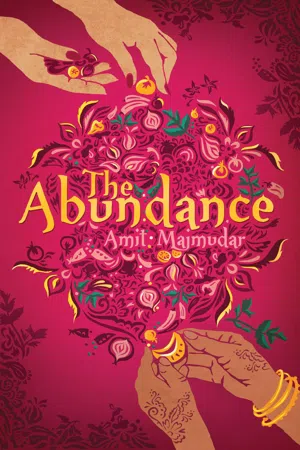
The Abundance
About this book
Mala and Ronak are adults now. They've married, begun their own families and moved away from the suffocating world of their first generation immigrant parents. But when they learn their mother has only months to live, the focus of their world returns to her home. Having shown little interest in the Indian cuisine they eat at every gathering, Mala decides to master the recipes her mother learned at her own mother's knee. And as they cook together, mother and daughter begin to confront the great divisions of their lives, and finally heal their fractured relationship. But when Ronak comes up with a plan to memorialise his mother, the hard-won peace between them is tested to its limits. Written with tenderness and wry compassion, Amit Majmudar has captured anew the immigrant experience, the clash of cultures, the conflicts of assimilation, and, most poignantly, the tangled ties between generations.
Frequently asked questions
Yes, you can cancel anytime from the Subscription tab in your account settings on the Perlego website. Your subscription will stay active until the end of your current billing period. Learn how to cancel your subscription.
No, books cannot be downloaded as external files, such as PDFs, for use outside of Perlego. However, you can download books within the Perlego app for offline reading on mobile or tablet. Learn more here.
Perlego offers two plans: Essential and Complete
- Essential is ideal for learners and professionals who enjoy exploring a wide range of subjects. Access the Essential Library with 800,000+ trusted titles and best-sellers across business, personal growth, and the humanities. Includes unlimited reading time and Standard Read Aloud voice.
- Complete: Perfect for advanced learners and researchers needing full, unrestricted access. Unlock 1.4M+ books across hundreds of subjects, including academic and specialized titles. The Complete Plan also includes advanced features like Premium Read Aloud and Research Assistant.
We are an online textbook subscription service, where you can get access to an entire online library for less than the price of a single book per month. With over 1 million books across 1000+ topics, weāve got you covered! Learn more here.
Look out for the read-aloud symbol on your next book to see if you can listen to it. The read-aloud tool reads text aloud for you, highlighting the text as it is being read. You can pause it, speed it up and slow it down. Learn more here.
Yes! You can use the Perlego app on both iOS or Android devices to read anytime, anywhere ā even offline. Perfect for commutes or when youāre on the go.
Please note we cannot support devices running on iOS 13 and Android 7 or earlier. Learn more about using the app.
Yes, you can access The Abundance by Amit Majmudar in PDF and/or ePUB format, as well as other popular books in Literature & Literature General. We have over one million books available in our catalogue for you to explore.
Information
PART ONE
ABUNDANCE

They arrive after midnight on the twenty-third. Mala had called from Indianapolis at around 10 PM and said they were having dinner at a Dennyās. I told her I would put everything in the refrigerator, it wasnāt a problem. She said she was sorry, but they had left home later than they wanted, it hadnāt been in her control, the snow had been heavy since they crossed into Indiana. The weather was clear where we were, I told her. She said yes, but it was snowing where they were, and she really had tried to get home in time.
I could tell she was frustrated. The children were still awake, and the food hadnāt arrived yet. I could hear Vivekās demands in the background and her own pleading, cajoling, halfhearted threats. Sachin had taken Shivani and was pacing back and forth in the waiting area, hoping to calm her. The tone of Malaās apology was reproachful. She assumed that I was reproaching her, even though I wasnāt, even though I donāt think like that. I know she is harried, overstretched, a mother and a career woman. I cut the call short so she could focus on Shivani and Vivek.
I am still awake when she calls my phone again.
āWere you asleep?ā she whispers. Her mood seems improved, I can tell from her tone. āWeāre here.ā
āDid you take the exit already?ā
āWeāre outside, in the driveway.ā
I smile into the darkness. āOkay, Iām opening the door.ā I tap Abhiās arm, and he sits up and pinches the bridge of his nose, squeezing out the sleep. I get out of bed too quickly. The pain pills make me sway. Abhi throws off the covers and guides me to a sitting position. He lays his pillow at the foot of the bed, then stacks mine on top of it.
āLie back and put your feet up.ā
āTheyāre in the driveway.ā
āIāll open the door.ā
āNo. Iām coming.ā
āLie back.ā
āTheyāll know somethingās wrong.ā
āSomething is wrong.ā
āDonāt say that. Donāt even think that. Not for these next few days. You promised.ā
We sit for several long seconds. Stalemate.
āTheyāre in the driveway,ā I repeat.
He scoots to my side and, arm around my shoulder, helps me stand. As we get to the top of the stairs, my fingers press all the light switches, upstairs chandelier, downstairs chandelier, the fixture over the stairs. They will be watching from the van. They will see the light through the windows, the face of the house brightening in welcome. My daughter home, and my grandchildren: Will they see us on the stairs through the high oval window, Abhi with his arm around me, helping me down? I ease his arm off me and hold on to the railing; he hurries down a few steps and looks back, below me in case I fall.
āI am not dizzy anymore.ā
āSlowly, okay?ā
āI sat up too quickly. Thatās all.ā
The winter silence has a presence like sound. The bright snow draws its glow from the track lights and the catās cradle of Christmas lights in our front yard maple tree. The light inside the van comes on, and I can see, between Mala and Sachin, the children in their car seats, symmetrical, brother and sister sleeping with their heads fallen aside to face each other. They look warm, serene.
Sachin tugs down his hat. His skin, still used to Indian weather, is more sensitive to the cold. Mala is already outside, no hat, no gloves, sliding Shivaniās arms through the car seat straps. Mala covers her with a coat and a scarf and hurries her to the porch steps, footsteps crunching softly.
I have been standing with the door open, feeling through my nightgown the same cold they feel. I want my focus of sensation to shift from inside, where the pain is, to my bodyās surface.
The moment Mala comes inside, I worry about being seen in so much light. I worry she will notice at once a change too gradual for me or Abhi to detect.
āIs everything ready upstairs?ā Mala asks, pushing off her snowy sneakers, sole to heel.
āItās ready,ā I whisper.
The house, sensing the cold, starts up the heating system. White noise, I think. Good, this will help them sleep. I follow mother and daughter up the stairs, keeping my face close to Shivaniās lying on her motherās shoulder, cheek pushed up until the eye is just lashes. Abhi, who has gotten into his boots and coat to help with the luggage, pauses at the door. He waits until I make it to the top. Sachin arrives behind him, holding Vivek. Sachin greets Abhi in Gujarati. His voice is much too loud. He sits down on the stairs with Vivek still on his shoulder. He bites each gloveās fingertip to pull his hand free, then begins unlacing a boot. When he drops it next to Malaās sneakers, the snow scatters over the floor and doormat.
Vivek shifts and mewls. He squints into the light, and my hand leaps to the switches, hoping to salvage his sleep. Sachin gets to work on the second boot. I hurry down the stairs, thinking I should maybe take Vivek myself. Abhi arrives at the door, a bag in each hand held off the ground, his frail shoulders sloping. He is just in time to see me fall.
I am not out long. Mala rushes down when she hears the noise. Abhi props me against his coatās cold sleeve. He smells of the outdoors and of the snow.
āWhere are you hurt?ā
āIt was just a few stairs.ā I look into Abhiās eyes, and he understands he must not tell.
Mala turns the lights back on and kneels beside me on the stairs. āIs she okay? Dad?ā
āIām fine,ā I say, moving away from Abhi so I donāt appear dependent or weak. I glance upstairs, toward the guest room door where I have set up the mattresses. āDid I wake her?ā
āHow many stairs did you fall, Mom?ā
āJust a few. Two steps, right here. Go close the door, Mala, sheāll wake up.ā
Sachin speaks to me in Gujarati. āThereās a bump. Iāll go get some ice.ā
I touch my forehead, embarrassed. āI shouldnāt have turned off the light. I slipped.ā
āYou go in the room with the kids,ā Mala orders Sachin. āI can get the ice.ā
Sachin nods. I turn to find Vivekās face close to mine. He is still a little disoriented. He blinks at me.
I kiss his forehead.
Sachin picks him up, and he puts his head on his fatherās shoulder right away. I bring my knees close to give them passage. Mala, at the foot of the stairs, pauses. āAre you hurt anywhere else?ā
āIām fine.ā
She comes up to touch my arm and my knee, as if to see if either gives. āYour legs? Are your legs okay?ā
I know what she is thinkingāthat I have fallen and fractured my hip like an old woman. āI havenāt broken a hip,ā I say with a little impatience.
āJust have to check,ā Mala says, and kisses me, unexpectedly, on my widowās peak.
She goes to the kitchen. Abhi holds me. I can hear the refrigeratorās ice dispenser. āDid you tell her?ā I whisper to Abhi. In Gujarati, the question is only two quick words.
āWhen could I have told her?ā
I nod.
āLetās get you to the bed.ā
āNo. The couch. Downstairs.ā
āEveryoneās going to sleep.ā
āThe couch.ā
He takes me to the couch, tracking snow on the hardwood. Malaās ice pack against my forehead, I watch the bits of white boot-print soften and clear. Sachin is still upstairs with the children, so Abhi brings in the rest of the luggage. Mala helps take it up the stairs. I lean forward to listen. Are they exchanging whispers? Mala turned on the kitchen lights to get me ice. Did she see me here on the couch and guess? She is a doctor, after all. She has called a patientās name, swished the penlight over each glassy eye, knuckled the sternum. She has seen illness before, and she will see mine. Havenāt I seen it myself lately? Every night, I feel a stranger staring at me while I sleep, nose to nose. His shadow remains on my face.
Mala comes down with two bottles and starts washing them in hot water. I would have done it for her, but she has a specific ritual, and I have learned not to interfere. Abhi opens the closet. I hear a click and slide of hangers as his hand parts and pushes aside our coats, making room.
Sachin joins me. In his white socks he walks through Abhiās melted boot-prints and doesnāt seem to notice. When he sits on the couch, his thighs tilt upward because he is so tall. He grew up in India, where everyone is shorter, and learned to slope his spine to hide his height. Resting on the carpet, his feet point slightly inward, just as they do when he walks.
Sachin asks me in Gujarati about my fall. He is relaxed, almost garrulous, anticipating Abhiās arrival. When Abhi, smiling, comes into the still-dark family room, Sachin rises to hug him. They begin chatting immediately in Gujarati.
Abhi turns on the light, and I fear Sachin and Mala will see everything. I move the ice pack to hide my face. I am ashamed of this stupid bump that has brought me so much attention. Abhi, sitting close to me, murmurs a question about the drive. I know how happy Abhi usually is to see Sachin; I want to tell him he doesnāt have to distract himself with sympathy, he can sit next to Sachin.
Sachin eyes my forehead periodically. He is also a doctor, but maybe he doesnāt see the change in me, either. I wonder whether my slip on the stairs might be a windfall, this tender swelling distracting from the harder lump inside me.
Sachin turns the conversation, predictably, to OSU football. Itās what Abhi and he would usually talk about at this point. Mala, over by the sink, looks up in annoyance from the running faucet.
āSachin?ā
āYes?ā He is already on his feet.
āSippy cups. Iām missing two.ā
āWhere do you think they are?ā
āThe back row. Or else check the floor between the car seats. I know I gave her apple juice.ā
Sachin heads to the door and begins the process of lacing and zipping. Abhi says it is too cold to go out for two cups, but Sachin, in English, says it isnāt a problem. Abhi acquiesces. This is between husband and wife. Mala turns the faucet off, grabs a hand towel, and looks down the hallway at her husband. āWhat are you doing?ā
āPutting on my glows,ā he says, the v becoming a w. Most of the time he sounds American. Suddenly, under Malaās glare, his accent comes out strong. Abhi and I keep our eyes on the carpet.
āTake your time, all right?ā
āOkay.ā
The sarcasm has not registered. She keeps drying her hands while he pulls on his hat and gets his hood over it. She looks at us.
āMom, Dad, you can go back to sleep. You donāt have to wait.ā
Abhi smiles. āWeāll go up with you.ā
Sachin closes the front door behind him, at last.
āHowās that bump, Mom?ā
āItās fine.ā
āLetās see.ā
She comes close and draws a gentle fingertip across my cold skin. āItās fine now,ā I say. The bump is at my hairline. I havenāt colored my hair in some time. Neither has Abhi. Although we are stocked with LāOrĆ©al boxes in the bathroom closet, one shelf below the towels, Soft Black, weāve lost the desire to do it. From this close, Mala must be noticing my gray hair.
Though I, too, see some disturbing signs up close: the sinkhole above my daughterās collarbone, the brittle lines from elbow to wrist, the too-sharp outline of her jaw. She needs to eat. She does not eat.
Have I gone completely gray under the dye? Would what is happening inside me seem less of a shock if I didnāt fool myself with young hair? I have my motherās hair, loose at the roots, every morning a matted tangle over the shower drain, and wisps wound around two fingers and tugged free of the comb.
Sachin returns with the sippy cups. He takes off his gloves and boots but stands with the winter coat still on, shoulders dusted in fine snow. His hands look small at the ends of his puffy sleeves, the plastic Mickey Mouse cups even smaller. Mala takes them without saying thank you. As Sachin removes the rest of his gear, the talk turns to weather, how many inches of snowfall in St. Louis versus here, how bad it was last yearāand I think how merciful it is that all people have the weather in common, the one subject everybody can talk about. We three speak in Gujarati, Sachin at ease again, his pleasantness undiminished by his humbling. Steam rises from the sink as Mala turns the fixture all the way left and holds the cups under the water, her face set, as though proving to herself she can withstand the heat.
Upstairs, in the dark, Abhi sits on the bed. I tug at his pajama sleeve.
āDo you really think we can do this?ā he says. āPretend this way? Let them know.ā
āItās late. The little ones will be up early.ā
āTomorrow morning. Take Mala aside.ā
āThis is their last visit before things change, Abhi. I told you.ā
āYou will have her as she is, then.ā
āThatās what I want. You saw, she was sweet to me when she came in.ā
āTonight she snapped at Sachin, tomorrow morning she may snap at you.ā
āI donāt mind.ā
He shakes his head. āHow can we walk about as if thereās nothing crushing us?ā
āThis is their last visit before they find out and things change.ā
He covers his face a moment, palms side by side, then slides the heels of his hands up to his eyes and presses in frustration. āThings have already changed. You are in pain. I know it. I see it every time I look in your eyes.ā
āItās nothing.ā
āItās not nothing.ā
āYou should sleep, Abhi. Mala says the kids have been getting up lately at six thirty.ā
āItās not nothing.ā
āCome here. Come here and sleep.ā
Abhi shakes his head again and joins me under the covers. He lies apart from me for a few moments, then he turns and sets his thigh over mine, brings his arm under my breasts, nuzzles my neck. Once, this used to be a signal that he wished to make love; now it is the burrowing of a scared creature. The thigh and arm that rest on me make sure that I do not vanish without warning. I cannot remember when we last made love. I do not want to remember, either. If we let it happen now, I will keep thinking, This may be the last time. Maybe I will think it just once, then concentrate harder, focus, shake the thought from my headābut the pleasure, if there can be any pleasure, would rise between my legs like a lump in the throat. I would be conscious of every moment. And later I would remember this one night, our last, more intensely than all the others we have spent together, back when we were timeās millionaires, rolling in nights.
I lie on my back for a while, unable to sleep. I trace Abhiās arm across my chest, the soft hairs of his hand, his rough knuckles, his fingers limp now that he has fallen asleep. I find the white gold of his wedding band and turn it around and around, as though winding a clock.
I made everything in advance the morning we went for the second opinion. I poured the dahl still steaming into a casserole dish. Condensation jeweled the glass lid. The fan over the stove kept me safe. I thought of its roar as a leaf blowerās, scattering my apprehensions. Anything not to concentrate on the appointment.
Two events were crowded into that day after weeks of waiting: my appointment at the Cleveland Clinic with Dr. DāOnofrio, and the arrival, from Buffalo, of Abhiās nephew and his wife. Life is like that, a long lull, then all the phones ring at once. We had to leave at 10 AM to make it to our 12:45 meeting, then, after two hours, come back here to pick up the guests from the airport.
Of course we hadnāt planned things this way. Abhi called Dr. DāOnofrioās office and got me the first available opening. His nephew Shaileshās itinerary arrived by e-mail three days afterward. We hadnāt been able to attend his wedding in Ahmedabad, so showing this hospitality, during the coupleās visit to America, was crucial.
Abhi asked me whether he should request that they fly into Cleveland. We could pick them up on the drive back. I didnāt wa...
Table of contents
- Cover
- Title page
- Copyright page
- Contents
- PART ONE: Abundance
- PART TWO: Famine
- PART THREE: Seedtime
- ACKNOWLEDGMENTS
- ABOUT THE AUTHOR