- 166 pages
- English
- ePUB (mobile friendly)
- Available on iOS & Android
eBook - ePub
About this book
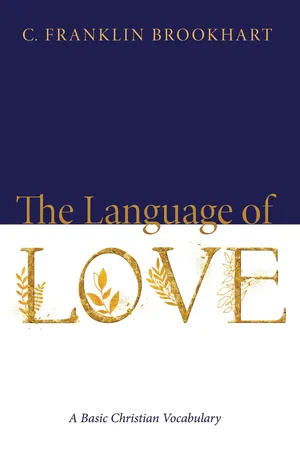
Have you ever puzzled over a strange word in the Bible, a hymn, or a prayer book, or wanted to explore a familiar term more fully? In either case, this book can serve you on your quest for deeper understanding. Here you will find essays on topics from "apocalypse" to "worship," as well as narratives and insights by the author. Words matter for Christians, because they are the tools used in our journey with God.
Information
Topic
Theology & ReligionSubtopic
Biblical Studieschapter 1
Apocalypse
Unveiling God’s Future
If you enter the word “apocalypse” into Google, here are some of the entries you will find:
• a Marvel comic book super villain,
• a bunker built by the wealthy to prepare for global diaster,
• signs of environmental doom,
• and five reasons why a zombie apocalypse could happen.
The word clearly has entered the popular vocabulary, and carries with it a variety of nuances. The general use suggests an expectation of imminent doom and the reasons for such an expectation. It has become almost synonymous with “diaster.”
My wife and I used to watch a television show that revealed the secrets of magic tricks. A person would perform the illusion as the audience would see it, and then would come a commercial. After that the announcer would solemnly say, “And now the reveal,” and the trick would then be explained. The word “apocalypse” simply means to reveal or to uncover. In the Bible what is revealed is the circumstances leading to the fulfillment of God’s plan for humanity. An apocalypse uncovers what God intends to do.
The last book in the Bible is today generally called “Revelation” (not Revelations) or “The Revelation to St. John the Divine.” But another title of long usage is “The Apocalypse.” The first verse says it well: “The revelation (in Greek, the apocalypse) of Jesus Christ, which God gave to him to his servants what must soon take place; he made it known by sending his angel to his servant John.” That is, the book unveils what must soon take place under God’s providence.
Now we hone in on the meaning of the term. More specifically, apocalypse is a form of literature; it is a genre. The Bible stands as a library, a collection of various books in a number of genres from different historical periods. To some that seems obvious, but that fact needs attention. The reason I emphasize that is because we understand what we read through our sense of genre. For example, when we look at a newspaper we do not read a sports article the same way we read an editorial. We approach the comics differently than news articles. Without thinking about it, we know that an editorial is someone’s opinion and that a news story lays before us the facts of an event. It’s all a matter of genre.
We should approach scripture in a similar way. We read the Psalms as poetry with all that that implies. But we read the letters of Paul understanding that it is correspondence addressing specific people in a certain place.
The genre of apocalypse arose as a common form of literature in late Judaism and early Christianity (about 300 BC till about 150 AD). The people of the time knew the form and how to understand it. Most of these works are now historical curiosities, but several have become a part of the church’s life and literature. Mark 13, sometimes called the Little Apocalypse, serves as an instance. Parts of the Old Testament book of Daniel, and bits of the New Testament (2 Thessalonians 2.1-20), are further examples, the major instance being, of course, the book of Revelation.
The purpose of an apocalypse is to interpret a crisis which the people of God are facing. This genre grows out of a setting in which it seems as if the world is falling apart and as if evil appears to be prevailing against the forces of order and godliness. Authors of apocalypse did this by using highly metaphorical language. Numerology, codes, angels and demons play important roles; and earthly rulers and powers are presented in veiled form. We today function is similar ways. When we see a picture of or read about Uncle Sam we know that that is a veiled reference to the United States. Our national emblem shows an eagle holding thunderbolts and olive branches, suggesting a noble nation with power to seek peace. We should approach any apocalypse with a similar turn of mind.
In a moment we will look at Revelation as a case study of apocalypse. But first, I ask that you put aside a popular notion about that book. Some see it as a code book about what is about the happen today. So, they read it and then look for signs of the times that fit what they read. My response to that method is a question. Why would early Christians have preserved Revelation and considered it holy scripture if its setting was actually the twenty-first century? If that were the case it would have been nonsense to those early believers. In fact, they read, used, and preserved it because it spoke a word of God to them in their situation. It is not a book about what is about to happen in the Middle East today, but rather what happened in the Middle East in the first century.
In Christian scripture and tradition the Revelation to St. John the Divine stands as the primary instance of apocalypse. The writer says his name is John, and calls himself simply a servant of Jesus and a brother to other Christians. He functions as a prophet in the Old Testament sense, a person called to proclaim a message from God. He does not speak of himself as an evangelist, so we should not think of him as the author of the gospel of John. Nor is he the apostle John, son of Zebedee. John was a common name then, and we should not confuse the three John’s we encounter in the New Testament. There are: John the Apostle, John the Evangelist, and John the Divine. Our guy is the final person on the list.
The John of the Apocalypse, sometimes referred to as St. John the Divine, received a divine word while on the Island of Patmos, a small and rugged outcropping in the Aegean Sea. The church’s tradition states that he was banished there by the Roman authorities. Here is what John himself writes: “I, John. Your brother who share with you in Jesus the persecution and the kingdom and the patient endurance, was on the island called Patmos because of the word of God and the testimony of Jesus. I was in the spirit on the Lord’s day, and I heard behind me a loud voice like a trumpet saying, ‘Write in a book what you see and send it to the seven churches, to Ephesus, to Smyrna, to Pergamum, to Thyatira, to Sardis, to Philadelphia, and to Laodicea.’” (Revelation 1. 9-10)
This passage implies that John had been exiled because he was preaching the gospel. In about 95 AD the Roman emperor Domitian initiated persecutions and harassment of Christians throughout his empire. In the text, John notes these persecutions, and elsewhere he writes of arrests (2.10), and says that one believer, Antipas, has already been martyred (2.13).
There were seven churches in what today we call Turkey, and John had some sort of association with them. He himself has suffered the harassment of arrest and the anxiety about possible martyrdom, and he shares these factors with the seven churches as well. The first part of Revelation contains seven letters, one to each of the above church (chapters 2 and 3). And his prophetic word to each he takes a carrot-and-stick approach. He congratulates each for some good qualities and works. For example, the people of Ephesus he commends for their endurance and their ability to identify false apostles. He states, “But this I have against you, that you have abandoned the love you had at first.” (2.4) Each letter unfolds in this manner.
After the seven letters, the scope of the work expands to a cosmic level. “After this I looked, and there in heaven a door stood open!” (4.1) Led by a heavenly being, John is allowed to witness a series of visions, all carefully wrought and beautifully composed. We are soon presented to the main actors in a cosmic struggle between good and evil, the One who sits upon the throne and the Lamb who was slain and yet lives. These, of course, refer to God and to the Risen Christ. The enemy is the dragon who dwells in Babylon, that is, the emperor and the Roman empire. The heavenly struggles mirror the Christians’ experience with their government, a sharp battle between God and God’s people with the forces of evil and persecution. In the end the dragon is defeated and cast into the lake of fire (19. 17-21) The book closes with a glorious vision of the new creation, where God’s people dwell in the very presence of God and where nothing accursed is found there.
The point of the vision is to encourage the Christians in the seven churches to endure with courage and hope, knowing that in the end the victory belongs to God. While the book does not overtly state it, this confidence is rooted in the resurrection of Christ, which proves that nothing can separate God’s people from the love of God witnessed in Jesus Christ.
Throughout this work John uses typical apocalyptic devices. Visions of heaven, angels of God who carry out the will of God, and strange and otherworldly creatures like something out of science fiction. There are exalted hymns of praise. The universe is painted as a dualistic struggle between extreme evil and the perfect goodness of God. Through it all the constant refrain proclaims the victory of God. The book constantly exhorts the baptized to endure patiently the present struggles confident of the eventual triumph of the One who sits upon the throne and of the Lamb.
At first glance biblical apocalypse appears to be impenetrable and chaotic. But if we understand how to read it, a strong message of hope and encouragement emerges. We can do no better than to quote one of the heavenly hymns penned by John: “Now have come the salvation and the power and the kingdom of our God and the authority of his Messiah, for the accusers of our comrades has been thrown down…they have conquered him by the blood of the Lamb and by the word of their testimony…Rejoice, then, you heavens and those who dwell in them” (12. 10-12)
Discussion Questions
First, do you think you could describe today’s world in terms of a struggle between good and evil? If so, what examples would you use?
Second, if you were to compose an apocalypse what current symbols, signs, and characters might you use?
Third, Jesus’ resurrection stands at the center of every New Testament apocalypse. How can you promote the primacy of his resurrection in your life and in the life of your church?
Fourth, where today can you see the victory of God dawning?
chapter 2
Atonement
Setting Things Right
I was sixteen, and had just been granted a driver’s license. I was backing the car out of the garage. For reasons I still do not understand I had left the car door partly open. That meant that I smashed the car door into the metal track that held up the garage door. Double trouble! I had in my haste damaged both the car and the garage. When I informed my father I could see fury cross his face, but to his cr...
Table of contents
- Title Page
- Acknowledgments
- Introduction
- Chapter 1: Apocalypse
- Chapter 2: Atonement
- Chapter 3: Bible
- Chapter 4: Catholic
- Chapter 5: Church
- Chapter 6: Cross
- Chapter 7: Doctrine and Dogma
- Chapter 8: Faith
- Chapter 9: Forgiveness
- Chapter 10: Gifts of the Spirit
- Chapter 11: God
- Chapter 12: Grace
- Chapter 13: Holy Baptism
- Chapter 14: Holy Eucharist
- Chapter 15: Holy Spirit
- Chapter 16: Holy Trinity
- Chapter 17: Hope
- Chapter 18: Incarnation
- Chapter 19: Jesus
- Chapter 20: Justification
- Chapter 21: Love
- Chapter 22: Mystery
- Chapter 23: Ordination
- Chapter 24: Resurrection
- Chapter 25: Revelation
- Chapter 26: Sacraments
- Chapter 27: Sacrifice
- Chapter 28: Salvation
- Chapter 29: Sin
- Chapter 30: Worship
Trusted by 375,005 students
Access to over 1.5 million titles for a fair monthly price.
Study more efficiently using our study tools.
Frequently asked questions
Yes, you can cancel anytime from the Subscription tab in your account settings on the Perlego website. Your subscription will stay active until the end of your current billing period. Learn how to cancel your subscription
No, books cannot be downloaded as external files, such as PDFs, for use outside of Perlego. However, you can download books within the Perlego app for offline reading on mobile or tablet. Learn how to download books offline
Perlego offers two plans: Essential and Complete
- Essential is ideal for learners and professionals who enjoy exploring a wide range of subjects. Access the Essential Library with 800,000+ trusted titles and best-sellers across business, personal growth, and the humanities. Includes unlimited reading time and Standard Read Aloud voice.
- Complete: Perfect for advanced learners and researchers needing full, unrestricted access. Unlock 1.5M+ books across hundreds of subjects, including academic and specialized titles. The Complete Plan also includes advanced features like Premium Read Aloud and Research Assistant.
We are an online textbook subscription service, where you can get access to an entire online library for less than the price of a single book per month. With over 1.5 million books across 990+ topics, we’ve got you covered! Learn about our mission
Look out for the read-aloud symbol on your next book to see if you can listen to it. The read-aloud tool reads text aloud for you, highlighting the text as it is being read. You can pause it, speed it up and slow it down. Learn more about Read Aloud
Yes! You can use the Perlego app on both iOS and Android devices to read anytime, anywhere — even offline. Perfect for commutes or when you’re on the go.
Please note we cannot support devices running on iOS 13 and Android 7 or earlier. Learn more about using the app
Please note we cannot support devices running on iOS 13 and Android 7 or earlier. Learn more about using the app
Yes, you can access The Language of Love by C. Franklin Brookhart in PDF and/or ePUB format, as well as other popular books in Theology & Religion & Biblical Studies. We have over 1.5 million books available in our catalogue for you to explore.