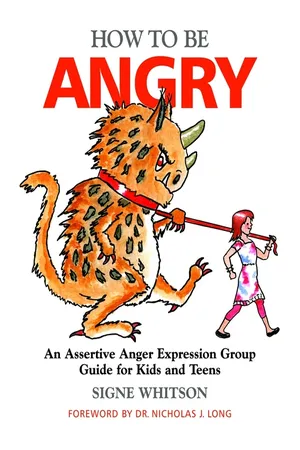
How to Be Angry
An Assertive Anger Expression Group Guide for Kids and Teens
- 216 pages
- English
- PDF
- Available on iOS & Android
About this book
Children often struggle to cope with anger, and angry feelings can boil over into aggression and destructive behaviour. This resource takes a different approach to anger, teaching children how to be angry effectively, rather than telling them not to be angry at all.
This group program provides step-by-step guidelines for building anger management and assertive emotional expression skills through tailored lessons, group activities and thought-provoking discussions. Participants will learn specific skills such as:
Ā·Using I-Statements
Ā·Standing Up to Bullies
Ā·Disagreeing without Arguing
Ā·Making and Refusing Requests
Ā·Responding to Anger
Ā·Finding WināWin Solutions
Suitable for use with children and teenagers aged 5 - 18, this engaging resource will help children to overcome self-destructive patterns of passive, aggressive, and passive aggressive behaviour. It will be of great use to educators, counselors, social workers, youth care professionals, psychologists and parents.
Frequently asked questions
- Essential is ideal for learners and professionals who enjoy exploring a wide range of subjects. Access the Essential Library with 800,000+ trusted titles and best-sellers across business, personal growth, and the humanities. Includes unlimited reading time and Standard Read Aloud voice.
- Complete: Perfect for advanced learners and researchers needing full, unrestricted access. Unlock 1.4M+ books across hundreds of subjects, including academic and specialized titles. The Complete Plan also includes advanced features like Premium Read Aloud and Research Assistant.
Please note we cannot support devices running on iOS 13 and Android 7 or earlier. Learn more about using the app.
Information
Table of contents
- How to Be Angry: An Assertive Anger Expression Group Guide for Kids and Teens
- Foreword
- Introduction
- Part I: Exploring Anger Behaviors
- Part II: Developing Assertive Anger Expression Skills
- Part III: Committing to Assertive Anger Expression
- References