Praise for the author:
'Deborah Plummer uses imagination and empowerment to move children and adults from discouragement to success.'
- The Canadian Child and Adolescent Psychiatry Review
'Deborah Plummer shows a fundamental respect for a child's integrity whilst making sure her language and ideas accessible to a wide range of people.'
- Afasic News
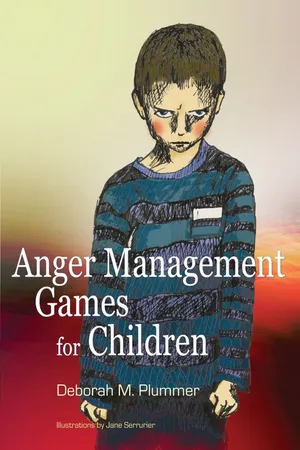
This practical handbook helps adults to understand, manage and reflect constructively on children's anger. Featuring a wealth of familiar and easy-to-learn games, it is designed to foster successful anger management strategies for children aged 5-12.
The book covers the theory behind the games in accessible language, and includes a broad range of enjoyable activities: active and passive, verbal and non-verbal, and for different sized groups. The games address issues that might arise in age-specific situations such as sharing a toy or facing peer pressure. They also encourage children to approach their emotions as a way to facilitate personal growth and healthy relationships.
This is an ideal resource for teachers, parents, carers and all those working with anger management in children.