![]()
PART 1
INTRODUCTORY NARRATIVE
Hurt, Humour and Persistence
![]()
Chapter 1
‘JOLLY WALKING’
How Social Workers Can Support Poorly Attached
Children and Their Caregivers Effectively
VICTORIA DRURY
‘I never expected The Waltons, but I feel like an extra in the
remake of The Exorcist.’ (from a very desperate parent)
Having been a children and families social worker for 14 years, I have had the privilege of walking alongside many youngsters and adoptive families, foster families and birth families who are valiantly struggling to raise traumatised and poorly attached children. Often by the time case files hit my desk the families themselves are traumatised (see Chapter 12). Many have spent years being ‘good’ parents, using skills and strategies that would work well with ‘regular’ kids, but have little effect with their children. Many have lost all sense of hope that they can ‘make it’ with their children: they are ‘on their knees’, exhausted, frustrated, angry and despairing. Many social workers themselves feel overwhelmed by the level of distress and the seeming enormity of the task in hand. The expectation of society is often that we have the answers and the solutions; we have the expectation of ourselves that we should be able to ‘fix’ this ‘breaking family’ (see also Chapter 8).
Although much of my work as a social worker is with youngsters who have experienced significant trauma from neglect and/or abuse, I sometimes find myself working with children from backgrounds where nothing initially appears amiss. They seem to be growing up in loving and supportive environments, yet their parents are distraught, with angry, disruptive, aggressive and challenging youngsters (Iwaniec and Sneddon 2001). Here I discuss some of these families. The children described are fictional characters in that they are not based on any individual child with whom I have worked; simultaneously they are very real, in that they are drawn from my years of experience working with numerous children and young people like them. I hope to introduce you to some ideas and practical techniques I have found effective when working with the ‘Jacobs’ and ‘Zoes’ on my caseload.
Poor attachment and the problems resulting from it have usually been associated with children who have been adopted or who are growing up in foster care (Bonin et al. 2014). Children who have experienced the trauma of neglect, abuse or poor parenting are also likely to be impacted by issues related to their patterns of attachment (Howe 2005). Attachment and trauma go hand in hand: early trauma affects healthy attachment and poorly formed attachments sensitise children (and adults) to trauma (Ogden et al. 2006). If youngsters experience the ‘big people’, on whom they depend to help them feel safe and make sense of the world, as unpredictable, unresponsive or scary, it is very hard for them to develop a relationship with them within which they feel safe and secure – a secure base (Bowlby 1988). However, as a social worker I have often found myself working with children and teenagers from seemingly ‘regular’ homes: where the parents worked, the children were clean and well dressed (see also Chapter 10) and where Mum and Dad were engaged and warm. In spite of this the children’s behaviour bore a startling resemblance to the traumatised, abused and neglected youngsters I worked with in foster and adoptive homes. Since there is often no obvious traumatic history, these troubled and troublesome children are frequently misunderstood and families remain inadequately supported.
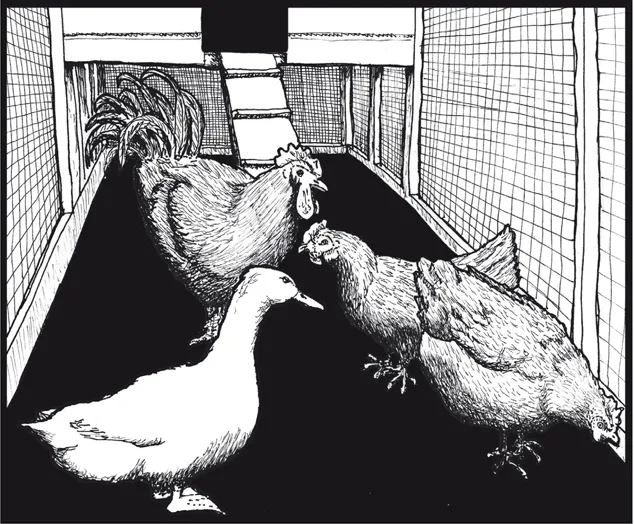
Many events and experiences can interrupt children’s ability to form secure attachments with their primary caregiver (Prior and Glaser 2006): experiences that may not be obvious and that may not be associated with the disengaged teenager refusing to go to school, constantly getting into fights, being unable to manage peer relationships and being angry and controlling. School counsellors and teachers may be baffled as to why such children have taken another overdose, are still cutting their arms, have been excluded – again. Their parents seem to be doing everything ‘right’; they have good boundaries, which are constantly pushed to the limit and walked all over. The child seems well cared for, is well cared for, yet continues on a path of apparent self-destruction. A little digging may reveal a history of severe postnatal depression, periods of multiple caregivers due to serious illness of a parent or sibling, or a series of painful ear infections. There may have been excessively high stress levels during pregnancy through an abusive, violent relationship, leading to toxic levels of the stress neuro-hormones adrenalin and cortisol (see Chapters 4 and 7) crossing the placental barrier and ‘washing’ through the unborn baby’s developing body and brain. Each of these traumatic events can contribute significantly to the infant’s ability to engage in the ‘dance of attunement’ (Golding and Hughes 2012) with their caregiver. If it looks like a duck, walks like a duck and quacks like a duck, do not assume it is a chicken because it is living in a henhouse!
THE DANCE OF ATTUNEMENT
The dance of attunement and/or attachment refers to behaviour between a caregiver and an infant where the behaviours reflect a shared emotional state without an exact imitation of behavioural expression. Stern gives the following example:
A nine-month-old girl becomes very excited about a toy and reaches for it. As she grabs it, she lets out an exuberant ‘aaah’ and looks at her mother. Her mother looks back, scrunches up her shoulder, and performs a terrific shimmy with her upper body, like a go-go dancer. The shimmy lasts only about as long as her daughters ‘aaah’ but it is equally excited, joyful and intense. (Stern 1985, p.140)
This display of affective attunement may only last a few seconds, but there are hundreds and thousands of such experiences in the first two years of mother–child attachment formation. They serve as building blocks for the strength of the relationship. The relationship, in turn, is the basis for the full development of the child.
CASE STUDIES: ZOE AND JACOB
Let me introduce Zoe: she is 14 years old (well, actually she is ‘nearly 15’ as she never tires of pointing out to me). She has hair that changes colour on an almost weekly basis and, as a result, is frequently excluded from school. She is a bright kid but she is way off her targets and will struggle to complete secondary school. Her attendance is appalling and the education welfare officer is a regular visitor at the house – although my sense is that the school is not particularly disappointed when she does not show up. Zoe has taken a couple of overdoses; she will probably be ‘successful’ in terms of suicide at some point, as her most recent one was a ‘near miss’. Her parents are distraught. They have attended a succession of parenting courses and they tell me they are attempting to put in boundaries, while high-volume expletives are directed at the tearful mum who is clearly struggling to cope. They report that Zoe’s younger brother is frightened of her, and that they themselves are frightened of her: of what she may do to them but more what she may do to herself. They have tried to reason with her, to placate her, to reward episodes of cooperative behaviour. The more distressed Mum becomes the more the situation escalates. Zoe is now howling with the injustice of having such a pathetic parent and certainly does not need any help from a social worker, or anyone else for that matter. ‘If everyone would just leave me alone I’ll be fine, obviously.’
Turning to Jacob: he is 16 years old and his mum is a teacher. Jacob is about eight stone, wringing-wet, but clearly controls the entire household, standing in the doorway with Mum and Step-Dad walking around him to avoid provoking confrontations: they have learned these can quickly escalate to broken doors and windows. Jacob’s parents want him to be taken into care, they are exhausted and defeated and feel they have ‘tried everything’ yet things just keep getting worse. When I meet Jacob and take him for coffee and cake, he is a delight of course. He chats easily and has a quick sense of humour, becoming more serious when he tells me how much he hates his step-dad who, he says, is completely unreasonable. He complains that his mum always takes his step-dad’s side, never sticking up for him. The youth worker who joins us takes up the theme, pointing out that Jacob’s parents just need to ‘loosen up a bit’ and give Jacob more freedom, ‘then everything would be fine, obviously’.
Zoe and Jacob are both highly controlling, prone to bouts of rage, often with no apparent trigger (see Chapters 2 and 7) and show little respect for other people’s belongings, space or feelings and no remorse or empathy for the evident distress of their parents or siblings. Neither accepts any responsibility for their actions either at home or school. They appear genuinely baffled as to why they were excluded for misbehaviour in class when other offenders were not; in fact their exclusion was most likely linked to verbal outbursts at their teachers when challenged over the original offences.
Talking to Zoe’s parents revealed that Zoe’s older brother was hospitalised for 18 months shortly after she was born. The family rallied round to look after Zoe during this time, so that Mum could spend the majority of her time with her critically ill three-year-old. Consequently, Zoe had too many people looking after her to be able to form strong, healthy attachments (Archer and Gordon 2013). All of her basic care needs were met; she was fed, played with, clean and cared for (see Chapter 10) but Mum was not there for her. She tells me that by the time Zoe was three years old she was already incredibly difficult, aggressive, destructive and prone to ‘tantrums’ that she never grew out of.
Jacob’s mum revealed that she had separated from his father when Jacob was a few months old as the violence and emotional abuse that started during her pregnancy were too much for her to cope with. Following Jacob’s birth she had postnatal depression that went undiagnosed. Although she ensured that Jacob was physically well cared for, she was unable to take delight in her beautiful son through her mist of fear and despair. When Jacob gazed into his mother’s face he could not make her ‘light up with wonder’ and consequently had not developed the sense that he could be delightful or was wonderful.
DEVELOPING A SECURE BASE
Conversations with parents about their children’s early histories are difficult. Often parents are already feeling that they have ‘failed’. Beginning to explore connections between their children’s emotional and behavioural development and their early experiences of being parented can trigger a further sense of blame and shame. In order to bring about change, parents need to feel optimistic about the future and confident in themselves, yet they also need to develop a realistic understanding of their children’s world. To do so they need to understand how this was created (Golding and Hughes 2012), which can pose problems on many levels.
In order to develop optimally, children need their parents to act as a ‘safe base’ from which to safely explore the world and a ‘secure haven’ to which they can return for reassurance, comfort and encouragement in times of difficulty (Archer and Gordon 2013). If parents are highly anxious, exhausted and feeling helpless it is a huge thing we ask them to do: to explore a whole different set of ideas, to change their own narratives about their children and their experiences, to adopt an entirely new way of ‘being’ alongside their children at a point where they may feel entirely unequipped to do so. Hence we need to provide parents with a ‘safe base’ from which to explore this new world, and a ‘secure haven’ to return to for support and reassurance when the going gets tougher.
‘Jolly Walking’ was a description created by my son on one of our holidays that frequently included a number of youngsters of different ages. As with any group of children, especially adolescents at different stages of emotional maturity and levels of vulnerability, we encountered a range of problems of varying degrees of seriousness. On one occasion four teenagers had been playing on the beach, running and teasing and jumping on one another, as teenage boys do. Suddenly tempers and testosterone flared and fists briefly flew. Finlay, our most vulnerable and troubled boy, ran off, leaving Scott nursing bruised face and pride. I went after Finlay and spent some 30 minutes talking him down and round before he agreed to come back to the car, clearly anxious about making the transition back into the group. My own son, the same age chronologically but years older emotionally, watching from a distance, turned to the group, rolled his eyes and said, ‘They’ll be back in a bit, and Mum will be “Jolly Walking”.’ The advantage of this intervention is that anyone can do it. There is no need to have particular qualifications, no need to be a psychologist or a therapist: it is available to many, for example youth workers, teaching assistants, social workers, parents or friends. It is completely portable and extremely cheap.
It is helpful to have an idea of what is going on in the brain at times like this, in order to understand the power of what my son dubbed ‘Jolly Walking’.
THE ‘TRIUNE’ BRAIN
The brain is structured in three distinct parts or layers. MacLean and Kral (1973) refer to this as ‘triune’ or ‘tri-brain’ theory. Each part of the brain is geared towards its own specific functions, but all three layers interact constantly with one another and with the central and autonomic nervous systems. In any threat-filled situation, specific areas of the brain react to protect us from harm. The brainstem (bottom layer) and limbic system (middle layer) respond immediately, diverting energy from the neo-cortical ‘thinking’ brain (top layer) and preparing the body for action. During this process, adrenalin and cortisol (see Chapters 4, 7 and 9) are released, increasing heart rate, blood pressure and glucose levels (facilitating ‘fight’ or ‘flight’) and temporarily shutting down other systems of the body. If neither ‘fight’ nor ‘flight’ is possible, the response of ‘last resort’ is for the whole body to shut down: the ‘freeze’ response (Porges 2001, 2003).
In babies and very young children who have experienced repeated, highly stressful and/or frightening situations, or whose ability to form safe, secure relationships with their caregivers has been compromised, for example through separation or chronic or acute unrelieved pain, the limbic system becomes hyper-reactive to external and internal somatic (bodily) and emotional feelings of threat. The limbic system develops markedly earlier than the ‘thinking’ brain (neocortex), following a ‘bottom-up’ developmental sequence (Schore 2001a, 2002; see also Chapters 4, 7 and 10). It takes several years for the ‘thinking’ brain to develop sufficiently to enable ‘top-down’ cognitive control; children’s responses therefore tend to be ‘reflexive’ rather than ‘reflective’ (Archer and Gordon 2013). When faced with scary and potentially life-threatening situations, the ‘thinking’ brain does not work well: in evolutionary terms it was just not needed when encoun...