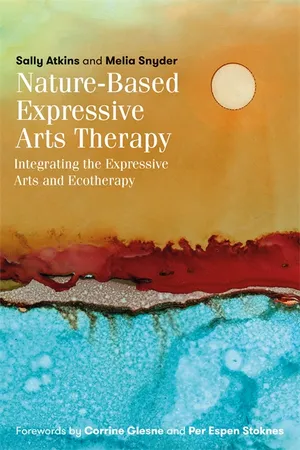
Responding to the increased interest in the integration of expressive arts and ecotherapy, this book presents a nature based approach to expressive arts work. It provides an overview of the two fields, emphasizing how they can enrich and learn from each other, and highlights attitudes and practices in expressive arts that are particularly relevant to working with nature. This includes cultivating an aesthetic response to the earth, the relationship between beauty and sustainability, and lessons about art and nature from indigenous cultures. Four suggested structures for a nature based expressive arts activity - including writing, body, and ritual centered - are provided in the appendices.
eBook - ePub
Nature-Based Expressive Arts Therapy
Integrating the Expressive Arts and Ecotherapy
- 176 pages
- English
- ePUB (mobile friendly)
- Available on iOS & Android
eBook - ePub
Nature-Based Expressive Arts Therapy
Integrating the Expressive Arts and Ecotherapy
About this book
Information
PART I
Beginning
In Part I we introduce the book and its contents. We offer a preparation for the exploration of the ideas we present in later chapters. We begin the book, as we always begin our work, with the arts, in a ritual way.
Introduction
We sit in circle silently
returning to breath, our first prayer
Inbreath, outbreath
The literal way we are connected
To air, to each other
Words become our invocation
Be still, listen
We go around, sunwise,
passing our talking stick
Te toca a ti, your turn
Casting the circle
Stitching ourselves in ritual to Earth
Weaving ourselves together
We make a sacred holding space
For work that is beautiful
And not always pretty
We claim languages older than words
The dance of the body/mind
The dance of spirit
What will we create together?
We close with silence
Joining hands to remember
Words of blessing
The candle is extinguished
The circle is open
But unbroken.
Sally Atkins and Melia Snyder
This is a book about nature, art and healing in therapeutic practice. We open this book as we open a class, a workshop or a therapy session, with breath, with poetic words and with a tuning in to ourselves and to each other with intention and presence. Within the holding space of this book we share personal and professional ideas and experiences from our research, teaching and practice.
Purpose of the book
The purpose of this book is to explore the expansion of theory and practice in the field of expressive arts therapy in order to articulate a nature-based approach to the work. In this exploration we ask the following questions: What is the role of a nature-based expressive artist/therapist in this time? How can we envision a practice of therapy that does not separate us from the natural world? How can we envision a sustainable way of living that supports individual and planetary wellbeing? The ideas discussed are relevant to many areas of professional practice. The theoretical stance expressed in this book is informed by work in the expressive arts field as it is being developed around the world and particularly by our own work at Appalachian State University in North Carolina and at the European Graduate School in Switzerland. We draw on our professional experience as well as on our personal heritage of the Southern Appalachian culture in which we live.
This is not a how-to guide. This book is intended as a theoretical grounding for both beginning and experienced professionals who use the expressive arts and nature as means of facilitating learning and promoting personal, organizational and planetary healing. Here we explore therapeutic, artistic, scientific, philosophical and cultural theories that inform our work. In keeping with our artistic perspective, we intentionally choose to refer to these theories as stories, rather than the more common academic term of theories. We choose to use poetic language as well as visual images to convey some of the stories we explore, especially when the ideas we share are difficult to convey within the traditional linear structures of our English language. We hope this book will also serve as a source of inspiration for anyone interested in working with arts and nature in the service of life. We hope to inspire reflection on the attitudes and practices that shape our work and our lives and to explore how it may be possible to live and work with awareness of our intimate relationship with the living Earth.
Academic disciplines speak in different voices within different language domains. Each discipline has its own methods for exploring the questions deemed most important to consider. The discursive landscape of expressive arts involves transdisciplinary and cross-cultural integration, weaving the threads of differing views into its own language domain. In this book we also include ideas from other disciplines and cultures. However, we attempt to speak in a clear and straightforward way in order to be accessible to an international readership of professionals, students and general readers. For clarification we define our use of the following terms.
Nature
Poet and essayist Gary Snyder (1990) elaborates various meanings of the word nature. It comes from the Latin natura meaning character, course of things and to be born. One meaning is the essence or character of something, as in the nature of a person or thing. A second commonly used meaning is the outdoors, wild nature or wilderness, the world apart from the interventions of humans. The other broader meaning of nature is the creative power operating in the world and all of the phenomena of the world including products of human action. From this perspective nature is everything, thus reframing the bifurcation of nature as opposed to culture. In this book we use the word nature primarily in its broad meaning. However, we also use it at times to mean wild nature, as in instances in which we talk about the natural objects and materials not made by humans. By nature-based expressive arts we mean the practice of expressive arts with awareness of individual creative process as a part of the creative process of the world.
Expressive
The word expressive in expressive arts therapy is somewhat misleading. It privileges one aspect of the creative arts, that of giving external form to ideas, emotions and experiences of the inner world of the individual. Expressive arts work values both expressive and receptive forms of arts experiences. Listening to music, watching artistic performances and observing visual arts are also potential sources of healing. A more accurate term for the field might be integrative or interdisciplinary arts therapy, signifying the interweaving of the arts together, or transformative arts, signifying the possibilities for work in the arts to generate personal and societal change. The term creative arts therapies is normally used to refer collectively to the singular modality-oriented arts therapies of music therapy, dance therapy, drama therapy, poetry therapy and visual art therapy.
Arts
In this book, when we speak of the arts we include all forms of creative activity. This includes the fine arts of music, dance, drama and poetry as well as the arts of cooking, gardening, childrearing and all of the crafts. This meaning of the arts is a reclaiming of ancient traditions in which all people sang and danced, beat drums, created visual images and participated in ceremonies to celebrate and to mourn the passages of life, to express the intangible and to remind themselves of their relationship to the natural world and to each other.
Therapy
The word therapy may suggest a somewhat narrow view of the scope of the book. We define therapy broadly to include any and all of the caring professions that we practice, including counseling, consulting, psychotherapy, education and supervision. For us therapy is not about pathology, about diagnosing and fixing what is broken. In our view therapy is salutogenic, focusing on health by cultivating and nurturing the innate creative and imaginative processes within each person. As one client put it, traditional psychotherapy looks at what is wrong and tries to fix it while expressive arts therapy looks for the treasure (Atkins and Williams 2007). Artist, poet and philosopher Mary Caroline Richards (1973) tells us that the word therapy comes from the same root as throne, and in its deepest sense means to care for and support. Thus therapy is the art of holding one another and holding space for sacred work.
Earth
In this book we are sensitive to the need for language that breathes life back into our human experience within the Earth. We use the word earth to mean the element of soil. We use Earth to mean the planet Earth, our home.
Soul
James Hillman (1996, 1999) reminds us that psychology literally means the study of the soul, from psyche, Greek, meaning mind or soul. The word soul appears frequently in this book, as it does in many writings in the fields of expressive arts and ecotherapy, and it carries many different connotations. We claim no precise reductive definition for this word. We choose to follow the writings of Hillman, who speaks of the imaginative possibilities of a being, an active intelligence shaping the story of one’s life, associated with character, calling and integrity, not a substance, but a perspective (1996). We also use the words sacred and holy to refer to matters of soul.
Stories: The rootlets of our work
Humans have always turned to stories in order understand the meaning of our lives. In her novel Ceremony, Leslie Marmon Silko speaks of the potency of language and the importance of storytelling: “I will tell you something about stories… They aren’t just entertainment… They are all we have… You don’t have anything if you don’t have the stories.” (Silko 1977, p.2). Throughout human history, story, myth and metaphor have shaped the way humans view the world and offered guidance about the big questions of life: Who am I? What is the meaning of life? How are we to live in relationship to each other, to the world and to whatever we believe is bigger than we are? We need the stories of empirical science, sensory experience, myth and imagination to meet personal challenges and the challenges of the world.
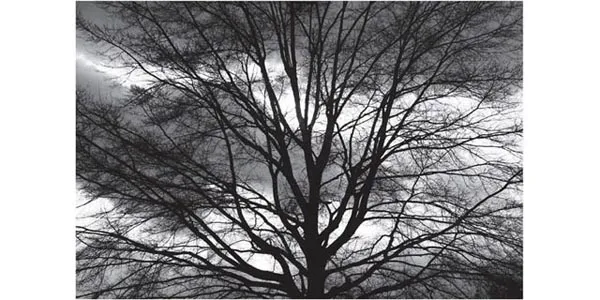
As we began work on this book, we realized we wanted to tell stories not only from expressive arts and ecotherapy, but also from different disciplines and cultures that undergird these fields. A nature-based approach to expressive arts includes stories from ecotherapy and also from the historical and cultural contexts of the arts, from contemporary ecological sciences, from ecological philosophies and from the wisdom of indigenous cultures. We first thought of these stories as foundational roots of our thinking. We imagined a tree with roots and a trunk and branches. Then we were captured by the image of a grove of aspen trees. Aspen trees are strikingly beautiful as they grace the Rocky Mountain areas of the western United States and Canada, and they are unique in several ways. Most notably, groves of aspen trees are actually communities. What appears above the surface of the ground as separate trees is actually part of a large lateral branching root system that sends out interwoven rootlets and shoots that grow into future trees. This living community of the aspen grove is highly communicative, sharing water and nutrients and responding to the differing environments it inhabits. This metaphor is appropriate for a nature-based approach to expressive arts.
Theories, or in our case stories, provide webs of interwoven connective tissue to order and relate ideas. Our stories also fit appropriately into the related philosophical metaphor of rhizomatic relationships, multiple, intertwining and interpenetrating ideas. Rhizomes are root-like horizontal underground stem systems that can produce shoots and root systems of new plants. The concept of rhizomatic relationship is widely used in a/r/tographic inquiry, an arts-based research theory and methodology in which the researcher acknowledges and utilizes the multiple perspectives of artist, researcher and teacher (Irwin and deCosson 2004; Springgay et al. 2008) to inform the research. Rhizomatic relationship is a philosophical concept (Deleuze and Guattari 1987) describing knowledge as always in the middle of ongoing connections of ideas that are multiple and no...
Table of contents
- Cover
- Title Page
- Contents
- Foreword
- Foreword
- Preface
- Part I: Beginning
- Part II: Moving In
- Part III: Insearch
- Part IV: Finding Voice
- Part V: Bringing Art into Life
- References
- Index
- Join Our Mailing List
- Acknowledgments
- Copyright
- Of Related Interest
Trusted by 375,005 students
Access to over 1.5 million titles for a fair monthly price.
Study more efficiently using our study tools.
Frequently asked questions
Yes, you can cancel anytime from the Subscription tab in your account settings on the Perlego website. Your subscription will stay active until the end of your current billing period. Learn how to cancel your subscription
No, books cannot be downloaded as external files, such as PDFs, for use outside of Perlego. However, you can download books within the Perlego app for offline reading on mobile or tablet. Learn how to download books offline
Perlego offers two plans: Essential and Complete
- Essential is ideal for learners and professionals who enjoy exploring a wide range of subjects. Access the Essential Library with 800,000+ trusted titles and best-sellers across business, personal growth, and the humanities. Includes unlimited reading time and Standard Read Aloud voice.
- Complete: Perfect for advanced learners and researchers needing full, unrestricted access. Unlock 1.5M+ books across hundreds of subjects, including academic and specialized titles. The Complete Plan also includes advanced features like Premium Read Aloud and Research Assistant.
We are an online textbook subscription service, where you can get access to an entire online library for less than the price of a single book per month. With over 1.5 million books across 990+ topics, we’ve got you covered! Learn about our mission
Look out for the read-aloud symbol on your next book to see if you can listen to it. The read-aloud tool reads text aloud for you, highlighting the text as it is being read. You can pause it, speed it up and slow it down. Learn more about Read Aloud
Yes! You can use the Perlego app on both iOS and Android devices to read anytime, anywhere — even offline. Perfect for commutes or when you’re on the go.
Please note we cannot support devices running on iOS 13 and Android 7 or earlier. Learn more about using the app
Please note we cannot support devices running on iOS 13 and Android 7 or earlier. Learn more about using the app
Yes, you can access Nature-Based Expressive Arts Therapy by Sally Atkins, Melia Snyder in PDF and/or ePUB format, as well as other popular books in Psychology & Psychotherapy Counselling. We have over 1.5 million books available in our catalogue for you to explore.