- 254 pages
- English
- ePUB (mobile friendly)
- Available on iOS & Android
eBook - ePub
Women and War Work (WWI Centenary Series)
About this book
This early work by Helen Fraser was originally published in 1918 and we are now republishing it as part of our WWI Centenary Series. 'Women and War Work' contains Fraser's thoughts on the methods of organising and utilising the skills of women in the workforce to improve productivity. In 1917, Fraser conducted a lecture tour of America during which she spoke 332 times in 312 days on the subject of Britain's war effort. This book is part of the World War One Centenary series; creating, collating and reprinting new and old works of poetry, fiction, autobiography and analysis. The series forms a commemorative tribute to mark the passing of one of the world's bloodiest wars, offering new perspectives on this tragic yet fascinating period of human history. Each publication also includes brand new introductory essays and a timeline to help the reader place the work in its historical context.
Information
Topic
HistoriaSubtopic
Historia del siglo XXCHAPTER I
THE SPIRIT OF WOMEN
TO WOMEN
Your hearts are lifted up, your hearts
That have foreknown the utter price,
Your hearts burn upward like a flame
Of splendour and of sacrifice.
For you too, to battle go,
Not with the marching drums and cheers,
But in the watch of solitude
And through the boundless night of fears.
And not a shot comes blind with death,
And not a stab of steel is pressed
Home, but invisibly it tore,
And entered first a woman’s breast.
That have foreknown the utter price,
Your hearts burn upward like a flame
Of splendour and of sacrifice.
For you too, to battle go,
Not with the marching drums and cheers,
But in the watch of solitude
And through the boundless night of fears.
And not a shot comes blind with death,
And not a stab of steel is pressed
Home, but invisibly it tore,
And entered first a woman’s breast.
From LAWRENCE BINYON’s “For the Fallen.”
The spirit of women in this greatest of world struggles cannot, in its essence, be differentiated from the spirit of men. They are one. The women of our countries in the mass feel about the issues of this struggle just as the men do; know, as they do, why we fight, and like them, are going on to the end. The declarations of our Government as to conditions for peace are ours, too, and when we vote, we shall show the spirit of women is clearly and definitely on the side of freedom, justice and democracy.
Our actions speak louder than any words can ever do, and the record of our women’s sacrifices and work stand as great silent witnesses to our spirit. There is nothing we have been asked to do that we have not done and we have initiated great pieces of work ourselves. The hardest time was in the beginning when we waited for our tasks, feeling as if we beat stone walls, reading our casualty lists, receiving our wounded, caring for the refugees, doing everything we could for the sailor and soldier and his dependants, helping the women out of work, but feeling there was so much more to do behind the men—so very much more—for which we had to wait. We did all the other things faithfully and, so far as we could, prepared ourselves and when the tasks came, we volunteered in tens of thousands, every kind of woman, young, old, middle-aged, rich and poor, trained and untrained, and today we have 1,250,000 women in industry directly replacing men, 1,000,000 in munitions, 83,000 additional women in Government Departments, 258,300 whole and part-time women workers on the land. We are recruiting women for the Women’s Army Auxiliary Corps at the rate of 10,000 a month and we have initiated a Women’s Royal Naval Service. We have had the help of about 60,000 V.A.D.’s (Voluntary Aid Detachment of Red Cross) in Hospitals in England and France, and on our other fronts, in addition to our thousands of trained nurses.
The women in our homes carry on—no easy task in these days of shortages in food and coal and all the other difficulties, saving, conserving, working, caring for the children, with so many babies whose fathers have never seen them, though they are one to two years old, and so many babies who will never see their fathers.
Some of our women have died on active service, doctors, nurses and orderlies. Our most recent and greatest loss is in the death of Dr. Elsie Inglis, the initiator of the Scottish Women’s Hospitals, who died on November 26th, three days after she had safely brought back her Unit from South Russia, which had been nursing the Serbians attached to the Russian army.
One who was with her at the end writes, “It was a great triumphant going forth.” There was no hesitation, no fear. As soon as she knew she was going, that the call had come, with her wonted decision of character, she just readjusted her whole outlook. “For a long time I meant to live,” she said, “but now I know I am going. It is so nice to think of beginning a new job over there! But I would have liked to have finished one or two jobs here first!”
She told us the story of the breaking of their moorings as they lay in the river in a great storm of wind and of how that breaking had saved them from colliding with another ship. “I asked,” she said, “what had happened.” Someone said “Our moorings broke.” I said, “No, a hand cut them!” Then, after a moment’s silence, with an expression in face and voice which it is utterly impossible to convey, she added, “That same Hand is cutting my moorings now, and I am going forth!” The picture rose before you of an unfettered ship going out to the wide sea and of the great untrammelled, unhindered soul moving majestically onwards.
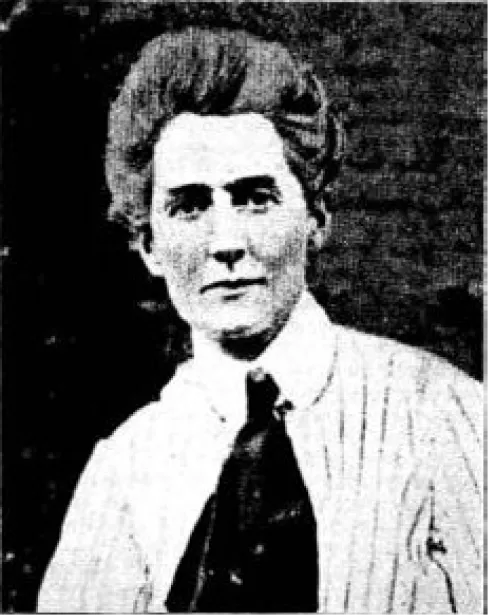
MISS EDITH CAVELL
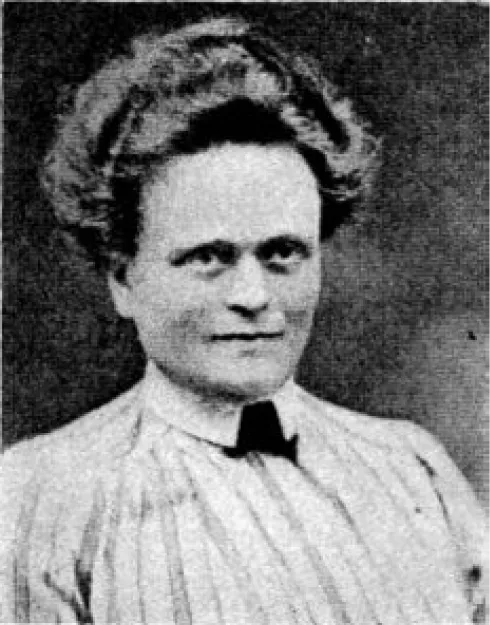
DR. ELSIE INGLIS
There was no fear, no death! How could there be. She never thought of her own work—she knew unity. “You did magnificently,” was said to her within an hour of her going. With all her wonted assurance and with a touch of pride she answered, “My Unit did magnificently.”
Her loss is irreparable to us, but there is no room for sorrow. She leaves us triumph, victory, and peace.
Edith Cavell’s name is another that shines upon our roll of honour—the same serene great spirit—no thought of self, but only a great love and desire to serve—and a great fearlessness. Her message, before she went out alone at dawn to her death, which added another stain to the enemy’s pages dark with blood, was the message of one who saw the eternal verities, the things worth living and dying for.

Our men’s Roll of Honor is a heavy Roll. We have lost in killed and permanently out of the army, a million men and over 75 per cent of our casualties are our own Island losses. Our women in every village and in every city street have lost husbands, fathers, brothers, lovers and friends. From every rank of life our men have died, the agricultural labourer, the city clerk, the railway man, the miner, the engineer, the business man, the poet, the journalist, the author, the artist, the scientist, the heirs of great names, many of the most brilliant of our young men. We comb out our mines and shipyards, and factories, ceaselessly for more men. Our boys at eighteen go into the army. From eighteen to forty-one every man is liable for service. Our Universities have only a handful of men in them and these are the disabled, the unfit, and men from other countries. Oxford and Cambridge Colleges are full of Officers’ Training Corps men. The Examination Schools and the Town Hall at Oxford are Hospitals, and Oxford and Cambridge streets are full of the blue-clad wounded, as are so many of our cities. We are a nation at war, and at war for over three years and everywhere and in everything we are changed.
In these years we women have lived always with the shadow of the war over us—it never leaves us, night or day. We do not live completely where we are in these days. A bit of us is always with our men on our many fields of war. We live partly in France and Flanders, in Italy, in the Balkans, in Egypt and Palestine and Mesopotamia, in Africa, with the lonely white crosses in Gallipoli, with our men who guard us sleeping and waking, going down to the sea in ships and under the sea, fighting death in submarines and mines, and with those who in the air are the eyes and the winged cavalry of our forces.
We mourn our dead, not sadly and hopelessly, though life for many of us is emptier forever, and for many so much harder, and we wear very little mourning. We mourn silently, and with a sure faith that our men’s supreme sacrifice is not in vain. “Greater love hath no man than this, that he lay down his life for his friend.” The little white crosses of our graves symbolize the faith for which they die.
The message of our soldier poets who have been created by this war and have written immortal verse, and many of whom have died, is the message of men who have seen through the veils of time into eternity, who are free of life and death, whom nothing can hurt, “if it be not the Destined Will.”
The veils of time grow thin in these days to those of us who take Death into our reckoning all the time. We think of our men gone on ahead as eternally young.
“Solemn the drums thrill; Death august and royal
Sings sorrow up into immortal spheres.
...Table of contents
- WOMEN AND WAR WORK
- Introduction to the World War One Centenary Series
- A Timeline of the Major Events of World War One in Europe
- The Home Front
- FOREWORD
- THE SPIRIT OF WOMEN
- CHAPTER I
- CHAPTER II
- CHAPTER III
- CHAPTER IV
- CHAPTER V
- CHAPTER VI
- CHAPTER VII
- CHAPTER VIII
- CHAPTER IX
- CHAPTER X
- CHAPTER XI
- CHAPTER XII
- CHAPTER XIII
- CHAPTER XIV
Trusted by 375,005 students
Access to over 1.5 million titles for a fair monthly price.
Study more efficiently using our study tools.
Frequently asked questions
Yes, you can cancel anytime from the Subscription tab in your account settings on the Perlego website. Your subscription will stay active until the end of your current billing period. Learn how to cancel your subscription
No, books cannot be downloaded as external files, such as PDFs, for use outside of Perlego. However, you can download books within the Perlego app for offline reading on mobile or tablet. Learn how to download books offline
Perlego offers two plans: Essential and Complete
- Essential is ideal for learners and professionals who enjoy exploring a wide range of subjects. Access the Essential Library with 800,000+ trusted titles and best-sellers across business, personal growth, and the humanities. Includes unlimited reading time and Standard Read Aloud voice.
- Complete: Perfect for advanced learners and researchers needing full, unrestricted access. Unlock 1.5M+ books across hundreds of subjects, including academic and specialized titles. The Complete Plan also includes advanced features like Premium Read Aloud and Research Assistant.
We are an online textbook subscription service, where you can get access to an entire online library for less than the price of a single book per month. With over 1.5 million books across 990+ topics, we’ve got you covered! Learn about our mission
Look out for the read-aloud symbol on your next book to see if you can listen to it. The read-aloud tool reads text aloud for you, highlighting the text as it is being read. You can pause it, speed it up and slow it down. Learn more about Read Aloud
Yes! You can use the Perlego app on both iOS and Android devices to read anytime, anywhere — even offline. Perfect for commutes or when you’re on the go.
Please note we cannot support devices running on iOS 13 and Android 7 or earlier. Learn more about using the app
Please note we cannot support devices running on iOS 13 and Android 7 or earlier. Learn more about using the app
Yes, you can access Women and War Work (WWI Centenary Series) by Helen Fraser in PDF and/or ePUB format, as well as other popular books in Historia & Historia del siglo XX. We have over 1.5 million books available in our catalogue for you to explore.