![]()
CHAPTER 1
International Project Management
1.1 Definition of International Project Management
Globalization has brought us a more integrated and interdependent world economy and therefore is creating an increasing number of international projects, that is, projects that reach beyond national boundaries regarding either the project purpose or the nationality of the stakeholders. However, surveys show only a 40 percent success rate of international effort.
One would think that standard project management methods can be applied within those projects as it is quite successful on a national scale. But international projects bring many different issues that are not covered by standard methods. One of the most difficult challenges, companies have to undergo is cultural differences. People do not have the same perception of power, happiness, time line, or team works and it can have a huge impact on the success of a project. To help the manager identify those differences, a list of questions have been developed within the Hofstede 6-D method which manages to give a broad idea of the challenges cultural differences could bring. Furthermost, to identify and mitigate all the new issues created by international projects, international project management requires unique methods, tools, and techniques.
International project management emphasizes the main differences between international projects and standard projects. A method to identify all the challenges that ensues from international projects will be developed as, depending of the project, you can have quite different issues. Finally, the key success factors in international project management will be exposed.
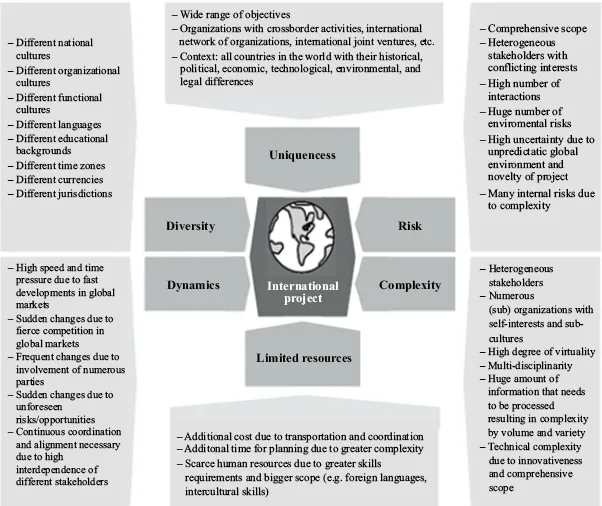
Figure 1.1. Characteristic of international projects (Koster 2010).
1.2 Understanding the Issues Standards in International and Globalization Environment
Globalization is the tendency of firms to extend their sales or manufacturing to new markets abroad. For businesses everywhere, the rate of globalization in the past few years has been nothing short of phenomenal. Globalization of markets and manufacturing is important, in part because it has vastly increased international competition.
Throughout the world, firms that formerly competed only with local firms—from airlines to car makers to banks-have discovered they must now face an onslaught of new foreign competitors. Porous international boundaries and trans-border flows of capital have precipitated a relentless proliferation of multicultural projects (Ghoshal 1987). Globalization has impacted project management profoundly, and has only reinforced the trend toward adoption of the project mode of work organization. Globalization in project management means among other matters more projects executed in the multi-cultural environment. East-West culture mix is an example of such a situation, requiring from the stakeholders quite a different approach. The spectacular globalization of firms in the course of the past decade has been a key challenge for practitioners and researchers alike (Bhide 2000). Strategy researchers have attempted to pin down the various alternatives for firms to gain competitive advantages in international markets (Ghoshal 1987). They have also considered the challenge of managing across borders and implementing a global strategic management process. Forming multicultural teams has been one of the organizational responses taken by multinational corporations (MNCs) (Bartlett and Ghoshal 1989, 1992).
1.3 Sustainability and the Issue Standards in International and Globalization Environment
The United Nations Global Compact (www.Unglobalcompact.org) asks companies to embrace, support, and enact, within their sphere of influence, a set of core values in the areas of human rights, labor standards, the environment, and anti-corruption. More than 5,000 global companies in 130 countries take part in the initiative, which is made up of 10 principles:
- Human Rights
1. Business should support and respect the protection of internationally proclaimed human rights; and
2. Make sure that they are not complicit in human rights abuses.
2. Labor
1. Business should uphold the freedom of association and the effective recognition of the right to collective bargaining;
2. The elimination of all forms of forced and compulsory labor;
3. The effective abolition of child labor; and
4. The elimination of discrimination in respect of employment and occupation.
3. Environment
1. Business should support a precautionary approach to environmental challenges;
2. Undertake initiatives to promote greater environmental responsibility; and
3. Encourage the development and diffusion of environmentally friendly technologies.
4. Anti-corruption
Business should work against corruption in all its forms, including extortion and bribery.
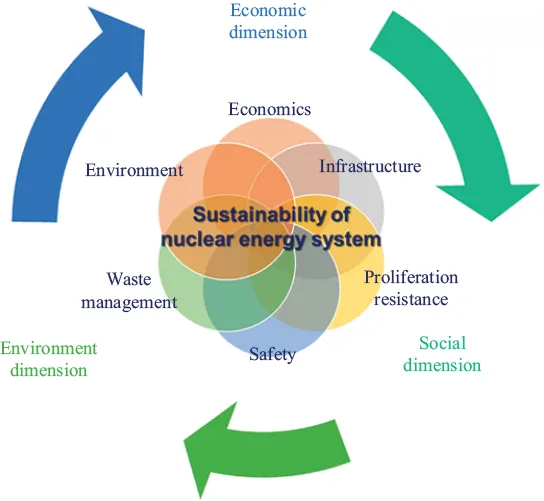
Figure 1.2. Sustainable performance and waste management.
CSR is, at this point, a self-regulated business policy that commits the organization to follows laws and international standards of ethics and norms. Normally it is concerned with stakeholders (profitability), society (social consciousness), employees (equal opportunity), and the environment. TBL, like CSR, commits the organization to focus on stakeholders, the environment, and society. Organizations that strive to meet a TBL or CSR goal recognize a responsibility to make money, to protect the environment, and to be good citizens. At RMIT University in Melbourne, Australia, the need for corporate governance, the care and nurturing of the workforce and transparency, was added to produce the TBL+1. Some organizations have adopted sustainability or CSR guidelines, but, unfortunately, many have not. On international projects, it has been our experience that there is a mixture of organizational policies, attitudes, and values on this subject. The international project manager of each organization that participates is responsible for knowing the standards that apply for her or his organization. The challenge then is fo...