The classic Hatha yoga manual for a strong, vital, beautiful body and a balanced, harmonious, happy mind
• Includes instructions for many advanced Hatha yoga exercises to build strength, stamina, and good posture, the necessary basis for spiritual development
• Provides detailed exercise plans to help you develop your personal weekly practice
• Explains traditional yogic methods of fasting and internal cleansing, practices to strengthen the endocrine system, methods for advanced sexual control, breath control practices, and concentration exercises to improve mind power
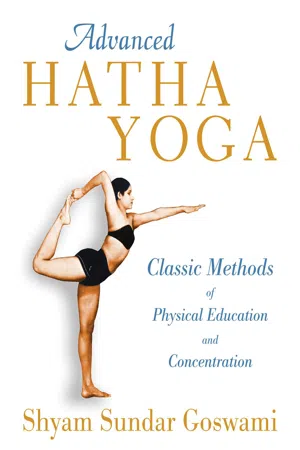
Based upon ancient Sanskrit works on yoga as well as thousands of years of oral teachings, this Hatha yoga classic moves beyond the introductory level of yoga and provides illustrated instructions for many advanced asanas and other yogic techniques to build strength, stamina, and good posture--a necessary prerequisite for spiritual development.
Offering detailed exercise plans to help you develop your personal weekly yoga practice as well as techniques to target specific areas of the body, such as the abdominal muscles, this book also contains detailed instructions on many forms of prânâyâma (breath control), including alternate nostril breathing, kapâlabhâti, and sahita, as well as meditative methods for developing your powers of concentration and mental discipline. With instructions on diet, fasting, internal cleansing, advanced sexual control, and strengthening the endocrine system, Sri S. S. Goswami’s classic text presents the complete picture of an advanced Hatha yoga lifestyle for a strong, vital, beautiful body and a balanced, harmonious, happy mind.
eBook - ePub
Advanced Hatha Yoga
Classic Methods of Physical Education and Concentration
- 304 pages
- English
- ePUB (mobile friendly)
- Available on iOS & Android
eBook - ePub
About this book
Information
Table of contents
- Cover Image
- Title Page
- Dedication
- Acknowledgments
- Table of Contents
- Foreword to the Third Edition by Basile P. Catoméris
- Foreword by Elis Berven
- Preface
- Introduction
- Part One: Yoga Exercise and Associated Factors
- Part Two: Technical Aspects of Yoga Exercise
- Part Three: Exercise Plans
- Glossary
- Footnote
- Yoga Demonstrations
- Note on the Pronunciation of Transliterated Sanskrit Words
- Bibliography
- About the Author
- About Inner Traditions • Bear & Company
- Books of Related Interest
- Copyright & Permissions
Trusted by 375,005 students
Access to over 1.5 million titles for a fair monthly price.
Study more efficiently using our study tools.
Frequently asked questions
Yes, you can cancel anytime from the Subscription tab in your account settings on the Perlego website. Your subscription will stay active until the end of your current billing period. Learn how to cancel your subscription
No, books cannot be downloaded as external files, such as PDFs, for use outside of Perlego. However, you can download books within the Perlego app for offline reading on mobile or tablet. Learn how to download books offline
Perlego offers two plans: Essential and Complete
- Essential is ideal for learners and professionals who enjoy exploring a wide range of subjects. Access the Essential Library with 800,000+ trusted titles and best-sellers across business, personal growth, and the humanities. Includes unlimited reading time and Standard Read Aloud voice.
- Complete: Perfect for advanced learners and researchers needing full, unrestricted access. Unlock 1.5M+ books across hundreds of subjects, including academic and specialized titles. The Complete Plan also includes advanced features like Premium Read Aloud and Research Assistant.
We are an online textbook subscription service, where you can get access to an entire online library for less than the price of a single book per month. With over 1.5 million books across 990+ topics, we’ve got you covered! Learn about our mission
Look out for the read-aloud symbol on your next book to see if you can listen to it. The read-aloud tool reads text aloud for you, highlighting the text as it is being read. You can pause it, speed it up and slow it down. Learn more about Read Aloud
Yes! You can use the Perlego app on both iOS and Android devices to read anytime, anywhere — even offline. Perfect for commutes or when you’re on the go.
Please note we cannot support devices running on iOS 13 and Android 7 or earlier. Learn more about using the app
Please note we cannot support devices running on iOS 13 and Android 7 or earlier. Learn more about using the app
Yes, you can access Advanced Hatha Yoga by Shyam Sundar Goswami in PDF and/or ePUB format, as well as other popular books in Sciences biologiques & Sciences du sport et de l'exercice. We have over 1.5 million books available in our catalogue for you to explore.