Narrative Medicine
eBook - ePub

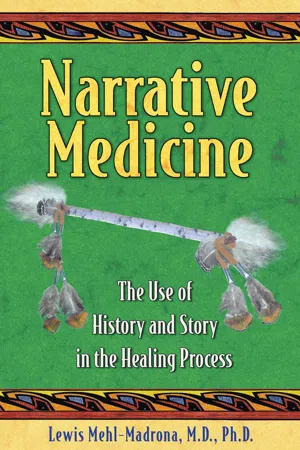
Narrative Medicine

The Use of History and Story in the Healing Process

  1. 336 pages
  2. English
  3. ePUB (mobile friendly)
  4. Available on iOS & Android
eBook - ePub

Narrative Medicine

The Use of History and Story in the Healing Process

About this book

Seeks to restore the pivotal role of the patient's own story in the healing process • Shows how conventional medicine tends to ignore the account of the patient • Presents case histories where disease is addressed and healed through the narrative process • Proposes a reinvention of medicine to include the indigenous healing methods that for thousands of years have drawn their effectiveness from telling and listening Modern medicine, with its high-tech and managed-care approach, has eliminated much of what constitutes the art of healing: those elements of doctoring that go beyond the medications prescribed. The typically brief office visit leaves little time for doctors to listen to their patients, though it is in these narratives that disease is both revealed and perpetuated--and can be released and treated. Lewis Mehl-Madrona's Narrative Medicine examines the foundations of the indigenous use of story as a healing modality. Citing numerous case histories that demonstrate the profound power of narrative in healing, the author shows how when we learn to dialogue with disease, we come to understand the power of the "story" we tell about our illness and our possibilities for better health. He shows how this approach also includes examining our relationships to our extended community to find any underlying disharmony that may need healing. Mehl-Madrona points the way to a new model of medicine--a health care system that draws its effectiveness from listening to the healing wisdom of the past and also to the present-day voices of its patients.
Frequently asked questions

Yes, you can cancel anytime from the Subscription tab in your account settings on the Perlego website. Your subscription will stay active until the end of your current billing period. Learn how to cancel your subscription.
No, books cannot be downloaded as external files, such as PDFs, for use outside of Perlego. However, you can download books within the Perlego app for offline reading on mobile or tablet. Learn more here.
Perlego offers two plans: Essential and Complete
  • Essential is ideal for learners and professionals who enjoy exploring a wide range of subjects. Access the Essential Library with 800,000+ trusted titles and best-sellers across business, personal growth, and the humanities. Includes unlimited reading time and Standard Read Aloud voice.
  • Complete: Perfect for advanced learners and researchers needing full, unrestricted access. Unlock 1.4M+ books across hundreds of subjects, including academic and specialized titles. The Complete Plan also includes advanced features like Premium Read Aloud and Research Assistant.
Both plans are available with monthly, semester, or annual billing cycles.
We are an online textbook subscription service, where you can get access to an entire online library for less than the price of a single book per month. With over 1 million books across 1000+ topics, we’ve got you covered! Learn more here.
Look out for the read-aloud symbol on your next book to see if you can listen to it. The read-aloud tool reads text aloud for you, highlighting the text as it is being read. You can pause it, speed it up and slow it down. Learn more here.
Yes! You can use the Perlego app on both iOS or Android devices to read anytime, anywhere — even offline. Perfect for commutes or when you’re on the go.
Please note we cannot support devices running on iOS 13 and Android 7 or earlier. Learn more about using the app.
Yes, you can access Narrative Medicine by Lewis Mehl-Madrona in PDF and/or ePUB format, as well as other popular books in Medicine & Alternative & Complementary Medicine. We have over one million books available in our catalogue for you to explore.
1
The Roots of Narrative Medicine
image
The Universe is vast. Nothing is more curious than the self-satisfied dogmatism with which mankind at each period of its history cherishes the delusion of the finality of its existing modes of knowledge. Skeptics and believers are all alike. At this moment, scientists and skeptics are the leading dogmatists. Advance in detail is admitted: fundamental novelty is barred. This dogmatic common sense is the death of philosophical adventure. The Universe is vast.
ALFRED NORTH WHITEHEAD1
The concept of narrative medicine offers a paradigm or perspective from which we can contemplate contemporary medicine and psychology. The narrative perspective offers a position outside of medicine from which medicine can be viewed and discussed. Though contemporary medicine engages in self-criticism, it rarely steps outside of itself to address the assumptions (stories) that define it. A narrative perspective allows us to identify these stories and to engage people outside of the field of medicine in discussing their desirability.
A storied approach to health and healing argues that our stories (or our series of interpretations about the world) are only as good as they are practical, and that it is impossible to determine their absolute “truth.” Rather than argue truth, we settle for learning which stories are best for particular situations, people, times, and places. Contemporary biomedicine becomes just one of many stories about health and disease. A common indigenous story, for example, is that disease is a side effect of disharmony and imbalance. Imagine a healer from that tradition trying to talk to a medical practitioner who sees disease only in anatomical terms. The healer’s discussion of sources of disharmony in a person’s family and spiritual life seems irrelevant to the physician trying to categorize the type of tissue damage in an organ. Progress is being made, however, in recognizing that these stories also have validity.
A storied approach to health and healing situates itself well within the developing field of indigenous knowledge. Aboriginal groups throughout the world recognize that wisdom is contained in stories. Traditional elders answer questions by telling stories. It is up to the listener to determine what they mean.
Indigenous knowledge systems usually recognize that we humans are integrated upon the Earth, and that we already share land, food, and air. Social justice emerges when we consider the importance of maintaining diversity and autonomy for the world’s people. Awareness of difference can be a reason for celebration and learning, or it can provoke a response in which the “other” is eliminated. A contemporary example is provided by the hatred and stereotyping of Turks and Kurds along the Turkish-Iraqi border. From our perspective in North America, those differences that seem so enormous to them seem trivial to us.
The history of colonization has been about elimination through death and assimilation, apropos to the ongoing Turkish debate about whether to use their military against the Kurds. Indigenous people throughout the world are challenging the point of view that leads to conquest and colonization as they assert the primacy of their own pre-contact stories. A narrative approach to medicine allows their stories (traditional Chinese medicine, ayurvedic medicine, North American Native healing, Mayan healing, African healing, and more) to coexist with the stories produced by the dominant, mostly white culture that relies largely on pharmaceuticals. We discover that the conversation is more interesting when everyone is given a seat around the table.
Despite its claims of superiority, conventional medicine itself is the third leading cause of accidental death in the United States.2 Similar to the stance taken by Galen in the first century BCE, medicine says that “what it cures, it cures, and what it cannot cure, cannot be cured.” The examples of pharmaceutical companies withholding information on the dangers of drugs like Vioxx (which increases the risk of heart attacks and strokes3) shows that medicine’s story (so closely linked to that of the pharmaceutical companies) is not always altruistic. Even as I completed this book, new scandals were emerging about the drug Paxil.4
The multibillion-dollar U.S. complementary and alternative medicine industry competes with conventional medicine to fill its gaps, but does it succeed? The many available alternative therapies are confusing to sort out. New fields and experts rise and fall yearly. Today’s popular cure for autism, for example, is forgotten next year.5 How is a person to decide what to do? Even holistic medicine*3 case conferences often present the same bland collection of recommendations for everyone—eat more fruits and vegetables, take some vitamins (but not too many), get reiki, have hypnosis, try acupuncture, take some herbs. Is this enough? In any city in America, we can emerge from a holistic doctor’s office with a shopping bag full of supplements and other products, but does this make us healthier? Does it work?
My criticism of alternative and holistic medicine resembles my thoughts about conventional medicine—that it constructs experts who are supposed to know more about the person and her condition than she does, that it purports to fix people from a position outside of them, that it fails to respect and elicit people’s local knowledge about how to heal themselves. In short, holistic medicine can also take away people’s sense of power and agency, just as conventional medicine does, but with theoretically more natural substances. This is not a real change, just an improvement by substitution that also does not work all the time.
A plethora of mysterious illnesses, including fibromyalgia, chronic fatigue syndrome, and Lyme disease, defies medicine’s ability to diagnose and treat. Illnesses related to lifestyle—diabetes, heart disease, chronic obstructive lung disease—are becoming the major causes of death. Conventional medicine has a dismal record at helping people change lifestyle. Less than 10 percent of people, for example, make lifestyle changes after a heart attack,6 despite Dean Ornish’s having shown that these changes can prevent the next heart attack and actually reverse atherosclerosis, the inflammatory process within arteries that leads to heart attacks.7 Drugs or procedures do not change lifestyle. I frequently point out to doctors in training that psychiatric drugs do not cure poverty, homelessness, isolation, or loneliness. They merely take the edge off the pain caused by these conditions. So what do we do with these limitations of conventional and holistic medicine?
To begin exploring this question, I want to tell a story told to me by Norman, a Haida physician from British Columbia. This story has a “phoenix rising” quality. It inspired me to think that we can rise above our circumstances regardless of our origins, and, through diligence, persistence, and courage, overcome all odds to reach our goal. It struck me that narrative medicine is emerging this way too. We are struggling against the binds and fetters of conventional medicine to bring a different perspective to health care, one that is more sustainable and nurturing than the conventional model. To do this, we must overcome obstacles the way Namasingit does in this story, as he rescues his wife from Killer Whale. Like all stories, this one may mean something different to each reader, but this is what it meant to me. Its spirit will work on each person who encounters it, and it will do with that person what it wishes. That is the nature of traditional stories.
Our story begins with a child who lived alone with his grandmother and a great blue heron in a shack of brush at the edge of a village.8 The rest of his family, including his mother, had gone to the spirit world. His father remained unknown. The great blue heron suffered from a cracked beak and, in gratitude for the family taking him in, he taught the child all he knew, which was enough to lead the youth to become a great hunter, able to find game when no one else could. He could catch large salmon when others’ hooks remained empty. By the time he reached adulthood, he had built a big house for himself and his grandmother, as large as any in the village.
We can let this young man represent marginalized people, like those of us on the outskirts of medicine, who are bridging cultures. He is an indigenous version of a Horatio Alger character, though he makes good through his relationship with and respect for an animal as well as his hard work. In this indigenous culture it is not just hard work that allows one to succeed; spiritual power is also required. When I tell this story in my practice, I ask my audience to recognize those who have inspired and uplifted them—whether animal, grandparent, great-uncle, or aunt. Suffering people often have sources of inspiration in their lives who they may forget. I recently told this story to a Dene woman who was able to overcome her depression by reconnecting to the spirit of her grandmother. She did this by performing a daily ceremony that her grandmother had done with her as a child to protect her from abusive parents. The ceremony reinvoked that feeling of protection and comfort, which was enough to pull her out of her depression (a story in which nobody loved her).
When his house was finished, the young man wanted a wife. Unfortunately for them, none of the girls in the village caught his eye, perhaps because they had treated him badly when he was still very poor, teasing, mocking, and spurning him. He decided to take the great blue heron’s advice and seek a wife from the sea. He laid up a supply of smoked fish, oil, and wood for his grandmother’s winter survival and then disappeared in his canoe over the smooth, glasslike surface of the summer sea, in search of a wife.
I take this to mean that we don’t have to “get hitched” to conventional medicine, but can make our own way, carving out our own territory. We’re not stuck with the resources and characters with whom we grew up. We can go outside of our limited and narrow confines to seek our healing from other people, cultures, and experiences.
One year later, an impressive canoe arrived at the village. Its design was unlike any the people had ever seen. It was decorated with haunting and provocative images. The young man sat in the bow. Exotic foods, carved chests, copper, jewelry, blankets, and hides spilled over the sides. A small cloud seemed to float amidst this bounty. The people gathered, curious. They asked the young man where he had been. He didn’t answer, and proceeded to the house to get his grandmother. “Come meet my wife,” he said to her. She came down to the canoe, but all she could see was a little cloud. “This is my wife,” he said, pointing toward the cloud. His grandmother stood next to the cloud and invited her to come into the house in the manner appropriate for a grandmother to address a grandson’s new wife. The young man returned to the shore to push the canoe farther up onto the beach.
Mainstream culture has yet to dream of the potential resources available for healing. The young man in our story found them beneath the sea. Magic was presumably required to allow him to breathe and live underwater for an extended period of time. In this case, the great blue heron held the key to this transformation and shared it with the young man in gratitude for his family’s kindness.
The curious villagers followed the young man to his house and milled around outside. Inside, the young man asked the cloud to take off her hat. A small voice from inside the cloud said, “You do it.” He touched the top of the cloud, picked it up, and set it behind him. Then everyone could see his wife. The people were breathless at the sight of her beauty. After she had settled into the house, the young man prepared to go fishing.
Once we show our riches—cultivated by authentically practicing the wisdom and traditions of our communities—people around us will get curious. We must hold faith in the past and practice our magic until the forthcoming results cannot be disputed.
Just as he was going down to his canoe, his grandmother asked if it could be snowing in the kelp bed. He looked and saw a snow-white form bobbing up and down in the waves. Recognizing a white sea otter, he chased it in his canoe for the entire day. After a grueling day at sea, he finally speared it under its tail so that the pelt would be perfect. He brought it home for his grandmother to skin but, despite her care, one drop of blood spilled onto the pure, white fur. His wife offered to clean that spot off in the sea. She walked out to the rocky point where clear tide pools lie free of sand. When she slipped on a wet stone, the pelt fell into the sea. She dove into the ocean to get it, but Killer Whale rose beneath her and lifted her clear of the waves. She clung to his dorsal fin for safety as he carried her away. The young man saw this happening from a distance and ran to the shore. He jumped into his canoe and paddled to the spot where the whale had dived, but could find nothing.
We will have challenges and opposition. I often use this part of the story as a template for an illness that has grabbed the person. An illness is similar to a kidnapping whale in the way that it can suddenly take away your happiness. Action is required. The young man did not lie down and pine, giving up on ever finding his wife. He was self-empowered to take action, which is how healing begins.
The young man returned to the village for a four-day fast. Afterward he drank devil’s club juice and ate corn lily leaves until the wind blew through him. On the fifth day, he bathed in aged urine and gathered the supplies he needed. On his fast, he had received a vision for how to proceed. He had been told what supplies to take, which included a mussel shell knife, twisted cedar limbs, goat hair, a whetstone, a comb, some goosegrass, and some dried bearberry leaves.
Our visions and the spirits will show us how to overcome the challenges we face. The contemplative and purifying part of the preparation cannot be skipped. We are all too tempted to do this in Western culture. We want to jump into action headfirst without letting the spirits tell us what to do. Patience is required in the early phases of the healing journey.
The young hunter returned to the spot where Killer Whale had dived. He tied his canoe to the kelp, and then dived deep into the sea. He found a trail on the sea floor. The first animals he encountered on this trail were four blind geese. They smelled him and named him Namasingit, which referred to his capacity to make things which were broken whole again, and which conveyed to him an important healing ability. With his mussel shell knife, he opened the eyes of three of the geese. He fed them goosegrass. When the eyes of the geese were open, they gratefully told him which way his wife had gone, and he proceeded down the trail in that direction.
Helpers along the way—family, spirits, friends—will give us needed guidance and show us where to go. They require something from us, however. Rarely in stories is help freely given. We must earn it through our own merits and preparedness. The young man was able to do this because of his help from the spirits prior to his journey. He came prepared.
Armed with his new name, Namasingit was surprised upon his path by a great blue heron who was repairing a cracked canoe. This was not a common sight anywhere, least of all under the sea. He felt a great affinity toward the bird based upon memories of his childhood teacher, so he tossed some of the bearberry leaves he had into Heron’s mouth, remembering how much the other heron had enjoyed them. While Heron chewed them, Namasingit gave him some cedar planks for his canoe. Then, they heard footsteps. “It’s the killer whale’s sentry,” exclaimed Heron. “Quick. Hide under my wing.”
We must show these helpers our appreciation and respect and offer them gifts. When we do, they will protect us like Heron protected Namasingit.
Namasingit squirmed under the wing just in time to avoid detection by the watchman, who lumbered along on wooden legs.
“I heard something,” said the watchman. “And I smell a human! Where did you get that cedar? What have you seen here?”
“Nothing,” retorted Heron. “You are wrong. Your nose is playing tricks on you. You are smelling things that aren’t there. I got this cedar from around here. Maybe once it was dropped into the water by people, but that must have been some time ago.”
“Fine,” the watchman grumbled and prepared to lumber off. Then he saw the bearberry leaves and grabbed a handful to eat. That seemed to satisfy him and he left. Namasingit then offered more bearberry leaves to Heron. In exchange for his help, Heron told Namasingit that his wife had been taken to the home of Killer Whale, who wanted to marry her, but only after she was given a fin.
“Go further u...

Table of contents

  1. Cover Image
  2. Title Page
  3. Dedication
  4. Epigraph
  5. Acknowledgments
  6. Table of Contents
  7. Foreword
  8. Introduction: Awakening to Narrative Medicine
  9. Chapter 1: The Roots of Narrative Medicine
  10. Chapter 2: Transcending Limitations
  11. Chapter 3: The Maps That Define Our Reality
  12. Chapter 4: Master Narratives
  13. Chapter 5: The Power of Large Groups in Shaping Identity
  14. Chapter 6: Narrative Medicine in Action
  15. Chapter 7: Talking with Asthma
  16. Chapter 8: Talking with Mental Illness
  17. Chapter 9: Talking with Cancer
  18. Chapter 10: Making Meaning for Diabetes
  19. Chapter 11: Talking with the Universe
  20. Chapter 12: Creating a Roundtable of Healing
  21. Conclusion: Revising Our Stories about Health Care and Healing
  22. Footnotes
  23. Endnotes
  24. About the Author
  25. About Inner Traditions • Bear & Company
  26. Copyright & Permissions