This Civil War history and guide presents an engaging chronicle of the Battle of Shiloh with information and insights about the Tennessee battlefield.
The Union Army of the Tennessee, commanded by Major General Ulysses S. Grant, had gathered on the banks of its namesake river at a spot called Pittsburg Landing, ready to strike deep into the heart of Tennessee Confederates, commanded by General Albert Sidney Johnston. Johnston's troops were reeling from setbacks earlier in the year and had decided to reverse their fortunes by taking the fight to the Federals.
Johnston planned to attack them at daylight and drive them into the river. As a brutal fight ensued, Grant gathered reinforcements and planned a counteroffensive. On the morning of April 7, he initiated his own bloody daybreak attack. The horrors of this two-day battle exceeded anything America had ever known in its history.
Historian Greg Mertz grew up on the Shiloh battlefield, hiking its trails and exploring its fields.
Attack at Daylight and Whip Them taps into five decades of intimate familiarity with a battle that rewrote America's notions of war.
- 192 pages
- English
- ePUB (mobile friendly)
- Available on iOS & Android
eBook - ePub
About this book
Information
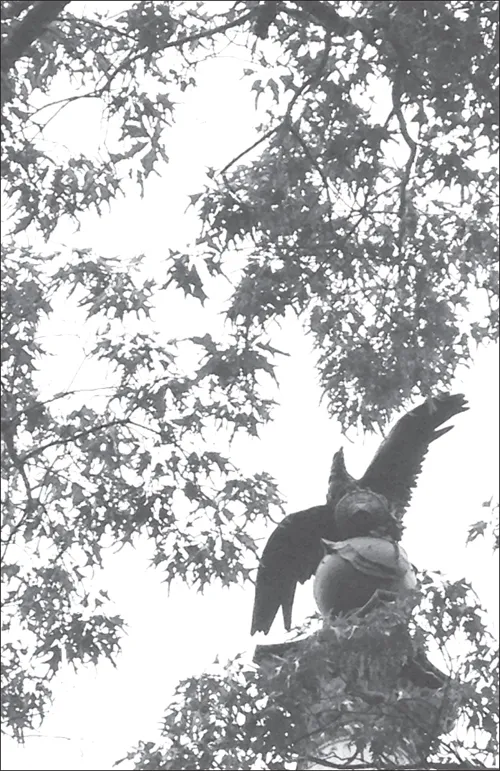
A bronze eagle with a fifteen-foot wingspan is perched on a globe atop a 75-foot high column on the tallest monument to grace the Shiloh battlefield: the Iowa monu ent. By war’s end 67,000 Iowa soldiers volunteered to enlist—the greatest percentage of mento volunteer than from any state, north or south. (cm)
The Campaign
CHAPTER ONE
April 6-7, 1862
Tensions were high in the fall of 1860 when Abraham Lincoln was elected the sixteenth president of the United States. Lincoln’s platform that slavery should not be permitted to extend into the U.S. territories was intolerable to the people of seven slave-holding states of the Deep South, which decided to leave the country and form the Confederate States of America.
Most in the North felt that the distinctive form of government that the Founding Fathers molded should not be placed in jeopardy. Being allowed to have a voice in government was a precious right, and a group of people should not be allowed to destroy that country just because the policies of the land were not to their liking.
Civil War erupted at Fort Sumter in Charleston, South Carolina, on April 12, 1861. Three days later, Lincoln responded by putting out a call for 75,000 troops from the remaining states in the Union to put down the rebellion. With the outbreak of war, four slave states that had previously decided to stay with the Union now decided that they would join with the other seven states rather than send their sons to Lincoln’s army to force the seceded states to return to the Union.
Tennessee was one such state to leave the Union at this juncture, and the decision would be particularly fateful. Of the 10,455 military actions that officially comprised the American Civil War, Tennessee hosted 1,462 battles and other engagements. Virginia was the only state to witness more fighting than Tennessee.
The first major land battle of the war was fought on July 21, 1861, near a railroad junction at Manassas, Virginia, and along the banks of a stream named Bull Run. It was the largest battle fought thus far in all of American history. With some 900 dead and another 3,000 wounded on both sides—Americans all—the battle alerted the people of both North and South that this would not be a relatively bloodless, one-battle war as many of them had imagined. What the First Battle of Manassas, or Bull Run, failed to do, however, was to illuminate just how costly the human toll of the Civil War would be. Light shone on that cost eight months later—at Shiloh.
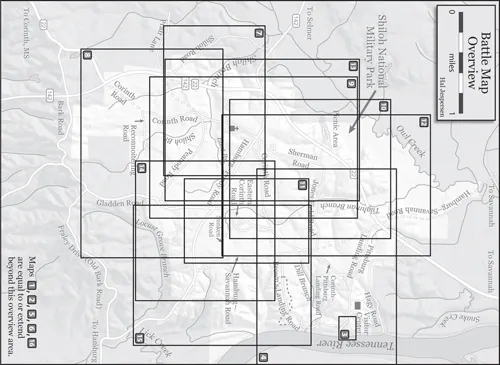
THE SHILOH CAMPAIGN—UNION success at Forts Henry and Donelson in February 1862 allow Union forces to use the Tennessee River as an avenue of advance deep into the heart of Tennessee. As Confederate forces concentrate at Corinth, Mississippi, Union forces threaten rail lines leading into Corinth in March 1862. Union forces plan for the Army of the Ohio under D. C. Buell to join U. S. Grant camped near Shiloh Church for a joint thrust on Corinth.
The April 6-7, 1862, battle of Shiloh witnessed five times as many casualties as Manassas. Officially, 3,482 were killed, 16,420 were wounded, and 3,844 were reported as missing— many of whom were captured. Shiloh had become the bloodiest battle in American history. The casualty count seemed to astonish the population like no other battle of the Civil War. Subsequent, more-brutal battles in terms of casualties would continue to stir emotions of sadness and anger in the people of the North and South, but even so, probably no other battle shocked and stunned the populace as Shiloh had done.
As one Southern writer purportedly said, “The South never smiled again after Shiloh.”
* * *
Rivers, roads and railroads—these features often dictated where and why battles were fought. The reason a battle was fought at Shiloh can be simply stated after looking at these three types of transportation routes. The Tennessee River provided the Union army with an avenue of advance to adjacent Pittsburg Landing. The Confederates responded to the Union excursion down the Tennessee by concentrating their forces via rail at a railroad junction in Corinth, Mississippi, 22 miles to the south. The Corinth Road linked the landing with the rail junction. Battle erupted along the Corinth Road, three miles away from the river landing, near a simple Methodist church named “Shiloh Meeting House.”
Rivers also dominated the larger strategy as well. Three important rivers in the western states of the Confederacy have north-south channels, which were very inviting passages of advance for Union troops—the Mississippi River, the Tennessee River, and a portion of the Cumberland River.
Most prominent of all was the Mississippi. Historian James M. McPherson did not overstate the vulnerability the Mississippi River imposed upon the Confederacy when he wrote that it was “an arrow thrust into the heart of the Lower South.” The struggles by the Confederates to defend the north-south rivers flowing through or bordering Tennessee were further complicated by the superiority of the Federal navy over the fledgling Confederate navy.
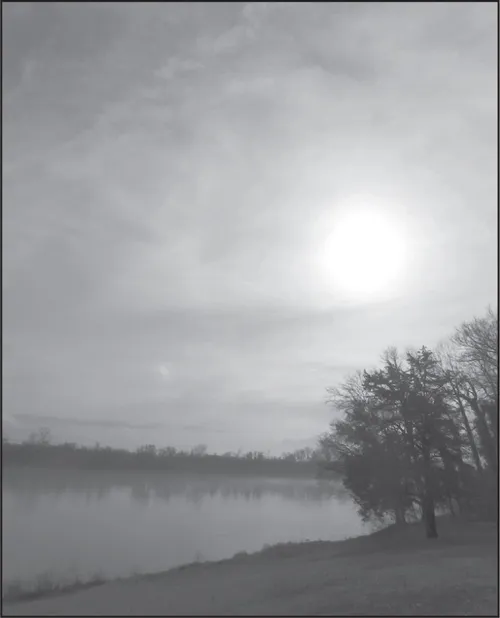
The Tennessee River was navigable from its mouth, where it flows into the Ohio River, all the way to a bridge at Florence, Alabama. The other major Confederate army in the field, operating predominantly in Virginia, did not face the challenge of Union waterway invasion routes. The rivers between the opposing capitals of Washington, D.C., and Richmond, Virginia, flowed west to east and formed obstacles to the advance of Union troops. (gam)
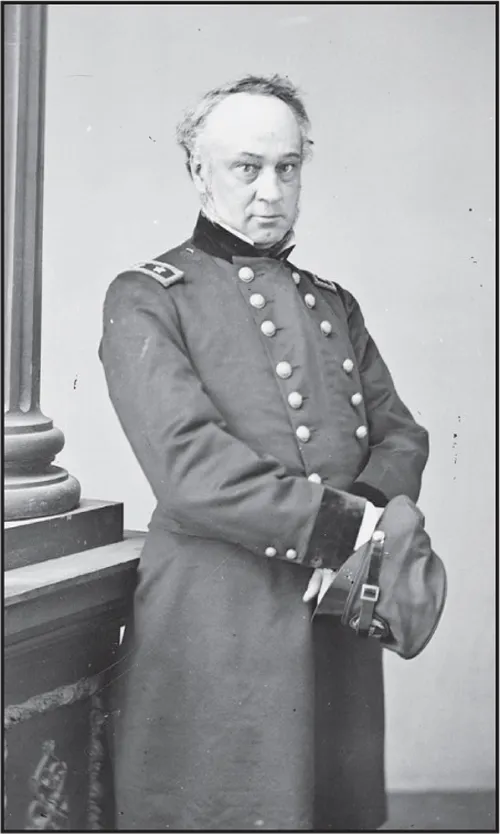
In the aftermath of the victory at Fort Donelson, 48-year-old Henry Halleck had a falling out with his successful subordinate, Grant, and turned command of the army over to Gen. Charles Smith on March 4, 1862—just a month before the battle of Shiloh. (na)
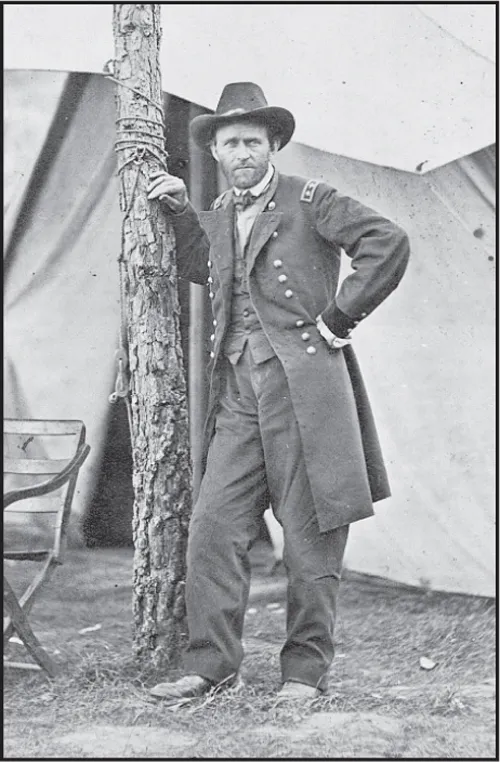
Earning the nickname of “Unconditional Surrender” Grant because the terms he offered for the capitulation of Fort Donelson matched his initials, a puzzled 39-year-old Ulysses S. Grant did not understand why Halleck relieved him. (loc)
With the Confederacy logically constructing defenses along various points of the all-important Mississippi, Union forces sidestepped those strongholds and made their first major thrusts in the western theater of the Civil War on the waters of the Tennessee and Cumberland Rivers. Union Gen. Ulysses S. Grant, supported by the U.S. Navy, easily defeated and captured Fort Henry on the Tennessee River, 100 miles north of Pittsburg Landing, on February 6, 1862. Grant then turned to the Cumberland River and its primary defense at Fort Donelson, just twelve miles east of Fort Henry. There, Grant achieved a huge victory with the surrender of some 12,000 Confederates on February 16. With the garrison at Fort Donelson no longer a threat to the rear of Union operations on the Tennessee River, Grant turned his attention back to that river. He established his headquarters at Savannah, Tennessee, about nine miles north of Pittsburg Landing.
The Union plan for the spring of 1862 was simple and logical. The Confederate build-up at Corinth would be their target. Grant, with an army of about 48,000 men that came to be known as the “Army of the Tennessee,” was to await the arrival of a second Union force comprised of 37,000 troops, the Army of the Ohio, under Gen. Don Carlos Buell. Together, under department commander Maj. Gen. Henry W. Halleck, they planned to proceed to Corinth to defeat the outnumbered Confederates.
Grant was under strict orders to avoid a fight until the arrival of Buell, but he did not stand by idly waiting the juncture of the two forces. Grant’s troops attempted raids on the railroad lines feeding into Corinth. One of Grant’s six divisions, numbering 7,500 soldiers under Gen. Lew Wallace, disembarked at Crump’s Landing, six miles north of Pittsburg Landing. Wallace ventured west on March 13 and disrupted the Mobile and Ohio Railroad—the north-south line that passed through Corinth. The next day, Brig. Gen. William T. Sherman’s division on army transports on the Tennessee River bypassed Pittsburg Landing; adverse weather, however, hampered its effort to damage the east-west Memphis and Charleston Railroad at points east of Corinth.
During this expedition, Sherman’s naval escort pointed out that a Confederate force had fired upon the gunboats from a hill during an earlier waterborne reconnaissance on March 1. (On this same hill now stands the National Cemetery.) A concerned Sherman suggested that some Union forces occupy the area to prevent Confederates from reappearing and threatening operations south of Pittsburg Landing. Sherman’s subsequent inspection of the area resulted in his assessment that it was an excellent site for a camp and soon all of the army, except for Lew Wallace’s command, was dispersed west of Pittsburg Landing, poised for the campaign against Corinth as soon as Buell arrived.
The Confederate army at Corinth, under Gen. Albert Sidney Johnston, did not intend to allow the Union armies to assemble an overwhelming force at Pittsburg Landing. Johnston, with nearly 45,000 men, planned to attack and destroy Grant’s force of 40,000 at Shiloh before the juncture with Buell’s army could take place.
As Sherman examined the area where the troops might bivouac, one of his concerns was whether the ground was defensible. To the north flowed Owl and Snake creeks, and to the south flowed Lick Creek, and even when not at flood stage, they were barriers to an enemy attack, protecting the sides or the flanks of the army. About four miles out, the army could be positioned behind another set of streams, Shiloh Branch (a tributary of Owl Creek) and Locust Grove Branch (a tributary of Lick Creek), which provided some degree of protection along the front of the army.
Grant had a field headquarters above the landing, but he spent his evenings in Savannah, staying in the Cherry Mansion. Buell would be arriving via Savannah, and Grant wanted to consult with him there.
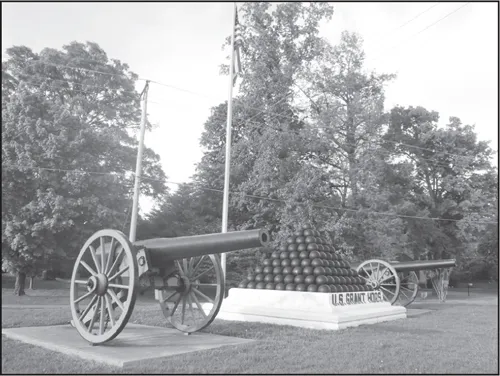
Grant headquartered in Savannah—marked today by a monument—instead of with his army at Pittsburg Landing because Buell was to arrive via Savannah. Unbeknownst to Grant, Buell had arrived on April 5, but felt no sense of urgency to meet with him. Before the twocould consult on the following day, disturbing battle sounds from the south dramatically altered the day’s plan. (sdm)
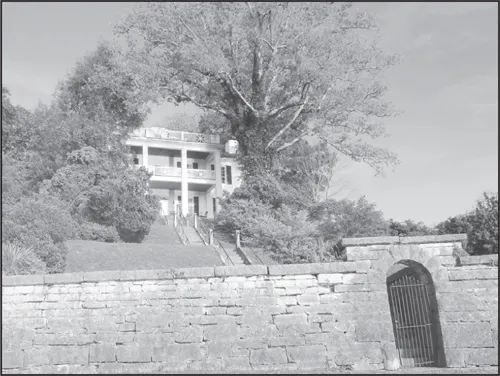
On the morning of April 6, Grant was sitting at the breakfast table of Annie Irwin Cherry when cannon fire from the south became audible. “Holding, untasted, a cup of coffee,”Mrs. Cherry remembered, “he paused in conversation to listen a moment at the report of another cannon.” (gam)
Cannon fire interrupted Grant’s breakfast on the morning of April 6, 1862. Soon Grant and his staff were off for the steamer Tigress to determine which portion of his army as under attack. As they neared Crump’s Landingit became obvious that Lew Wallace’s isolated division was not the target. The Tigress ste...
Table of contents
- Cover
- Title
- Copyright
- Dedication
- Table of Contents
- List of Maps
- Acknowledgments
- Touring the Battlefield
- Forword
- Chapter One: The Campaign
- Chapter Two: The Confederates Stir
- Chapter Three: The Battle Opens at Shiloh Church
- Chapter Four: Rea Field
- Chapter Five: First Contact
- Chapter Six: Into the Hornets’ Nest
- Chapter Seven: Order from Chaos
- Chapter Eight: The Battle for the Hornets’ Nest
- Chapter Nine: Death and Surrender
- Chapter Ten: The Hamburg-Savannah Road
- Chapter Eleven: Fighting Resumes
- Chapter Twelve: Fields of Wheat and Cotton
- Chapter Thirteen: Stuart’s Brigade
- Chapter Fourteen: The Death of Albert Sidney Johnston
- Chapter Fifteen: The Peach Orchard
- Chapter Sixteen: The Bloody Pond
- Chapter Seventeen: Grant’s Left Flank
- Chapter Eighteen: Pittsburg Landing
- Appendix A: Lew Walllace’s Controversial March to Shiloh by Ryan T. Quint
- Order of Battle
- Suggested Reading
- About the Author
Trusted by 375,005 students
Access to over 1.5 million titles for a fair monthly price.
Study more efficiently using our study tools.
Frequently asked questions
Yes, you can cancel anytime from the Subscription tab in your account settings on the Perlego website. Your subscription will stay active until the end of your current billing period. Learn how to cancel your subscription
No, books cannot be downloaded as external files, such as PDFs, for use outside of Perlego. However, you can download books within the Perlego app for offline reading on mobile or tablet. Learn how to download books offline
Perlego offers two plans: Essential and Complete
- Essential is ideal for learners and professionals who enjoy exploring a wide range of subjects. Access the Essential Library with 800,000+ trusted titles and best-sellers across business, personal growth, and the humanities. Includes unlimited reading time and Standard Read Aloud voice.
- Complete: Perfect for advanced learners and researchers needing full, unrestricted access. Unlock 1.5M+ books across hundreds of subjects, including academic and specialized titles. The Complete Plan also includes advanced features like Premium Read Aloud and Research Assistant.
We are an online textbook subscription service, where you can get access to an entire online library for less than the price of a single book per month. With over 1.5 million books across 990+ topics, we’ve got you covered! Learn about our mission
Look out for the read-aloud symbol on your next book to see if you can listen to it. The read-aloud tool reads text aloud for you, highlighting the text as it is being read. You can pause it, speed it up and slow it down. Learn more about Read Aloud
Yes! You can use the Perlego app on both iOS and Android devices to read anytime, anywhere — even offline. Perfect for commutes or when you’re on the go.
Please note we cannot support devices running on iOS 13 and Android 7 or earlier. Learn more about using the app
Please note we cannot support devices running on iOS 13 and Android 7 or earlier. Learn more about using the app
Yes, you can access Attack at Daylight and Whip Them by Gregory A. Mertz in PDF and/or ePUB format, as well as other popular books in History & American Civil War History. We have over 1.5 million books available in our catalogue for you to explore.