An in-depth, illustrated history of Israeli Air Force operations in Western Negev toward the end of the Arab-Israeli War.
Operation HOREV—the Israeli winter offensive from December 1948 until January 1949—practically ended Israel's War for Independence (also known as the 1948 Arab-Israeli War), with an Israeli victory that forced Egypt to seek ceasefire and to negotiate a settlement with the fledgling nation.
With unseen depth and detail, this book details Israeli Air Force missions during Operation HOREV. It chronicles Israeli Air Force sorties during Operation HOREV; from Austers and Pipers to C-46s and C-47s; from Messerschmitts, Spitfires and P-51s to Beaufighters and B-17s; Israel Air Force operations are detailed spanning the timeline of the conflict down to every unearthed sortie in depth. This level of detail has been made possible by extensive use of contemporary documentation, as well as numerous photographs and color profiles.
Middle East@War—ollowing on from our highly successful Africa@War series, Middle East@War replicates the same format—concise, incisive text, rare images and high-quality color artwork providing fresh accounts of both well-known and more esoteric aspects of conflict in this part of the world since 1945.

eBook - ePub
Israeli Air Force Operations in the 1948 War
Israeli Winter Offensive Operation Horev 22 December 1948–7 January 1949
- 72 pages
- English
- ePUB (mobile friendly)
- Available on iOS & Android
eBook - ePub
Israeli Air Force Operations in the 1948 War
Israeli Winter Offensive Operation Horev 22 December 1948–7 January 1949
About this book
Information
DAY 1
23 DECEMBER 1948
Brigade 1 Battalion 13 initiated HOREV ground action with an attack in direction of Hill 86 – roughly midway between Gaza and Rafah – aimed at cutting off Egyptian forces in the Gaza Strip as well as to create a diversion from HOREV’s main effort at Auja sector. ILAF was tasked to dispatch four bombing sorties from midnight to sunset of Day 1 but a few Day 0 bombing sorties were delayed and actually flown during Day 1.
RAID EL ARISH RAFAH

There were reports of very bad weather from Ramat David to Tel Aviv and good weather from Tel Aviv to El Arish, with very good visibility over the target. The actual target was El Arish air base but this was not pinpointed, so 1401 diverted to Rafah as an alternative target, was over target from 0126 until 0145, bombed from 10,000 feet and reported:
Captain: original target was not identified; hastily bombed what was believed to be Rafah. Over El Arish an explosion was heard and an orange flame was seen below aircraft. Discovery of enemy fighter prevented us from making a more thorough search for target. Enemy aircraft sighted by two crew members. The aircraft was believed to be twin-engined. No flak or searchlight over what believed to be El Arish or Rafah. Searchlight playing on the water near Gaza; no ships sighted. Radio Operator: Saw an aircraft; informed the pilot. Joined by navigator and pointed the aircraft out to him. He confirmed. Took violent evasive action but the aircraft managed to tail us for quite a long distance. We lost sight of him outside Gaza when the pilot did a 360 [degrees] turn over the sea [at] (1,000 feet).
Navigator: Identified the plane as twin-engined.
Pilot: Confirms the above.
As a result of the search for El Arish and due to the reported encounter with enemy aircraft, the C-47 landed at Tel Nof at 0201, refueled and returned to Ramat David at 0412.
RAID EL ARISH RAFAH

Also tasked to raid El Arish, also unable to pinpoint target and also diverted to attack Rafah from 0153 until 0154; is it possible that 1405 was the enemy aircraft that 1401 reported? 1405 pilot reported:
Arrived west of target. Could not locate target properly because of lack of petrol. No signs of activity at El Arish, no searchlights or AAA. Went to Rafah; to the south of Rafah there were eight searchlights; located some dim lights and bombed them. Proceeded to Tel Nof, landing with 40 gallons of petrol.
The C-47 landed at Tel Nof at 0224, refueled and proceed to Ramat David where it landed at 0434. Crew concluded debrief with four complaints:
- Quantity of petrol about 400 gallons, which does not allow for a climb of 10,000 feet or any emergency.
- Met briefing extremely inaccurate – cloud of 8,000 feet thickness, rain, hail and icing.
- Hang up; one of the bombs did not drop despite double effort at jettisoning.
- Nothing to marshal the aircraft at Ramat David in a blinding rain.
RAID GAZA FALUJA
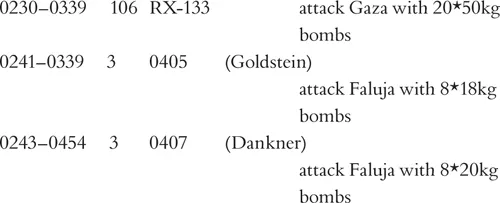
EGAF apparently retaliated circa 0400 when Tel Nof was bombed; ILAF reported three bombs with no casualties or damage while Adam Shatkai, pilot of 1405, reported:
Took off from Tel Nof and on take-off the field was raided. Numerous hits could be seen in the vicinity (seven hits observed for sure).
VELVETTA SPITFIRES
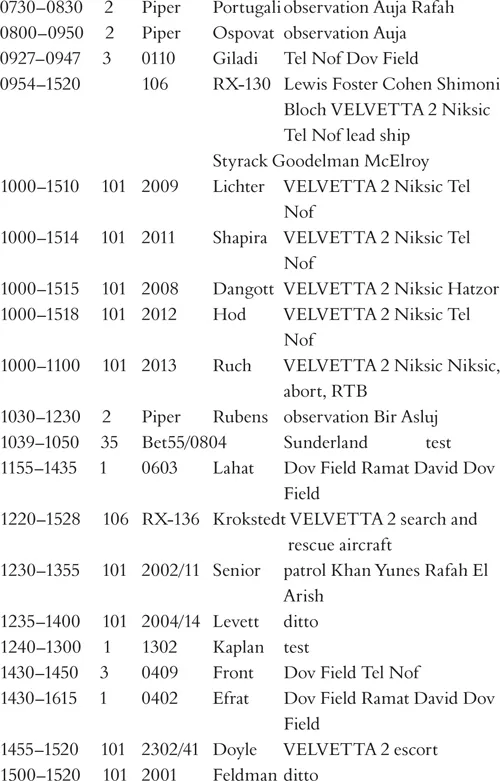
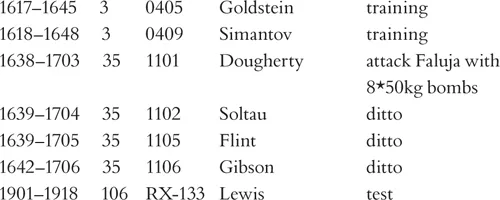
Squadron 101 initiated HOREV with only five S199s, four Spitfires and two P-51s. ILAF planned to reinforce Squadron 101, in time for HOREV, with 12 Spitfires that were to be flown to Israel from Czechoslovakia, via Yugoslavia. Operation VELVETTA 2 was planned to include two flights, from Czechoslovakia to Israel, of six Spitfires each, but these were delayed due to bad weather. Six Spitfires were at Niksic, Yugoslavia, by morning of 23 December 1948 but one was unserviceable, so McElroy boarded the C-46 lead ship. Five Spitfires departed Niksic but Ruch’s 2013 malfunctioned after some 30 minutes so he turned back and returned to Niksic. Four Spitfires arrived at Israel. Three landed, as planned, at Tel Nof for AMU acceptance inspection; the other landed, not as planned, at Hatzor.
RAIN AND RETREAT
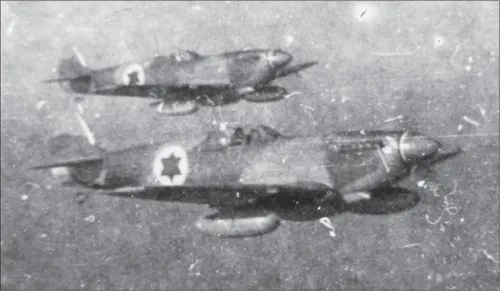
Two VELVETTA 2 Spitfires – believed to be 2009 and 2011 – flying from Yugoslavia to Israel on 23 December 1948.
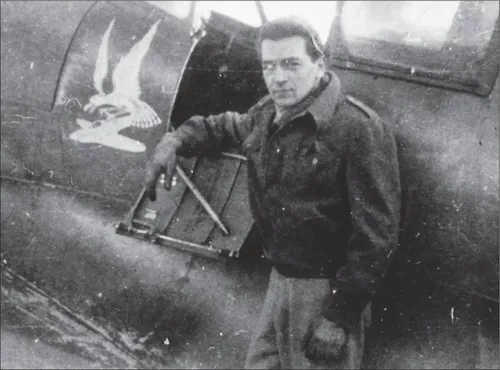
Squadron 106 C-46 pilot Ray Foster poses beside the VELVETTA 2 Spitfire 2011 prior to flight from Yugoslavia to Israel.
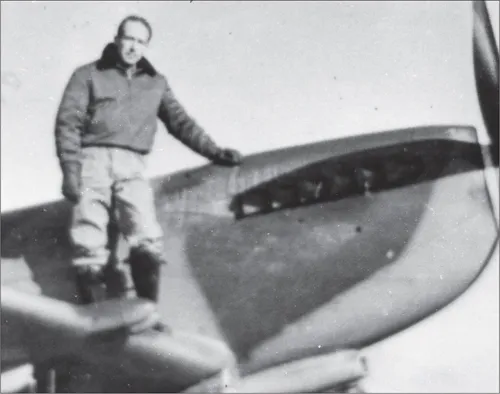
Squadron 101 pilot Caesar Dangott on the VELVETTA 2 Spitfire – with two underwing fuel tanks and one belly tank – at Niksic, Yugoslavia, prior to flight to Israel.
Rain started over Tel Aviv during the night of 22 to 23 December 1948, and although it would only start raining in the south from the evening of 23 December, ILAF operations slowed down; the only ILAF Day 1 daylight offensive operation was Flight 35 attacking Faluja.
Front D reported retreat from Hill 86 at 1815; an Egyptian counterattack pushed back Battalion 13 and frustrated the ILDF plan to wedge a strip of land between Gaza and Rafah. The same Front D message also reported pouring rain at Beer Sheba.
DAY 2
24 DECEMBER 1948
Brigade 8, Brigade 10 and Brigade 12 were at the holding area, ready to start the HOREV main effort, but poor weather delayed their attack; in anticipation of the HOREV main effort, the ILAF stepped-up offensive operations.
MIDNIGHT TO DAWN
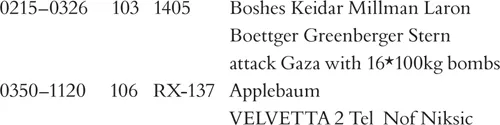
1405 reported poor weather; it arrived over the target at 10,500 feet still inside clouds, could not pinpoint target and so jettisoned bombs over the Mediterranean Sea, some 15 miles west of Tel Aviv, then RTB.
DAWN TO MIDDAY
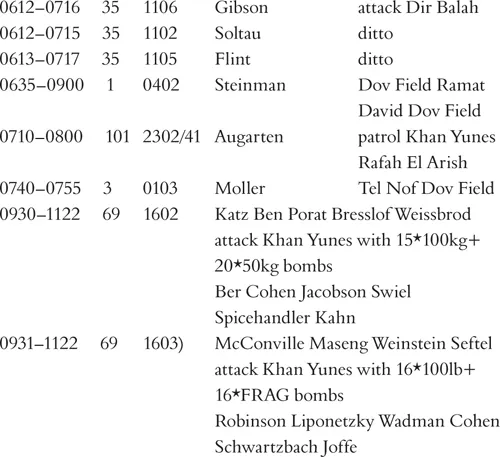
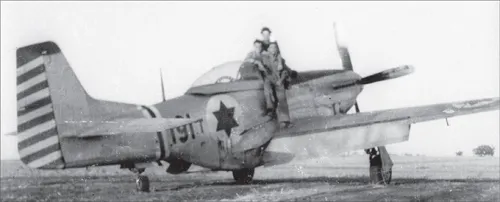
Rudy Augarten flew P-51 Dalet191 on the morning of 24 December 1948; it was still reported as Dalet191 even though reidentified as 2302 during November 1948.
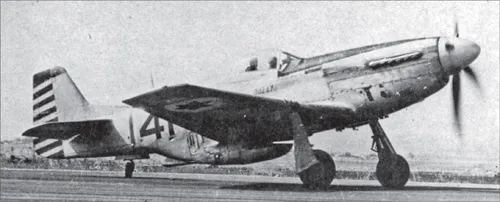
Following the introduction of the new ILAF serial system during November 1948, Squadron 101 introduced an in-house unofficial tactical code system that resembled US 12th Air Force’s Second World War system; in the US 12th Air Force system the numbers 10 to 39 were the codes of the first squadron in a wing and the numbers 40 to 69 were the codes of the second squadron in a wing; in the Squadron 101 system the numbers 10 to 39 were reserved for Spitfires and the numbers from 40 onwards to P-51s so that 2302, ex Dalet191, was also 41.
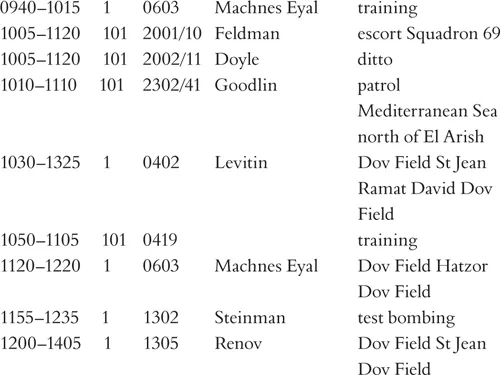
Augarten first flew over El Arish, where he observed that the long runway seemed serviceable and that along the short runway there were, possibly, one or two craters, while three fighters were also spotted. Augarten then pinpointed a previously-unknown EGAF air base at El Riah, south of El Arish and nearby Bir Lahfan, where three fighters in pens were observed.
Squadron 69 was tasked to bomb Khan Yunes. The weather was described as fair and the two bombers initiated an attack, from 13,000 feet, at 1038. Katz’s first run was a dummy due to clouds; during the second run, three bombs were observed to explode in the center of town but there were 30 hang-ups so Katz flew to Gaza, where the bombardier could not drop the bombs so the armorer released two bombs by hand and the remaining bombs were jettisoned over the sea. McConville reported that bombing was inaccurate due to clouds over the target.
MIDDAY TO DUSK
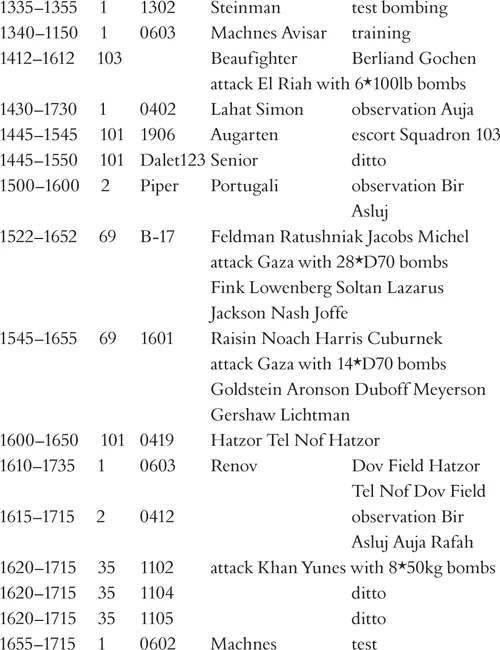
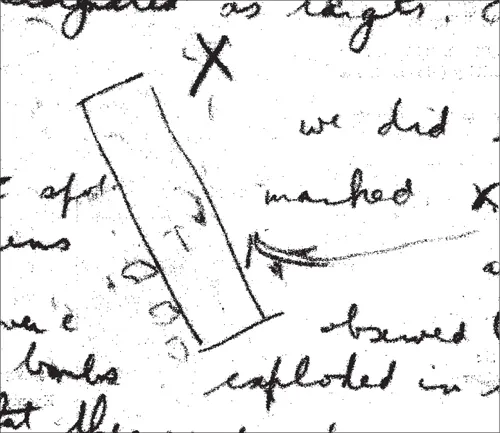
A sketch of El Riah from 24 December 1948 – Squadron 103’s mission debrief (less informative but generally similar.
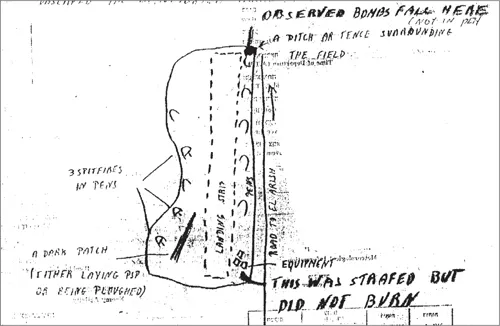
A sketch of El Riah from 24 December 1948 – Squadron 103’s ...
Table of contents
- Cover
- Title
- Copyright
- Contents
- Map
- Note
- Acknowledgements
- Glossary
- Brief Background
- Opor Horev
- Military Balance
- Day 0: 22 December 1948
- Day 1: 23 December 1948
- Day 2: 24 December 1948
- Day 3: 25 December 1948
- Day 4: 26 December 1948
- Day 5: 27 December 1948
- Day 6: 28 December 1948
- Day 7: 29 December 1948
- Day 8: 30 December 1948
- Day 9: 31 December 1948
- Day 10: 1 January 1949
- Day 11: 2 January 1949
- Day 12: 3 January 1949
- Day 13: 4 January 1949
- Day 14: 5 January 1949
- Day 15: 6 January 1949
- Day 16: 7 January 1949
- Ceasefire
- End of OPOR HOREV
- Plate section
Trusted by 375,005 students
Access to over 1.5 million titles for a fair monthly price.
Study more efficiently using our study tools.
Frequently asked questions
Yes, you can cancel anytime from the Subscription tab in your account settings on the Perlego website. Your subscription will stay active until the end of your current billing period. Learn how to cancel your subscription
No, books cannot be downloaded as external files, such as PDFs, for use outside of Perlego. However, you can download books within the Perlego app for offline reading on mobile or tablet. Learn how to download books offline
We are an online textbook subscription service, where you can get access to an entire online library for less than the price of a single book per month. With over 1.5 million books across 990+ topics, we’ve got you covered! Learn about our mission
Look out for the read-aloud symbol on your next book to see if you can listen to it. The read-aloud tool reads text aloud for you, highlighting the text as it is being read. You can pause it, speed it up and slow it down. Learn more about Read Aloud
Yes! You can use the Perlego app on both iOS and Android devices to read anytime, anywhere — even offline. Perfect for commutes or when you’re on the go.
Please note we cannot support devices running on iOS 13 and Android 7 or earlier. Learn more about using the app
Please note we cannot support devices running on iOS 13 and Android 7 or earlier. Learn more about using the app
Yes, you can access Israeli Air Force Operations in the 1948 War by Shlomo Aloni in PDF and/or ePUB format, as well as other popular books in History & Middle Eastern History. We have over 1.5 million books available in our catalogue for you to explore.