eBook - ePub
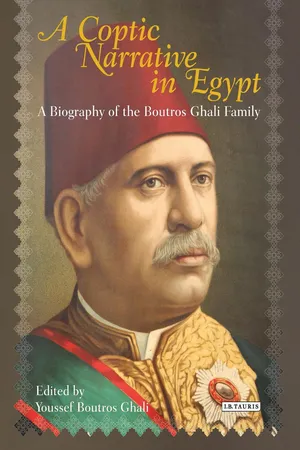
A Coptic Narrative in Egypt
A Biography of the Boutros Ghali Family
- 256 pages
- English
- ePUB (mobile friendly)
- Available on iOS & Android
eBook - ePub
About this book
A short walk from the glistening Nile nestled in a dusty Cairo street lies the Coptic Church of St. Peter and St. Paul, known locally as the Boutrosiya. If one were to enter through one of the seven doors, walk down the columned central aisle past Venetian mosaics and silk curtains, they would find the tomb of Boutros Pasha Ghali. Resting on two steps of black marble, decorated with colourful crosses, are written his last words: 'God knows that I never did anything that harmed my country'. The first Copt to be awarded the title of Pasha, the career of Boutros Pasha Ghali inextricably linked his family's fate to that of Egypt. From early whispers of independence to the last Mubarak government and the United Nations, the Boutros-Ghali's have not only been a force in the political, cultural and religious life of Egypt, but internationally. This book traces the illustrious history of this family from 1864 to the present day. Through assassinations, wars and elections, it illuminates the events that have shaped Egyptian and Coptic life, revealing the family's crucial role in the creation of modern Egypt and what their legacy may mean for the future of their country.
Information
CHAPTER 1
Boutros Pasha Ghali
Background
Ghali Bey Nayrouz was a land overseer and treasurer of the land holdings of Prince Moustafa Fazl Pasha, the son of Ibrahim Pasha, grandson of Mohamed Ali the Founder of modern Egypt and Brother of the Khedive Ismail. He came originally from the village of Nekheila in Assiut province then moved to middle Egypt in the province of Beni Suef. Ghali Bey practically lived in the Khedivial Household and enjoyed their trust and confidence. He had two boys, the eldest Boutros and the younger Amin who would grow up with the young princes of the Khedivial family.
Boutros Ghali was born in the town of El-Maymoun, Beni Suef province, on 12 May, 1846.1
At the age of six, Boutros Ghali joined a pre-school nursery kuttaab in Beni Suef, before attending the Haret el-Sakkayeen school in Cairo, founded by Pope Cyril IV (Kyrellos IV, the Father of Reform). Here he learned the basics of Arabic and French from Mostafa Bey Radwan, and was taught the Coptic language by Barsoom Effendi el-Raheb.2
Boutros Ghali was an exceptionally intelligent boy, and was sent by his father to a school established by Prince Moustafa Fazl Pasha in Darb el-Gamameez, and attended by the sons of princes and members of the Egyptian Establishment. Here Boutros Ghali learned several languages: French, English, Turkish, Farsi and Armenian along with Arabic, and with his quick memory and enthusiasm for learning was soon translating perfectly from Arabic into French, Farsi and Turkish.3 In later life, he was known still to recite the Persian poetry he had memorised as a young boy. He was so fond of reading, in fact, that, concerned that it would affect his health, his colleagues asked Ghali Bey Nayrouz to persuade his son to read less.
So keen was he to learn, that whilst still at school, the young Boutros Ghali even hired himself a private tutor from Khan El-Khalili, whom he paid out of his own pocket money (with coins called bar), to help him master French and Turkish, since he was not satisfied with the performance of his school teacher. He eventually graduated from school with four languages, and then went on to learn English, Italian and the Coptic language.4
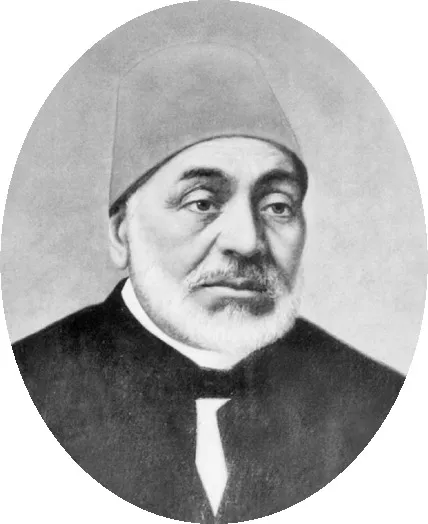
Ghali Bey Nayrouz
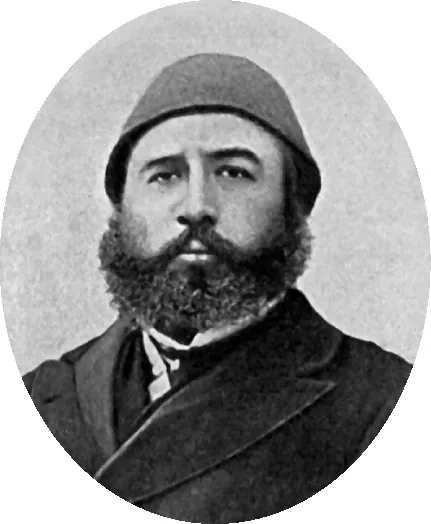
Moustafa Fazl Pasha
The Beginning
Boutros Effendi Ghali’s first job was as a teacher at Haret el-Sakkayeen school, taking a salary of E£7. In his spare time, he continued to work on his language and translation skills, at the school established by Refaa Pasha el-Tahtawi, and after two years was qualified to work at the Trade Council in Alexandria. Here he was regularly promoted, eventually rising to the post of chief clerk.5
The Trade Council was affiliated to the Ministry of Interior, and Boutros Effendi soon came to know the Minister of Interior, Mohamed Sharif Pasha. The Minister admired the young man’s fluency in foreign languages, and in 1874 made him a chief clerk in the new Ministry of Justice, which he had been asked to establish in preparation for the new judiciary reform system.6
Once in his new position, it was not long before Boutros Effendi was invited by Mohamed Kadri Pasha, the Minister of Justice and one of the great jurists of the time, to assist in translating the laws of the mixed courts into Arabic. This in turn gave Boutros Effendi the opportunity to become acquainted with Nubar Pasha, the then Prime Minister.
The mixed courts were founded in 1875 by Khedive Ismail Pasha and designed by Nubar Pasha, as part of a reform of Egypt’s legal system. They were based on a civil law format and British common law, incorporating Islamic principles, and were intended for disputes between foreign nationals (on both sides) and disputes between foreign nationals and Egyptians.
With the worsening of the financial crisis during the reign of Khedive Ismail, Boutros Effendi, by now General Secretary for the Ministry of Justice, became an assistant to Mostafa Pasha Riadh, chairman of the committee formed to unify debts. Here he learned a great deal about taxes, and wrote a report about taxation in Egypt in French and Arabic. Sir Rivers Wilson, the British delegate to the committee, told Boutros Effendi, ‘You’ll be Minister of Finance one day.’ In appreciation of his skills, the Egyptian government granted Boutros Effendi the title of Bey.7
The reign of Khedive Mohamed Tawfik saw the government tasked with establishing a financial system to settle public debts. The Khedive agreed with debtor countries to form a ‘liquidation committee’, and on 31 March, 1880 a decree on forming the committee was issued. A further decree was issued a week later, appointing its members, and Boutros Bey Ghali was named as Egypt’s representative. The ‘law of legislation’ eventually submitted to the Khedive by the committee remained the basis of Egypt’s financial system until 1904, and Boutros Bey was granted an Ottoman Medal of the Third Order in appreciation of his efforts towards its creation.8 In 1880 Boutros Bey Ghali was granted the title of Pasha.
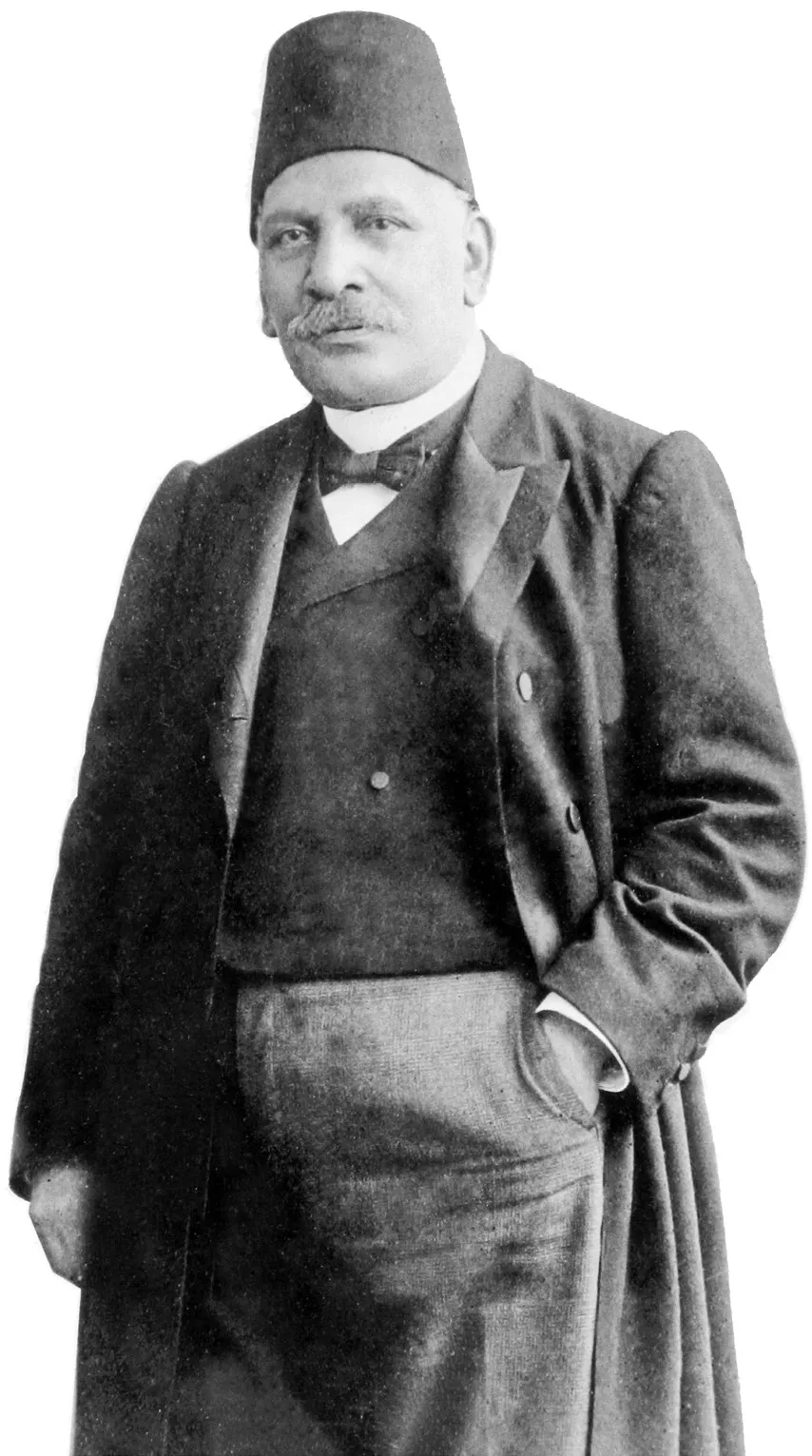
Boutros Pasha Ghali
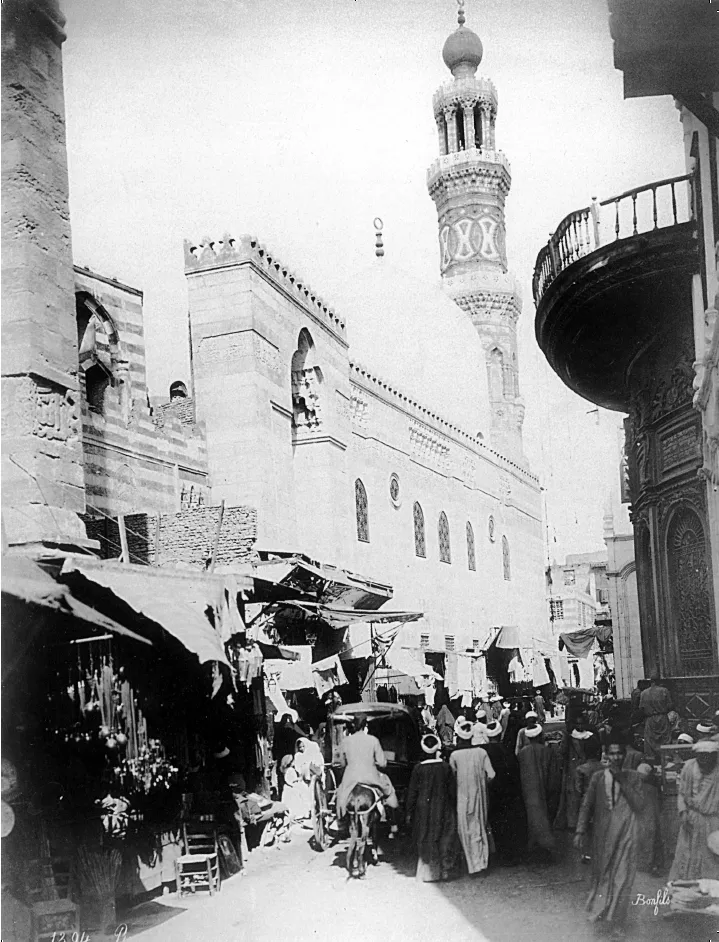
Bein el-Kasrein Street, Cairo, at the end of the nineteenth century
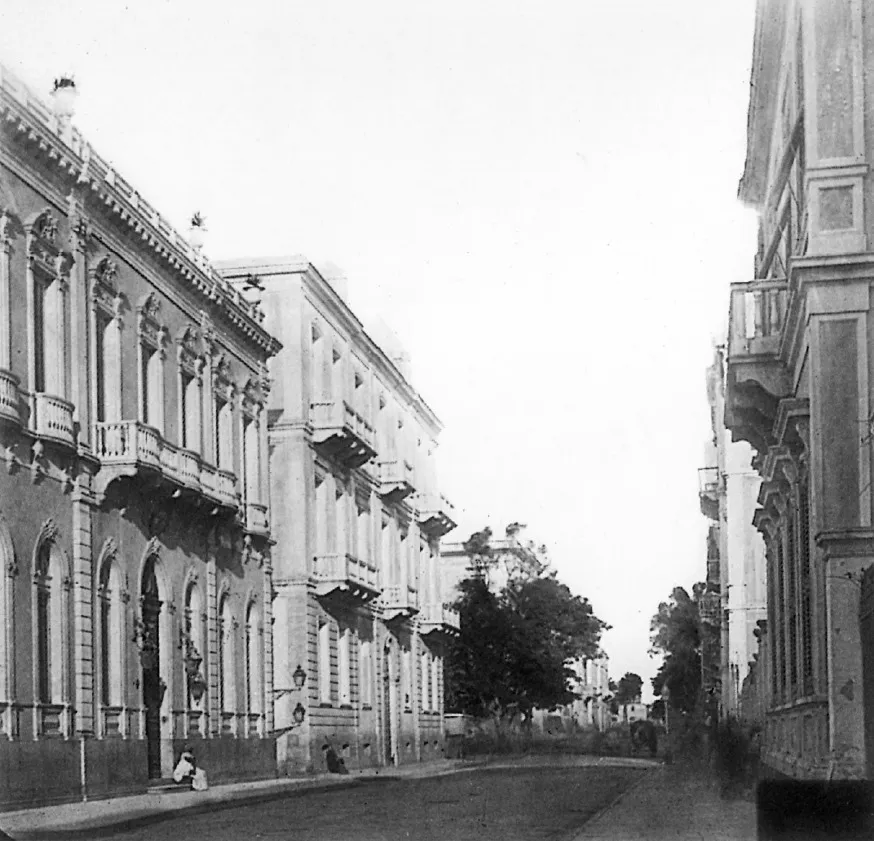
A street in the European district, Alexandria, at the end of the nineteenth century
In 1881 Prime Minister Mohamed Pasha Sherif declared his intention to draft a legal framework for the employment of civil servants, specifying their duties, the relationship between heads and staff, conditions of employment and promotion, as well as disciplinary and dismissal measures to ensure their good performance. He submitted a report to Khedive Mohamed Tawfik suggesting the formation of a committee to instigate this, and by October of that year, Boutros Pasha had been invited to become a member of it.9 He was also involved in the 1884 committee formed by Nubar Pasha to amend these laws, and which included foreign consuls based in Egypt.
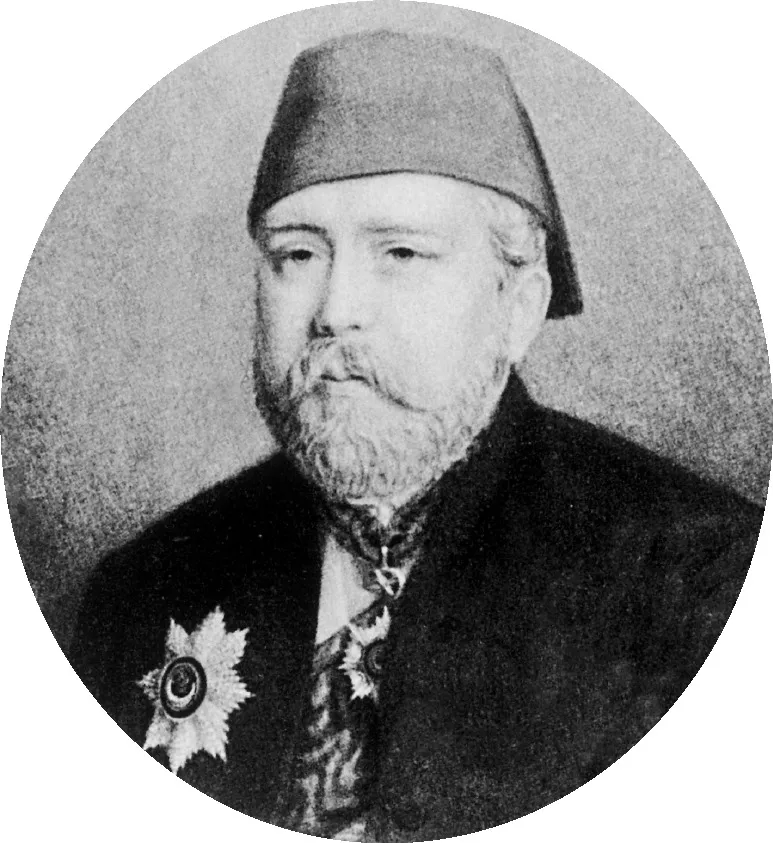
Khedive Ismail
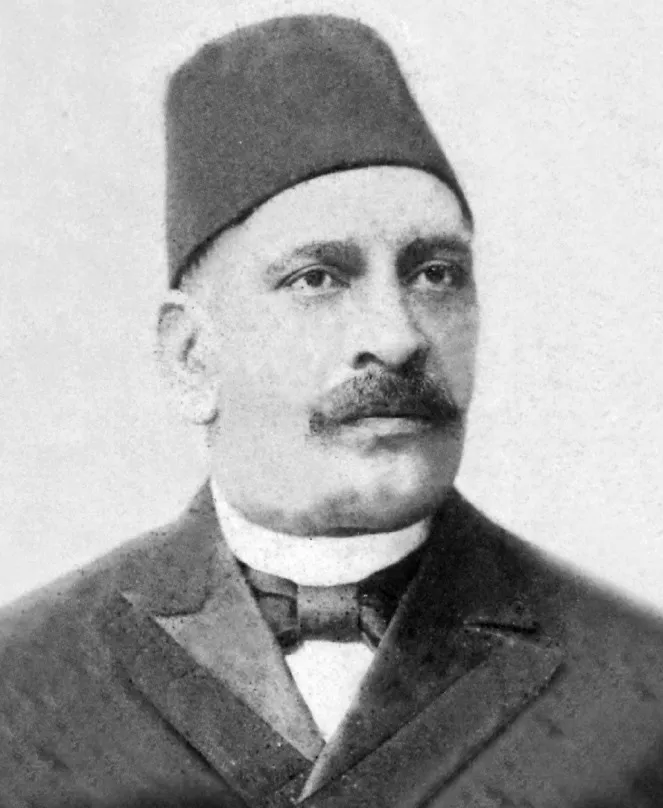
Boutros Bey Ghali in his youth
Whilst working on the translation and amendment of these laws, Boutros Pasha Ghali also prepared the civil laws that would be applied in the new national courts, which opened in January 1884 alongside the already existing religious tribunals, the first civil courts to be established in Egypt. So enthusiastic was Boutros Pasha about the new judiciary system that in early 1884 he led the opening ceremonies of the new civil courts in Alexandria, Tanta, Shebeen Elkom, Benha and Zagazig.
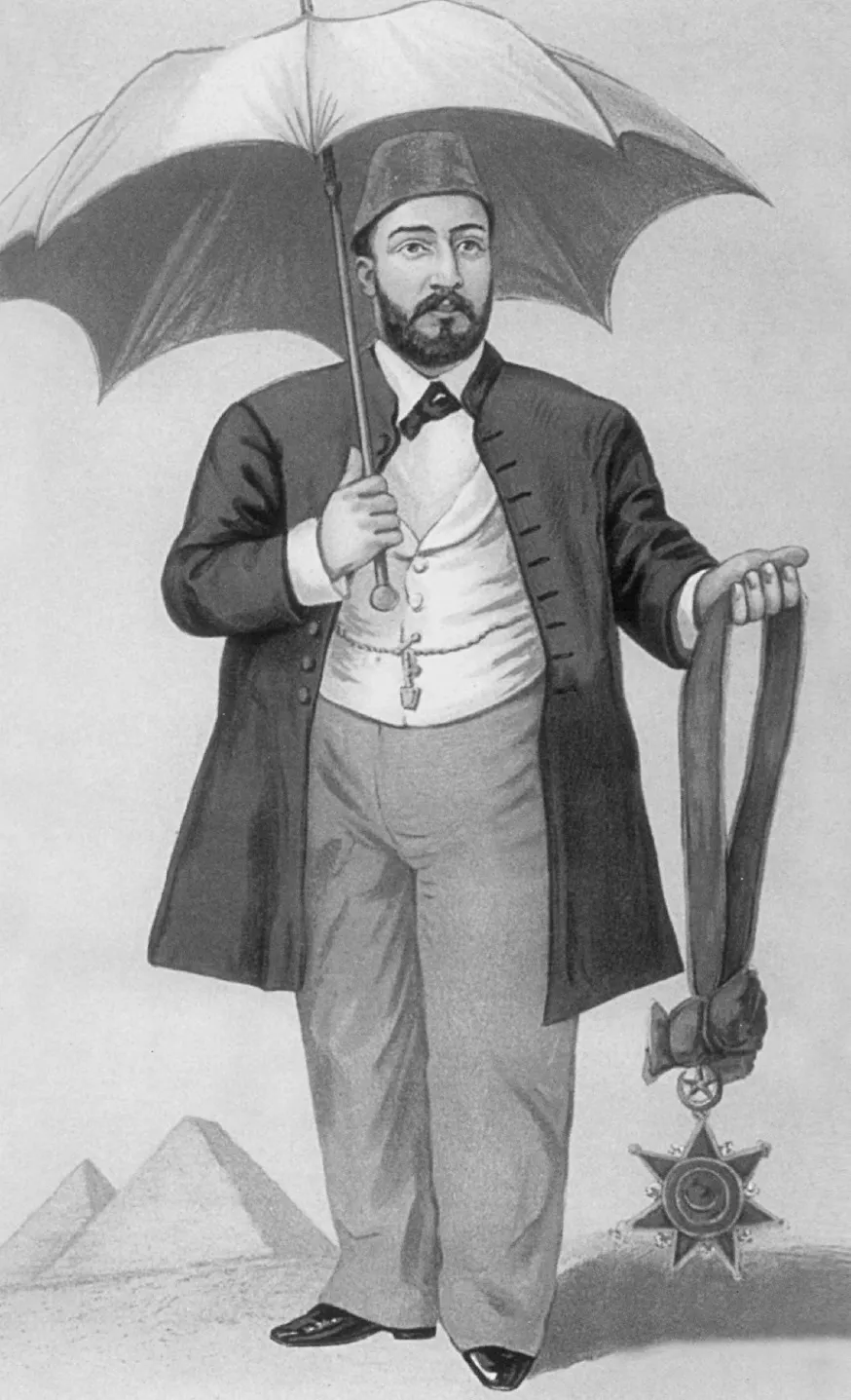
Khedive Mohamed Tawfik
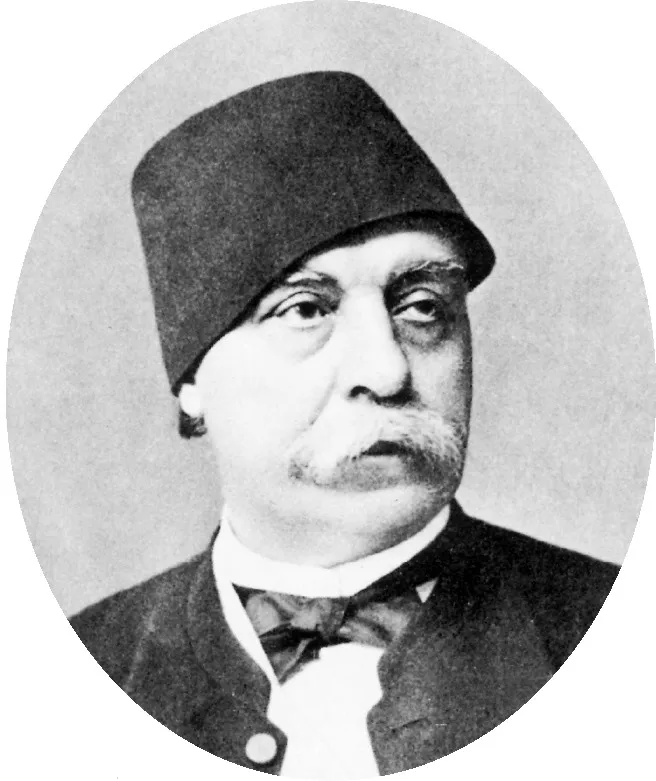
Nubar Pasha
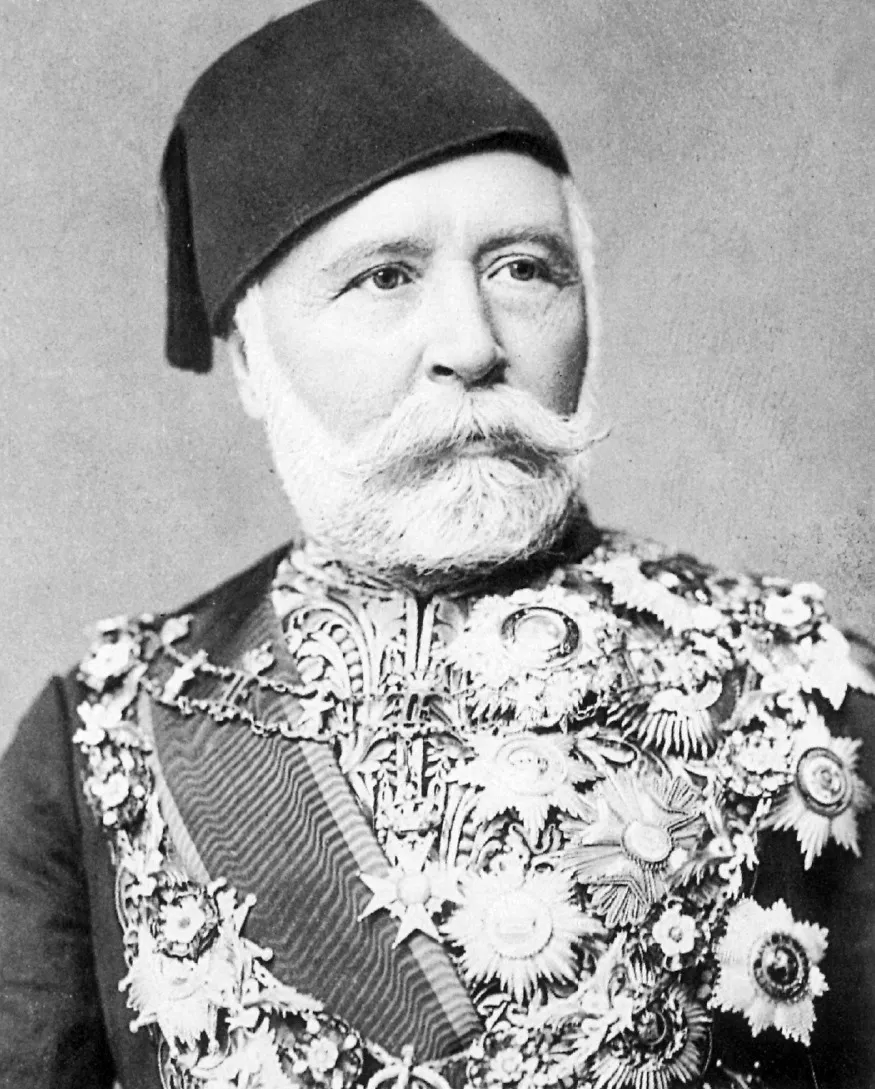
Mostafa Pasha Riadh
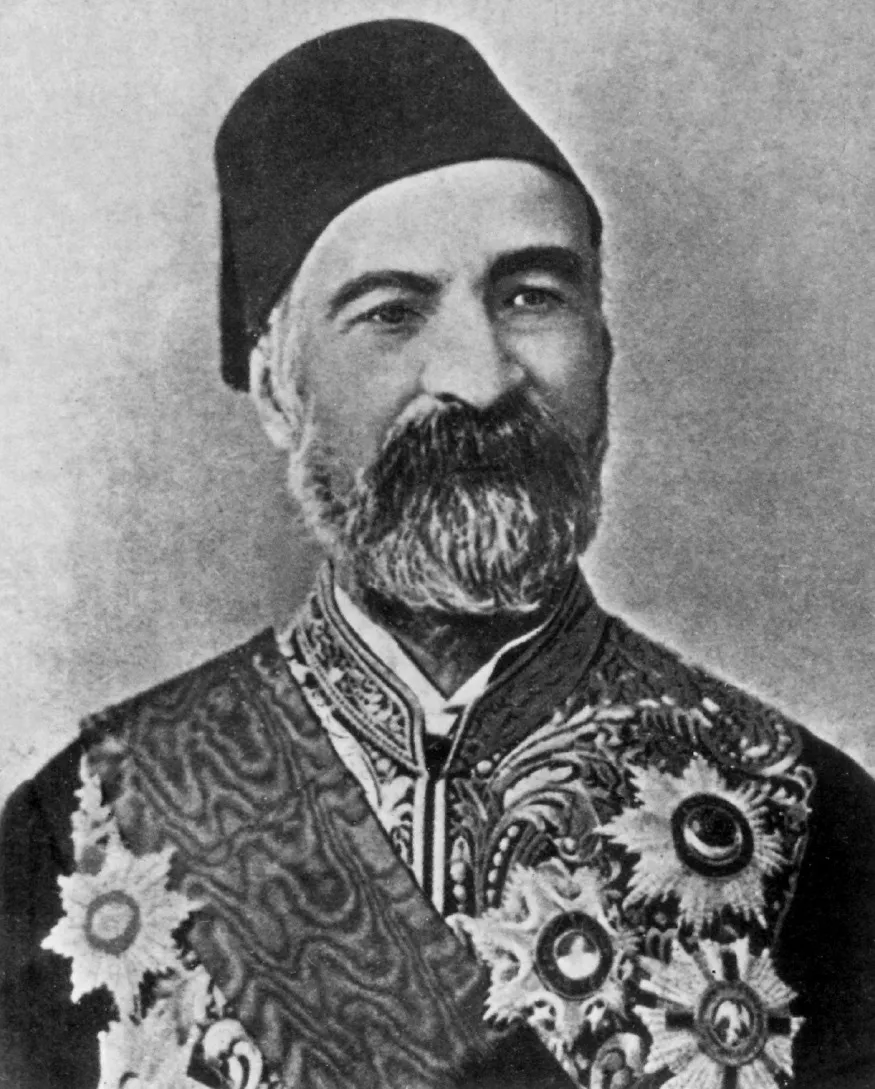
Mohamed Sharif Pasha
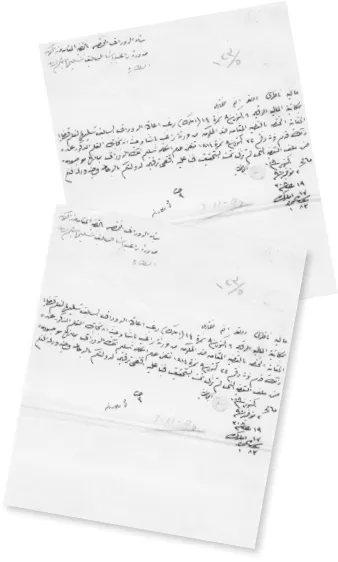
Papers signed by Boutros Pasha Ghali in his capacity as Deputy Minister of Justice
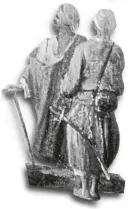
Gendarmes, mid-nineteenth century

Al-Azhar Mosque at the end of the nineteenth century
It was no surprise that Boutros Pasha should face traditionalist resistance to his development of the judiciary system, and in 1884 Sheikh Almahdi and some members of the Advisory Council of Laws (Legislative Council) attempted to have him dismiss...
Table of contents
- Cover
- Title Page
- Dedication
- Contents
- Preface
- 1 Boutros Pasha Ghali
- 2 Naguib Pasha Boutros Ghali
- 3 Wassif Pasha Boutros Ghali
- 4 Youssef Bey Boutros Ghali
- 5 Merrit Bey Naguib Boutros Ghali
- 6 Gueffrey Naguib Boutros Ghali
- 7 Dr Boutros Youssef Boutros Ghali
- 8 Wassif Youssef Boutros Ghali
- 9 Raouf Youssef Boutros Ghali
- 10 Dr Youssef Raouf Boutros Ghali
- 11 The Boutrosiya Church
- Notes
- Index
- eCopyright
Trusted by 375,005 students
Access to over 1.5 million titles for a fair monthly price.
Study more efficiently using our study tools.
Frequently asked questions
Yes, you can cancel anytime from the Subscription tab in your account settings on the Perlego website. Your subscription will stay active until the end of your current billing period. Learn how to cancel your subscription
No, books cannot be downloaded as external files, such as PDFs, for use outside of Perlego. However, you can download books within the Perlego app for offline reading on mobile or tablet. Learn how to download books offline
We are an online textbook subscription service, where you can get access to an entire online library for less than the price of a single book per month. With over 1.5 million books across 990+ topics, we’ve got you covered! Learn about our mission
Look out for the read-aloud symbol on your next book to see if you can listen to it. The read-aloud tool reads text aloud for you, highlighting the text as it is being read. You can pause it, speed it up and slow it down. Learn more about Read Aloud
Yes! You can use the Perlego app on both iOS and Android devices to read anytime, anywhere — even offline. Perfect for commutes or when you’re on the go.
Please note we cannot support devices running on iOS 13 and Android 7 or earlier. Learn more about using the app
Please note we cannot support devices running on iOS 13 and Android 7 or earlier. Learn more about using the app
Yes, you can access A Coptic Narrative in Egypt by Youssef Boutros Ghali in PDF and/or ePUB format, as well as other popular books in History & Historical Biographies. We have over 1.5 million books available in our catalogue for you to explore.