![]()
Dispatches from the Field
It’s impossible to escape civilization’s essentials, flotsam, and trappings. If I don’t see power lines, contrails streak the sky. If I don’t see contrails, litter mars highways. Plastic bottles bob along waterways. Windborne grocery bags snag limbs. We blight our habitat and natural places. Even worse, we change wild places’ fundamental nature. Carolina bays are no exception. We’ve drained, timbered, farmed, and destroyed a lot of them. Those that remain pristine, however, are well worth the time to see, for wild places provide a tonic to civilization’s ills.
Bays through the Seasons
We visited bays on a seasonal basis to get year-round coverage and document what was taking place. Spring and summer, the seasons of growth, are busy times. We took photos and made notes about water lilies. We recorded the emergence of wildflowers. We noted the changes varying water levels produced. During spring we observed water levels thanks to pollen rings upon cypresses. In spring attention to buttressed trunks revealed white rings.
Lavender Leaves, Golden Pollen
AIKEN COUNTY, SOUTH CAROLINA
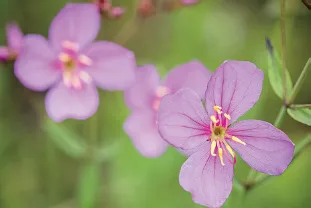
Meadow beauties fleck the bays with color. This small perennial shows up in cypress swamps, moist sands, and boggy meadows. Its stamens’ anthers are rich with pollen.
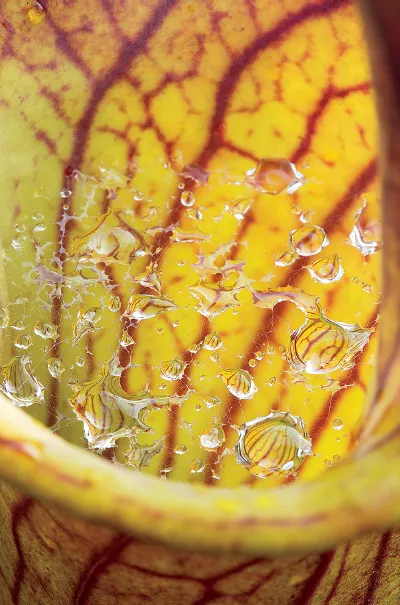
In the summer we took a close look at the deep pink veins running through meadow beauties. In habitat-specific bays, we got on our knees and hands and searched for Venus flytraps. Examining the oddly beautiful blooms of pitcher plants evoked the mysterious ways of nature. The carnivorous pitcher plant is death made beautiful. We liked seeing white-topped sedge, Rhynchospora colorata, in bloom. From a distance you can’t see the delicate mint-green tendrils that make up part of the white blossoms. In spring and summer, thanks to morning dew or afternoon rain, we got a kick out of the spiders that build webs across the rims of pitcher plants. The spiders have erected a blockade, Checkpoint Charlie, where they intercept insects.
Toward fall we anticipated sedges’ and grasses’ fenceless borders where colors define grass zones. Envision a layer of deep blue sky just over a line of green trees and six bands of pink, gold, light green, yellow, dark green, and red grass. Now sprinkle in yellow and blue wildflowers. It’s something to behold.
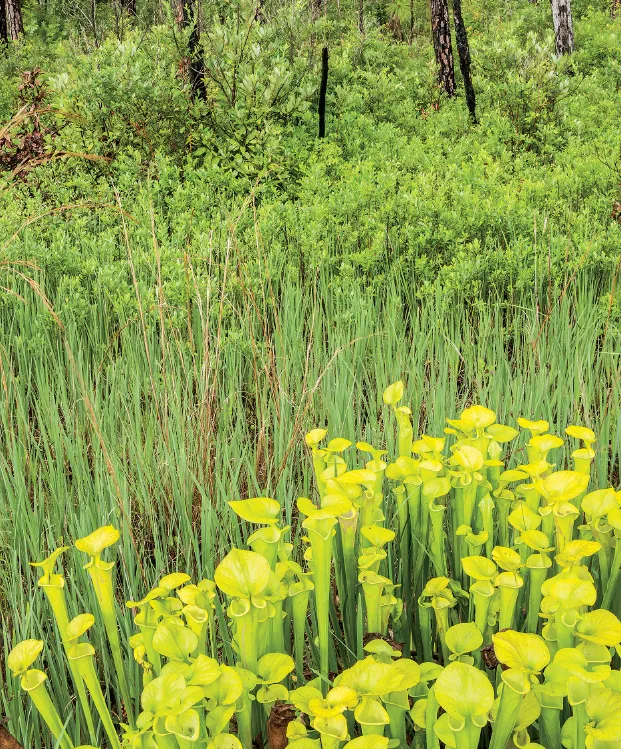
At the edge of sedges and shrubs stand colonies of pitcher plants. Fall will bring colors to them that rival a florist’s most imaginative creations. And all these wonderful plants are in close proximity. You can walk from one area of habitat to another in mere feet. Ecotones, areas of transition between biomes, abound in bays. A typical bay gives you the opportunity to explore diverse habitats on foot.
Death’s Door
BERKELEY COUNTY, SOUTH CAROLINA
The inventive ways of nature: spiderwebs across pitcher plants’ openings capture insects seeking the fragrant “nectar,” which will prove to be their undoing even if they escape spiders’ ambush.
Still Waters
BERKELEY COUNTY, SOUTH CAROLINA
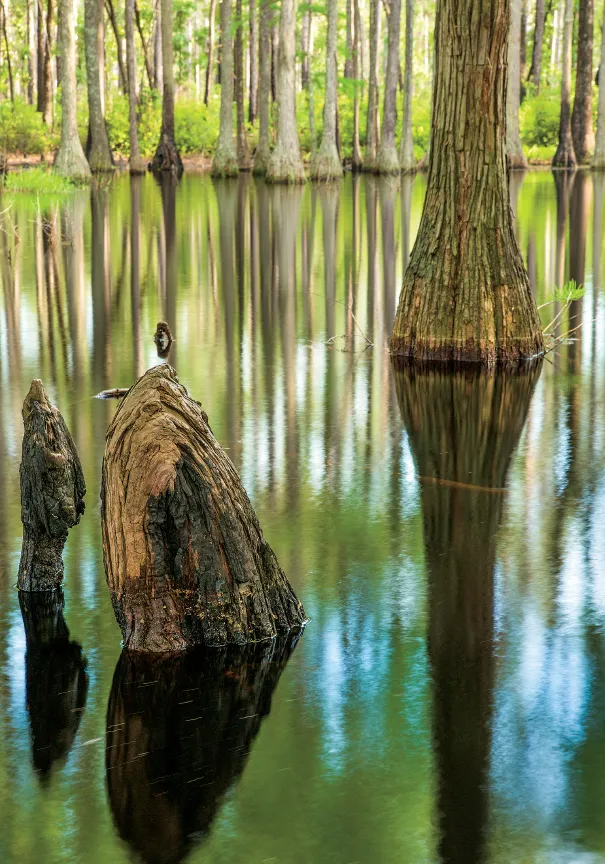
Florida Bay mirrors cypress knees and trunks. Beneath still waters life runs deep in a bay. Aquatic insects and amphibians spend part of their life cycle beneath water. This bay has sinkholes, formed from eroding limestone.
Neighboring Habitats
Woods, shrubs, grasses, and pitcher plants form ecotones. In a Carolina bay, a short walk takes you a long way as habitat goes.
As summer fades, signs of fall arrive. Colors begin to change. In autumn sand rims looked as if snow had fallen around and beneath the red leaves of scrub oaks. Even beneath a gray sky, the red leaves of oaks, snow-white sands, and evergreen trees on the horizon painted a pretty picture. In the interior wetlands, we looked for concentrated pools of water where tannic acid looks much like strawberry Kool-Aid. Cypress needles turn orange and stand out against a blue sky.
Sand-Rim Trees
FLORENCE COUNTY, SOUTH CAROLINA
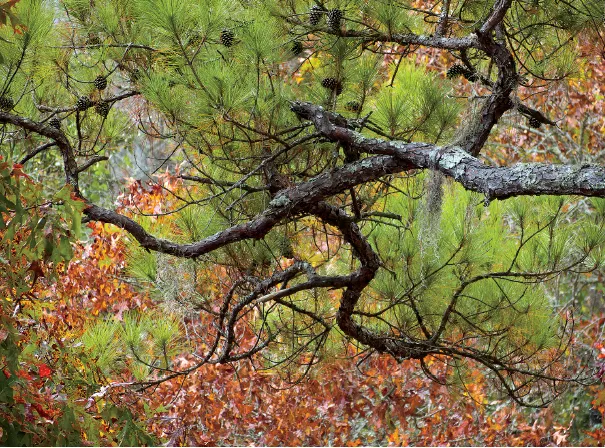
Larger bays feature sand rims on their southeastern end. These rims show up in aerial photographs. Walking a rim reveals pines and scrub oaks in sands heaped up by long periods of prevailing winds, according to Kaczorowski’s oriented wind and wave theory.
A Glimpse of Fall
AIKEN COUNTY, SOUTH CAROLINA
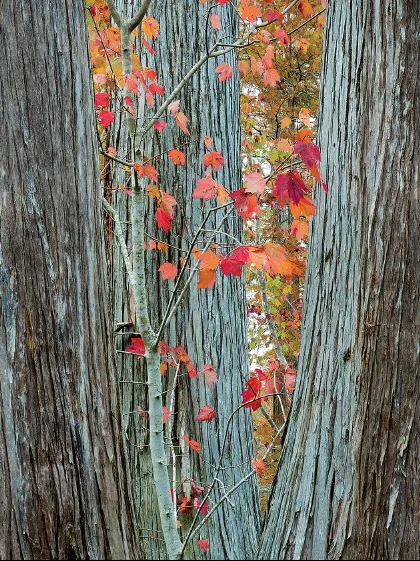
At Enchantment Bay maple leaves and cypress bark contrast. A peek between the cypress reveals the red leaves of vines and hardwoods.
Watermarks
AIKEN COUNTY, SOUTH CAROLINA
While autumn brightens the bay, cypress bark is darkened where water recently stood. In spring retreating waters leave rings around cypress, the residue of floating pollen.
Up from Black Waters
BAMBERG COUNTY, SOUTH CAROLINA
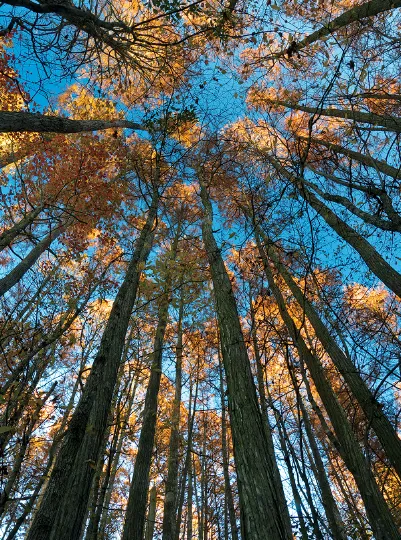
Cypresses in autumn foliage thrust rust-colored needles into the blue. Out of sight are the fallen needles’ mirror-like images upon black waters.
By winter’s onset bald cypresses shed their needles, and blackwater better reflects the sky. In the Southeast occasional snows whiten the bays. Leaves of colors float atop the blackwater, creating a kaleidoscope effect as breezes rearrange them. We visited Woods Bay and walked its leaf-strewn boardwalk in winter. We saw fungi on trees and on a warm sunny day found a banded water snake coiled up in a sunstruck patch of needles and leaves.
Just a Photographer and Writer
As we pointed out in our introduction, we are not naturalists or scientists. As a photographer and writer, we appreciate what bays do. They provide much-needed habitat in areas where standing water doesn’t exist. Bays provide flood control and make drinking water available to many species. They act as giant, spongelike filters that cleanse water of pollutants and impurities. They provide wildlife habitat and help control erosion. They amaze and unleash wonder. Recognizing that most people will not go into them, aware that many people know nothing about them, we pursue a simple and straightforward mission: we want to share their beauty and wonder and in so doing build support for protecting bays as yet undisturbed.
Going into a bay is not like going into a park. The seasons have a lot to do with what to wear. If it’s spring or summer, wear long pants—jeans work—high-top boots, snake chaps as a precaution, and a long-sleeve white linen shirt, which handles the heat well. Wear a wide-brimmed hat or at least a cap. Use sunscreen. Wear good-quality sunshades. Take insect repellent. Mosquitoes abound, as do ticks, and at times deerflies attack in swarms. U.S. Forest Service’s Bruce Lyles, retired, says huge clouds of mosquitoes were so thick and ravenous at one bay that he and his colleagues had to run to escape them.
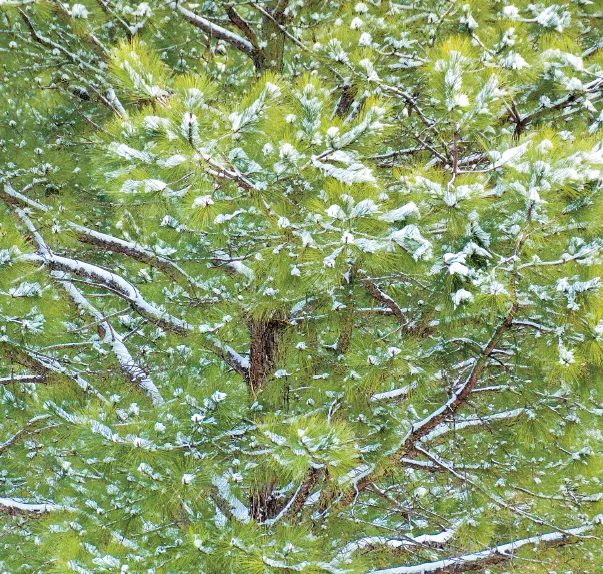
A Wintry Coat
BLADEN COUNTY, NORTH CAROLINA
A rare snow flecks white upon a loblolly pine. Loblollies make up nearly half of the commercial softwood timber in the South. Clear-cutting right up to the edge of a bay, however, works a hardship on amphibians and reptiles during breeding cycles.
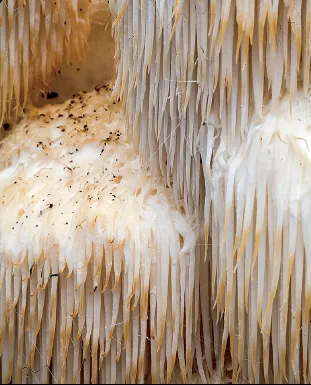
Tastes Like Lobster
Looking like stalactites, this fungus, Hericium americanum, properly prepared, tastes like lobster, according to wetlands ecologist Linda Lee.
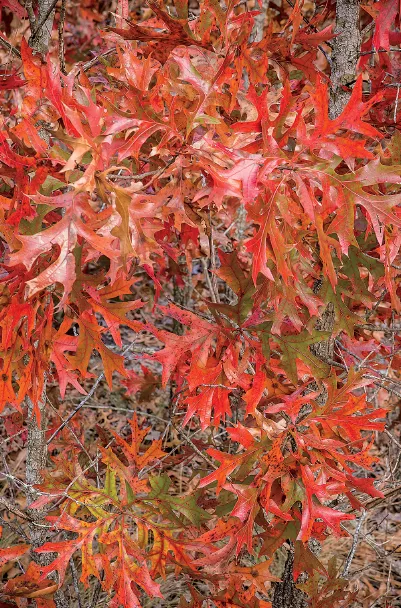
Wall of Red
Besides bringing cooler temperatures, fall light up the bays with color.
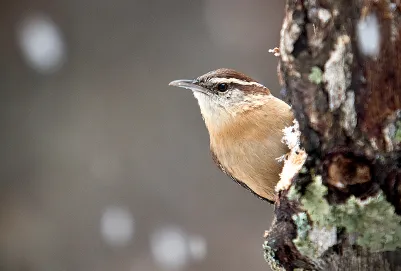
Palmetto State Icon
BLADEN COUNTY, NORTH CAROLINA
The South Carolina state bird dwells in the high shrubs and forests of Carolina bays. Known for its presence around gardens, sheds, and garages, it also likes pocosins. Here a few snowflakes flutter by an inquisitive Carolina wren in the Tarheel State.
Make a record of what you see. Take a compass and a good camera, not a smart-phone camera. Always take a lot ...