The science of nanotechnology, the manipulation, design and engineering of devices at the atomic and molecular scale, is starting to be applied to many disciplines including aspects of agriculture and crop science. This book opens with a brief history of nanotechnology in agriculture. Applications are then examined in detail, including nanopesticides, nanosensors, nanofertilizers, and nanoherbicides. Topics covered include; the biosynthesis of nanoparticles (through microbes, plants and other biotic agents); the ecological consequences of their delivery into the environment (examining effects and toxicity on soil, soil biota, and plants); safety issues; an overview of the global market for nanotechnology products, and the regulation of nanotechnology in agriculture. The book concludes with speculations on what the future holds for the technology.The book has been written by an international group of researchers and experts from over 12 countries with experience across a wide range of issues relating to the industry.This book will be of use to a wide range of researchers and professional scientists in the agricultural sector, academia and industry, including microbiologists, chemical engineers, geneticists, plant scientists and biochemists.
eBook - ePub
Emerging Trends in Agri-Nanotechnology
Fundamental and Applied Aspects
- English
- ePUB (mobile friendly)
- Available on iOS & Android
eBook - ePub
Emerging Trends in Agri-Nanotechnology
Fundamental and Applied Aspects
About this book
Information
Subtopic
Agricoltura 1 Rewinding the History of Agriculture and Emergence of Nanotechnology in Agriculture
1Key Laboratory of Tropical Forest Ecology, Xishuangbanna Tropical Botanical Garden, Chinese Academy of Sciences, China; 2Laboratory of Environmental Nanotechnology, São Paulo State University, Brazil; 3Department of Mycology and Plant Pathology, Institute of Agricultural Sciences, Banaras Hindu University, India
# Past affiliation of Sandhya Mishra: Department of Mycology and Plant Pathology, Institute of Agricultural Sciences, Banaras Hindu University, India.
1.1 Introduction
Agriculture has been the key factor for development and rise of human civilization by nurturing the ever-growing human population. Agricultural history dates back thousands of years when people started to harvest their food from the surroundings about 10,000 years bc (Wieczorek and Wright, 2012). The field of agriculture has witnessed groundbreaking revolutions with the main aim of enhancing food production in order to feed the constantly growing human population. The major concern for agriculturists is to enhance crop production in a sustainable manner with the aim of fulfilling food demand for the ever-growing human population, which is expected to grow to around 9.3 billion in 2050. In this regard, researchers are attempting to bring substantial changes in agricultural technology to shape the infrastructure of modern agriculture (Mba et al., 2012; Mishra et al., 2014b).
The Green revolution (GR) is credited with the development of high-yielding varieties, and enhanced crop yield has led to transformation of management techniques through uncontrolled use of synthetic fertilizers and pesticides. However, despite the largely excellent outcome from GR, there are adverse effects from synthetic pesticides and fertilizers on ecosystems, including diminished soil fertility and groundwater pollution. The major concerns and issues associated with GR raised important question about the sustainability and efficiency to cope with the emerging challenges of the 21st century (Thompson et al., 2007). Consequently, efforts were channelled to address biosafety issues and sustainability in agriculture and this led to the development of organic farming through biofertilizers and biopesticides. Enhanced crop productivity and plant disease management without any adverse impacts on soil microflora are the major advantages of using these bioinoculant-based fertilizers and pesticides (Adesemoye and Kloepper, 2009; Bhardwaj et al., 2014). In spite of this, the major concerns of shelf life and unpredictable performance under stressed environment limit its complete effectiveness in agricultural practices. Therefore, changes in agricultural technology are urgently needed by modern agriculture in order to face the major constraints in a sustainable manner. Hence, nanotechnology has emerged as a cutting-edge solution, as this revolutionary technology provides the opportunity for precision farming (Mishra and Singh, 2015; Mishra et al., 2017a).
1.2 A Brief Outline of Nanotechnology-based Researches in Agriculture
In recent times, nanotechnology has emerged as the sixth revolutionary technology after the Industrial Revolution in the mid-1700s and the Green revolution of the 1960s (NAAS, 2013) (Fig. 1.1). In actual fact, the multidisciplinary approach of nanotechnology has been exploited in a broad range of sectors, including cosmetics, pharmaceuticals, electronics and agriculture (Mishra et al., 2016). The agricultural sector has witnessed tremendous advancements due to the integration of nanotechnology providing new avenues in the field of agri-nanotechnology (Mishra et al., 2017a). The innovative field of agri-nanotechnology has contributed successfully in various areas such as genetics and plant breeding, waste remediation, nanobioprocessing, plant disease management and crop productivity (Moraru et al., 2003; Nair et al., 2010; Mishra et al., 2014a; Mishra et al., 2017b).
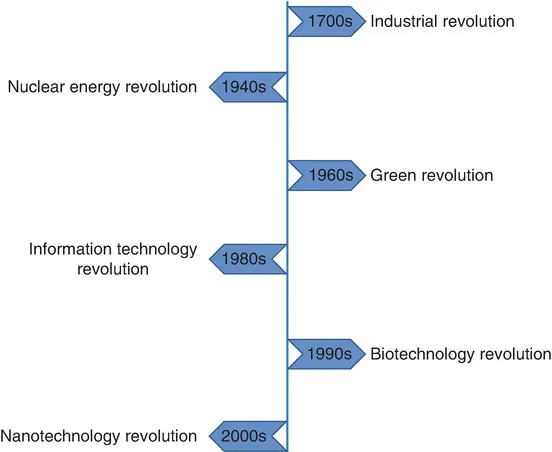
Fig. 1.1. Evolution of the technology in agriculture section.
The concept of nanotechnology in the agriculture sector originated approximately half a century ago (Mukhopadhyay, 2014). The remarkable popularity of nanotechnology-based researches in the agriculture sector is demonstrated by the fact that Google Scholar Search on the phrase ‘nanotechnology in agriculture’ shows about 464,000 results while Google patents search displays 2283 patents (at time of writing).
This progressive increase in scientific publications and patents reveals the potential benefits of nanotechnological applications in agriculture. It is worth mentioning here that the scientific fraternity is seeking nanotechnology solutions to various agricultural and environmental challenges due to its robust application. Agriculture benefits from nanotechnology in a number of ways, such as reduced use of agrochemicals due to smart delivery system, nanofertilizer for reducing the loss and runoff of synthetic fertilizers, killing of phytopathogens by nanopesticides, bionanocomposites, nanosensors as a smart detecting tool (Nair et al., 2010; Parisi et al., 2015; Mishra et al., 2017a,b) (Fig. 1.2).
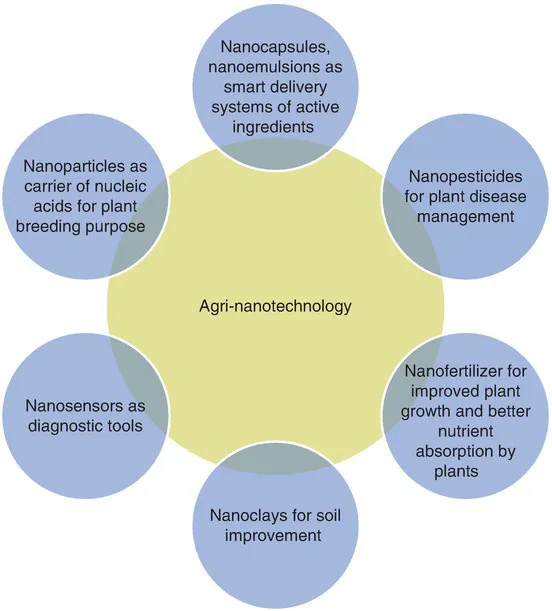
Fig. 1.2. Potential applications of nanotechnology in agriculture.
The growing trends of publications in different areas of agri-nanotechnology depict the ongoing researches and their excellent outcome. As evident from Fig. 1.3, the majority of research has been carried out in the area of nanofertilizers, while a limited number of studies has been attempted in the area of nanopesticides. The global scenario of research trends in agri-nanotechnology is expected to benefit both society and the agricultural sector enormously.
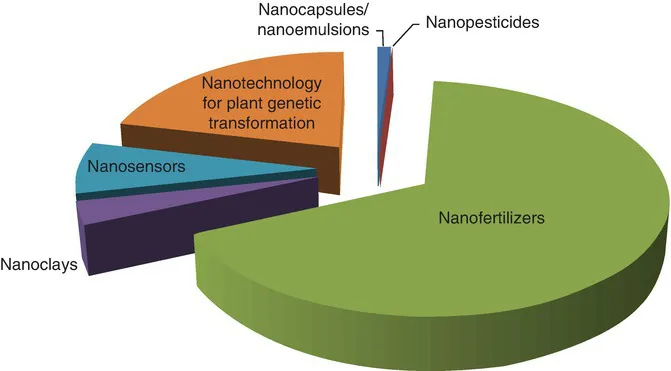
Fig. 1.3. Figure generated based on Google search results of published articles in the representative areas.
1.3 Achieving Sustainability in Agriculture Through Nanotechnology: What Are the Possibilities?
Sustainability has been the main goal in agricultural researches and is being given priority in order to protect the environment. Integrating the concept of sustainability into any technology and research design is necessary to deal with the global challenges of environment security and societal benefits. However, coping with sustainability issues is proving to be difficult due to the complicated interaction between the ecosystem and society (Rao, 2002; Wennersten et al., 2008). In 2000, when nanotechnology research began, the main goal was the discovery, synthesis, characterization and modelling of nanoscale materials, which are popularly known as nanoparticles. With continuous advancements in nanotechnology-based studies, the research agenda has become more focused towards addressing the major issue of sustainability. The sustainability of any technology is based mainly on three components: ecosystem health, societal benefits and economic profitability (Diallo and Brinker, 2011) (Fig. 1.4). Achieving sustainability in agriculture is necessary to meet the current and future needs of society and the environment without having any detrimental effects on the ecosystem.
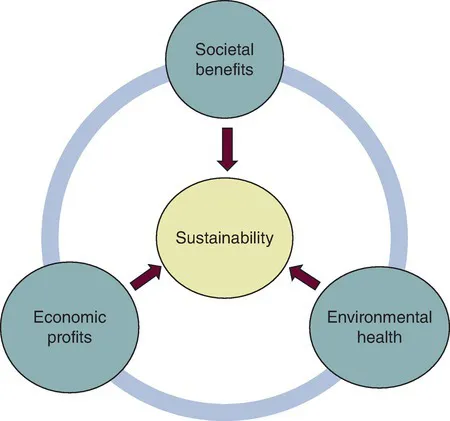
Fig. 1.4. The key components of sustainability in agriculture.
There are certain millennium development goals (MDG) established by the United Nations with which one can identify the sustainability of the technology (Brutland, 1987). Keeping these goals in mind, we can predict the sustainable approach of nanotechnology in the following ways.
1. Nanotechnology has the potential to advance modern agricultural systems with huge positive impacts on society. Moreover, the food safety sector also benefits through the integration of nanotechnology.
2. Taking into account the hygiene and sanitation issues of society, nanotechnology has offered promising applications in the field of water treatment technologies, eradicating the occurrence of water-borne diseases. Moreover, groundwater contamination has been another serious issue that can easily be addressed with the help of nanotechnology.
3. Nanotechnology-based advanced methodologies for detecting, monitoring and prevention of plant diseases.
4. Restoring and maintaining soil fertility through application of nanofertilizers.
Subsequently, these optimistic disclosures of the potential of nanotechnology indicate an environmentally sustainable approach for agricultural uses. Furthermore, modernization of the agricultural sector through involvement of nanotechnology has contributed greatly to the food sector by improve...
Table of contents
- Cover
- Half Title
- Dedication
- Title
- Copyright
- Contents
- About the Editors
- Contributors
- Foreword
- Preface
- Acknowledgements
- 1 Rewinding the History of Agriculture and Emergence of Nanotechnology in Agriculture
- 2 Use of Nanomaterials in Agriculture: Potential Benefits and Challenges
- 3 Green Nanotechnology for Enhanced Productivity in Agriculture
- 4 Nanonutrient from Fungal Protein: Future Prospects on Crop Production
- 5 Multifarious Applications of Nanotechnology for Enhanced Productivity in Agriculture
- 6 Different Methods of Nanoparticle Synthesis and Their Comparative Agricultural Applications
- 7 Nanotoxicity to Agroecosystem: Impact on Soil and Agriculture
- 8 Factors Affecting the Fate, Transport, Bioavailability and Toxicity of Nanoparticles in the Agroecosystem
- 9 Nanotechnology: Comprehensive Understanding of Interaction, Toxicity and the Fate of Biosynthesized Nanoparticles in the Agroecosystem
- 10 Global Market of Nanomaterials and Colloidal Formulations for Agriculture: An Overview
- 11 The Responsible Development of Nanoproducts – Lessons from the Past
- 12 Nanotechnology Application and Emergence in Agriculture
- 13 Positive and Negative Effects of Nanotechnology
- 14 Vanguard Nano(bio)sensor Technologies Fostering the Renaissance of Agriculture
- 15 Current Trends and Future Priorities of Nanofertilizers
- 16 Biosafety and Regulatory Aspects of Nanotechnology in Agriculture and Food
- 17 Implication of Nanotechnology for the Treatment of Water and Air Pollution
- 18 Role of Nanotechnology in Insect Pest Management
- Index
- Back Cover
Trusted by 375,005 students
Access to over 1.5 million titles for a fair monthly price.
Study more efficiently using our study tools.
Frequently asked questions
Yes, you can cancel anytime from the Subscription tab in your account settings on the Perlego website. Your subscription will stay active until the end of your current billing period. Learn how to cancel your subscription
No, books cannot be downloaded as external files, such as PDFs, for use outside of Perlego. However, you can download books within the Perlego app for offline reading on mobile or tablet. Learn how to download books offline
Perlego offers two plans: Essential and Complete
- Essential is ideal for learners and professionals who enjoy exploring a wide range of subjects. Access the Essential Library with 800,000+ trusted titles and best-sellers across business, personal growth, and the humanities. Includes unlimited reading time and Standard Read Aloud voice.
- Complete: Perfect for advanced learners and researchers needing full, unrestricted access. Unlock 1.5M+ books across hundreds of subjects, including academic and specialized titles. The Complete Plan also includes advanced features like Premium Read Aloud and Research Assistant.
We are an online textbook subscription service, where you can get access to an entire online library for less than the price of a single book per month. With over 1.5 million books across 990+ topics, we’ve got you covered! Learn about our mission
Look out for the read-aloud symbol on your next book to see if you can listen to it. The read-aloud tool reads text aloud for you, highlighting the text as it is being read. You can pause it, speed it up and slow it down. Learn more about Read Aloud
Yes! You can use the Perlego app on both iOS and Android devices to read anytime, anywhere — even offline. Perfect for commutes or when you’re on the go.
Please note we cannot support devices running on iOS 13 and Android 7 or earlier. Learn more about using the app
Please note we cannot support devices running on iOS 13 and Android 7 or earlier. Learn more about using the app
Yes, you can access Emerging Trends in Agri-Nanotechnology by Harikesh Bahadur Singh, Sandhya Mishra, Leonardo Fernandes Fraceto, Renata de Lima, Harikesh Bahadur Singh,Sandhya Mishra,Leonardo Fernandes Fraceto,Renata de Lima in PDF and/or ePUB format, as well as other popular books in Tecnologia e ingegneria & Agricoltura. We have over 1.5 million books available in our catalogue for you to explore.