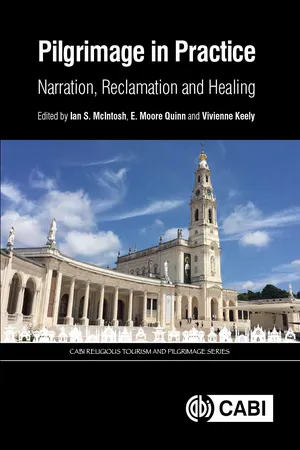
Pilgrimage in Practice: Narration, Reclamation and Healing provides an interdisciplinary approach to the topic. It reveals many aspects of the practice of pilgrimage, from its nationalistic facets to its effect on economic development; from the impact of the internet to questions of globalization; from pilgrimage as protest to pilgrimage as creative expression in such media as film, art and literature. - Contests the very definitions of pilgrimage and challenges its paradigms. - Provides multiple perspectives on the subject to give a rounded and comprehensive review. - Covers past and present definitions of the sacred journey, the telling of stories, and historical injustices and their remedies through pilgrimage.Perhaps best understood as a form of heritage tourism or tourism with a conscience, pilgrimage (as with touristic travel) contains a measure of transformation that is often deep and enduring, making it a fascinating area of study. Reviewing social justice in the context of pilgrimage and featuring a diverse collection of interdisciplinary voices from across the globe, this book is a rich collection of papers for researchers of pilgrimage and religious and heritage tourism.
eBook - ePub
Pilgrimage in Practice
Narration, Reclamation and Healing
- English
- ePUB (mobile friendly)
- Available on iOS & Android
eBook - ePub
Pilgrimage in Practice
Narration, Reclamation and Healing
About this book
Information
1 The Experience of Medieval Pilgrims on the Route to Santiago de Compostela, Spain: Evidence from the 12th-century Pilgrim’s Guide
College of Charleston, South Carolina, USA
*Address for correspondence: [email protected]
The dramatic rise in popularity of the pilgrimage to Santiago de Compostela in the 11th and 12th centuries is reflected in the 12th-century Pilgrim’s Guide, which provides information about shrines to visit and the experiences of pilgrims along the four main routes through France and northern Spain – routes which are used by pilgrims to this day. This chapter examines the information provided in the Pilgrim’s Guide with an emphasis on the physical, visual and spiritual experiences of pilgrims along the route. The Guide describes the characteristics of the lands, peoples, local customs and food and drink experienced on the journey, as well as the miraculous qualities of saints whose shrines should be visited on the way, and in some cases the visual imagery of their shrines. Scholars have tended to emphasize the typical ‘pilgrimage church’ plan exemplified by the churches at Santiago, Toulouse or Conques, but a study of both the guide and the surviving churches reveals a rich variety of architectural forms and imagery that would have been experienced by 12th-century pilgrims along the pilgrimage routes. Each shrine emphasized the validity and significance of its relics, and the arrangement of the sacred space and visual imagery was frequently designed to demonstrate the miraculous powers or qualities of the local saint, as well as to encourage, warn and influence the behaviour and beliefs of devotees visiting the shrine. Methods of communication about the experiences of pilgrims have changed in recent times, as well as the religious emphasis; modern pilgrims have easy access to information about the journey and place less emphasis on the power of holy relics and more on the inner spiritual experience, but many aspects of walking the Camino remain the same.
The 12th-century Pilgrim’s Guide
Insights into the experience of individual pilgrims in the modern world are often provided by pilgrim narratives, such as the multiple stories of pilgrims to Santiago de Compostela, or Richard Burton’s account of his Hajj, analysed by Suzanne van der Beek (Chapter 4, this volume) and Aateka Khan (Chapter 6, this volume), respectively. The recent revival of interest in the Camino to Santiago de Compostela has taken place against a dramatic increase in access to, and exchange of, information about the experiences of pilgrims. Through online media as well as written records, modern pilgrims can communicate with a wide network of other pilgrims and can disseminate their stories and experiences to a large audience. In contrast, 12th-century pilgrims to Santiago de Compostela would generally have learned of the experiences of others, and disseminated their own, by word of mouth, and they have left no personal written records. It is therefore much more difficult to access their individual experiences. We can, however, gain some insights through a remarkable 12th-century manuscript, the Pilgrim’s Guide, which forms part of a collection of texts in the Codex Callixtinus and which describes the routes and shrines to be visited along the Way of St James through France and Spain.
The Codex was probably written and compiled around 1140 by three authors, the primary one being a French cleric, possibly Aymeric Picaud. It provides an anthology of information for pilgrims, including sermons, miracles, liturgical texts, musical pieces, descriptions of the route, sites to visit along the way and local customs. The final section, the Pilgrim’s Guide, provides information and advice for pilgrims (Shaver-Crandell and Gerson, 1995; Gerson et al., 1998; Ashley and Deegan, 2009). Few 12th-century pilgrims would have had the opportunity to see, or the ability to read, a copy of the Pilgrim’s Guide, and it was not a resource to be consulted en route like a modern-day guide. Only 12 manuscript copies survive, and there can never have been a large number of copies available (Shaver-Crandell and Gerson, 1995, p. 24). The Guide might, however, have been read to pilgrims by a local priest before they set off. This is implied by the passage at the end of Chapter III: ‘If I have enumerated only briefly the said towns and stages along the way, it is so that pilgrims setting out for Santiago can, having heard this, anticipate the expenses necessitated by the journey’ (Shaver-Crandell and Gerson, 1995, p. 28). Information about the pilgrimage would no doubt have been disseminated to prospective pilgrims by the local priest and by former pilgrims as they prepared for their journey, and a liturgical ceremony was developed in the 11th century for departing pilgrims. The ritual involved the blessing of their staff and scrip, items which became the identifying characteristics of a pilgrim (Ashley and Deegan, 2009, p. 65).
By examining some of the descriptions of, and evaluating the advice to, pilgrims given in the Codex Callixtinus, and by analysing some of the surviving monuments referred to in the Guide, we can gain a greater understanding of the experience of 12th-century pilgrims.
The Routes, Lands and Peoples along the Way
The Guide provides practical information about the routes travelled by pilgrims, opening with a description of four possible routes:
which, leading to Santiago, converge into one near Puente la Reina, in Spanish territory. One goes through St Gilles, Montpellier, Toulouse, and the Somport; another passes through Notre Dame of Le Puy and Ste-Foy at Conques and St-Pierre at Moissac; another proceeds through Ste-Marie-Madeleine of Vézelay, St-Leonard of the Limousin and the city of Périgueux; another goes from St-Martin of Tours to St-Hilaire of Poitiers, St-Jean d’Angély, St-Eutrope of Saintes and the city of Bordeaux.
(Shaver-Crandell and Gerson, 1995, p. 65)
Since all had to travel initially from home, either on foot or horseback or by boat, there was a much larger network of routes that would have been used to join the major routes, and which no doubt allowed pilgrims to take in as many shrines and pilgrimage destinations as possible on the way. Each of the routes described in the Guide starts at a major shrine, and the text emphasizes the importance of visiting shrines along the way, describing the characteristics and miracles of the saints at each site. But the Guide does not focus only on spiritual or religious experiences; but it also provides an account of the physical and cultural experiences of the journey. Chapter VII describes ‘The Names of the Lands and Characteristics of the Peoples on the Road to St James’, displaying prejudices and fears typical of travellers in strange and foreign lands. One of the most pejorative descriptions is that of the people of Navarre who, the Guide asserts:
are repulsively dressed, and they eat and drink repulsively. For in fact all those who dwell in the household of a Navarrese, servant as well as master, maid as well as mistress, are accustomed to eat all their food mixed together from one pot, not with spoons but with their own hands, and they drink with one cup. If you saw them eat, you would think them dogs or pigs. If you heard them speak, you would be reminded of the barking of dogs. For their speech is utterly barbarous. . . . This is a barbarous race unlike all other races in customs and in character, full of malice, swarthy in colour, evil of face, depraved, perverse, perfidious, empty of faith and corrupt, libidinous, drunken, experienced in all violence, ferocious and wild, dishonest and reprobate, impious and harsh, cruel and contentious, unversed in anything good, well-trained in all vices and iniquities . . . in everything inimical to our French people. For a mere nummus, a Navarrese or a Basque will kill, if he can, a Frenchman. . . . In certain regions of their country . . . when the Navarrese are warming themselves, a man will show a woman and a woman a man their private parts. The Navarrese even practice unchaste fornication with animals. For the Navarrese is said to hang a padlock behind his mule and his mare, so that none may come near her but himself. He even offers libidinous kisses to the vulva of woman and mule.
(Shaver-Crandell and Gerson, 1995, p. 73)
I have quoted this passage at some length as it gives some idea of the mixture of observation, myth, prejudice and scandalous gossip presented in the Guide and of the reaction to different racial, linguistic and regional characteristics as pilgrims travelled through France and northern Spain. It is clear from this passage that the author is French, and those reading it or listening to it were given further insight into his region of origin by a description of the people of Poitou as ‘valiant heroes and fighting men, daring in the front line of battle, elegant in their dress, distinguished of face, very generous with gifts, lavish in hospitality’ (Shaver-Crandell and Gerson, 1995, pp. 68–69).
It is worth reiterating that, although the Guide’s author was an educated cleric, pilgrims came from all walks of life, and many of those travelling on foot could not have been much more elegant in dress or eating habits than the description of the people of Navarre. This may be illustrated by a capital from the 12th-century chapel of the pilgrim’s hostel in Navarrete (Navarre), which depicts two seated pilgrims, wearing hooded and belted tunics, one clearly identified by his staff and scrip, the other holding a goblet (Fig. 1.1). Both are eating ‘with their own hands’ and appear to be drinking ‘with one cup’ in a manner not unlike the description of the Navarrese. A second capital depicts two figures in their underwear, one grooming the hair of the other, possibly removing head lice (Fig. 1.2). The capitals, now incorporated, along with the portal and windows, into the entrance to the cemetery at Navarrete, come from the chapel of the hospital and inn of St Juan de Acre, which was founded just east of Navarrete in c.1185 (Shaver-Crandell and Gerson, 1995, pp. 251–252). Pilgrim hostels, established along the route to Compostela by a number of monastic orders, served to provide food and shelter, and would have brought together people of different nationalities and backgrounds, much as they do today.
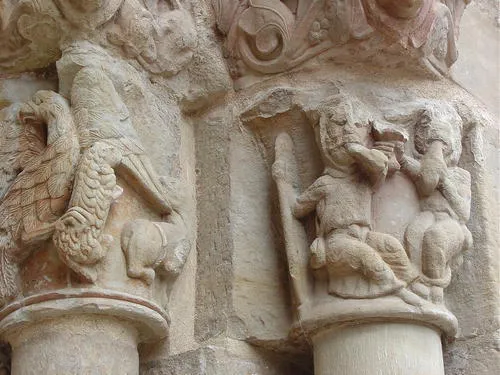
Fig. 1.1. Navarrete, hospital and inn of St Juan de Acre, capital. Photo courtesy of Tessa Garton, ©2011. Used with permission.
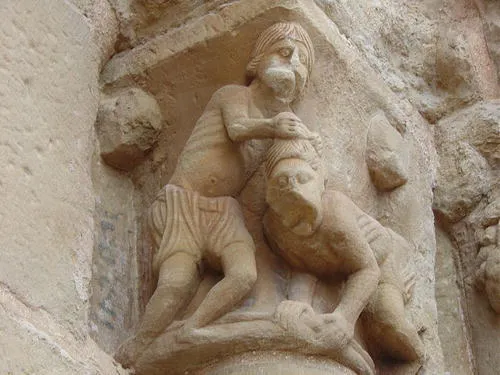
Fig. 1.2. Navarrete, hospital and inn of St Juan de Acre, capital. Photo courtesy of Tessa Garton, ©2011. Used with permission.
The Guide also prepares pilgrims for the changes in climate, landscape and vegetation which they will encounter during their pilgrimage. Chapter VII includes warnings of the difficulties and dangers of the journey, such as the insects and quicksands of the Landes region:
If . . . you cross the Landes region in summer, take care to guard your face from the enormous insects, commonly called guespe [wasps] or tavone [horseflies], which are most abundant there; and if you do not watch carefully where you put your feet, you will slip rapidly up to your knees in the quicksand which abounds there.
(Shaver-Crandell and Gerson, 1995, p. 69)
There are many references to the difficulties of crossing rivers, and the dangers of dishonest ferrymen. One notable example warns that:
The way of St James crosses two rivers which flow near the town of St-Jean de Sorde . . . which cannot be crossed without a barque – may their boatmen be utterly damned! For, although the rivers are quite narrow, nevertheless, they are in the habit of getting one nummus from every person, poor as well as rich, whom they ferry across, and for a beast four, which they undeservedly extort. And, furthermore, their boat is small, made of a single tree trunk, scarcely big enough to accommodate horses. Also, when you get in, be careful not to fall into the water by accident. You will have to draw your horse behind you by the bridle, outside the boat, through the water. On account of this, get into the boat with only a few passengers because if the boat is overladen with too many people, it will soon be in peril. Many times also, after receiving the money, the ferrymen take on such a throng of pilgrims that the boat tips over, and the pilgrims are killed in the water. Thereupon the ferrymen rejoice wickedly after sei...
Table of contents
- Cover
- Half Title
- Series
- Title
- Copyright
- Contents
- Contributors
- Introduction: Pilgrimage in Practice – Narration, Reclamation and Healing
- 1 The Experience of Medieval Pilgrims on the Route to Santiago de Compostela, Spain: Evidence from the 12th-century Pilgrim’s Guide
- 2 Pilgrimage: A Distinctive Practice
- 3 Meshworks, Entanglements and Presencing Absence: Pilgrimages, Eastern Free State-style
- 4 Pilgrim Writers in Dialogue
- 5 Medieval Pilgrims in Modern Times: Buñuel’s The Milky Way
- 6 Richard Burton: Disguise as Journey to the Self and Beyond
- 7 Children’s Processions to Glasnevin: Contestation, Education, Recreation
- 8 ‘Non-Sacred’ No More: The Pilgrimage Path Crucán na bPáiste and the Re-evaluation of Irish Cultural Practices
- 9 Spain’s Mystical Adventure: Walking in the Footsteps of Teresa of Ávila
- 10 Dreaming of Al-Quds (Jerusalem): Pilgrimage and Visioning
- 11 The Future Generations Ride of the Lakota Sioux
- 12 Pilgrimage and the Challenging of a Canadian Foundational Myth
- Index
- Back Cover
Trusted by 375,005 students
Access to over 1.5 million titles for a fair monthly price.
Study more efficiently using our study tools.
Frequently asked questions
Yes, you can cancel anytime from the Subscription tab in your account settings on the Perlego website. Your subscription will stay active until the end of your current billing period. Learn how to cancel your subscription
No, books cannot be downloaded as external files, such as PDFs, for use outside of Perlego. However, you can download books within the Perlego app for offline reading on mobile or tablet. Learn how to download books offline
Perlego offers two plans: Essential and Complete
- Essential is ideal for learners and professionals who enjoy exploring a wide range of subjects. Access the Essential Library with 800,000+ trusted titles and best-sellers across business, personal growth, and the humanities. Includes unlimited reading time and Standard Read Aloud voice.
- Complete: Perfect for advanced learners and researchers needing full, unrestricted access. Unlock 1.5M+ books across hundreds of subjects, including academic and specialized titles. The Complete Plan also includes advanced features like Premium Read Aloud and Research Assistant.
We are an online textbook subscription service, where you can get access to an entire online library for less than the price of a single book per month. With over 1.5 million books across 990+ topics, we’ve got you covered! Learn about our mission
Look out for the read-aloud symbol on your next book to see if you can listen to it. The read-aloud tool reads text aloud for you, highlighting the text as it is being read. You can pause it, speed it up and slow it down. Learn more about Read Aloud
Yes! You can use the Perlego app on both iOS and Android devices to read anytime, anywhere — even offline. Perfect for commutes or when you’re on the go.
Please note we cannot support devices running on iOS 13 and Android 7 or earlier. Learn more about using the app
Please note we cannot support devices running on iOS 13 and Android 7 or earlier. Learn more about using the app
Yes, you can access Pilgrimage in Practice by Ian S. McIntosh, E. Moore Quinn, Vivienne Keely, Ian S. McIntosh,E. Moore Quinn,Vivienne Keely in PDF and/or ePUB format, as well as other popular books in Business & Hospitality, Travel & Tourism Industry. We have over 1.5 million books available in our catalogue for you to explore.