Advances in Cancer Drug Targets is an e-book series that brings together recent expert reviews published on the subject with a focus on strategies for synthesizing and isolating organic compounds and elucidating the structure and nature of DNA. The reference work serves to give readers a brief yet comprehensive glance at current theory and practice behind employing chemical compounds for tackling tumor suppression, DNA site specific drug targeting and the inhibition of enzymes involved in growth control pathways. The reviews presented in this series are written by experts in pharmaceutical sciences and molecular biology. These reviews have been carefully selected to present development of new approaches to anti-cancer therapy and anti-cancer drug development. This e-book volume will be of special interest to molecular biologists and pharmaceutical scientists.
- English
- ePUB (mobile friendly)
- Available on iOS & Android
eBook - ePub
Advances in Cancer Drug Targets: Volume 1
About this book
Information
Inhibitors of Cyclin Dependent Kinases: Useful Targets for Cancer Treatment (An Update)
P. Sapra Sharma*, R. Sharma
Department of Chemistry, C.S.S.S. (P.G.) College, Machhra, Meerut, Uttar Pradesh, India
Abstract
Cyclin-dependent kinases (CDKs) are serine/threonine protein kinases, which regulate multiple pathways such as the cell division cycle, apoptosis, transcription, and neuronal functions. Their sequential activation ensures the correct timing and ordering of events required for cell cycle progression. Uncontrolled proliferation is a hallmark of cancer cells. Over the past two decades, it has become increasingly clear that in many human cancers, hyperactivity of CDKs is one of the mechanisms underlying the physiological hyper-proliferation. Therefore, inhibition of CDKs, through the insertion of small molecules into its ATP binding pocket has emerged as a potential therapy method for cancers. For these reasons an intensive search for pharmacological inhibitors of these protein kinases has been carried out during the last decade. Consequently, a number of small molecules with CDK inhibitory properties have been developed. Many of these have been evaluated as potent inhibitors and some are currently in clinical-trials for various types of cancer. This review reports various CDK inhibitors, natural as well as small molecules, along with their reported activities for various CDKs. It will highlight the potential for the development of novel anti-cancer molecules.
Keywords: : Cyclin dependent kinase, CKIs, small molecule inhibitors, anticancer agents, cell cycle, apoptosis.
* Address correspondence to P. Sapra Sharma: Department of Chemistry, C.S.S.S. (P. G.) College, Machhra, Meerut, Uttar Pradesh, India; E-mail: [email protected]
INTRODUCTION
The worldwide epidemic of cancer has been stimulating the search for new concept and targets for the treatment of this incurable disease. Most traditional therapies [1] aim to exploit the proliferative machinery, for example DNA replication or chromosome segregation. As such, they demonstrate only partial selectivity for tumor cells compared with normal proliferating tissues such as the gut and bone marrow. Although efforts to refine and incrementally improve
existing classes of anticancer agents continue, the recent shift of emphasis is towards novel mechanistic targets that have emerged as a direct consequence of the intense study of the underlying genetic changes associated with the cancerous state.
Recently, pharmaceutical attention has been focused on the proteins driving cellular proliferation, transformation, differentiation, and metastasis [2]. Approximately 518 different protein kinases are encoded in the human genome [3]. Among them a key class of cell cycle proteins, the Cyclin Dependent Kinases (CDKs), are a group of serine/threonine kinases involved in the regulation of the cell cycle, neuronal functions, transcription and apoptosis [4]. Their activity is highly regulated at several levels by multiple mechanisms, including association with cyclin regulatory subunit (CDK binding protein). The oscillating concentration of the cyclin during the cell cycle is the basis for the stage-dependent activity of the CDKs. Different CDK/cyclin pairs are active during each phase of the cell cycle [5]. To date at least 13 CDKs and more than 25 different cyclin families [6] have been described. Individual family members have a limited ability to assort a heterodimeric complex.
It is now recognized that in various human tumors, hyperactivity and deregulation of CDKs (mutation, deletion, and overexpression) are the primary causes for the uncontrolled proliferation [7]. This led to the initiation of ATP-competitive low molecular weight CDK inhibitor and their evaluation as anticancer agents [7-9]. The significance of these potential drug targets is clearly evidenced by the high incidence of alteration in the genes that code for these proteins in tumors. Targeting of protein kinase is a relatively recent activity for medicinal chemists. The design principles gleaned from these efforts have emerged as novel therapeutic that are more specific, efficacious, lesser toxic than their predecessors and target a wide range of protein kinase with broad therapeutic potential. A number of natural product-derived as well as synthetic kinase inhibitors have been discovered and characterized [10]. Presently more than a dozen kinase inhibitors have been approved for clinical use and about 150 are undergoing clinical trials [11].
There are many challenges in the rational development of specific inhibitors for protein kinases due to the similarity of the mechanism of different protein kinases and structure of their catalytic domains [12]. To achieve success, two main issues must be explored: First the selectivity among the kinases for efficacious and safe control of cell cycle. The clinical efficacy of these inhibitors critically depends not only on their potency, that is their ability to bind to CDKs, more stable than ATP (1), but also on their selectivity for the specific CDK over other highly homologous members of the CDK family and also other protein kinases. Non -selective inhibition carries the risk of undesired and potentially toxic side effect [13]. Thus along with potency, selectivity is crucial issue in inhibitor design [14,15]. Second as evidenced from those compounds with nanomolar potency for the CDK enzymes, two hydrogen bonds between the substrate and the CDK in the ATP pocket are preferred. As there have been no compounds disclosed with picomolar potency, it remains a possibility that an additional binding interaction will be key in achieving better potency and selectivity [16].
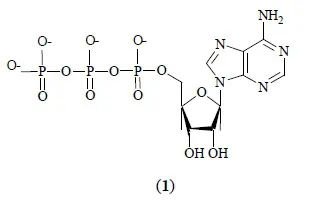
This review highlights small molecule inhibitors of CDKs (natural as well as synthetic) as potential drug molecules for cancer treatment. It also provides a brief insight into CDK inhibitory proteins (CKIs).
CDK INHIBITORS
The CDK inhibitors can be visualized as belonging to the following categories:
CDK Inhibitory Proteins or CKIs
Small Molecule Inhibitors
These are an additional regulatory subunit for the CDKs, a protein that binds to the CDK/cyclin complex and inhibits its activity. These proteins are termed CDK inhibitory proteins (CKIs). INK4 {(p16(Ink4a), p15(Ink4b), p18(Ink4c) and p19(Ink4d)} and Cip1/Waf1/Kip1-2 family {(p21(Cip1/Waf1), p27(Kip1), p57(Kip2)} are two familie...
Table of contents
- Welcome
- Table of Contents
- Title
- BENTHAM SCIENCE PUBLISHERS LTD.
- FOREWORD
- LIST OF CONTRIBUTORS
- The PIK3CA Gene as a Mutated Target for Cancer Therapy
- AKT Signaling in Regulating Angiogenesis
- Inhibitors of Cyclin Dependent Kinases: Useful Targets for Cancer Treatment (An Update)
- Cellular FLICE-Like Inhibitory Protein (C-FILP ): A Key Anti-Apoptotic Factor and a Target for Cancer Therapy
- Pin1: A Promising Novel Diagnostic and Therapeutic Target that Acts on Numerous Cancer-Driving Pathways
- Anticancer Immunotherapy in Combination with Proapoptotic Therapy - Possible Therapeutic Strategies for Enhancement of Anticancer Immune Reactivity in Autologous Immunocompetent Cells and After Allogeneic Stem Cell Transplantation
- Melatonin and Breast Cancer: Selective Estrogen Enzyme Modulator Actions
- Targeting Cancer and Neuropathy with Histone Deacetylase Inhibitors
Trusted by 375,005 students
Access to over 1.5 million titles for a fair monthly price.
Study more efficiently using our study tools.
Frequently asked questions
Yes, you can cancel anytime from the Subscription tab in your account settings on the Perlego website. Your subscription will stay active until the end of your current billing period. Learn how to cancel your subscription
No, books cannot be downloaded as external files, such as PDFs, for use outside of Perlego. However, you can download books within the Perlego app for offline reading on mobile or tablet. Learn how to download books offline
Perlego offers two plans: Essential and Complete
- Essential is ideal for learners and professionals who enjoy exploring a wide range of subjects. Access the Essential Library with 800,000+ trusted titles and best-sellers across business, personal growth, and the humanities. Includes unlimited reading time and Standard Read Aloud voice.
- Complete: Perfect for advanced learners and researchers needing full, unrestricted access. Unlock 1.5M+ books across hundreds of subjects, including academic and specialized titles. The Complete Plan also includes advanced features like Premium Read Aloud and Research Assistant.
We are an online textbook subscription service, where you can get access to an entire online library for less than the price of a single book per month. With over 1.5 million books across 990+ topics, we’ve got you covered! Learn about our mission
Look out for the read-aloud symbol on your next book to see if you can listen to it. The read-aloud tool reads text aloud for you, highlighting the text as it is being read. You can pause it, speed it up and slow it down. Learn more about Read Aloud
Yes! You can use the Perlego app on both iOS and Android devices to read anytime, anywhere — even offline. Perfect for commutes or when you’re on the go.
Please note we cannot support devices running on iOS 13 and Android 7 or earlier. Learn more about using the app
Please note we cannot support devices running on iOS 13 and Android 7 or earlier. Learn more about using the app
Yes, you can access Advances in Cancer Drug Targets: Volume 1 by Atta-ur-Rahman in PDF and/or ePUB format, as well as other popular books in Medicine & Oncology. We have over 1.5 million books available in our catalogue for you to explore.