eBook - ePub
Available until 23 Dec |Learn more
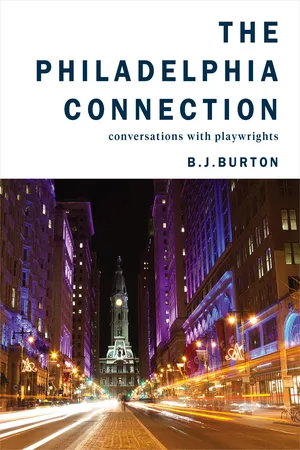
The Philadelphia Connection
Conversations with Playwrights
This book is available to read until 23rd December, 2025
- 270 pages
- English
- ePUB (mobile friendly)
- Available on iOS & Android
eBook - ePub
Available until 23 Dec |Learn more
About this book
Philadelphia is one of America's most interesting and innovative cities for theater, rich in new theaters, new plays, and rising playwrights. This book paints a picture of the city's burgeoning scene through interviews with some of Philadelphia's most influential and successful playwrights. Featuring interviews with Bruce Graham, Michael Hollinger, Thomas Gibbons, Seth Rozin, Louis Lippa, Jules Tasca, Kimmika Williams-Witherspoon, Ed Shockley, Larry Loebell, Arden Kass, Nicholas Wardigo, Alex Dremann, Katharine Clark Gray, and Jacqueline Goldfinger, the book will be a source of inspiration for playwrights in Philadelphia and far beyond.
Frequently asked questions
Yes, you can cancel anytime from the Subscription tab in your account settings on the Perlego website. Your subscription will stay active until the end of your current billing period. Learn how to cancel your subscription.
No, books cannot be downloaded as external files, such as PDFs, for use outside of Perlego. However, you can download books within the Perlego app for offline reading on mobile or tablet. Learn more here.
Perlego offers two plans: Essential and Complete
- Essential is ideal for learners and professionals who enjoy exploring a wide range of subjects. Access the Essential Library with 800,000+ trusted titles and best-sellers across business, personal growth, and the humanities. Includes unlimited reading time and Standard Read Aloud voice.
- Complete: Perfect for advanced learners and researchers needing full, unrestricted access. Unlock 1.4M+ books across hundreds of subjects, including academic and specialized titles. The Complete Plan also includes advanced features like Premium Read Aloud and Research Assistant.
We are an online textbook subscription service, where you can get access to an entire online library for less than the price of a single book per month. With over 1 million books across 1000+ topics, we’ve got you covered! Learn more here.
Look out for the read-aloud symbol on your next book to see if you can listen to it. The read-aloud tool reads text aloud for you, highlighting the text as it is being read. You can pause it, speed it up and slow it down. Learn more here.
Yes! You can use the Perlego app on both iOS or Android devices to read anytime, anywhere — even offline. Perfect for commutes or when you’re on the go.
Please note we cannot support devices running on iOS 13 and Android 7 or earlier. Learn more about using the app.
Please note we cannot support devices running on iOS 13 and Android 7 or earlier. Learn more about using the app.
Yes, you can access The Philadelphia Connection by B. J. Burton in PDF and/or ePUB format, as well as other popular books in Literature & Literary Criticism. We have over one million books available in our catalogue for you to explore.
Information
Chapter 1
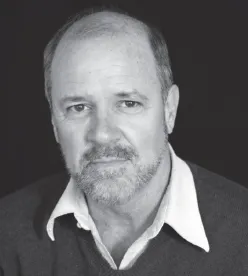
Bruce Graham. Anyone who’s been connected even remotely with the Philadelphia theatre scene in the last 30 years recognizes his name. The quality and quantity of work he’s had produced in almost every major Philadelphia theatre is legendary. Starting with his Playwright-in-Residence status at the Philadelphia Festival Theatre for New Plays, held on the University of Pennsylvania campus, Bruce has continued to inspire theatregoers, actors, directors, and playwrights with his portrayal of the ordinary man in day-to-day, interesting, difficult, unusual, and extraordinary circumstances. His work has especially resonated with local audiences who tend to be repeat customers having become genuine fans throughout his career. His national appeal is evident by his many awards, including the Jeff Award in Chicago for Best New Play for The Outgoing Tide. My own study of playwriting began while attending the free readings of his plays at the Festival Theatre in the early 1990s. It was astounding and exciting at that time to know that a living person from the Philadelphia area could be responsible for creating a play and didn’t have to live in New York or within the pages of a book. The revelation was life-changing. Bruce spoke with me at his townhouse in Philadelphia.
BJB: Were you born in the Philadelphia area?
BG: Darby. I was born in beautiful, downtown Darby.
BJB: And you grew up in Ridley, Delaware County?
BG: Yes, grew up in Ridley.
BJB: What was that like for you growing up there?
BG: It was terrific. I loved living in Ridley, growing up there. It was suburbs, but it still felt like the city. And by the time I was ten or eleven, I was able to hop on public transportation and come to Philly to go to the movies ’cause back then movies didn’t come out to the suburbs sometimes for even months at a time. If you wanted to see Mary Poppins [1964], you had to come in to the Midtown Theatre. I loved growing up there, but I think it really influenced me because it is very blue collar. Everybody’s dad worked at Boeing or Sun Ship or Westinghouse or the Airport or the Navy Yard. You know, that was pretty much it, so everybody was kind of equal in that respect.
BJB: Do you remember the first play you saw growing up?
BG: Yes! Of course, I do! I had my first funeral and my first play in the same day. My Mother’s Great Aunt Em or something died. I guess I was like four years old, and so we were over at the wake in Darby, and my mother loved musicals, and we had tickets to Camelot at the Valley Forge Music Fair [in Devon, Pennsylvania, operated from 1955 to 1996]. I was more fascinated with the guys running up and down the aisles with the scenery and stuff, and so I don’t know what that says about my career, but my first funeral and my first play were on the same day.
BJB: Do you remember the first movie you saw?
BG: I think it was Pinocchio [1940]. I may be wrong on that, but I vividly remember seeing Pinocchio, and the whale scared the hell out of me! It was almost all Disney until I was like ten or so, and then like every Jack Lemmon movie that came out. One movie that really influenced me was a comedy called Good Neighbor Sam [1964], and I remember seeing that when it was at the Swarthmore College Theater. It’s almost like that moment in Chorus Line: “I can do that!” I remember watching Jack Lemmon up there, and saying literally to myself, “I can do that! I think I’ll be an actor!” And that’s what did it! And that’s how I kind of got involved. I was always, even in kindergarten, at St. Marks or whatever [acting in]: “The Story of David and Goliath Told on a Felt Board.” You know, that was me up there, so I’ve always been an entertainer in one way or the other, but I started out as an actor.
BJB: Did you start writing in high school?
BG: You know, actually I had a one-act play produced in high school. I directed it, and we did like nine performances of it. It was a great experience because I was used to getting laughs as an actor. I was in the back of the theatre and suddenly when the audience laughed, it was like, “Whoa! This is the greatest thing in the world!”
BJB: So, already you were thinking about this.
BG: I was! I remember in tenth grade, going to high school, and the guidance counselor asking me what I wanted to be and giving me a form. And I misspelled “playwright.” I assumed it was “playwrite,” which makes sense, you know. I didn’t know how to spell it, but I knew I wanted to be it.
BJB: Do we want to go to college next?
BG: Sure, I’d love to go back to college! That was fun! I went to Indiana University of Pennsylvania, not known for its theatre, but it was cheap and it was 300 miles from home. My sister was in college at the time, too, so money was tight. At the time there was really no department. We were in the English Department. I was there a week and I was cast in my first play, where in some schools, you know, you don’t get cast ’til you’re a junior or something, and I did three shows a semester. By the time I was a sophomore, we were producing a dinner theatre at the student union, and I started working as a night club comic with a friend of mine. I was in Pittsburgh playing Elks halls and night clubs and strip joints and you name it, and it was all great training. While I was there I wrote two one-act plays and we performed them, and this time I didn’t direct them. I had two different directors. Writing the comedy was great, great training because there’s nothing more audience-oriented than comedy.
BJB: Did you have some kind of playwriting class at college?
BG: No. Never had a playwriting class in my life until I went to grad school at Villanova, at which point I’d already had two plays Off-Broadway. And I never went. And I got a B.
BJB: After college at Indiana University of Pennsylvania, you went to New York?
BG: Yeah, first I went to New York to be an actor, but I was highly unsuccessful. When you’re 22 and look like me, there’re not a lot of parts. So I came back to Philly and actually got parts in dinner theatre and stuff. I was working in dinner theatre all the time doing comedies.
BJB: And then you went to get your teaching certificate?
BG: I thought I’d better get a real job, and so I went to Widener [University], and they certified me to teach in like a semester and a half, and it was great. I stumbled into a job at the Rose Tree Media School District, and I was there for five years.
BJB: What grade did you teach?
BG: Everything from seven to twelve.
BJB: Then came Villanova, right? How long were you there?
BG: A year and a half maybe. I was in the master’s program, and they were very kind to me. They were giving me a graduate assistantship. They were paying me to go to college. That was my excuse to quit my school teaching job and try to be a writer. And suddenly I was getting work. I was hired at CBS to write a TV show called Legwork [1987], which went seven episodes. But I couldn’t turn down the money, you know. It was more than I made as a school teacher [in a year] for one episode.
BJB: How did your connection come about with the Philadelphia Festival Theatre for New Plays? Which no longer exists, sad to say. [The Philadelphia Festival Theatre for New Plays ran from 1981 to 1997.]
BG: Carol Rocamora formed this new theatre for just new American plays, and I remember getting a postcard in the mail because I had like a production or something at Delaware County Community College. Bohdan Senkow directed a version of Rainbow Bar & Grille. So I guess I was on a list of local playwrights and they sent me this invitation to come to a reading or something, and I did and got on their mailing list, got on their radar. I sent them a play, they rejected it nicely, and then I wrote Burkie, and in the third year of the Festival’s existence they produced it. Part of it was they liked the play and part of it was I was local, which certainly helps. I was 26, I guess, and I remember the night they called. Stephanie and I were having dinner. We had like no dining room in our apartment. We were sitting on the floor having dinner, and I kicked my plate right across the room when I got the news. And they said, “Is $1,000 okay?” My first response was going to be like, “Well, it’s a little steep, but I’ll try and make it. What? Oh, you’re going to pay me?” So, yeah, and then after that it was like a big hit for them, and then three months later it was Off-Broadway.
BJB: How did it get to Off-Broadway so quickly?
BG: Variety gave it a review and a good review from the Philadelphia production. Back then in the ’80s there were a lot more little theatres with subscription audiences Off-Broadway, and this was the Hudson Guild and they needed product. They did five plays a year and they liked to do new plays. So they did this one.
BJB: And you were able to get your agent that way?
BG: Correct. Yes.
BJB: How was that first production in New York?
BG: I was too close to it. I was 26. I didn’t realize that when you write a play that’s basically depressing, you have to fight against the text, and we played it as tragedy when we should have played it as comedy, including the costumes and the set. Everything was dark; everything was blue or gray or purple. My mother died right after the production, and I predicted exactly how she was going to die in Burkie. The last picture I have of the two of us is in the lobby of the Hudson Guild. So I really had to put that play away for a while. Finally, Cincinnati Playhouse wanted to do it and when they did it, Richard Harden directed it and did a great job. And what he did was just the opposite way, played it like it was a Neil Simon comedy down to the set and costumes, and it worked. It worked ten times better. So I learned. I was 26 and I was Off-Broadway, and whoa, I was just saying “yes” to everything. I’ve learned a lot since then.
BJB...
Table of contents
- Cover Page
- Title Page
- Copyright
- Dedication
- Contents
- Acknowledgments
- Foreword
- Preface
- Introduction
- Chapter 1: A Conversation with Bruce Graham
- Chapter 2: A Conversation with Michael Hollinger
- Chapter 3: A Conversation with Thomas Gibbons
- Chapter 4: A Conversation with Seth Rozin
- Chapter 5: A Conversation with Louis Lippa
- Chapter 6: A Conversation with Jules Tasca
- Chapter 7: A Conversation with Kimmika Williams-Witherspoon
- Chapter 8: A Conversation with Ed Shockley
- Chapter 9: A Conversation with Larry Loebell
- Chapter 10: A Conversation with Arden Kass
- Chapter 11: A Conversation with William di Canzio
- Chapter 12: A Conversation with Nicholas Wardigo
- Chapter 13: A Conversation with Alex Dremann
- Chapter 14: A Conversation with Katharine Clark Gray
- Chapter 15: A Conversation with Jacqueline Goldfinger
- Conclusion
- Bibliography
- Suggested Reading
- Photo Credits
- About the Author
- Back Cover