![]()
William Temple: “Confident Living after Careful Prayer”1
David Urquhart
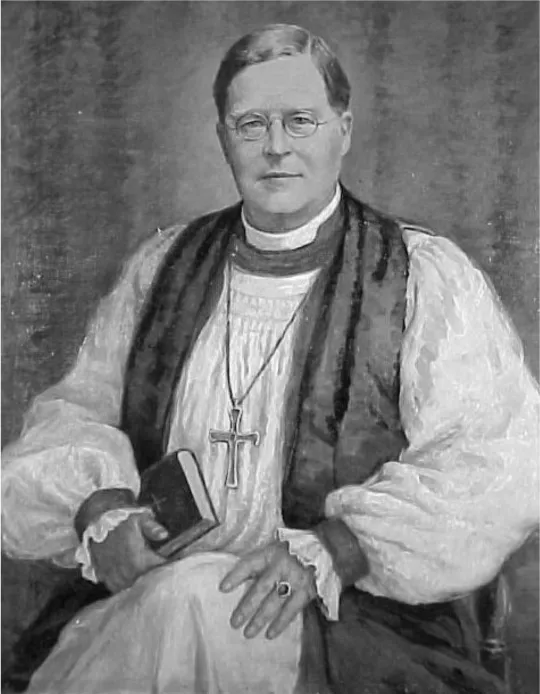
William Temple, Archbishop of Canterbury, Philosopher, Tutor, Headmaster, Priest, Bishop, Chairman, Broadcaster, is described as “the most significant Anglican churchman of the twentieth century.”2
A vigorous apologist for Christian faith, it was above all his fearless engagement with intractable economic and social issues that gave him national prominence. In short space we shall trace the roots of his beliefs and policies, account for his leadership in Church and Society and consider his continuing influence both for those of faith and none.
In the wide range of Temple’s engagement in public life from 1908 to 1944 he faced issues still current today: the gap between universal education and persistent ignorance; confusion about family fragmentation and social cohesion; the uneasy relationship between Church and State; aspiring cooperation between Christian denominations; tension between social action and evangelism; the ethics of war and peace; dilemmas of poverty and wealth.
During a life of just over 63 years that “was always dominated by the immediate requirements of work”3 Temple drew on a rich hinterland of classics, music, poetry, family, friendship and above all applied Christian theology.
William, the second son of Fredrick and Beatrice Temple, was born on 15th October 1881 in Exeter and educated at Rugby School, where his father had been Headmaster. At Balliol, Oxford, he followed his father with a double first.4 Nurtured deeply in the 19th Century Establishment he sat lightly to inherited conventions.5
Temple “had a profound a profound veneration for both his parents”.6 His relationship with his father was both intellectual and affectionate, with a constant correspondence during his education, foreshadowing the days of email, “showing the intimate interchange of opinion, instruction and chaff”. In his enthronement sermon of 1942, William said of his father “He was and is among men the chief inspiration of my life”.7
Living with a cataract present from infancy that left him completely blind in his right eye, Temple possessed a near photographic memory that served him well, not only when preaching and lecturing, but also in reciting poetry and singing.
From student days he was a champion of Robert Browning, comparing him favourably to Shakespeare in a precocious undergraduate essay that stands the test of time:
“Shakespeare is magnificent but it is a pagan magnificence; Browning’s genius is fundamentally and thoroughly Christian: through his poems there rings a joy of work and worship”8
Near the end of his life he wrote with wisdom that “The greatest literature is manifestly aiming at the presentation of a picture of human life in such ways that we may understand it more fully, not with a utilitarian aim, but because there is a joy in the understanding itself”9
Temple displayed from an early age that he was quick of mind and an intellect at heart. A persistent student on a quest for learning, he rose to Rugby sixth form at the earliest possible age, 15 ½. His relentless work ethic has been captured in one of the letters to his father:
“How could any intelligent boy who was able to get through two hours’ work in thirty minutes spend the remaining ninety minutes except by adding to his store of knowledge” (Iremonger 1948: 16, 18)10
Temple continued in this vein at Oxford, graduating to a Fellowship at Queen’s, in 1904. He was elected to an exhibition, his good humour and equanimity outweighing any hint of priggishness or pomposity.
Among the strongest influences at Balliol during Temple’s time, followers of TH Green, Edward Caird promoted dialectical idealism on Hegelian lines while Cook Wilson moved steadily towards a realist philosophy.11 Temple was an active member of the Union, holding positions as Secretary and Librarian in 1903 and President in the Lent Term of his last year. He spoke often, three times in a single week at the Union in his last year, finding no difficulty in developing a style that was at once confident in argument and sympathetic to opponents.
The study of Philosophy, and Plato in particular, that undergirded Temple’s theological and religious development gave him a broad platform on which to build his understanding of God and the world. This interdisciplinary approach foreshadows the even wider base of the stimulating Philosophy of Science courses pioneered today by Rugby School.
Temple’s two larger written works trace his journey towards a convinced Christian framework for life. In Mens Creatrix when discussing his assertion that “Pelagianism is Ethical Atheism”, another good essay topic, his Liberal confidence in divine-human relationship emerges:
“At His own time He will call out from our hearts the response to His own love by the full manifestation of it in its irresistible power. So far as we have felt it, we prepare ourselves for a fuller response; so far as we trust those who tell us of it, we prepare ourselves to respond when the time will come.” (Temple 1917: 290)
By the time of Christus Veritas he is developing his ideas of Christian engagement with society. From God’s perspective:
“the whole purpose of human history is to fashion souls, and a great fellowship of the souls, knit together in mutual love through common participation in the Eternal love.” (Temple 1924: 197)
About individual human conversion and the transformation of life Temple says:
“It is at once clear…that the thought of eternity is a most potent influence.” (ibid: 207)
Daunting as these substantial essays are to the general reader, Michael Ramsey, theologian-bishop, and later a successor at both York and Canterbury, does not count Temple as a mainstream scholar. Nonetheless Ramsey concedes:
“… if Temple was the amateur he was yet, par excellence, the theologian. For him, everything was related to God, and to be cherished and studied in that revelation.”12
As Temple entered public life, his theories were moulded and developed by active engagement, whether in the Student Christian Movement, the Workers Educational Association or later in the Coal and General Strikes of 1925 and 1926.13 “His social concern was at the start an idealistic but shadowy socialism. He remained, however, all his life a man of tempered enthusiasm, resiliently skilful in grafting into his thinking new patterns of ideas.”14
On neither extremes of Left or Right, a member of the Labour Party from 1918-1925, his methods can be followed up in the late RH Preston’s extensive consideration of applied ethics, including the use of Middle Axioms.15
As the Dictators grew more powerful across Europe, Temple became more insistent that principles and their appli...