Boron-Based Compounds
eBook - ePub

Boron-Based Compounds

Potential and Emerging Applications in Medicine

  1. English
  2. ePUB (mobile friendly)
  3. Available on iOS & Android
eBook - ePub

Boron-Based Compounds

Potential and Emerging Applications in Medicine

About this book

Noted experts review the current status of boron-containing drugs and materials for molecular medical diagnostics

Boron-Based Compounds offers a summary of the present status and promotes the further development of new boron-containing drugs and advanced materials, mostly boron clusters, for molecular medical diagnostics. The knowledge accumulated during the past decades on the chemistry and biology of bioorganic and organometallic boron compounds laid the foundation for the emergence of a new area of study and application of boron compounds as lipophilic pharmacophores and modulators of biologically active molecules.This important text brings together in one comprehensive volume contributions from renowned experts in the field of medicinal chemistry of boron compounds.

The authors cover a range of the most relevant topics including boron compounds as modulators of the bioactivity of biomolecules, boron clusters as pharmacophores or for drug delivery, boron compounds for boron neutron capture therapy (BNCT) and for diagnostics, as well as in silico molecular modeling of boron- and carborane-containing compounds in drug design. Authoritative and accessible, Boron-Based Compounds:

  • Contains contributions from a panel of internationally renowned experts in the field
  • Offers a concise summary of the current status of boron-containing drugs and materials used for molecular diagnostics
  • Highlights the range and capacity of boron-based compounds in medical applications
  • Includes information on boron neutron capture therapy and diagnostics

Designed for academic and industrial scientists, this important resource offers the cutting-edge information needed to understand the current state of boron-containing drugs and materials for molecular medical diagnostics.
Frequently asked questions

Yes, you can cancel anytime from the Subscription tab in your account settings on the Perlego website. Your subscription will stay active until the end of your current billing period. Learn how to cancel your subscription.
No, books cannot be downloaded as external files, such as PDFs, for use outside of Perlego. However, you can download books within the Perlego app for offline reading on mobile or tablet. Learn more here.
Perlego offers two plans: Essential and Complete
  • Essential is ideal for learners and professionals who enjoy exploring a wide range of subjects. Access the Essential Library with 800,000+ trusted titles and best-sellers across business, personal growth, and the humanities. Includes unlimited reading time and Standard Read Aloud voice.
  • Complete: Perfect for advanced learners and researchers needing full, unrestricted access. Unlock 1.4M+ books across hundreds of subjects, including academic and specialized titles. The Complete Plan also includes advanced features like Premium Read Aloud and Research Assistant.
Both plans are available with monthly, semester, or annual billing cycles.
We are an online textbook subscription service, where you can get access to an entire online library for less than the price of a single book per month. With over 1 million books across 1000+ topics, we’ve got you covered! Learn more here.
Look out for the read-aloud symbol on your next book to see if you can listen to it. The read-aloud tool reads text aloud for you, highlighting the text as it is being read. You can pause it, speed it up and slow it down. Learn more here.
Yes! You can use the Perlego app on both iOS or Android devices to read anytime, anywhere — even offline. Perfect for commutes or when you’re on the go.
Please note we cannot support devices running on iOS 13 and Android 7 or earlier. Learn more about using the app.
Yes, you can access Boron-Based Compounds by Evamarie Hey-Hawkins, Clara Viñas Teixidor, Evamarie Hey-Hawkins,Clara Viñas Teixidor in PDF and/or ePUB format, as well as other popular books in Ciencias físicas & Química industrial y técnica. We have over one million books available in our catalogue for you to explore.

Information

Part 1
Design of New Boron‐based Drugs

1.1
Carboranes as Hydrophobic Pharmacophores: Applications for Design of Nuclear Receptor Ligands

Yasuyuki Endo
Faculty of Pharmaceutical Sciences, Tohoku Medical and Pharmaceutical University, Sendai, Japan

1.1.1 Roles of Hydrophobic Pharmacophores in Medicinal Drug Design

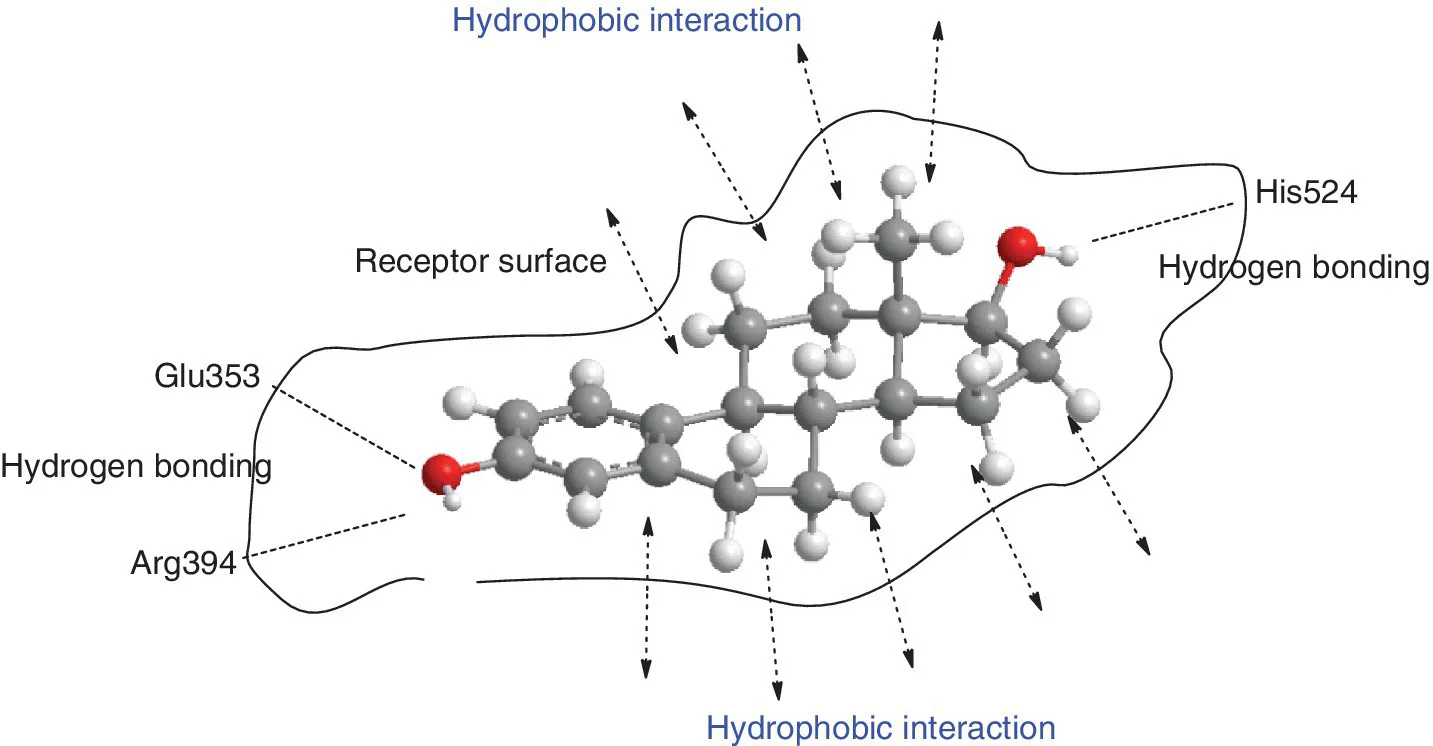
A pharmacophore is a partial structure in which important functional groups and hydrophobic structure are arranged in suitable positions for binding to a receptor [1]. Typically, hydrophilic functional groups of the pharmacophore interact with the receptor by hydrogen bonding and/or ionic bonding, and the hydrophobic structure interacts with a hydrophobic surface of the receptor. While hydrogen bonding plays a key role in specific ligand–receptor recognition, the hydrophobic interaction between receptor and drug molecule is especially important in determining the binding affinity. The difference of binding constants between a ligand having a suitable hydrophobic group and a ligand without such a group can be as large as 1000‐fold. In medicinal drug design, the hydrophobic structures are often composed of aromatic and heteroaromatic rings, which also play a role in fixing the arrangement of functional groups appropriately for binding to the receptor. On the other hand, three‐dimensional hydrophobic structures are not yet widely used in drug design, even though they could be well suited for interaction with the three‐dimensional hydrophobic binding pockets of receptors. It is noteworthy that various steroid hormones target distinct steroid hormone receptors owing to differences of functionalization of the hydrophobic steroidal skeleton. The binding of the natural ligand 17β‐estradiol to human estrogen receptor‐α (ERα) is illustrated in Figure 1.1.1 as an example. The large number of steroid hormones may be a consequence of evolutionary diversification of the functions of the steroidal skeleton. In this context, we aimed to establish a new three‐dimensional hydrophobic skeletal structure for medicinal drug design.
Ball and stick model illustrating the interactions of ligand with receptor. The components are labeled receptor surface, Glu353, Arg394, and His524. Double-headed arrows indicate hydrophobic interaction.
Figure 1.1.1 Interactions of ligand with receptor (example for 17β‐estradiol with estrogen receptor‐α).

1.1.2 Carboranes as Hydrophobic Structures for Medicinal Drug Design

In the past three decades, there has been increasing interest in globular molecules. In the 1980s, dodecahedrane, which consists of sp3 carbons, was synthesized [2]; and in the 1990s, the chemistry of fullerene C60, which also consists of sp2 carbons, was explored [3]. However, the former is not easy to synthesize, while the latter molecule may have limited application because of its large molecular size. On the other hand, icosahedral carboranes [4] are topologically symmetrical, globular molecules, and have been known for more than half a century. The B–B and C–B bonds of 12‐vertex carboranes are approximately 1.8 angstroms in length, and the molecular size of carboranes is somewhat larger than adamantane or the volume of a rotated benzene ring. Carboranes have a highly electron‐delocalized hydrophobic surface, and are considered to be three‐dimensional aromatic compounds [5] or inorganic benzenes. The structures of these compounds are illustrated in Figure 1.1.2. But, although the use of boron derivatives for boron neutron capture therapy (BNCT) of tumors has a long history [6], relatively little attention has yet been paid to the possible use of carboranes as components of biologically active molecules, despite their desirable hydrophobic character, spherical geometry, and convenient molecular size for use in the design and synthesis of medicinal drugs.
Structures of dodecahedrane, fullerene C60, adamantane, bicyclo[2, 2, 2]octane, o-carborane, m-carborane, and p-carborane.
Figure 1.1.2 Structures of globular molecules and characteristics of carboranes.
Carboranes have three isomers, ortho‐, meta‐, and para‐carboranes (Figure 1.1.2), and their rigid and bulky cage structures hold substituents in well‐defined spatial relationships. The two carbon atoms of carboranes have relatively acidic protons, which can readily be substituted with other organic groups [7]. Substituents can also be introduced selectively at certain boron atoms, to construct structures having three or more substituents, as illustrated in Figure 1.1.3 [8]. Carbocyclic skeletons often rearrange under acidic conditions, whereas carborane cage skeletons do not rearran...

Table of contents

  1. Cover
  2. Title Page
  3. Table of Contents
  4. List of Contributors
  5. Preface
  6. Part 1: Design of New Boron‐based Drugs
  7. Part 2: Boron Compounds in Drug Delivery and Imaging
  8. Part 3: Boron Compounds for Boron Neutron Capture Therapy
  9. Index
  10. End User License Agreement