The revised edition of the guide to environmental impact of pharmaceuticals and personal care products
The revised and updated second edition of Pharma-Ecology joins the health and environmental sciences professions' concern over the occurrence and fate of pharmaceutical and personal care products (PPCPs) in the environment and explores how to best minimize their impact. The text highlights the biological effects of various classes of pharmaceutical compounds under clinical settings, their modes of action, and approximate quantities consumed. The second edition contains the most recent knowledge about the ecological impact of PPCPs as more sensitive detection techniques have become available, since the book was first published.
The second edition offers the most up-to-date information on pharma ecology and bridges the gap between medicine, public health, and environmental science. This new edition contains helpful learning objectives for each chapter, as well as a brief section at the end of each chapter that presents a set of open ended questions. This vital resource:
• Explores the biological effects of pharmaceutical compounds under clinical settings, their modes of action, approximate quantities consumed
• Provides researchers and scientists with critical background data on the environmental impacts of PPCPs
• Contains the most current information on PPCPs' ecological impacts, based on new detection techniques
• Bridges the gap between medicine, public health, and environmental science
Written for ecologists, engineers, microbiologists, pharmacists, toxicologists, chemists, physicians, and veterinarians involved in pollution and environmental analysis, the second edition of Pharma-Ecology contains the most current information available on the environmental impact of pharmaceuticals and personal care products.
Trusted by 375,005 students
Access to over 1.5 million titles for a fair monthly price.
1 Usage of Pharmaceutical and Personal Care Products
LEARNING OBJECTIVES
Intertwine between human health and the ecosystem based on historical perspectives of environmental degradation.
Potential consequences of our increased dependency on extensive PPCP use vis‐à‐vis lessons from agrochemical (i.e. pesticides, herbicides, fungicides, and fertilizers) usage.
PPCP classification for environmental studies.
Historical pharmaceutical consumption trends in the United States and other developed countries highlighting global differences.
The human impulse for a cure runs quite deeply, and our first instinct whenever we feel sick or are inclined to sickness is to medicate. As the baby boomers age, so is their increased demand for state‐of‐the‐art medical care. The pharma–patient transaction has transformed itself from the previous practice of selling pharmaceutical products to selling a lifestyle. Amiss from that transformation, however, is the need to appreciate the intertwined relationship between the health of ecological systems and the ecology of health. Both of these concepts collectively refer to the health of humans as determined, at least in part, by the condition of their ecological surroundings. These considerations have led to the emergence of what is referred to as ecosystem health, a science aimed at integrating our desire to assess and monitor ecosystems and health‐related problems in a more holistic fashion, environmental degradation, and ecology (Rapport et al. 2001; Jjemba and Robertson 2005). Ecology is the study of the distribution, activities, and interactions of organisms with their habitat. Thus, ecosystem health necessitates the identification and characterization of natural and anthropogenic sources of environmental contaminants that can compromise our health, a need to predict their movement and persistence both in time and space, and determining how pathogens (typically the target of pharmaceuticals) and nontarget organism respond to the presence of such compounds. To that effect, pharmaceutical and personal care products (PPCPs) are increasingly being recognized as emerging contaminants in the environment.
Pharmaceutical or pharmaceutical substance in this context refers to the actual active pharmaceutical ingredients. PPCPs are a diverse group of chemicals that include prescription and nonprescription medications, veterinary drugs, nutritional supplements, and diagnostic agents as well as a variety of consumer products such as fragrances, sunscreens, and cosmetics. To that effect, PPCPs are referred to by several other names such as compounds of emerging concern (CECs) or trace organic compounds (TrOC). This book is intended to examine the usage of these chemicals, occurrence in the environment, and ecotoxicity and highlight efforts to minimize their presence (and introduction in the environment) as well as remove them from various matrices in the environment.
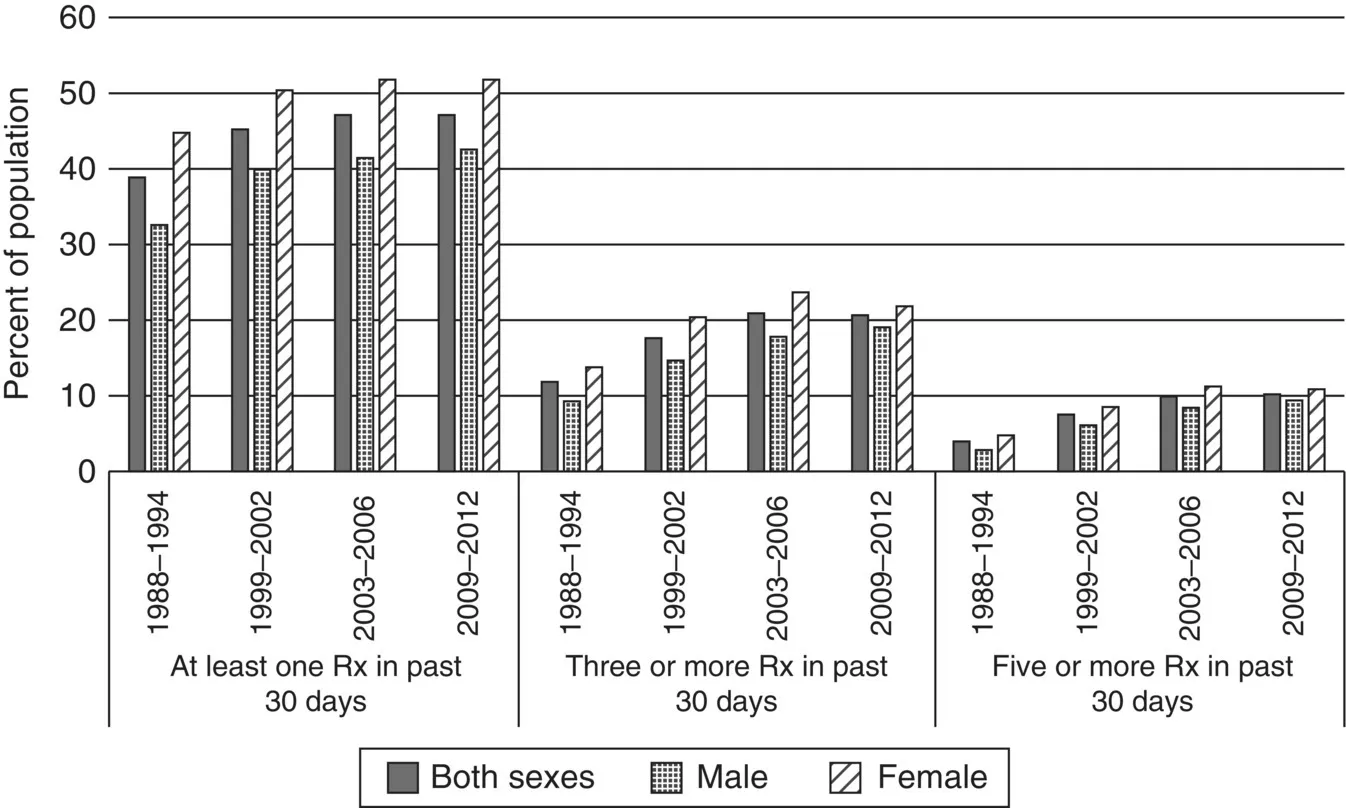
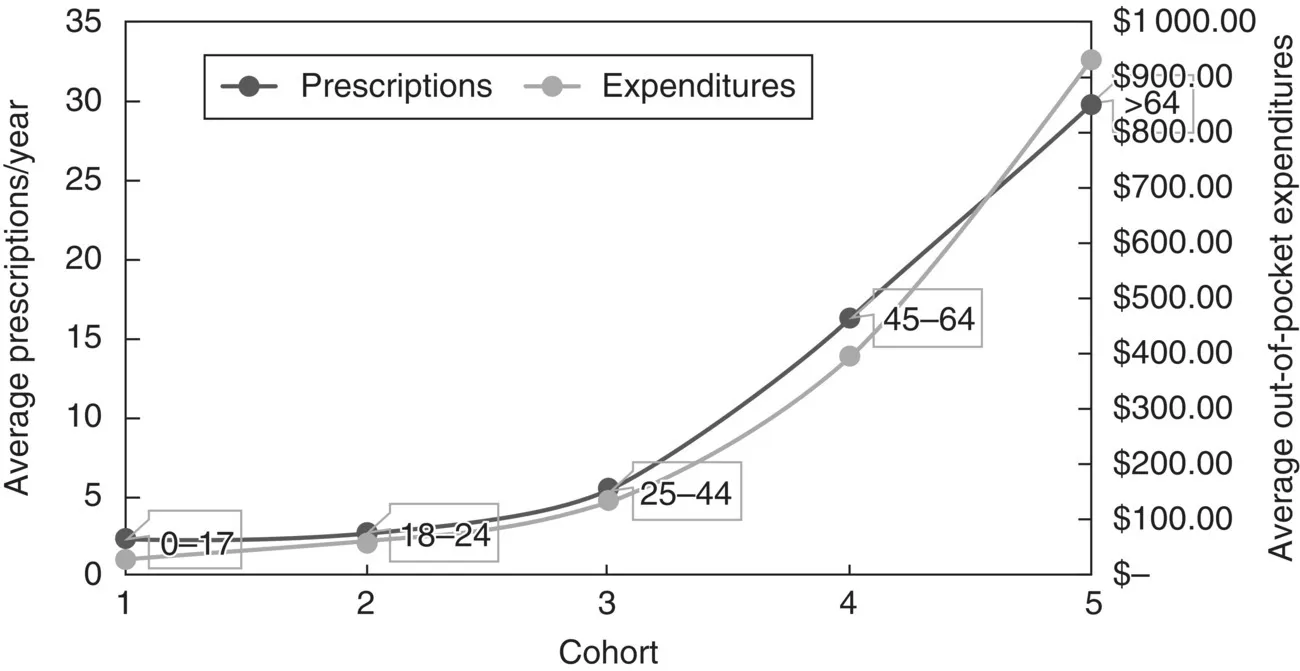
Dr. David Kessler, a former US FDA chief, once indicated at a direct‐to‐consumer (DTC) national conference that the more the pharmaceutical industry wears the public health hat, the more drugs it will ultimately sell. The pharmaceutical industry has traditionally included medical chemists, pharmacists, physicians, nurses, marketing experts, and other public health professionals. Microbiologists and other biologists have had a limited role of examining physiological processes as they relate to disorders, pathogens, and pathogen control, particularly through the use of antibiotics. However, it has traditionally excluded other disciplines such as engineers and ecologists. Over time, the per capita consumption of pharmaceutical compounds and the range of choices have steadily increased. This is especially true in developed countries as more natural and synthetic compounds are discovered. For example, total drug sales in Canada doubled from $6.6 billion in 1996 to $13.8 billion in 2004 (Campbell 2007). Similarly, consumption in the United States steadily grew over time, with over half the population using a prescription drug in a 30‐day timeframe. In fact, approximately 20% of the population took three or more prescriptions, and 10% used five or more prescriptions in a 30‐day timeframe (Figure 1.1). Separate statistics from the United States also showed increased usage of prescription pharmaceuticals with age (Figure 1.2).
Figure 1.1 Prescription drug use in past 30 days in the United States (1988–2012).
Source: Data from cdc.gov/nchs/hus/contents2015.htm#080 (accessed 20 March 2016).
Figure 1.2 Prescription and out‐of‐pocket expenditure in the United States by cohort. Cohorts 1, 2, 3, 4, and 5 belonged to age groups 0–17, 18–24, 25–44, 45–64, and over 64, respectively.
Source: Data from Kallaos et al. (2007).
The increase in pharmaceutical use also coincided with the detection of these compounds in the environment. First brought to the attention of the scientific community by the work of Richardson and Bowron (1985), focus on the fate of these compounds did not really catch on until the late 1990s when Halling‐Sørensen et al. (1998) and Jørgensen and Halling‐Sørensen (2000) published extensive reviews about the issue of drugs in the environment. The consumption of pharmaceutical products is mostly driven through advertising with more and more individuals becoming aware of conditions that were once less noticeable as significant or even of concern. Such consumption is typically not accompanied by basic fundamental questions about:
How a particular drug is able to achieve what it does to make one feel relieved (i.e. mode of action).
How much of the active ingredient that is consumed is actually used to make one feel better or even get cured.
If not all of the drug is used by our ailing bodies, what happens to the excess.
A similar complacence prevailed during the early days of the Green Revolution when unlimited quantities of agrochemicals (i.e. pesticides, herbicides, fungicides, and fertilizers) were applied, generating tremendous increases in plant yield. Although those yield increases mitigated world hunger, it ultimately became clear that their continued use without proper precautions could be detrimental to the ecosystem and to our well‐being. Those realizations were prompted by celebrated publications such as Rachel Carson’s (1962) Silent Spring. It is important to realize that PPCPs are not very different from agrochemicals and, in a number of instances, they are actually used in equal (or even higher) quantities than agrochemicals (Hirsch et al. 1999). However, while there are some similarities between PPCPs and other organic pollutants, there are also some dramatic differences. For one, PPCPs tend to be more polar and, in most instances, have acidic or basic functional groups. This attribute poses challenges when it comes to efforts to completely remove PPCPs from the environment once they are introduced and also contributes to the difficulties we face in trying to detect their presence in the environment. Besides being biologically active, PPCPs also have other uni...
Table of contents
Cover
Table of Contents
Preface
1 Usage of Pharmaceutical and Personal Care Products
2 Most Prescribed Pharmaceuticals and Related Endpoints
3 Usage of Antimicrobial Agents and Related Endpoints
4 Usage of Other Groups of Pharmaceuticals and Related Endpoints
5 Personal Care Products of Environmental Concern
6 Detection and Occurrence of PPCPs in the Environment
7 Ecopharmacokinetics and Ecopharmacodynamics of PPCPs
8 Ecotoxicity of Pharmaceuticals and Personal Care Products
9 Technologies for Removing and Reducing PPCPs in the Environment
10 Guidelines for a Regulatory Framework on PPCPs in the Environment
Index
End User License Agreement
Frequently asked questions
Yes, you can cancel anytime from the Subscription tab in your account settings on the Perlego website. Your subscription will stay active until the end of your current billing period. Learn how to cancel your subscription
No, books cannot be downloaded as external files, such as PDFs, for use outside of Perlego. However, you can download books within the Perlego app for offline reading on mobile or tablet. Learn how to download books offline
Perlego offers two plans: Essential and Complete
Essential is ideal for learners and professionals who enjoy exploring a wide range of subjects. Access the Essential Library with 800,000+ trusted titles and best-sellers across business, personal growth, and the humanities. Includes unlimited reading time and Standard Read Aloud voice.
Complete: Perfect for advanced learners and researchers needing full, unrestricted access. Unlock 1.5M+ books across hundreds of subjects, including academic and specialized titles. The Complete Plan also includes advanced features like Premium Read Aloud and Research Assistant.
Both plans are available with monthly, semester, or annual billing cycles.
We are an online textbook subscription service, where you can get access to an entire online library for less than the price of a single book per month. With over 1.5 million books across 990+ topics, we’ve got you covered! Learn about our mission
Look out for the read-aloud symbol on your next book to see if you can listen to it. The read-aloud tool reads text aloud for you, highlighting the text as it is being read. You can pause it, speed it up and slow it down. Learn more about Read Aloud
Yes! You can use the Perlego app on both iOS and Android devices to read anytime, anywhere — even offline. Perfect for commutes or when you’re on the go. Please note we cannot support devices running on iOS 13 and Android 7 or earlier. Learn more about using the app
Yes, you can access Pharma-Ecology by Patrick K. Jjemba in PDF and/or ePUB format, as well as other popular books in Physical Sciences & Environmental Science. We have over 1.5 million books available in our catalogue for you to explore.