Dealing with Aging Process Facilities and Infrastructure
,
English
ePUB (mobile friendly)
Available on iOS & Android
eBook - ePub
Dealing with Aging Process Facilities and Infrastructure
,
About this book
Examines the concept of aging process facilities and infrastructure in high hazard industries and highlights options for dealing with the problem while addressing safety issues
This book explores the many ways in which process facilities, equipment, and infrastructure might deteriorate upon continuous exposure to operating and climatic conditions. It covers the functional and physical failure modes for various categories of equipment and discusses the many warning signs of deterioration. Dealing with Aging Process Facilities and Infrastructure also explains how to deal with equipment that may not be safe to operate. The book describes a risk-based strategy in which plant leaders and supervisors can make more informed decisions on aging situations and then communicate them to upper management effectively. Additionally, it discusses the dismantling and safe removal of facilities that are approaching their intended lifecycle or have passed it altogether.
Filled with numerous case studies featuring photographs to illustrate the positive and negative experiences of others who have dealt with aging facilities, Dealing with Aging Process Facilities and Infrastructure covers the causes of equipment failures due to aging and their consequences; plant management commitment and responsibility; inspection and maintenance practices for managing life cycle; specific aging asset integrity management practices; and more.
Describes symptoms and causal mechanisms of aging in various categories of process equipment
Presents key considerations for making informed risk-based decisions regarding the repair or replacement of aging process facilities and infrastructure
Discusses practices for managing process facility and infrastructure life cycle
Includes examples and case histories of failures related to aging
Dealing with Aging Process Facilities and Infrastructure is an important book for industrial practitioners who are often faced with the challenge of managing process facilities and infrastructure as they approach the end of their useful lifecycle.
All physical systems and process equipment undergo continuous change as a result of their chemical exposure, natural environment, service conditions, electromagnetic fields and gravity just to mention a few. When systems change, their physical properties and performance characteristics are often altered. Usually this alteration is one of deterioration or worsening. When there is a mismatch between assumed design properties and actual properties, system integrity may be compromised and failure may be more likely. The lifecycle of existing industrial facilities has increased over the past few decades. Many facilities are now operating beyond their intended life span and at somewhat harsher or more aggressive conditions. Consequently, aging may be more prevalent under more severe operating conditions, harsh weather extremes and an increase in the number of upsets, start-ups and outages than may have been originally planned or designed.
We generally measure age in increments of time. In fact, from a scientific perspective, time is simply a measure of change. Time can be measured in years or decades, or in the number of operating hours. Some forms of aging (e.g., metal fatigue) are measured in terms of the number of unit operating cycles a structure is subjected to. We often associate aging with deterioration. As we grow older our bodies deteriorate and we are often unable to undertake activities we enjoyed in earlier times. Physical structures and process equipment also have a tendency to deteriorate with age. In some venues aging is not necessarily viewed as negative; vintage wines often improve with age. From an aesthetic perspective society tends to value older architecture as well as ancient ruins and artifacts. However, this is not the case for Industrial facilities.
As systems age chronologically, three outcomes are possible:
Properties may improve
No change may take place
Properties may deteriorate
While the first two of the listed outcomes are not typical for process and infrastructure facilities and are not addressed in the book, the third represents a risk to a safe and reliable operation in the process industries.
1.1 OVERVIEW
Aging equipment presents a challenge to managing the integrity of plants and associated infrastructure. Included in this scope are chemical plants, oil refineries, power plants (including nuclear), steel mills, manufacturing plants, pipeline terminals and railways to mention just a few. Rigorous in-house methods must be employed to gauge quality and reliability at a given point in time. Second, and most important, the aging process and associated deterioration is not necessarily linear with time, making strategic decisions somewhat difficult.
As indicated, the aging process in physical systems and equipment is one associated with deteriorating properties and conditions. However, equipment aging does not necessarily correlate with chronological age or time in service. Aging does not necessarily equate to visible wear and tear, either. Given that time is not the only factor in the aging process, aging can simply be considered as negative or undesirable change that can result in diminished integrity and reliability. There are many ways in which material may react with its environment. Changes may affect the physical as well as chemical properties of the material including but not limited to the thickness, the crystalline structure, the tensile strength, the conductivity, and the ductility. Everyone associated with the operation and management of chemical facilities shares the challenge to operate facilities safely and reliably. To do so, it may require not only timely intervention to fix problems when they occur, but periodic inspections and system testing throughout the entire lifecycle of equipment change.
1.2 PURPOSE
This book is about the aging of process facilities and infrastructure. It explores some of the many ways that equipment in the process industries might age and suggests some of the warning signs for which to look. It is primarily intended to provide helpful ideas and suggestions to persons on the front line charged with the responsibility for dealing with aging equipment. The scope herein not only includes equipment in direct contact with process fluids or exposed to operating conditions but, additionally, the infrastructure that supports the operation. Included in this category are roads, buildings, support structures (pipe racks and access platforms), sewers, power lines, pipelines, tanks, silos, loading racks, marine facilities, and waste water/sewage ponds. Electrical equipment and instrumentation are also subject to physical aging as well as redundancy. This category includes conduits, cable trays, transformers and switchgear.
This book highlights a growing concern in the process industries. It is intended to enlighten the reader on some of the current issues confronting the safe operation and management of industrial facilities. It does not provide prescriptive advice for dealing with aging but suggests some ideas that might be applied as part of an Asset Management program. Many of these ideas have been tried and tested by CCPS member companies. Ultimately, some difficult decisions will need to be made to determine what equipment to replace and what equipment may continue to be operated safely. By recognizing and understanding aging it is hoped one can adopt strategies to help operate facilities in a safe and responsible manner.
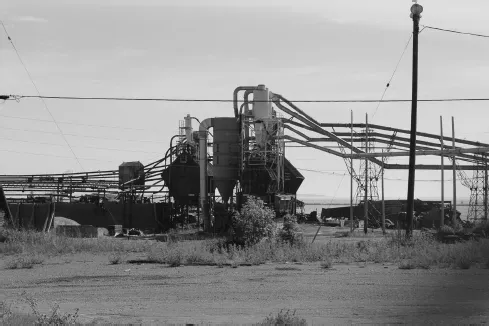
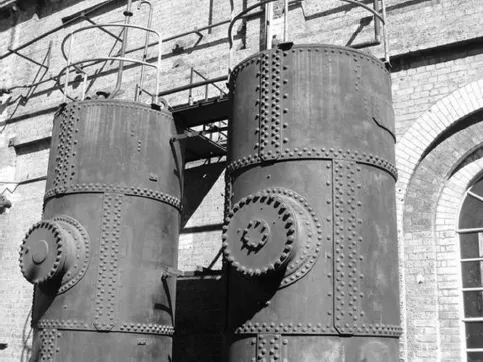
Some examples of aging facilities are shown in Figures 1.1-1 and 1.1-2. While the effect of passage of time on this equipment is recognizable from external appearances, this is not always the case. Visual appearance alone is not sufficient to gage the condition of an asset.
1.3 AGING: CONCERNS, CAUSE AND CONSEQUENCES
What is it about aging equipment that should be of concern? It is the unknown and increased potential for failure, resulting in safety, environmental incidents or business interruption. Such failure may be physical or functional. Either category can have catastrophic consequences. An example of physical failure is material breakage due to pre-existing high stresses or deteriorated properties. A functional failure is one that impedes or interferes with the intended functional capacity of a system. Instrumentation and control systems are susceptible to functional failure due to aging.
Physical failures are often visible to the naked eye and there may be warning signs prior to major consequences. Sometimes physical integrity may be difficult to detect or measure through visible means. Hidden defects can contribute to a future failure. Likewise, functional failures are often less obvious and may be more difficult to detect. A physical failure can coincide with a functional failure if a system is unable to perform its required function following failure. An example of a physical failure without functional consequence might be paint peeling or deteriorating on a metal surface while the properties and performance of the metal component are not immediately affected.
Figure 1.1-1.Image of an Aging Facility Containing Silos
Figure 1.1-2.Vintage Vessels Fastened with Rivets
On the other hand, a purely functional failure might be the inability of equipment to operate at high (previously demonstrated) throughput. A system that does not perform properly when required to do so can undermine the safety and integrity of an operation. Electrical and instrumentation systems fall into this category. We depend on high availability under all situations.
Physical failure can occur in systems and equipment being exposed to forces whether they are mechanical, electrical or magnetic. The actions of chemical (both environmental and process chemicals) exposure can also contribute to physical failures. For instance, Stress Corrosion Cracking (SCC) issues on pipelines are both environmental and mechanical physical failures (stress related and time dependent).
The simplest of these forces is gravity. Gravity exerts a downward force on all equipment and upon prolonged exposure it can cause bending or sagging. If moving parts are involved, shaft alignment may become distorted causing increased wear from friction.
Structural creep is a phenomenon related to gravity whereby slight dimensional changes take place upon prolonged exposure to high loads. Structural creep is irreversible. Creep in metals occurs at a higher temperature and causes minute, incipient grain boundary melting or micro voids that cause weakening. Creep often occurs in boiler and process heater tubes (e.g., ethylene cracking furnaces). Sometimes creep is accompanied by surface or concealed cracking which may progress towards a mechanical failure. Creep may also occur at normal environmental temperatures resulting in sagging. An extended structural member or long span of piping is subject to normal gravity as well as operating loads and weather (snow and ice). Over time such components may bend or sag in response to these forces. Whether the strength of the affected components is impaired may require careful inspection and analysis.
Electric and electromagnetic forces are present in all operating equipment and structures. Electric and electromagnetic forces can alter the grain structure of steel leading to local weak spots creating the potential for failure.
Physical materials are typically chosen because of their tensile strength as well as their chemical properties. Ferrous metals are commonly employed in the process industries for vessels, piping and other equipment. Metal must be rigid and strong enough to withstand forces in an operating environment. Properties such as thermal or electrical conductivity, hardness, resistance to chemicals are some of the prerequisites to material selection. Process equipment materials may also include glass, rubber, ceramic and other metals including alloys. When the important properties of process equipment are diminished or compromised, such equipment may no longer be fit for service and a failure may be more likely to occur. Failures related to equipment aging will be dealt with in more detail in subsequent chapters.
Chemical exposure is another contributor to equipment aging. All equipment is exposed to chemical substances which constitute the operating environment. That environment may include air, steam, water, corrosive liquids and vapors, reactive chemicals, organic compounds and biomatter. Various forms of residue may accumulate in equipment and, if not properly cleaned for several years, can contribute to material degradation and plugging. This material may be difficult to remove if service conditions have changed and it has become integrated with the base metal.
The most common category of chemical change is corrosion. When two or more incompatible materials come into contact, chemical change is inevitable. Chemical change affects not only the exposed surface of equipment but it may penetrate far into the material thickness compromising the physical properties for which the material was selected. System incompatibility may result due to hybrid systems comprised of old and new components. Some incompatibility may exist contributing to confusion and human error, adjustment of dimensional discrepancies using improper materials, galvanic corrosion and electromagnetic currents (e.g., at underground and above ground piping transitions).
Many of these mechanisms may be involved in service aging. Service aging is the product of the operating history of the equipment, including failures, breakdowns and process upsets and how these operating conditions have impacted the remaining life of the equipment. This is particularly true when the equipment was originally designed based on known/expected damage mechanisms and failure modes as determined by a process hazard analysis, but during its operating life those original design conditions have changed, resulting in increased deterioration and the potential for breakdown.
Natural events can also affect equipment and structural aging. As equipment gets older it has a higher probability of being exposed to "rare" events which may not have been thought of in the design. Flooding allows ingress of water and moisture into structures with deleterious impact, or subjects vessel supports to upwards stress due to buoyancy. Drought can cause changes in the water table and impartment of equipment ground systems. Natural settling causes foundation sinking or distortion that weakens support structures. Extreme wind can exceed wind loads or cause surface erosion from blowing sand and dust. Soil creep, expansive soils, and seismic activity may produce long term cumulative effects.
Lack of documentation and knowledge is also a concern associated with aging equipment. Record keeping on older facilities was not always to the level of detail as required by current safety regulations. A written history of service conditions or upsets during the entire lifecycle often does not exist, and tenured s...
Table of contents
Cover Page
Title Page
Copyright Page
TABLE OF CONTENTS
LIST OF FIGURES
LIST OF TABLES
ACKNOWLEDGMENTS
PREFACE
1 INTRODUCTION
1.1 OVERVIEW
1.2 PURPOSE
1.3 AGING: CONCERNS, CAUSE AND CONSEQUENCES
1.4 HOW AGING OCCURS
2 AGING EQUIPMENT FAILURES, CAUSES AND CONSEQUENCES
2.1 AGING EQUIPMENT FAILURE AND MECHANISMS
2.2 CONSEQUENCES OF AGING EQUIPMENT INCIDENTS
2.3 MECHANICAL FAILURE OF METAL
2.4 SYSTEM FUNCTIONAL AGING
2.5 AGING STRUCTURES
3 PLANT MANAGEMENT COMMITMENT AND RESPONSIBILITY
3.1 PROMOTING SITE SAFETY CULTURE
3.2 MANAGEMENT CHALLENGES
3.3 MONITORING AGING PROCESS AND MEASURING PERFORMANCE
3.4 HUMAN RESOURCES REQUIREMENTS
3.5 PLANNING FOR EQUIPMENT RETIREMENT AND REPLACEMENT
3.6 APPRECIATING THE IMPORTANCE OF AGING INFRASTRUCTURE TO THE BUSINESS ENTERPRISE
3.7 ADDRESSING AGING INFRASTRUCTURE IN DECISION PROCESS
4 RISK BASED DECISIONS
4.1 RISK MANAGEMENT BASICS
4.2 RISK BASED DECISIONS
4.3 HOW TO APPLY RISKED BASED DECISIONS
4.4 EMBRACING RISK BASED MANAGEMENT
4.5 DEALING WITH UNEXPECTED EVENTS
4.6 RISK BASED DECISIONS SUCCESS METRICS
5 MANAGING PROCESS EQUIPMENT AND INFRASTRUCTURE LIFECYCLE
5.1 LIFECYCLE STAGES
5.2 ASSET LIFECYCLE MANAGEMENT
5.3 GENERAL TOPICS
5.4 PREDICTING ASSET SERVICE LIFE
5.5 INFRASTRUCTURE SPECIFIC TOPICS
6 INSPECTION AND MAINTENANCE PRACTICES FOR MANAGING LIFE CYCLE
6.1 INSPECTION AND MAINTENANCE GOALS
6.2 INSPECTION AND MAINTENANCE PROGRAM ELEMENTS
6.3 INSPECTION AND MAINTENANCE PROGRAM RESOURCES
6.4 ADDRESSING INFRASTRUCTURE DEFICIENCIES
7 SPECIFIC AGING ASSET INTEGRITY MANAGEMENT PRACTICES
7.1 STRUCTURAL ASSETS
7.2 ELECTRICAL DISTRIBUTION AND CONTROLS
7.3 EARTHWORKS: ROADS, IMPOUNDMENTS, AND RAILWAYS
7.4 MARINE FACILITIES: TERMINALS AND JETTIES
7.5 UNDERGROUND UTILITY SYSTEMS
8 DECOMMISSIONING, DISMANTLEMENT AND REMOVAL OF REDUNDANT EQUIPMENT
8.1 INTRODUCTION
8.2 EQUIPMENT HAZARDS
8.3 FINAL DECOMMISSIONING PRACTICES
8.4 DISMANTLING AND DISPOSAL
9 ONWARD AND BEYOND
ACRONYMS
REFERENCES
APPENDIX A AGING ASSET CASE STUDIES
CASE STUDY 1: GAS DISTRIBUTION PIPELINE EXPLOSION
CASE STUDY 2: MISSISSIPPI BRIDGE COLLAPSE
CASE STUDY 3: SINKING BUILDING FOUNDATION
CASE STUDY 4: TAILINGS DAM FAILURE
CASE STUDY 5: SINKING OF THE BETELGEUSE
CASE STUDY 6: ALEXANDER KIELLAND DRILLING RIG DISASTER
CASE STUDY 7: ROOF COLLAPSE AT ORE PROCESSING FACILITY
INDEX
EULA
Trusted by 375,005 students
Access to over 1.5 million titles for a fair monthly price.
Study more efficiently using our study tools.
Frequently asked questions
Yes, you can cancel anytime from the Subscription tab in your account settings on the Perlego website. Your subscription will stay active until the end of your current billing period. Learn how to cancel your subscription
No, books cannot be downloaded as external files, such as PDFs, for use outside of Perlego. However, you can download books within the Perlego app for offline reading on mobile or tablet. Learn how to download books offline
Perlego offers two plans: Essential and Complete
Essential is ideal for learners and professionals who enjoy exploring a wide range of subjects. Access the Essential Library with 800,000+ trusted titles and best-sellers across business, personal growth, and the humanities. Includes unlimited reading time and Standard Read Aloud voice.
Complete: Perfect for advanced learners and researchers needing full, unrestricted access. Unlock 1.5M+ books across hundreds of subjects, including academic and specialized titles. The Complete Plan also includes advanced features like Premium Read Aloud and Research Assistant.
Both plans are available with monthly, semester, or annual billing cycles.
We are an online textbook subscription service, where you can get access to an entire online library for less than the price of a single book per month. With over 1.5 million books across 990+ topics, we’ve got you covered! Learn about our mission
Look out for the read-aloud symbol on your next book to see if you can listen to it. The read-aloud tool reads text aloud for you, highlighting the text as it is being read. You can pause it, speed it up and slow it down. Learn more about Read Aloud
Yes! You can use the Perlego app on both iOS and Android devices to read anytime, anywhere — even offline. Perfect for commutes or when you’re on the go. Please note we cannot support devices running on iOS 13 and Android 7 or earlier. Learn more about using the app
Yes, you can access Dealing with Aging Process Facilities and Infrastructure by in PDF and/or ePUB format, as well as other popular books in Technology & Engineering & Chemical & Biochemical Engineering. We have over 1.5 million books available in our catalogue for you to explore.