The adoption of smartphones has had as a corollary the use of services that require streaming, such as video streaming, which is a constraint for the 4G mobile network. The integration of the network of Wi-Fi hotspots deployed by the operators adds capacity to the 4G mobile network.
The use of Wi-Fi technology in carrier networks is the result of developments coordinated by the IEEE, WFA and WBA standardization bodies. For its part, the 3GPP standardization body has been working to integrate Wi-Fi technology into the 4G mobile network.
The first part of this book presents the characteristics of the Wi-Fi radio interface. The different IEEE 802.11b / g / n / ac physical layers characterize the implementation in the 2.4 GHz ISM frequency bands and U- NII at 5 GHz. The MAC layer defines a number of media access procedures such as scanning, associating, or transferring data.
The second part of this book deals with the architecture of the 4G network based on the Wi-Fi interface. This architecture defines several models corresponding, on the one hand, to Wi-Fi access controlled or not, On the other hand, to a handover controlled by the network or by the mobile. The integration of Wi-Fi technology resulted in a redefinition of attachment and session set-up procedures.
Smartphones have the ability to activate simultaneously the two radio interfaces, LTE and Wi-Fi, which allows to direct certain services to one and / or the other of the interfaces. The ANDSF and HotSpot 2.0 functions provide the mobile with rules for network selection and traffic control to determine which traffic is to be routed to what type of interface.
- English
- ePUB (mobile friendly)
- Available on iOS & Android
eBook - ePub
Wi-Fi Integration to the 4G Mobile Network
About this book
Information
1
Architecture Based on Wi-Fi Access
1.1. Functional architecture
EPS (Evolved Packet System) is the name of the 4G mobile network. It consists of an evolved packet core (EPC) and an evolved universal terrestrial radio access network (E-UTRAN).
The E-UTRAN network presents the LTE (Long-Term Evolution) radio interface to the mobile.
Wi-Fi (Wireless Fidelity) interface is subsequently integrated into the EPS network and is a component of a set of technologies grouped under the term Non-3GPP Access.
Its introduction has an impact on the core network (EPC) architecture, which has several variants depending on the following characteristics:
- – Wi-Fi access is trusted or untrusted by the operator;
- – mobility is managed by the network or the mobile.
1.1.1. Architecture based on the S2a interface
The functional architecture based on the S2a interface corresponds to trusted Wi-Fi access and network-based mobility (Figure 1.1).
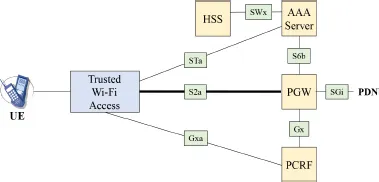
Figure 1.1. Functional architecture based on the S2a interface
The mobile stream travels through the Wi-Fi radio interface and the S2a tunnel to access the packet data network (PDN). The PGW (PDN Gateway) entity is an IP (Internet Protocol) router that acts as a gateway for the mobile stream.
The home subscriber server (HSS) and the AAA (Authentication, Authorization and Accounting) server provide the following functions:
- – mutual authentication of the mobile and the AAA server via the interfaces SWx and STa. This authentication has the effect of opening Wi-Fi access to the mobile;
- – transfer of the mobile profile comprising a list of access point names (APN) and the quality of service (QoS) level of the S2a tunnel and Wi-Fi interface, to the PGW entity, via the interface S6b, and to trusted Wi-Fi access, via the STa interface.
The policy charging and rules function (PCRF) also provides the traffic profile, including the QoS level of the S2a tunnel to the PGW entity, via the Gx interface, and to trusted Wi-Fi access via the Gxa interface.
The mobile profile is stored in the HSS entity for mounting the default bearers, and in this case, the presence of the PCRF is optional.
The presence of the PCRF entity is mandatory for the mounting of dedicated bearers on the initiative of an application function (AF), whose first example of implementation is the VoLTE (Voice over LTE) that provides telephone service.
The characteristics of the dedicated bearer of the IP packet containing the voice are only stored in the SPR (Subscriber Profile Repository) database associated with the PCRF entity.
Trusted WLAN access network (TWAN) includes the following features:
- – WLAN AN: this feature includes Wi-Fi access points;
- – TWAG (Trusted WLAN Access Gateway): this function terminates tunnel S2a;
- – TWAP (Trusted WLAN AAA Proxy): this function terminates the STa interface.
The transparent connection mode provides a single connection to the PGW entity without mobility support between the LTE and Wi-Fi radio accesses. The IPv4 and/or IPv6 address of the mobile is provided by the TWAG function:
- – in the case of a statefull configuration, the TWAG function acts as a DHCP (Dynamic Host Configuration Protocol) server;
- – in the case of a stateless configuration, the TWAG function broadcasts the prefix of the IPv6 address.
The single-connection mode supports mobility between LTE and Wi-Fi accesses. This mode also supports non-se...
Table of contents
- Cover
- Table of Contents
- Title
- Copyright
- List of Abbreviations
- Introduction
- 1 Architecture Based on Wi-Fi Access
- 2 MAC Layer
- 3 802.11a/g Interfaces
- 4 802.11n Interface
- 5 802.11ac Interface
- 6 Mutual Authentication
- 7 SWu Tunnel Establishment
- 8 S2a/S2b Tunnel Establishment
- 9 S2c Tunnel Establishment
- 10 Network Discovery and Selection
- 11 Carrier Aggregation
- 12 MPTCP Aggregation
- Bibliography
- Index
- End User License Agreement
Trusted by 375,005 students
Access to over 1.5 million titles for a fair monthly price.
Study more efficiently using our study tools.
Frequently asked questions
Yes, you can cancel anytime from the Subscription tab in your account settings on the Perlego website. Your subscription will stay active until the end of your current billing period. Learn how to cancel your subscription
No, books cannot be downloaded as external files, such as PDFs, for use outside of Perlego. However, you can download books within the Perlego app for offline reading on mobile or tablet. Learn how to download books offline
Perlego offers two plans: Essential and Complete
- Essential is ideal for learners and professionals who enjoy exploring a wide range of subjects. Access the Essential Library with 800,000+ trusted titles and best-sellers across business, personal growth, and the humanities. Includes unlimited reading time and Standard Read Aloud voice.
- Complete: Perfect for advanced learners and researchers needing full, unrestricted access. Unlock 1.5M+ books across hundreds of subjects, including academic and specialized titles. The Complete Plan also includes advanced features like Premium Read Aloud and Research Assistant.
We are an online textbook subscription service, where you can get access to an entire online library for less than the price of a single book per month. With over 1.5 million books across 990+ topics, we’ve got you covered! Learn about our mission
Look out for the read-aloud symbol on your next book to see if you can listen to it. The read-aloud tool reads text aloud for you, highlighting the text as it is being read. You can pause it, speed it up and slow it down. Learn more about Read Aloud
Yes! You can use the Perlego app on both iOS and Android devices to read anytime, anywhere — even offline. Perfect for commutes or when you’re on the go.
Please note we cannot support devices running on iOS 13 and Android 7 or earlier. Learn more about using the app
Please note we cannot support devices running on iOS 13 and Android 7 or earlier. Learn more about using the app
Yes, you can access Wi-Fi Integration to the 4G Mobile Network by André Pérez,André Perez in PDF and/or ePUB format, as well as other popular books in Technology & Engineering & Electrical Engineering & Telecommunications. We have over 1.5 million books available in our catalogue for you to explore.