In geography, a region is one of the most obscure and controversial scientific research objects. However, the tourism sector frequently uses the term, both in the communication of tourism destinations and in daily-life vocabulary, to characterize spatial practices that overtake the scale of a place. That said, a geographic concentration of place, equipment and accommodation does not equate to a tourist region.
In order to define the tourist region, this book presents the common thoughts and interpretations of it, which have been advanced by geographers since the beginning of the 20th Century. The Tourist Region also examines stakeholders' logics that are identified in the practices of a tourist destination in a regional dimension, and explores the tourist region as a territorial co-construction. Finally, this book analyzes multi-level regional networks of tourist places, built according to tourist mobilities.
By presenting several measurement methods of the tourist region, this book explains the spatial practices of tourists and anticipates the actions for tourism professionals.
- English
- ePUB (mobile friendly)
- Available on iOS & Android
eBook - ePub
About this book
Information
PART 1
The Region, a Complex Concept Applied to Tourism
Introduction to Part 1
To understand the region, it is useful to use the modes of reading geography. This science, which has as its object space in order to analyze society, has several concepts with imprecise outlines. The word “region” is one of the essential concepts of geography, but it remains polysemic and even vague. This is explained by its Latin etymology regio, which means country, region, zone, territory, extending around a city or place [DIM 03]. Also, two meanings are attributed to it, regionis (direction, line, limit) and regere (to govern, to direct), conferring on it a role of power, control and management. However, geographers do not resign themselves to abandoning the term and attribute multiple epithets: agricultural, industrial and tourist regions. However, according to our research, the latter has not been the subject of an in-depth study on the notion of “region” applied to tourism.
This first part reports on regional employment in the analysis of the tourism phenomenon. Also, to understand what the “tourist region” is, we must start from the foundation of these spaces, i.e. the presence of places inhabited by individuals. The presence of suitable places for tourism has been the subject of multiple analyses since the 1970s using multiple criteria (economy, physical environment, etc.), but we will keep for our purposes the practices of the individuals who operate there as well as the spatial dimension of elementary places of tourism. We will see that a regional scale clearly appears in a typology of elementary places of tourism, but this remains little exploited (see Chapter 1). Then, the word “region” connotes a specific meaning to a space which, by appropriation, delimits a territory. But we will see that the ambiguity of the notion of region disturbs the geographical analysis of tourism, perhaps referred to as a region, a part of the world, a continent, a nation or a sub-national region. In addition, actors acting in a country can invent and build a region from the creation of ex nihilo places. However, several observations can be highlighted for the purpose of understanding the tourism phenomenon. We will answer the following questions: how can we define a “region” characterized by tourism? Where are the tourist places that would organize a tourist region located? How should this organization, which would constitute a tourist region, be interpreted (see Chapter 2)? Finally, we will deepen the analytical frameworks of the tourist region proposed by different geographical approaches. From pioneering work based on a classical geography, using naturalistic criteria, to a functional reading based on economic models, the definition and particularly the attempts to explain the functioning of the tourist region have undergone a correlative evolution to that of geography in general. The cumulative proposals over time were the subject of numerous discussions, including breakdowns, modeling and perception, on the scientific method used to explain a concept that some authors have transformed into a concept (see Chapter 3).
1
Tourist Places, with their Foundations in the Tourist Region
The place in geography excludes any distance; therefore, it constitutes the finest spatial unit, with the sub-place (districts, streets, neighborhoods), to study societal phenomena. Living in the area is an “art of doing” according to Michel de Certeau’s formula [CER 80], which reveals the ability of individuals to mobilize their resources and skills. Living in it is in this sense the typical spatiality of the actors [LÉV 03c]. Temporarily living in the area is a choice of individuals whose tourism is a reason for it. Tourism transforms places, and this change is observed by individuals’ practices within these tourist places. We will see that this results in differentiations in the ways in which tourism appropriates space and whose tourism is observed and analyzed on a local and regional scale.
1.1. The tourist place, a locality chosen in spatial tourism practices
A place used for tourism purposes is a place that is subject to specific mobility. Mobility means that the individual exercises physical movements in temporal data and is a “form of movement that is expressed by changing position” [BRU 93, p. 333]. Tourism mobility is one of the main ways in which mobility is accepted to describe movements in geographical space: among residential mobility, daily mobility and migration mobility [CRE 04]. But mobility is much more than a movement; it is a social relationship with the change of place [LÉV 00] and contributes to the construction of oneself independently of society [CÉR 08]. The change of place, the change of living in tourism, is to temporarily leave one’s place of life for one or more places located outside the sphere of one’s daily life [KNA 97b]. According to Mathis Stock, the temporary tourist inhabitation of places must be understood by the otherness, familiarity and strangeness of the geographical places practiced [STO 01]. A break with a place of daily life is necessary in tourist mobilities, when leisure in this same place of daily life is no longer effective enough. Leisure time is part of free time, a time of one’s own, in which “a person finalizes themself in themself, by the meaning they must give to a time that begins to belong to themself alone” [VIA 00, p. 47]. Joffre Dumazedier defines leisure as the compensation of the demands of society that must make it possible to free oneself from boredom, fatigue due to institutions, stereotypes of work organization and family life, leading to surpassing oneself [DUM 72]. Leisure is finally a release that allows you to free yourself from a certain self-control of emotions, allowing you to experience pleasure. The notion of recreation makes it possible to distinguish moments of “relaxation of constraints” beyond the sphere of work and the sphere of everyday life, which are characterized by routine activities [ELI 76, ELI 94]. The temporary distance from a place of daily life by moving to one or more places where one stays, in a quest for recreation, explains the use of a place by an individual for tourism purposes. It is an essential geographical dimension to explain the practice of certain geographical places through travel, particularly through tourist mobilities [STO 17a]. Also, places are invented by tourism, insofar as the social phenomenon of tourism has transformed the uses and representations of these places [KNA 92]. For Denis Retaillé, tourism is a powerful operator of topogenesis, i.e. the social construction of a geographical place [RET 03]. Tourism, being a practice dedicated to the intentionality of recreation, generates the use of one or more premises, for a “way of living” oriented towards leisure that takes many forms (discovery, rest, play, sociability and/or shopping) [STO 17a]. The tourist situation of a place indicates that the tourist practice is informed at the same time as it informs the context of the action by and in which it takes place [COË 10]. If tourism is happening or is happening in one place, it does not necessarily happen elsewhere, at least not in the same way. The tourist place is a social construction in the sense that tourist places are mythical places, i.e. “made up of a set of mental representations born of texts, iconographies, photographs, flying words,[…] an aggregate of messages composing an entire communication system” [CHA 88, p. 18]. Thus, geographical sites attract the curiosity of walkers. The Pointe du Raz, located in the far west of Brittany, is for walkers a part of the world because of its geographical characteristics, a rocky promontory that fascinates onlookers and experienced walkers, whose increased popularity at the end of the 19th Century is the subject of a picturesque enhancement by writers and local transport or promotional operators [VOU 99] (see Figure 1.1).
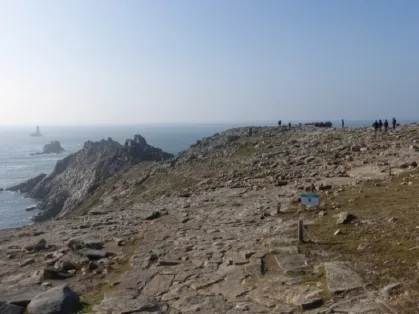
Figure 1.1. The Pointe du Raz tourist site (France) (source: J. Piriou, March 2015). For a color version of the figures in this chapter, see www.iste.co.uk/piriou/tourism.zip
COMMENT ON FIGURE 1.1.– A picturesque place praised by writers since the 19th Century, then a place of excursion promoted by the French western railway company and the Finistère Tourism Committee, the reputation of the Pointe du Raz has increased over the past century [CHA 50, GIN 72], and tourist flows have become regular and intense [BAR 96]. Despite a classification of the natural site in 1958 on a surface of 72 hectares, the human degradation linked to the frequent passage of people and vehicles, as well as wild camping contributes to the reduction of the site’s vegetation cover. Operations were envisaged as early as 1976 to limit these degradations. The end of the 1980s also marked the desire of players to enhance and preserve the Pointe du Raz site. By escaping the realization of a nuclear power plant project, the Pointe du Raz was developed for its physical and natural characteristics. A major site operation was carried out in 1993. The aim was to demolish car parks and existing buildings near the tip and relocate these facilities. In addition, before reopening to the public in 1996, experiments were also carried out to study the capacity of the natural environment to regenerate itself [LEF 13, PIR 17].
Mediatization through artistic and literary dissemination also contributes to this mythical construction. For example, as early as the 18th Century, Jean-Jacques Rousseau, author of La Nouvelle Héloïse, associated the mountains on the Valais side of Switzerland as a social allegory that suggested a natural character of the site that permeated the mentalities and lifestyles of the populations [DEB 95]. This construction leads, by exaggeration, to the creation of stereotypes, aimed at facilitating the interpretation of the context that is unfamiliar to the tourist, “by speaking of ‘stereotyped spaces’, we hypothesize that the tourist space taken in its material or immaterial acceptance represents the projection in space and time of the ideals, myths of the global society” [CHA 88, p. 19]. Exoticism translates this quest for otherness constructed as a distraction, an amusement or an enchantment that presents itself “as a point of view, a discourse, a set of values and representations about something, somewhere, or someone” [STA 08, p. 9]. Nanjing, the former capital of China, located between...
Table of contents
- Cover
- Table of Contents
- Foreword
- Preface
- Introduction
- PART 1: The Region, a Complex Concept Applied to Tourism
- PART 2: Stakeholder Logics in the Practice of a Tourist Destination in a Regional Dimension
- PART 3: Reading the Tourist Region Using Networks of Places Analysis
- Conclusion
- References
- Index
- End User License Agreement
Trusted by 375,005 students
Access to over 1.5 million titles for a fair monthly price.
Study more efficiently using our study tools.
Frequently asked questions
Yes, you can cancel anytime from the Subscription tab in your account settings on the Perlego website. Your subscription will stay active until the end of your current billing period. Learn how to cancel your subscription
No, books cannot be downloaded as external files, such as PDFs, for use outside of Perlego. However, you can download books within the Perlego app for offline reading on mobile or tablet. Learn how to download books offline
Perlego offers two plans: Essential and Complete
- Essential is ideal for learners and professionals who enjoy exploring a wide range of subjects. Access the Essential Library with 800,000+ trusted titles and best-sellers across business, personal growth, and the humanities. Includes unlimited reading time and Standard Read Aloud voice.
- Complete: Perfect for advanced learners and researchers needing full, unrestricted access. Unlock 1.5M+ books across hundreds of subjects, including academic and specialized titles. The Complete Plan also includes advanced features like Premium Read Aloud and Research Assistant.
We are an online textbook subscription service, where you can get access to an entire online library for less than the price of a single book per month. With over 1.5 million books across 990+ topics, we’ve got you covered! Learn about our mission
Look out for the read-aloud symbol on your next book to see if you can listen to it. The read-aloud tool reads text aloud for you, highlighting the text as it is being read. You can pause it, speed it up and slow it down. Learn more about Read Aloud
Yes! You can use the Perlego app on both iOS and Android devices to read anytime, anywhere — even offline. Perfect for commutes or when you’re on the go.
Please note we cannot support devices running on iOS 13 and Android 7 or earlier. Learn more about using the app
Please note we cannot support devices running on iOS 13 and Android 7 or earlier. Learn more about using the app
Yes, you can access The Tourist Region by Jérôme Piriou,Jerome Piriou in PDF and/or ePUB format, as well as other popular books in Business & Hospitality, Travel & Tourism Industry. We have over 1.5 million books available in our catalogue for you to explore.