Authored by one of the leading experts in the field, this is the only comprehensive overview of chiral organophosphorus compounds, from asymmetric synthesis to catalysis and pharmacological applications.
As such, this unique reference covers the chemical background as well as spectroscopical analysis of phosphorus compounds, and thoroughly describes all the various synthetic strategies for these substances. Metal-, organo- and biocatalyzed reactions for the introduction of phosphorus are explained as are asymmetric oxidation and reduction methods for the preparation of all possible oxidation states of phosphorus. The text also includes industrial applications for these compounds.
Of particular interest to chemists working in the field of asymmetric synthesis, as well as to the pharmaceutical industry due to the increasing number of phosphorous-containing drugs.
eBook - ePub
Asymmetric Synthesis in Organophosphorus Chemistry
Synthetic Methods, Catalysis, and Applications
- English
- ePUB (mobile friendly)
- Available on iOS & Android
eBook - ePub
Asymmetric Synthesis in Organophosphorus Chemistry
Synthetic Methods, Catalysis, and Applications
About this book
Information
Chapter 1
Fundamentals of the Stereochemistry of Organophosphorus Compounds
1.1 Historical Background
Natural processes are subordinate to geometrodynamics – the theory describing physical objects, geometrical spacetime, and associated phenomena completely in terms of geometry, and her elder sister – symmetry. Symmetry/asymmetry is one of the basic concepts in modern natural science [1]. Research into this field began in the Middle Ages, when the birefringent properties of calcite were discovered. In 1669, Bartholinus observed the double refractive properties of the calcite Iceland spar. Later, in 1801, the mineralogist Haui found that quartz crystals are enantiomorphic, representing mirror images of one another. In 1815, another French naturalist J.-B. Biot discovered that certain chemical compounds rotate the plane of a beam of polarized light [2]. Biot constructed the first polarimeter and he also discovered that many natural compounds exhibit optical activity, that is, they rotate the plane of circularly polarized light. Studying crystals under a microscope, Biot discovered two types of crystals. The sample consisting of crystals of one type turned polarized light clockwise and that from another type in the opposite direction. A mixture of the two types of crystals had a neutral effect on polarized light. The nature of this property remained a mystery until 1848, when Louis Pasteur proposed that it had a molecular basis originating from some form of dissymmetry [3]. Pasteur separated the left and right hemihedral crystals of the sodium-ammonium salt of D,L-tartaric acid under a microscope, and connected the opposite optical activity to the mirror image of these crystals. Pasteur termed the mixture creating polarization as dissymetric and the phenomenon as dissymmetry (asymmetry). The term chirality was proposed by Lord Kelvin in 1894 and introduced into chemistry by Mislow in 1962. Dissimmetry, as discovered by Pasteur, is found in nature, whereas compounds obtained from living organisms are chiral or nonracemic. In 1852, Pasteur discovered that resolution could also be achieved by using a chiral base (quinine and brucine) and by using microorganisms. He discovered that paratartaric acid could be separated under the influence of optically active natural bases such as quinine or brucine. Pasteur developed a method for the separation of paratartaric acid with the help of Penicillium glaucum, leading to the formation of levorotatory tartaric acid, thus creating the basis for microbiological separation of racemates. J. Wislicenus came to the conclusion that the right- and non-superimposable levorotatory lactic acids have an identical structure, and he noticed that the only difference between the isomers is the order in which the radicals are distributed in space [4]. The origin of chirality itself was finally discovered in 1874, when van't Hoff and Le Bel independently proposed that this phenomenon of optical activity can be explained by the assumption that the four saturated chemical bonds between carbon atoms and their neighbors are directed toward the corners of a regular tetrahedron [5]. This concept led to the explanation for the observed optical activity by recognizing that a carbon atom with four different substituents exists in two mirror images: that is, it is chiral. The study of enantioselective reactions began with Emil Fisher [6], who studied the addition of hydrogen cyanide to sugars. In 1912, Bredig and Fiske [7] described the first catalytic enantioselective reaction. They studied the addition of hydrogen cyanide to benzaldehyde catalyzed by cinchona alkaloids. Although the mandelic acid that they obtained after hydrolysis of the initially formed benzcyanohydrin was of low optical purity (3–8%), Bredig and Fiske showed that it was possible to synthesize optically active compounds out of achiral precursors by using a chiral catalyst. Unlike Fischer, Marckwald performed an enantioselective reaction upon an achiral, unnatural starting material, although with a chiral organocatalyst [8]. In a paper titled “Ueber asymmetrische Syntheses,” Marckwald gave the following definition of asymmetric synthesis: “Asymmetric syntheses are those reactions which produce optically active substances from symmetrically constituted compounds with the intermediate use of optically active materials but with the exclusion of all analytical processes.” Fifty years later, Horst Pracejus reported the asymmetric organocatalytic reaction of methyl(phenyl)ketenes with alcohols catalyzed by alkaloids, leading to the formation of enantiomerically enriched esters of α-phenyl-propionic acid [9].
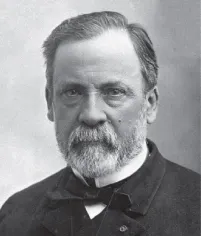
Louis Pasteur (1822–1895)
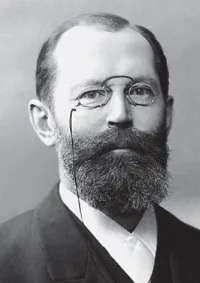
Hermann Emil Fischer (1852–1919)
The first work devoted to the asymmetric synthesis of aminophosphonates by catalytic hydrogenation of unsaturated phosphonates was published approximately 30 years ago. The development of enantioselective synthesis was initially slow, largely owing to the limited range of techniques available for their separation and analysis. It was not until the 1950s that real progress began with the development of new techniques. The first of these was X-ray crystallography, which was used to determine the absolute configuration (AC) of an organic compound by Bijvoet et al. [10]. During the same period, methods were developed to allow the analysis of chiral compounds by NMR, either using chiral derivatizing agents (CDAs), such as Mosher's acid [11], or europium-based shift reagents, of which Eu(DPM)3 was the earliest [12]. Chiral auxiliaries were introduced by Corey and Ensley in 1975 [13] and featured prominently in the work of D. Enders. Around the same time, enantioselective organocatalysis was developed and enzyme-catalyzed enantioselective reactions became more and more common ...
Table of contents
- Cover
- Title Page
- Copyright
- Table of Contents
- Dedication
- Preface
- Abbreviations
- Chapter 1: Fundamentals of the Stereochemistry of Organophosphorus Compounds
- Chapter 2: Asymmetric Synthesis of P-Chirogenic Phosphorus Compounds
- Chapter 3: Phosphorus Compounds with Chiral Side-Chain Centers
- Chapter 4: Asymmetric Catalysis with Metal Complexes
- Chapter 5: Asymmetric Organocatalysis
- Chapter 6: Asymmetric Biocatalysis
- Index
- End User License Agreement
Trusted by 375,005 students
Access to over 1.5 million titles for a fair monthly price.
Study more efficiently using our study tools.
Frequently asked questions
Yes, you can cancel anytime from the Subscription tab in your account settings on the Perlego website. Your subscription will stay active until the end of your current billing period. Learn how to cancel your subscription
No, books cannot be downloaded as external files, such as PDFs, for use outside of Perlego. However, you can download books within the Perlego app for offline reading on mobile or tablet. Learn how to download books offline
Perlego offers two plans: Essential and Complete
- Essential is ideal for learners and professionals who enjoy exploring a wide range of subjects. Access the Essential Library with 800,000+ trusted titles and best-sellers across business, personal growth, and the humanities. Includes unlimited reading time and Standard Read Aloud voice.
- Complete: Perfect for advanced learners and researchers needing full, unrestricted access. Unlock 1.5M+ books across hundreds of subjects, including academic and specialized titles. The Complete Plan also includes advanced features like Premium Read Aloud and Research Assistant.
We are an online textbook subscription service, where you can get access to an entire online library for less than the price of a single book per month. With over 1.5 million books across 990+ topics, we’ve got you covered! Learn about our mission
Look out for the read-aloud symbol on your next book to see if you can listen to it. The read-aloud tool reads text aloud for you, highlighting the text as it is being read. You can pause it, speed it up and slow it down. Learn more about Read Aloud
Yes! You can use the Perlego app on both iOS and Android devices to read anytime, anywhere — even offline. Perfect for commutes or when you’re on the go.
Please note we cannot support devices running on iOS 13 and Android 7 or earlier. Learn more about using the app
Please note we cannot support devices running on iOS 13 and Android 7 or earlier. Learn more about using the app
Yes, you can access Asymmetric Synthesis in Organophosphorus Chemistry by Oleg I. Kolodiazhnyi in PDF and/or ePUB format, as well as other popular books in Physical Sciences & Organic Chemistry. We have over 1.5 million books available in our catalogue for you to explore.