
- English
- ePUB (mobile friendly)
- Available on iOS & Android
eBook - ePub
About this book
Building Services Engineering focuses on how the design-construction interface and how the design intent is handled through the construction stage to handover and in the short term thereafter.Part One sets the scene by describing the stakeholders involved in the construction stage and the project management context.Part Two focuses specifically on the potential roles and responsibilities of building services engineers during construction and post-construction.
Information
Part One
Stakeholders and procedures during construction
Although the intention at the outset of almost all building projects is to complete the construction, this may not be the case in practice. Construction may be stopped or delayed (Figure P1.1).
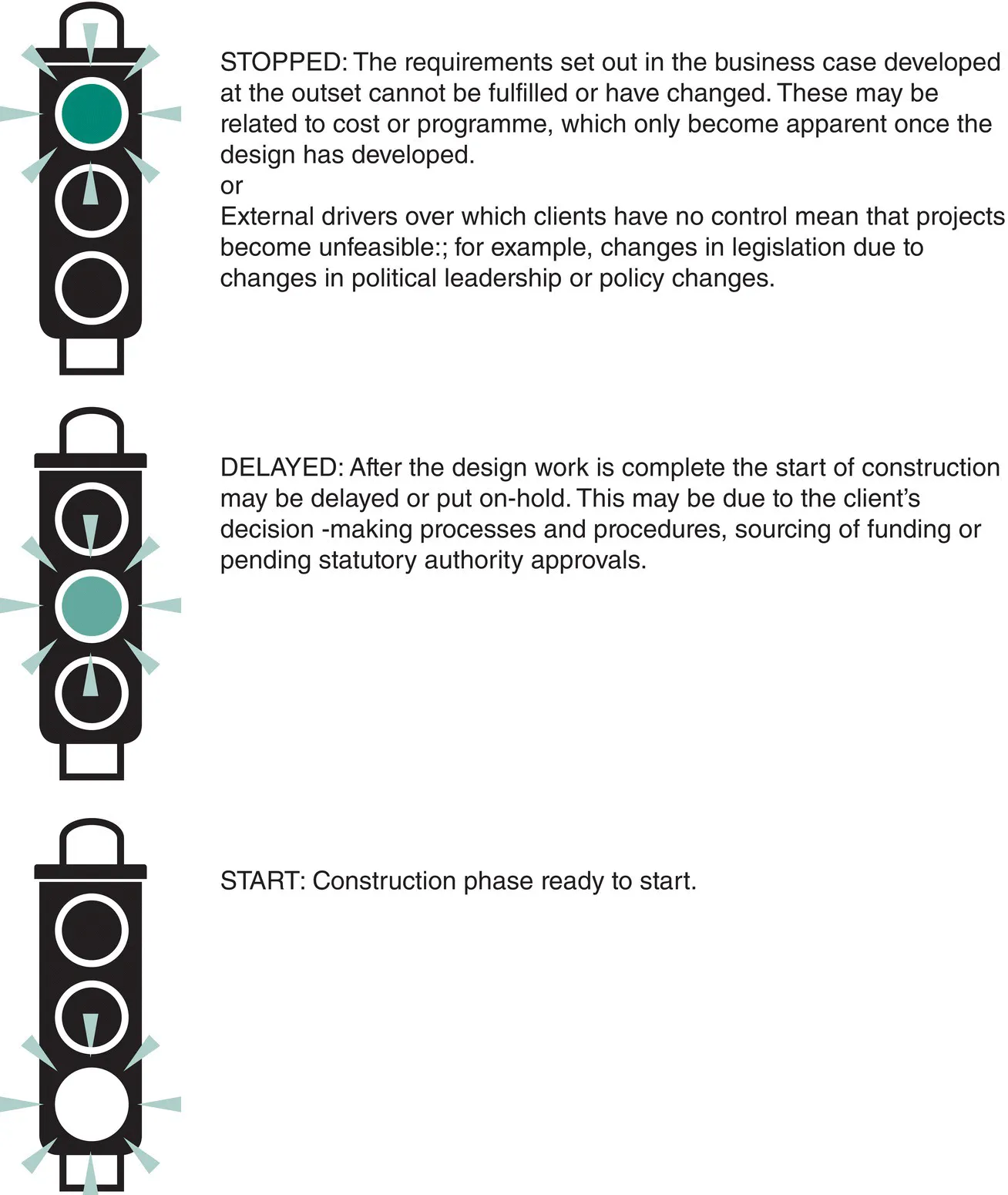
P1.1 Status of construction after design delivery
Once construction has been given the green light, the focus switches from office-based activities to activities associated with the physical project site. To deliver a finished building project requires planning, procurement, putting in place, setting to work, testing and commissioning of materials and components in accordance with the design requirements.
The construction period starts with mobilisation, when the construction team prepares for the necessary movement of personnel, equipment, supplies and incidentals for the impending physical activities on the project site. The end of the construction period is more difficult to quantify. There will be demobilisation activities and an official handover date; thereafter, there will still be short- and long-term legacy issues to deal with.
Part One of this book describes the stakeholders as they are involved during the construction phase; specifically, how building services engineering design is affected by the specific roles and responsibilities of a range of interested parties. These stakeholders can express needs and expectations and may have rights and interests in imposing requirements on building projects and the associated environment they occupy. For any particular building project, there will be mostly unique, temporary, multidisciplinary, distributed teams whose membership and focus change during the construction phase and which are often disbanded thereafter. Even when building projects are procured using entities that are listed in a client’s framework agreement, the individuals involved may be different for different projects.
Figure P1.2 illustrates a stakeholder map for different entities that engage with the construction team and interact with building services engineers in connection with the construction works. These are broadly categorised as the client team, design team, enforcing authorities and utility services providers; each has different objectives for a building project. There are also other ‘third-party’ stakeholders who have no contractual link to a building project but may have influences that affect the progress and nature of the construction works. The particular stakeholder make-up and the contractual arrangements between the stakeholders vary according to the particular project. In some cases the function will not be required or more than one function may be undertaken by the same person; for example, the architect may also be the landscape architect.
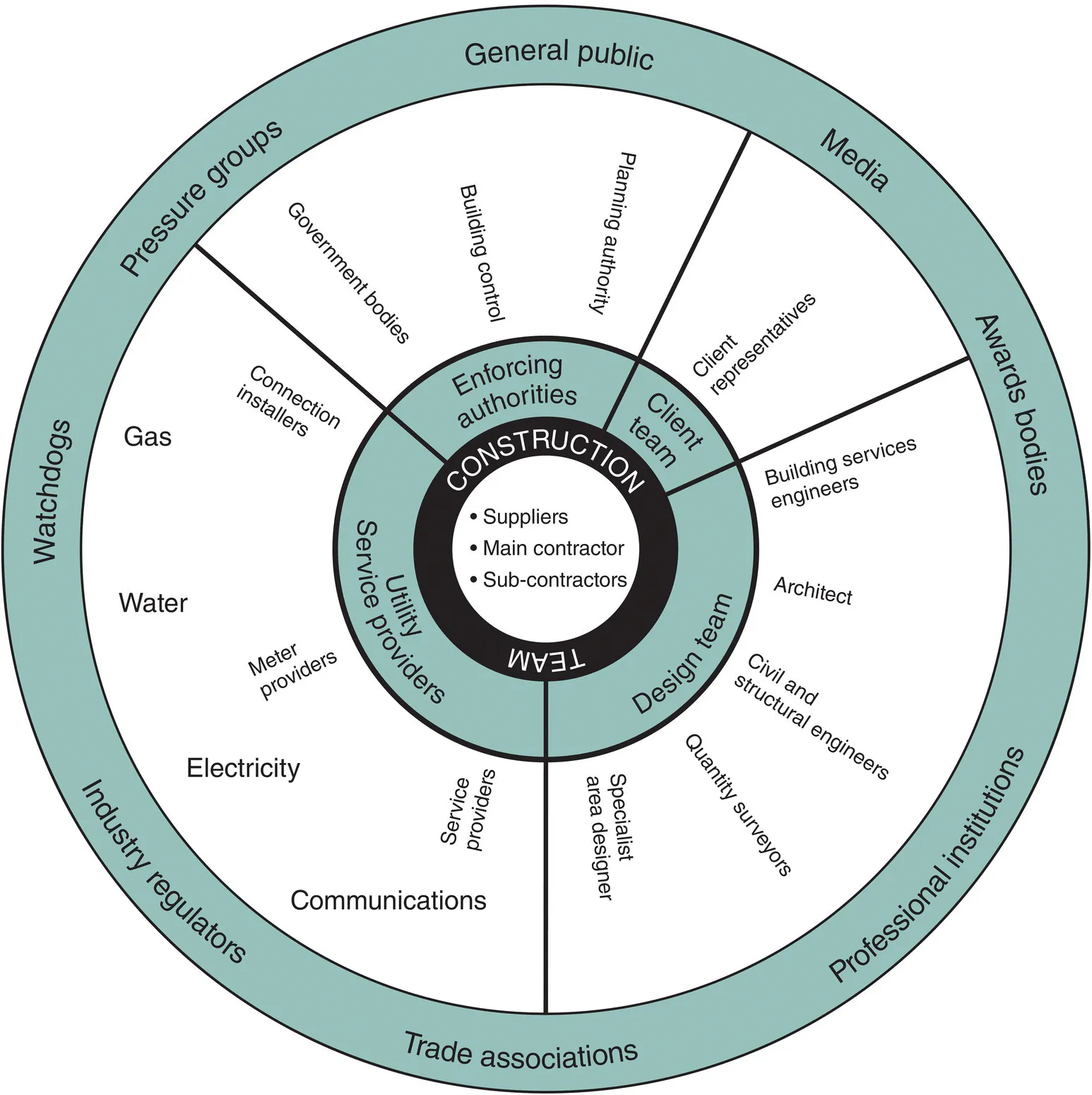
P1.2 Construction phase stakeholder map
Figure P1.2 shows the design and construction teams as separated entities. The concept of separating design and construction has been challenged in the last few decades. This has led to new procurement methods and attitudes towards working relationships amongst the parties in the design and construction teams. It has meant that the roles of building professionals in the structure of a project team have been changed. In particular, this means that building services engineers (and the other members of the design team) may still be discharging some their duties during the construction phase.
The diversity of stakeholders makes for a multidisciplinary culture and complex issues with multiple and overlapping influences that are legally only limited by formal contractual lines. This lack of direct contractual relationships makes the lines of authority subtle and may be a factor in creating a less than optimum team performance: formal contractual rules may bring about and legitimise behaviours and strategies at odds with common sense perceptions as to how trustworthy and cooperative exchange stakeholders should act.
Every team member has particular functions and obligations to a project. The obligations can be moral or legal. Moral obligations are duties that are owed, and which ought to be performed, but to which the member is not legally bound. On the other hand, legal obligations are a legal tie between two entities which is recognised and enforceable by law by a court of law. These obligations are associated with the legal object of performance, which is a definite action or inaction, delivery of a specific thing or payment of a specific amount of money.
Feedback questions
- Discuss and describe situations where prospective construction projects have stopped during or at the end of the design stage. What were the reasons and drivers behind this?
- If a project is greatly delayed between completion of the design and starting on site, discuss the risks to the integrity of the design once the project starts?
1
The client team
Clients are not unitary bodies but need to be considered as a team comprising (in-house or out-sourced) individuals, internal departments and external entities organised to deliver clients liabilities and obligations. Client teams have a collective goal of determining a need (normally encapsulated in a business plan), arranging finance and organising the processes that result in the delivery of building projects to satisfy their requirements. There are many different ways of categorising client types according to the particular nature of the building project. Figure 1.1 describes these based on their financial motivation and the beneficiary of their efforts.
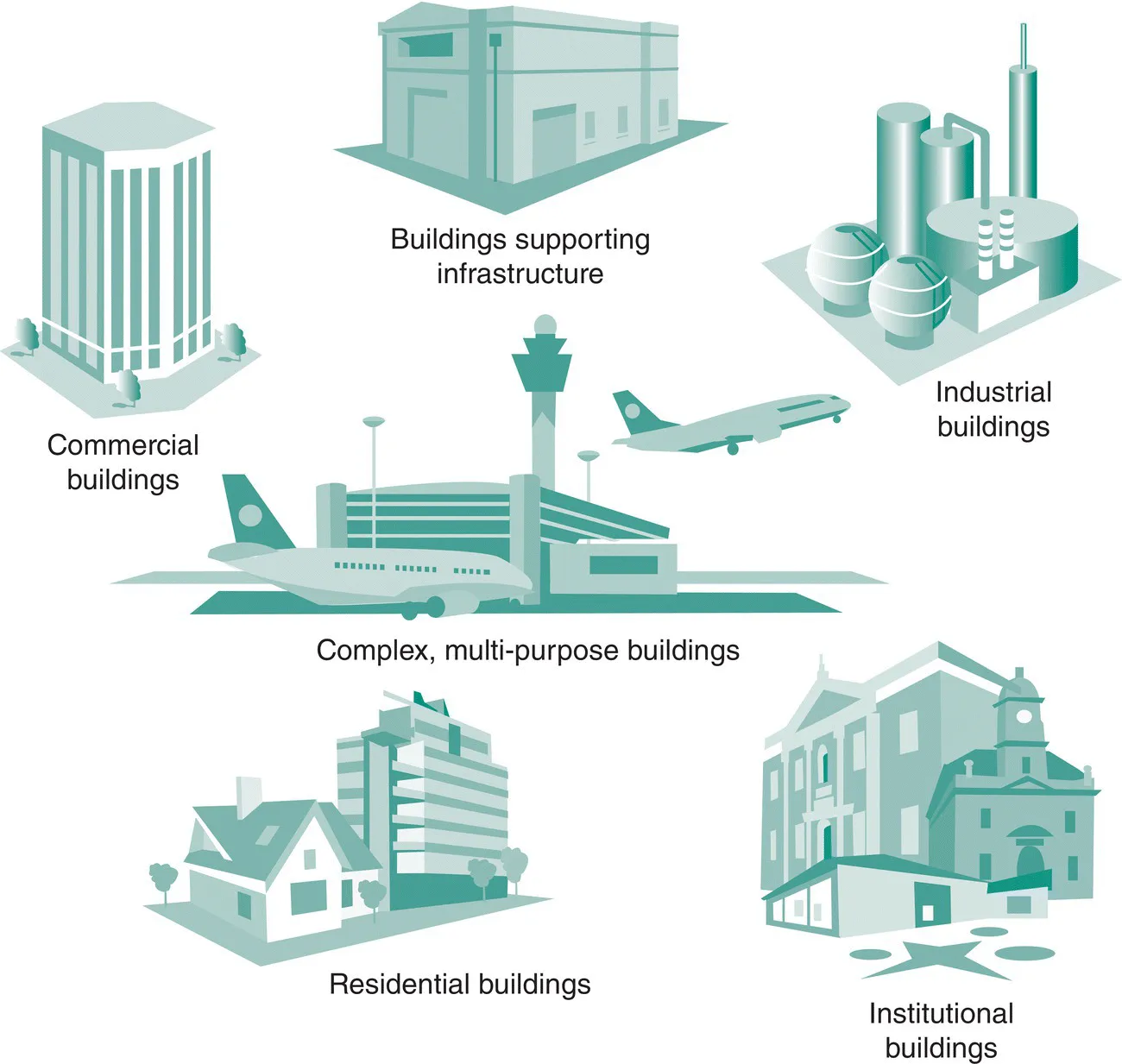
Figure 1.1 Types of clients
The performance of client teams affects the quality, cost and progress of the construction on site. Client teams need to establish structures and protocols to deliver their responsibilities and obligations with respect to legal, contractual and financial matters, facilities management, and project management to support and interface with the construction team.
By the time construction starts clients will have determined the procurement route that informed the nature of the design work, method of selection of construction team, established how work is authorised, financed, programmed and commissioned. They should also have planned for the ultimate disposal of finished building projects once their need for them has expired – this may be by demolition or sale. At any stage, and certainly at the key decision point prior to starting construction, clients should review their business case plans before deciding whether to proceed as is, proceed with modifications or to stop a project.
1.1 Client team functions
Client team functions comprise:
- Legal: As well as operating their entity within the law with respect to employment...
Table of contents
- Cover
- Title Page
- Table of Contents
- Preface
- About the Author
- Introduction
- Part One: Stakeholders and procedures during construction
- Part Two: Processes
- Index
- End User License Agreement
Trusted by 375,005 students
Access to over 1.5 million titles for a fair monthly price.
Study more efficiently using our study tools.
Frequently asked questions
Yes, you can cancel anytime from the Subscription tab in your account settings on the Perlego website. Your subscription will stay active until the end of your current billing period. Learn how to cancel your subscription
No, books cannot be downloaded as external files, such as PDFs, for use outside of Perlego. However, you can download books within the Perlego app for offline reading on mobile or tablet. Learn how to download books offline
Perlego offers two plans: Essential and Complete
- Essential is ideal for learners and professionals who enjoy exploring a wide range of subjects. Access the Essential Library with 800,000+ trusted titles and best-sellers across business, personal growth, and the humanities. Includes unlimited reading time and Standard Read Aloud voice.
- Complete: Perfect for advanced learners and researchers needing full, unrestricted access. Unlock 1.5M+ books across hundreds of subjects, including academic and specialized titles. The Complete Plan also includes advanced features like Premium Read Aloud and Research Assistant.
We are an online textbook subscription service, where you can get access to an entire online library for less than the price of a single book per month. With over 1.5 million books across 990+ topics, we’ve got you covered! Learn about our mission
Look out for the read-aloud symbol on your next book to see if you can listen to it. The read-aloud tool reads text aloud for you, highlighting the text as it is being read. You can pause it, speed it up and slow it down. Learn more about Read Aloud
Yes! You can use the Perlego app on both iOS and Android devices to read anytime, anywhere — even offline. Perfect for commutes or when you’re on the go.
Please note we cannot support devices running on iOS 13 and Android 7 or earlier. Learn more about using the app
Please note we cannot support devices running on iOS 13 and Android 7 or earlier. Learn more about using the app
Yes, you can access Building Services Engineering by Jackie Portman in PDF and/or ePUB format, as well as other popular books in Technology & Engineering & Construction & Architectural Engineering. We have over 1.5 million books available in our catalogue for you to explore.