Crop Variety Trials
eBook - ePub

Crop Variety Trials

Data Management and Analysis

  1. English
  2. ePUB (mobile friendly)
  3. Available on iOS & Android
eBook - ePub

Crop Variety Trials

Data Management and Analysis

About this book

Variety trials are an essential step in crop breeding and production. These trials are a significant investment in time and resources and inform numerous decisions from cultivar development to end-use.  Crop Variety Trials: Methods and Analysis is a practical volume that provides valuable theoretical foundations as well as a guide to step-by-step implementation of effective trial methods and analysis in determining the best varieties and cultivars.

Crop Variety Trials is divided into two sections. The first section provides the reader with a sound theoretical framework of variety evaluation and trial analysis. Chapters provide insights into the theories of quantitative genetics and principles of analyzing data. The second section of the book gives the reader with a practical step-by-step guide to accurately analyzing crop variety trial data. Combined these sections provide the reader with fuller understanding of the nature of variety trials, their objectives, and user-friendly database and statistical tools that will enable them to produce accurate analysis of data.

Trusted by 375,005 students

Access to over 1.5 million titles for a fair monthly price.

Study more efficiently using our study tools.

Information

Year
2014
Print ISBN
9781118688649
eBook ISBN
9781118688564

Chapter 1
Theoretical Framework for Crop Variety Trials

Key points

  • The ultimate purpose of crop variety trials is to identify superior cultivars for a given target environment. The target environment is the sum of the environments that are likely to be encountered in a target region across years.
  • The heritability of a trait obtained from a variety trial system is a measure of the system's ability to reveal any genetic differences among tested genotypes for the trait.
  • Heritability is a relative measure of the genetic variance (G) versus the genotype-by-environment interaction variance (GE), ignoring any experimental errors. So G and GE must be considered simultaneously in variety evaluation.
  • Heritability must be estimated in the genotype–location–year framework because superior cultivars must be identified in test environments representative of the target environment.
  • Heritability estimated in the genotype–location–year framework facilitates appreciation of the relative power of a single-trial, multilocation trials in a single year, and multilocation trials in multiple years.
  • Variance components constituting heritability in the genotype–location–year framework can reveal possible approaches to improve the efficiency of variety trials, which are the topics of this book.
Variety trials are conducted every year in every geographical or administrative region for every major crop in that region. They are conducted by plant breeders to identify improved genotypes and/or by agronomists to identify superior cultivars to recommend to the growers. Despite the budget situation, variety trials are conducted every year and have rarely been discontinued, indicating their great importance to the agriculture and the economy. Variety trials are probably the best-funded applied research in agriculture.
The sole purpose of the whole book is to provide methods and techniques that can improve the efficiency of variety trials through variety trial design, conduct, data collection, data management, data analysis, and decision-making. This chapter is to set up the basic theoretical framework for crop variety trials.
The ultimate measure of the efficiency of a variety trial system is the predicted genetic gain, ΔG for a trait or trait complex. According to the quantitative genetics theory, the predicted genetic gain is determined by three factors: the selection intensity (i), the heritability of the trials (h2 or H), and the square root of the phenotypic variance (σ2p) in the trials:
(1.1)
numbered Display Equation
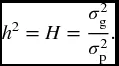
The selection intensity is the inverse of the proportion of the selection population that is selected; a higher intensity means a smaller proportion of the genotypes are selected. It is an arbitrary value set by the researcher. The heritability is the ratio of the genotypic variance (σ2g) over the phenotypic variance,
(1.2)
numbered Display Equation
It is the proportion of the observed variation among genotypes that is due to genetic differences for the trait of interest. Therefore, the heritability may also be understood as the “relative genetic variance” or “relative genetic variability” (Hanson and Brim, 1963). Equation 1.1 can also be rewritten as
(1.3)
numbered Display Equation
Since the selection intensity is an arbitrary value, and the genotypic variance or its square root is supposed to be a constant for a given set of genotypes, the sole determinant of the predicted genetic gain in the variety trials is h, i.e., the square root of heritability.
So, heritability is the single most important concept in quantitative genetics with regard to variety trials. All measures taken in varie...
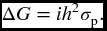
Table of contents

  1. Cover
  2. Dedication
  3. Title Page
  4. Copyright
  5. Preface
  6. Chapter 1: Theoretical Framework for Crop Variety Trials
  7. Chapter 2: An Overview of Variety Trial Data and Analyses
  8. Chapter 3: Introduction to Biplot Analysis
  9. Chapter 4: Data Centering for Biplot Analysis
  10. Chapter 5: Data Scaling and Weighting for GGE Biplot Analysis
  11. Chapter 6: Frequently Asked Questions About Biplot Analysis
  12. Chapter 7: Single-Trial Data Analysis
  13. Chapter 8: Genotype-by-Location Two-Way Data Analysis
  14. Chapter 9: Genotype-by-Trait Data Analysis and Decision-Making
  15. Chapter 10: Trait Association-by-Environment Two-Way Table Analysis
  16. Chapter 11: Location-by-Trait Two-Way Data Analysis
  17. Chapter 12: Mega-environment Analysis Based on Multiyear Data
  18. Chapter 13: Test Location Evaluation Based on Multiyear Data
  19. Chapter 14: Genotype Evaluation Based on Multiyear Data
  20. Chapter 15: Building and Utilizing a Relational Database for Crop Variety Trial Data
  21. Chapter 16: Experimental Design for Variety Trials and Breeding Nurseries
  22. Chapter 17: Modules and Functions in GGEbiplot
  23. Chapter 18: Conclusions
  24. References
  25. Index

Frequently asked questions

Yes, you can cancel anytime from the Subscription tab in your account settings on the Perlego website. Your subscription will stay active until the end of your current billing period. Learn how to cancel your subscription
No, books cannot be downloaded as external files, such as PDFs, for use outside of Perlego. However, you can download books within the Perlego app for offline reading on mobile or tablet. Learn how to download books offline
Perlego offers two plans: Essential and Complete
  • Essential is ideal for learners and professionals who enjoy exploring a wide range of subjects. Access the Essential Library with 800,000+ trusted titles and best-sellers across business, personal growth, and the humanities. Includes unlimited reading time and Standard Read Aloud voice.
  • Complete: Perfect for advanced learners and researchers needing full, unrestricted access. Unlock 1.5M+ books across hundreds of subjects, including academic and specialized titles. The Complete Plan also includes advanced features like Premium Read Aloud and Research Assistant.
Both plans are available with monthly, semester, or annual billing cycles.
We are an online textbook subscription service, where you can get access to an entire online library for less than the price of a single book per month. With over 1.5 million books across 990+ topics, we’ve got you covered! Learn about our mission
Look out for the read-aloud symbol on your next book to see if you can listen to it. The read-aloud tool reads text aloud for you, highlighting the text as it is being read. You can pause it, speed it up and slow it down. Learn more about Read Aloud
Yes! You can use the Perlego app on both iOS and Android devices to read anytime, anywhere — even offline. Perfect for commutes or when you’re on the go.
Please note we cannot support devices running on iOS 13 and Android 7 or earlier. Learn more about using the app
Yes, you can access Crop Variety Trials by Weikai Yan in PDF and/or ePUB format, as well as other popular books in Technologie et ingénierie & Agronomie. We have over 1.5 million books available in our catalogue for you to explore.