The recent widespread use of mobile Internet together with the advent of numerous smart applications has led to the explosive growth of the mobile data traffic in the last few years. This momentum of mobile traffic will continue due to the emerging needs of connecting people, machines, and applications through mobile infrastructure. As a result, the current and projected dramatic growth of mobile data traffic necessitates the development of fifth-generation (5G) mobile communications technology. As a result, there is significant interest in the development of innovative backhaul and fronthaul solutions for ultra-dense heterogeneous networks.
This book brings together mobile stakeholders from academia and industry to identify and promote technical challenges and recent results related to smart backhaul/fronthaul research for future communication system such as 5G. Moreover, it presents a comprehensive analysis on different types of backhaul/fronthaul technology and topology. It considers already available topology for backhauling/fronthauling and explains all fundamental requirements for deploying future smart and efficient backhauling/fronthauling infrastructure from an architectural, technical and business point of view and presents real life applications and use cases. Expanding on standardization activities, this book consists of multiple channels on specific research topics. The chapters are logically organized as the authors approach the subject from overview to specifics and from a lower to higher layer direction.
Nowadays, the mobile Internet is a pervasive phenomenon that is changing social trends and playing a pivotal role in creating a digital economy. This, in part, is driven by advancements in semiconductor technology, which are enabling faster and more energy‐compliant devices, such as smartphones, tablets and sensor devices, among others. However, a truly smart digital world is still in its infancy and the current trends are set to continue, leading to an unprecedented rise in mobile data traffic and intelligent devices. In fact, according to an Ericsson report [1], a typical laptop will generate 11 GB, a tablet 3.1 GB and a smartphone 2 GB per month by the end of 2018. These figures represent the changing communication paradigm, where the end user will not only receive data but generate data; in other words, the end user will become a ‘prosumer’ running data‐hungry applications, for example, high‐definition wireless video streaming, machine‐to‐machine communication, health‐monitoring applications and social networking. Therefore, existing technology requires a radical engineering design upgrade in order to compete with ever‐growing user expectations and to accommodate the foreseen increase in traffic. The change will be driven by market expectations, and the new technology being considered is fifth generation (5G) communications [2].
Experts anticipate that 5G will deliver and meet the expectations of a new era in wireless connectivity, and will play a key role in enabling this so‐called digital world. In contrast to legacy fourth generation (4G) systems, the widely accepted consensus on the 5G requirement includes [3, 4]:
Capacity: 1000x increase in area capacity;
Latency: Less than 1 millisecond (ms) round trip time (RTT) latency;
Energy: 100x improvement in energy efficiency in terms of Joules/bit;
Cost: 10–100x reduction in cost of deployment;
Mobility: Mobility support and always‐on connectivity of users that have high throughput requirements.
To achieve these targets, all the key mobile stakeholders, such as operators, vendors and the mobile research community, are contriving to reengineer the mobile architecture in order to support higher‐speed data connectivity.
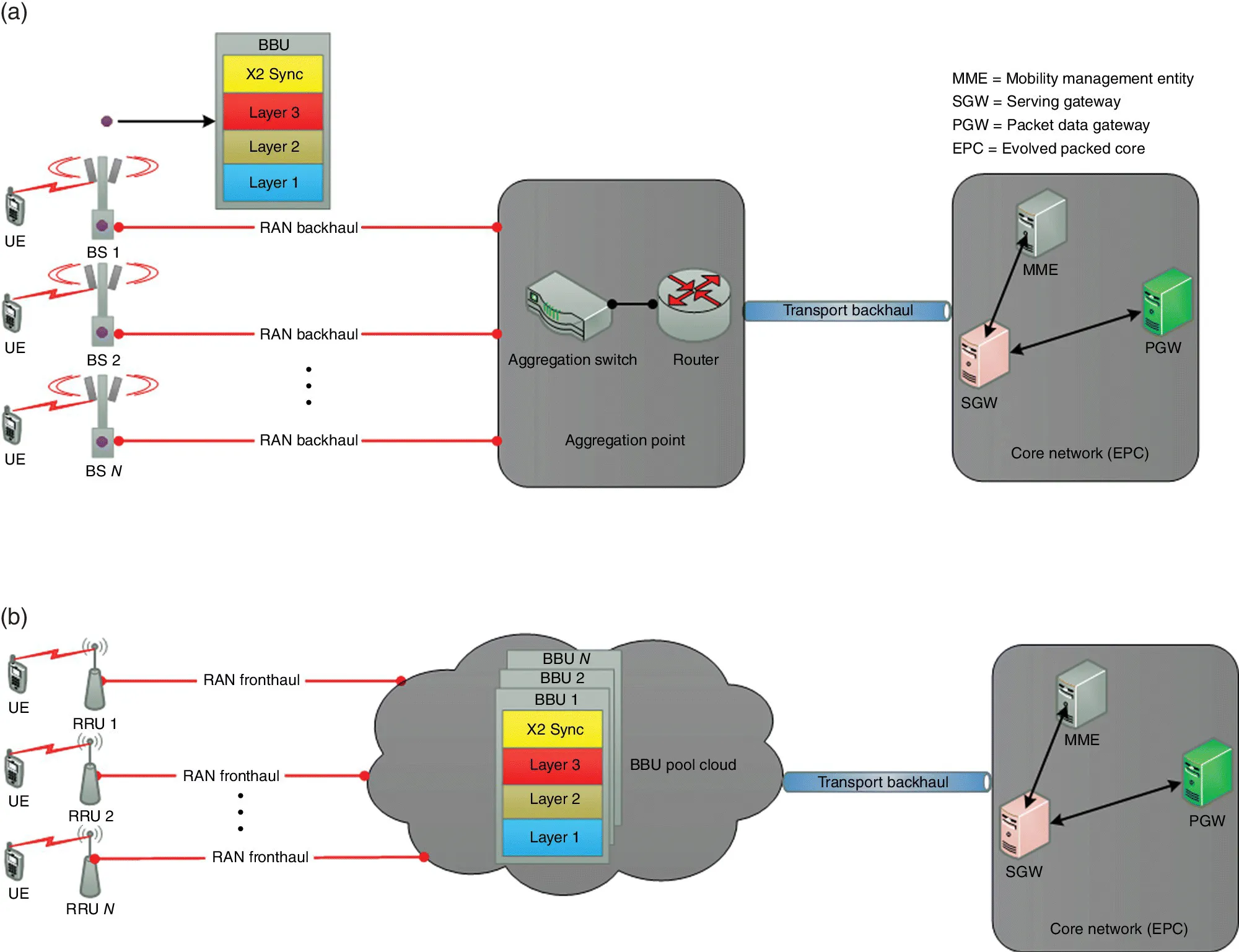
Small‐cell technology is an emerging deployment that is providing promising results in terms of delivering fast connectivity due to the small distance between the base station (BS) and the end user, whilst reducing energy consumption. Market use cases of small cells such as the indoor femto cell have already become a success story, so the question is, can we extrapolate the femto cell paradigm to the outdoor world? In fact, current trends are suggesting that this is the way forward, with multi‐tier heterogeneous networks being a new design addition to the LTE‐Advanced standard [5, 6]. Here, multi‐tier radio networks (small‐cell tiers) play a pivotal role, coupled with network coexistence approaches to reduce the interference between tiers. Moreover, mobile technology will continue to evolve in this direction with the hyper‐dense deployment of small cells providing hotspot islands of high data connectivity coverage zones. This context will ask new questions from the research community in terms of how to tunnel this traffic from the local serving base station towards the core network. Typically, in legacy networks, the segment of the network that interconnects the BS to the RAN (radio access network) to the EPC (evolved packet core) is called the backhaul. Fibre optic lines or microwave links have fulfilled this role, with limitations in terms of deployment cost and limited coverage area. However, mobile technology is heading towards an era of virtualization and software‐defined networking, where radio resources are allocated from a common pool to different providers, and their management is centralized. This new era is, in fact, reflecting parallels in the cloud computing world, with the onset of cloud services. Emerging mobile networks are heading towards a C‐RAN (cloud radio access network) approach [7, 8], where RRUs (remote radio units) and a centralized processing RAN core work in synergy to provide coordinated scheduling, or, in other words, interference management. This paradigm is changing the perception of the communication haul in the network, from backhauling to incorporating both a back and fronthaul segment. In this context, the backhaul dictates how the information is parried from the base stations to the core network, whilst the fronthaul refers to the connectivity segment between the C‐RAN core network and the small cell. Figure 1.1 shows definitions of the backhaul and fronthaul segments pertaining to legacy and emerging C‐RAN architectures.
Figure 1.1 Communication haul segments of (a) legacy and (b) emerging C‐RAN mobile network
The future enhanced communication haul (be it backhaul or fronthaul) for 5G is expected to be deployed around 2020 in order to support the exponential growth in wireless data that is forecast over the next decade. Therefore, there is substantial market interest in the development of ground‐breaking backhaul and fronthaul solutions that can not only enhance today’s networks, but also provide a coherent interference management approach in emerging technologies such as C‐RAN and beyond. This communication haul challenge provided the inspiration for this book and its title: Backhauling/Fronthauling for Future Wireless Systems.
The book intends to bring together all mobile stakeholders, from academia and industry, to identify and promote technical challenges and recent results related to smart backhaul/fronthaul research for future communication systems such as 5G. It provides an overview of current approaches to backhauling legacy communication systems and explains the rationale for deploying future smart and efficient backhauling/fronthauling infrastructure from architectural, technical and business points of view using real‐life applications and use cases. The book is intended to inspire researchers, operators and manufacturers to render ground‐breaking ideas in the newly emerging discipline of smart backhauling/fronthauling over future, ultra‐dense wireless systems. Moreover, detailed security challenges are presented to analyse the performance of smart backhauling/fronthauling for future wireless. It is clear that smart backhauling/fronthauling deployment can offer a palette of interesting colours capable of painting new business opportunities for mobile stakeholders for next generation wireless communication systems. This is the first book of its kind on smart backhauling/fronthauling for future wireless systems which updates the research community on the communication haul roadmap, reflecting current and emerging features emanating from the 3GPP group.
To guide the reader through this adventure, the book has the following layout. In Chapter 2, a reference architecture for the future radio communication haul is presented from a 5G perspective. 5G networks are anticipated to obtain Shannon‐level and beyond throughput and almost zero latency. However, there are several challenges to solve if 5G is to outperform legacy mobile platforms; one of these is the design of the communication ‘haul’. Traditionally, the backhaul segment connects the radio access network (RAN) to the rest of the network where the baseband processing takes place at the cell site. However, in this chapter, we will use the concept of ‘fronthaul access,’ which is recently gaining significant interest since it has the potential to support remote baseband processing based on adopting a cloud radio access network (C‐RAN) architecture that aims to mitigate (or coordinate) interference in operator‐deployed infrastructures; this eases significantly the requirements in interference‐aware transceivers. To do this, we provide a reference architecture that also includes a network and protocol architecture and proposes a so‐called ‘cloud resource optimizer’. This integrated solution will be the enabler for RAN‐as‐a‐Service, not only paving the way for effective radio resource management, but opening up new business opportunities for virtual mobile service providers.
Emerging channel transmission approaches and the possibility of using higher frequency bands, such as massive MIMO and millimetre‐wave (mmWave), respectively, are of paramount importance for future wireless systems and for the communication haul. Chapter 3 introduces the fundamentals with regard to massive MIMO and mmWave communication, and their suitability for small‐cell backhauling and fronthauling. Furthermore, a performance analysis model for wireless backhauling of small cells with massive MIMO and mmWave communication is outlined. Using this model, some numerical results on the performance of massive‐MIMO‐ and/or mmWave‐based wireless backhaul networks are presented.
C‐RAN promises considerable benefits compared to decentralized network architectures. Centralizing the baseband processing enables smaller radio access points as well as cooperative signal processing and ease of upgrade and maintenance. Further, by realizing the processing not on dedicated hardware, but on dynamic and flexible general‐purpose processors, cloud‐based networks enable load balancing between processing elements to enhance energy and cost efficiency. However, centralization also places challenging requirements on the fronthaul network in terms of latency and data rate. This is especially critical if a heterogeneous fronthaul is considered, consisting not only of dedicated fibre but also of, for example, mmWave links. A flexible centralization approach can relax these requirements by adaptively assigning different parts of the processing chain either to the centralized baseband processors or the base stations based on the load situation, user scenario and the availability of the fronthaul links. This not only reduces the requirements in terms of latency and data rate, but also couples the data rate to the actual user traffic. In Chapter 4, a comprehensive overview of different decentralization approaches is given, and we analyse their specific requirements in terms of latency and data rate. Furthermore, we demonstrate the performance of flexible centralization and provide design guidelines on how to set up the fronthaul network to avoid over‐ or under‐dimensioning.
Heterogeneous backhaul deployment using different wired and wireless technologies is a potential solution to meet the demand in small‐cell and ultra‐dense networks. Therefore, it is of cardinal importance to evaluate and compare the performance characteristics of various backhaul technologies in order to understand their effect on the network aggregate performance and provide guidelines for system design. In Chapter 5, the authors propose relevant backhaul models and study the delay performance of various backhaul technologies with different capabilities and characteristics, including fibre, xDSL, mmWave and sub‐6 GHz. Using these models, the authors aim to optimize the base station (BS) association so as to minimize the mean network packet delay in a macro‐cell network overlaid with small cells. Furthermore, the authors model and analyse the backhaul deployment cost and show that there exists an optimal gateway density that minimizes the mean backhaul cost per small‐cell base station. Numerical results are presented to show the delay performance characteristics of different backhaul solutions. Comparisons between the proposed and traditional BS association policies show the significant effects of backhaul on network performance, which demonstrates the importance of joint system design and optimization for both the radio access and backhaul networks.
The small‐cell network (also called a HetNet) has been recognized as a potential solution to offer better service coverage and higher spectral efficiency. However, the dense deployment of small cells could cause inter‐cell interference problems and reduce the performance gains of HetNets. Variou...
Table of contents
Cover
Title Page
Table of Contents
List of Contributors
Preface
Acknowledgements
1 Introduction
2 A C-RAN Approach for 5G Applications
3 Backhauling 5G Small Cells with Massive-MIMO-Enabled mmWave Communication
4 Fronthaul for a Flexible Centralization in Cloud Radio Access Networks
5 Analysis and Optimization for Heterogeneous Backhaul Technologies
6 Dynamic Enhanced Inter-cell Interference Coordination Strategy with Quality of Service Guarantees for Heterogeneous Networks
7 Cell Selection for Joint Optimization of the Radio Access and Backhaul in Heterogeneous Cellular Networks
8 Multiband and Multichannel Aggregation for High-speed Wireless Backhaul
9 Security Challenges for Cloud Radio Access Networks
Index
End User License Agreement
Trusted by 375,005 students
Access to over 1.5 million titles for a fair monthly price.
Study more efficiently using our study tools.
Frequently asked questions
Yes, you can cancel anytime from the Subscription tab in your account settings on the Perlego website. Your subscription will stay active until the end of your current billing period. Learn how to cancel your subscription
No, books cannot be downloaded as external files, such as PDFs, for use outside of Perlego. However, you can download books within the Perlego app for offline reading on mobile or tablet. Learn how to download books offline
Perlego offers two plans: Essential and Complete
Essential is ideal for learners and professionals who enjoy exploring a wide range of subjects. Access the Essential Library with 800,000+ trusted titles and best-sellers across business, personal growth, and the humanities. Includes unlimited reading time and Standard Read Aloud voice.
Complete: Perfect for advanced learners and researchers needing full, unrestricted access. Unlock 1.5M+ books across hundreds of subjects, including academic and specialized titles. The Complete Plan also includes advanced features like Premium Read Aloud and Research Assistant.
Both plans are available with monthly, semester, or annual billing cycles.
We are an online textbook subscription service, where you can get access to an entire online library for less than the price of a single book per month. With over 1.5 million books across 990+ topics, we’ve got you covered! Learn about our mission
Look out for the read-aloud symbol on your next book to see if you can listen to it. The read-aloud tool reads text aloud for you, highlighting the text as it is being read. You can pause it, speed it up and slow it down. Learn more about Read Aloud
Yes! You can use the Perlego app on both iOS and Android devices to read anytime, anywhere — even offline. Perfect for commutes or when you’re on the go. Please note we cannot support devices running on iOS 13 and Android 7 or earlier. Learn more about using the app
Yes, you can access Backhauling / Fronthauling for Future Wireless Systems by Kazi Mohammed Saidul Huq, Jonathan Rodriguez, Kazi Mohammed Saidul Huq,Jonathan Rodriguez in PDF and/or ePUB format, as well as other popular books in Technology & Engineering & Mobile & Wireless Communications. We have over 1.5 million books available in our catalogue for you to explore.