A comprehensive and up-to-date overview of alkyne chemistry, taking into account the progress made over the last two decades. The experienced editors are renowned world leaders in the field, while the list of contributors reads like a "Who's Who" of synthetic organic chemistry. The result is a valuable reference not only for organic chemists at universities and in the chemical industry, but also for biologists and material scientists involved in the modern synthesis of organic compounds and materials.
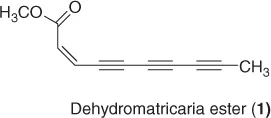
Alkyne is one of the fundamental functional groups that established the foundation of organic chemistry [1]. The smallest member of this family, acetylene, was first discovered in 1836 by Edmund Davy [2]. It was rediscovered and named “acetylene” by Marcellin Berthelot in 1860 by passing vapors of organic compounds through a red-hot tube or sparking electricity through a mixture of cyanogen and hydrogen gas. Acetylene is a moderately common chemical in the universe [3], often in the atmosphere of gas giants. In 1862, Friedrich Wöhler discovered the generation of acetylene from the hydrolysis of calcium carbide (Equation 1.1). Acetylene produced by this reaction was the main source of organic chemicals in the coal-based chemical industry era. When petroleum replaced coal as the chief source of carbon in the 1950s, partial combustion of methane (Equation 1.2) or formation as a side product of hydrocarbon cracking became the prevalent industrial manufacturing processes for acetylene. The next member of the family, propyne, is also mainly prepared by the thermal cracking of hydrocarbons. The first naturally occurring acetylic compound, dehydromatricaria ester (1), was isolated in 1826 [4] from an Artemisia species. Well over 1000 alkyne-containing natural products have been isolated since then, among which many are polyyne-containing natural products isolated from plants, fungi, bacteria, marine sponges, and corals [5].
1.1
1.2
The higher members of alkynes are generally derived from the smaller homologs via alkyne homologation processes of the terminal alkynes (see Equation 1.8, below), while some alkynes are generated through elimination reactions with organic halides under basic conditions (Equation 1.3) [1]. A search in Sci Finder shows that >70 000 terminal alkynes and >10 000 internal alkynes are now commercially available from various sources.
1.3
1.2 Structure and Properties of Alkynes
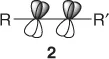
Alkynes contain a tripe bond, composed of a σ-covalent bond formed from two sp-hybridized carbons and two π-bonds resulted from the overlapping of two orthogonal unhybridized p-orbitals on each carbon (2) [1]. Consequently, alkynes are generally rod-like. Cyclic alkynes are less common with benzyne as an important reactive intermediate in organic chemistry [6]. Acetylene is linear and intrinsically unstable under pressure due to its high compressibility as well as its propensity to undergo exothermic self addition reactions. Consequently, acetylene itself can explode violently at high pressure and the safe limit for acetylene is 103 kPa. Thus, acetylene is generally shipped in acetone or dimethyl formamide (DMF) solutions or contained in a gas cylinder with porous filling [7]. Acetylene has been used as a burning fuel and for illumination purposes in the late nineteenth century and early twentieth century [8]. In modern times, alkynes have found a wide range of applications ranging from organic electronic materials, metal-organic frame works (MOF), pharmaceutical agents, and others [9]. The linearity of the alkyne creates strain when an alkyne is part of a ring [10]. In spite of this fact, cyclopentyne, cyclohexyne, and cycloheptyne can be generated at least fleetingly, their existence being confirmed by in situ trapping, notably by 1,3-dipolar cycloadditions [11]. Cyclooctyne is still highly strained but has sufficient stability to be isolated and used in click chemistry to study biological processes [12].
1.3 Classical Reactions of Alkynes
The higher degree of unsaturation of alkynes compared to alkenes increases their reactivity toward addition to both alkenes and alkynes. In particular, virtually all additions of HX and RX to alkynes are exothermic. Consequently, these stoichiometric addition reactions have been the basis of most reactions in the classical alkyne chemistry (Equation 1.4) [1]. These classical alkyne addition reactions include the additions of hydrogen, halogens, water, hydrogen halides, halohydrins, hydroborations, and others. With a stoichiometric ...
Table of contents
Cover
Related Titles
Title Page
Copyright
List of Contributors
Preface
Chapter 1: Introduction
Part I: Catalytic Isomerization of Alkynes
Part II: Catalytic Cycloaddition Reactions
Part III: Catalytic Nucleophilic Additions and Substitutions
Part IV: Other Reactions
Index
End User License Agreement
Trusted by 375,005 students
Access to over 1.5 million titles for a fair monthly price.
Study more efficiently using our study tools.
Frequently asked questions
Yes, you can cancel anytime from the Subscription tab in your account settings on the Perlego website. Your subscription will stay active until the end of your current billing period. Learn how to cancel your subscription
No, books cannot be downloaded as external files, such as PDFs, for use outside of Perlego. However, you can download books within the Perlego app for offline reading on mobile or tablet. Learn how to download books offline
Perlego offers two plans: Essential and Complete
Essential is ideal for learners and professionals who enjoy exploring a wide range of subjects. Access the Essential Library with 800,000+ trusted titles and best-sellers across business, personal growth, and the humanities. Includes unlimited reading time and Standard Read Aloud voice.
Complete: Perfect for advanced learners and researchers needing full, unrestricted access. Unlock 1.5M+ books across hundreds of subjects, including academic and specialized titles. The Complete Plan also includes advanced features like Premium Read Aloud and Research Assistant.
Both plans are available with monthly, semester, or annual billing cycles.
We are an online textbook subscription service, where you can get access to an entire online library for less than the price of a single book per month. With over 1.5 million books across 990+ topics, we’ve got you covered! Learn about our mission
Look out for the read-aloud symbol on your next book to see if you can listen to it. The read-aloud tool reads text aloud for you, highlighting the text as it is being read. You can pause it, speed it up and slow it down. Learn more about Read Aloud
Yes! You can use the Perlego app on both iOS and Android devices to read anytime, anywhere — even offline. Perfect for commutes or when you’re on the go. Please note we cannot support devices running on iOS 13 and Android 7 or earlier. Learn more about using the app
Yes, you can access Modern Alkyne Chemistry by Barry M. Trost, Chao-Jun Li, Barry M. Trost,Chao-Jun Li in PDF and/or ePUB format, as well as other popular books in Physical Sciences & Physical & Theoretical Chemistry. We have over 1.5 million books available in our catalogue for you to explore.