- English
- ePUB (mobile friendly)
- Available on iOS & Android
About this book
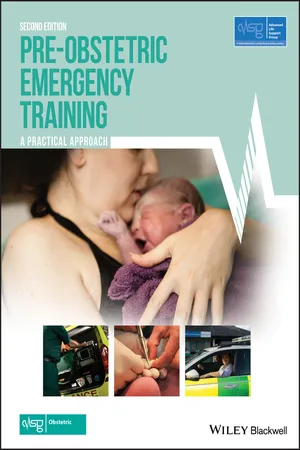
Pre-Obstetric Emergency Training: A Practical Approach, 2nd Edition
Fully revised and now in full colour, the new edition of Pre-Obstetric Emergency Training (POET) will help practitioners identify and manage a range of time-critical obstetric emergencies, specifically in the pre-obstetric department setting.
Providing structured examination and assessment techniques as an aid to determine what treatment should be provided before transport, this practical manual equips the practitioner with the knowledge necessary to save the mother and fetus in life-threatening circumstances before admission to the hospital. New to the second edition are chapters covering non-technical skills and communication, as well as complicated labour and delivery.
Designed to accompany the associated Advanced Life Support Group training course, Pre-Obstetric Emergency Training serves as an authoritative guide for a range of pre-hospital practitioners dealing with specialist situations.
Frequently asked questions
- Essential is ideal for learners and professionals who enjoy exploring a wide range of subjects. Access the Essential Library with 800,000+ trusted titles and best-sellers across business, personal growth, and the humanities. Includes unlimited reading time and Standard Read Aloud voice.
- Complete: Perfect for advanced learners and researchers needing full, unrestricted access. Unlock 1.4M+ books across hundreds of subjects, including academic and specialized titles. The Complete Plan also includes advanced features like Premium Read Aloud and Research Assistant.
Please note we cannot support devices running on iOS 13 and Android 7 or earlier. Learn more about using the app.
Information
CHAPTER 1
Obstetric services
Learning outcomes
- Discuss the relationship between the different professional groups involved in the management of the obstetric patient
- Describe the function and importance of handāheld records and how to use them effectively
1.1 Organisation of obstetric services, epidemiology of obstetric emergencies and role of the ambulance service, general practitioner and midwife
Organisation
Place of delivery
Mode of delivery
Common preāhospital emergencies
- Labour +/ā delivery (term or preterm)
- Bleeding antenatally or postnatally (including miscarriage) and postoperative vaginal haemorrhage
- Abdominal pain other than labour
- Preāeclampsia and eclampsia (this is now less common: 2:10 000 cases due to the use of magnesium sulphate in hospital in atārisk cases; however, this does mean that one of the more common places to have a convulsion will be in the community)
- Prolapsed umbilical cord
Transfer
Table of contents
- Cover
- Table of Contents
- Foreword to second edition
- Preface to second edition
- Preface to first edition
- CHAPTER 1: Obstetric services
- CHAPTER 2: Legal and ethical issues
- CHAPTER 3: When things go wrong ā a review of the MBRRACEāUK and Ireland Maternity Mortality Reports 2014ā17
- CHAPTER 4: Getting it right ā nonātechnical skills and communications
- CHAPTER 5: Anatomical and physiological changes in pregnancy
- CHAPTER 6: Structured approach to the obstetric patient
- CHAPTER 7: Collapse, cardiac arrest and shock in pregnancy
- CHAPTER 8: Emergencies in early pregnancy (up to 20 weeks)
- CHAPTER 9: Emergencies in late pregnancy (from 20 weeks)
- CHAPTER 10: Trauma, surgical and medical emergencies
- CHAPTER 11: Normal labour and delivery
- CHAPTER 12: Complicated labour and delivery
- CHAPTER 13: Emergencies after delivery
- CHAPTER 14: Resuscitation of the baby at birth
- CHAPTER 15: Assessment and management of the postāgynaecological surgery patient
- Abbreviations
- Glossary
- References
- Further reading
- Index
- End User License Agreement