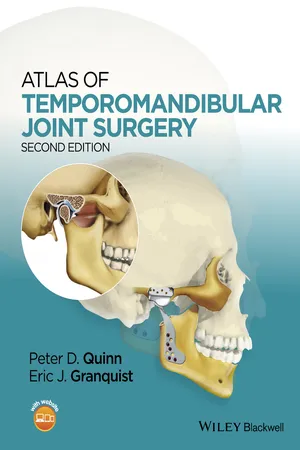
This second edition of the Atlas of Temporomandibular Joint Surgery is a major revision of Dr. Quinn's classic work, taking into account new procedures, equipment, and evidence-based findings from the latest research in TMJ treatment.
Assuming that readers are familiar with non-surgical therapies to correct temporomandibular pain and disorders, Drs. Quinn and Granquist focus on the surgical remedies for disorders that are beyond conservative treatment. This concise, how-to surgical atlas guides both the novice and experienced surgeon through the intra-articular and extra-articular procedures that have proven efficacious in the treatment of advanced craniomandibular dysfunction. Chapters take readers through decision making for TMJ surgery, diagnostic imaging methods, surgical approaches, surgery for internal derangements, trauma, osseous surgical procedures, total joint replacement, and pathologies.
eBook - ePub
Atlas of Temporomandibular Joint Surgery
- English
- ePUB (mobile friendly)
- Available on iOS & Android
eBook - ePub
Atlas of Temporomandibular Joint Surgery
About this book
Information
CHAPTER 1
Surgical decision making for temporomandibular joint surgery
Correct diagnosis and surgical planning is the key to successful surgical outcomes. Many controversies exist in the management, indications for surgery, and the correct surgical procedure in temporomandibular joint disease. As a number of interventions and management schemes are currently accepted in the literature, these controversies only serve to complicate decision making in temporomandibular joint surgery for internal derangement, trauma, and management of benign and malignant disorders. Several excellent comprehensive textbooks on temporomandibular joint disorders explore the basis for these controversies and provide a historical and scientific overview of this problematic area of maxillofacial surgery.
The intent of this text is simply to illustrate the technical aspects of the various surgical procedures on the temporomandibular joint. No attempt was made to champion a single approach to temporomandibular joint surgery. Ultimately, only well-designed clinical studies can prove, or disprove, the safety and efficacy of the individual procedures. It is our hope that scientific evidence will one day provide the sine qua non that will dictate the proper role for all the potential surgical modalities, including arthroscopy, meniscal repair, and the use of both autogenous and alloplastic materials in joint reconstruction, and eventually, the use of tissue engineering in the management of temporomandibular joint reconstruction. Although serious mistakes have been made in the management of the temporomandibular joint, surgeons cannot allow the failures of the past to obscure the needs of the future.
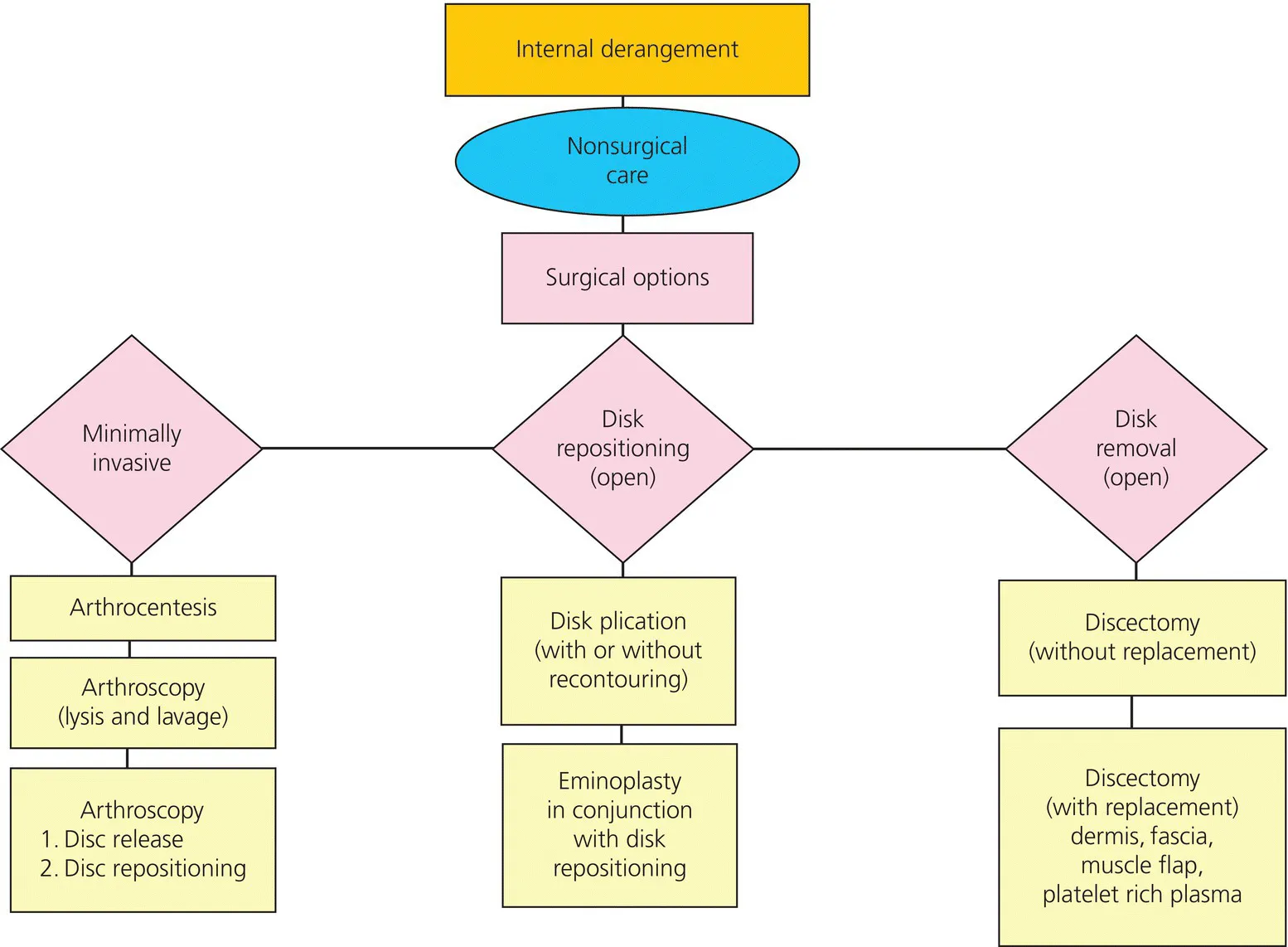
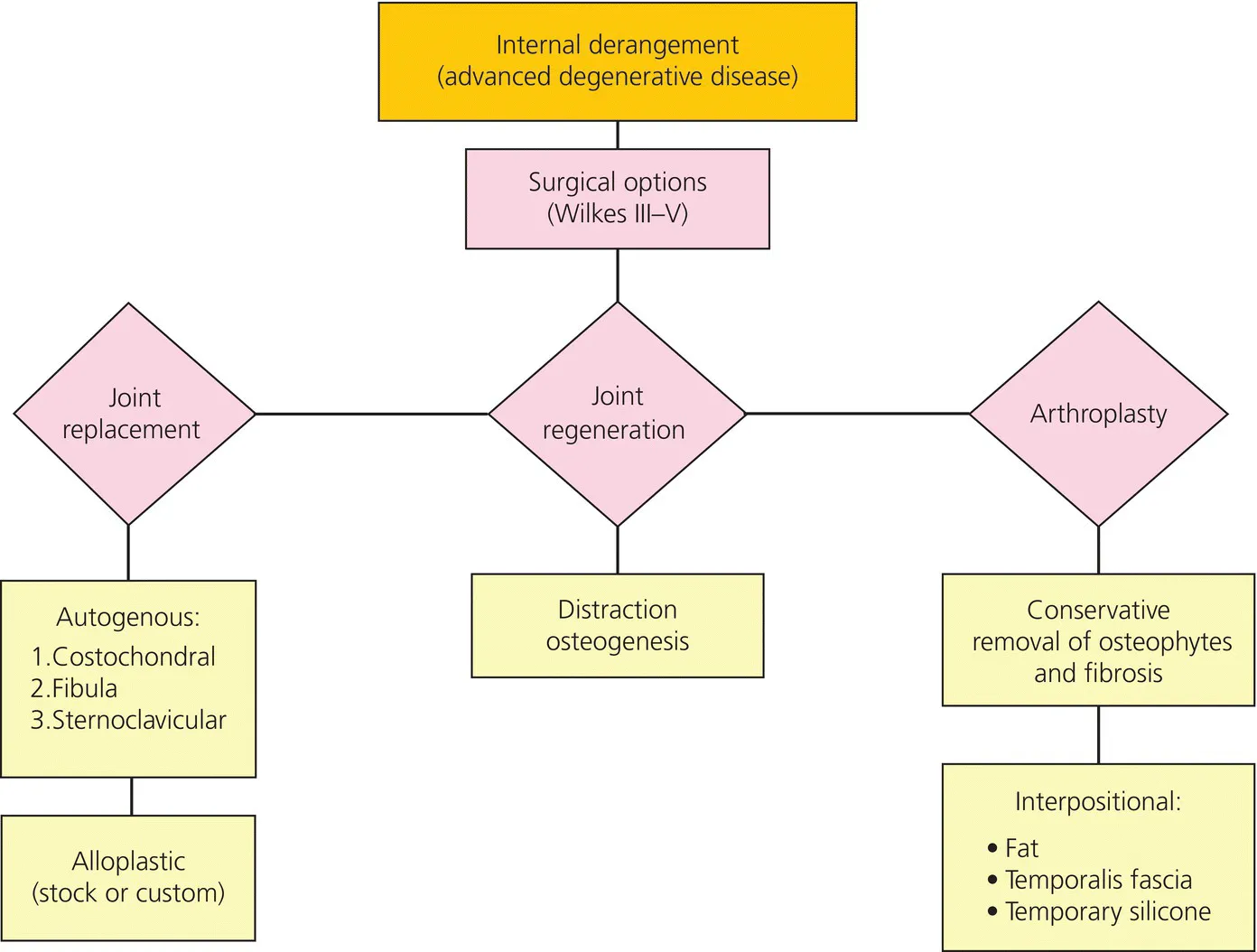
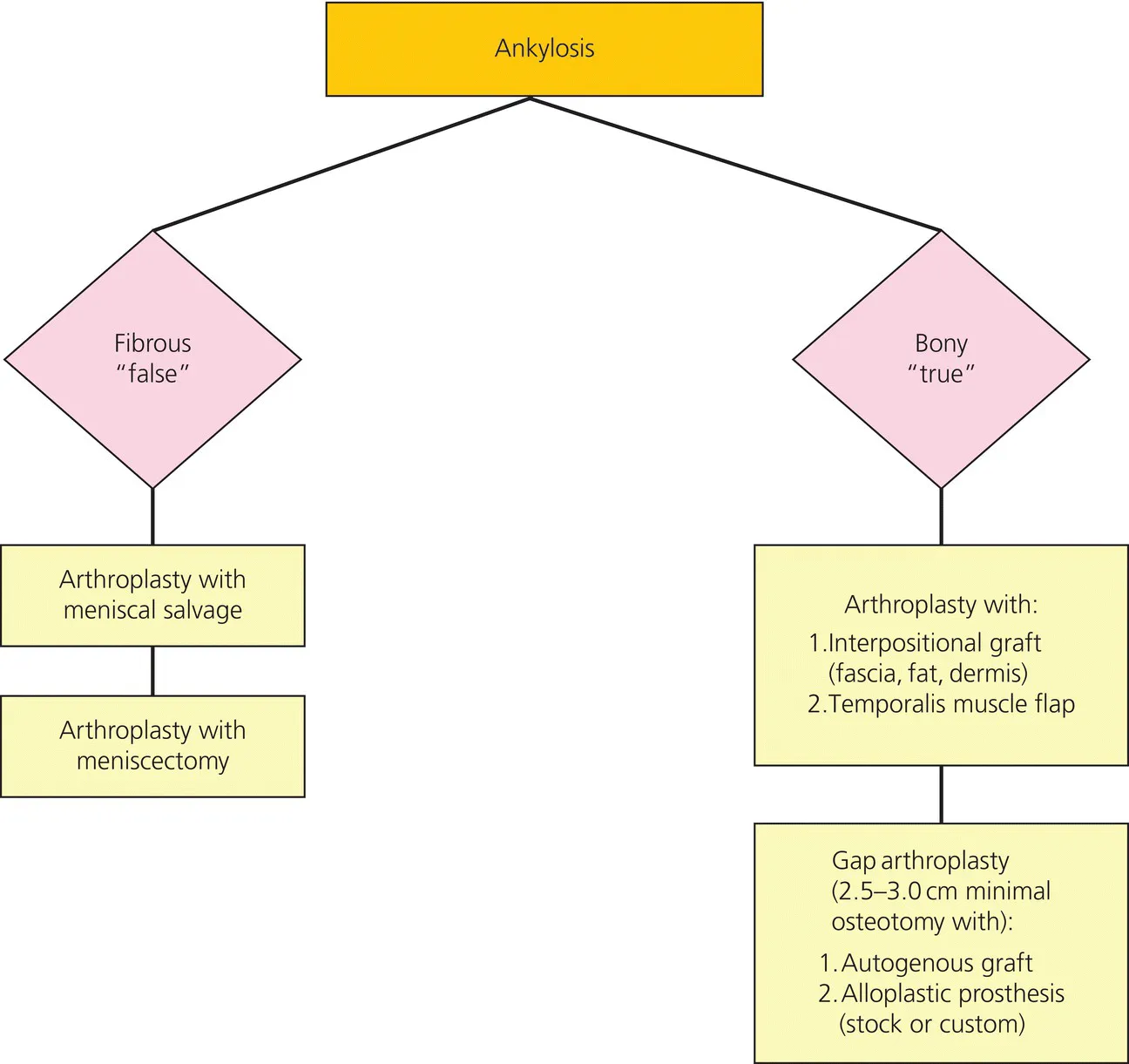
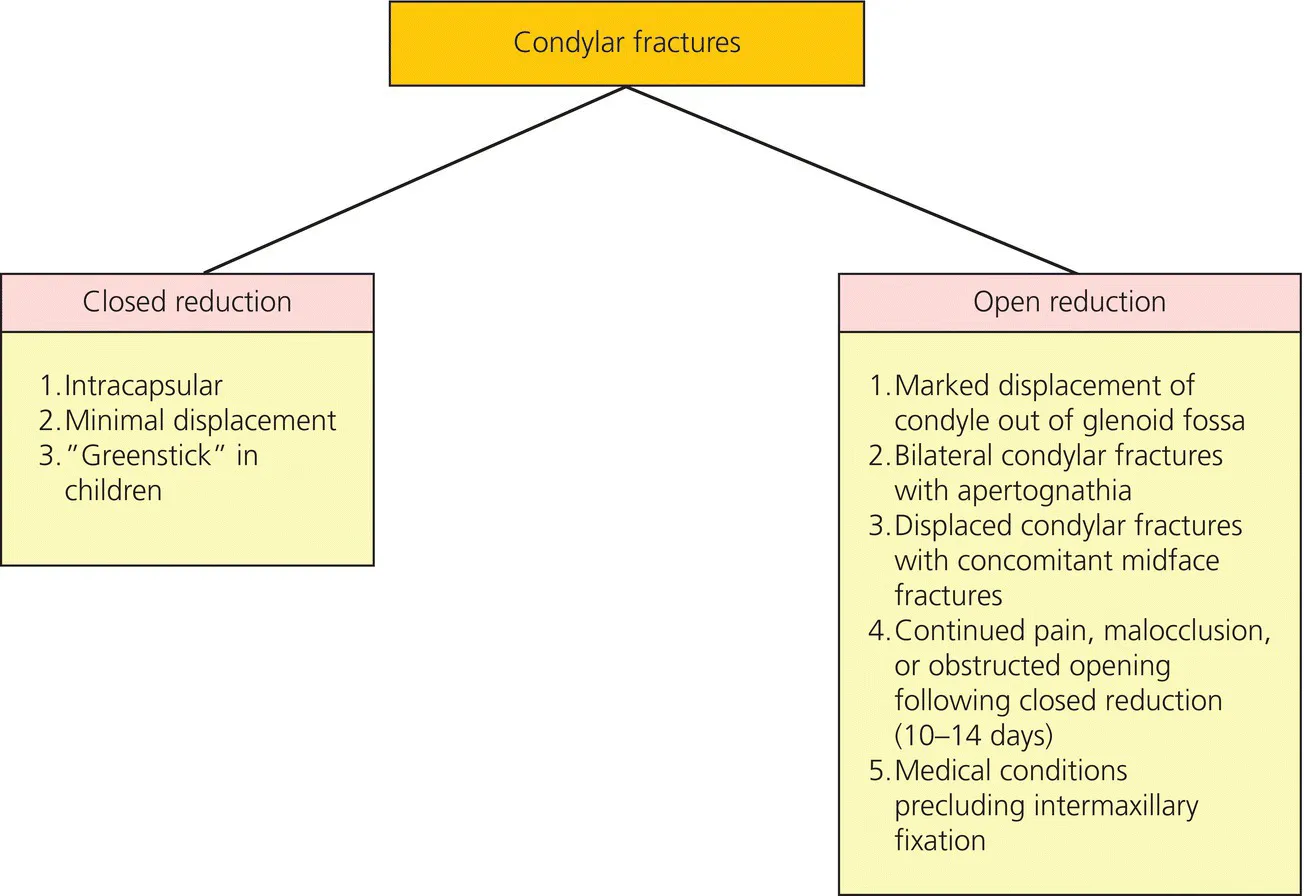
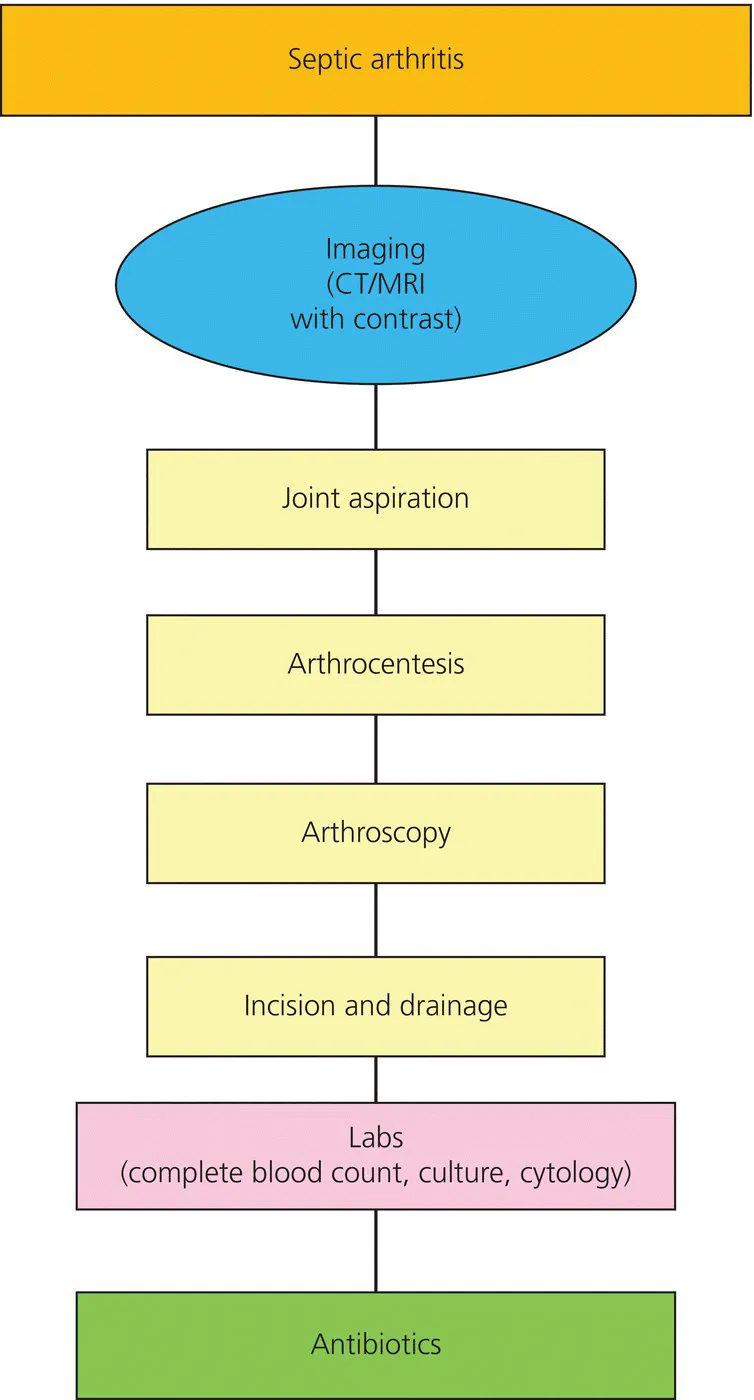
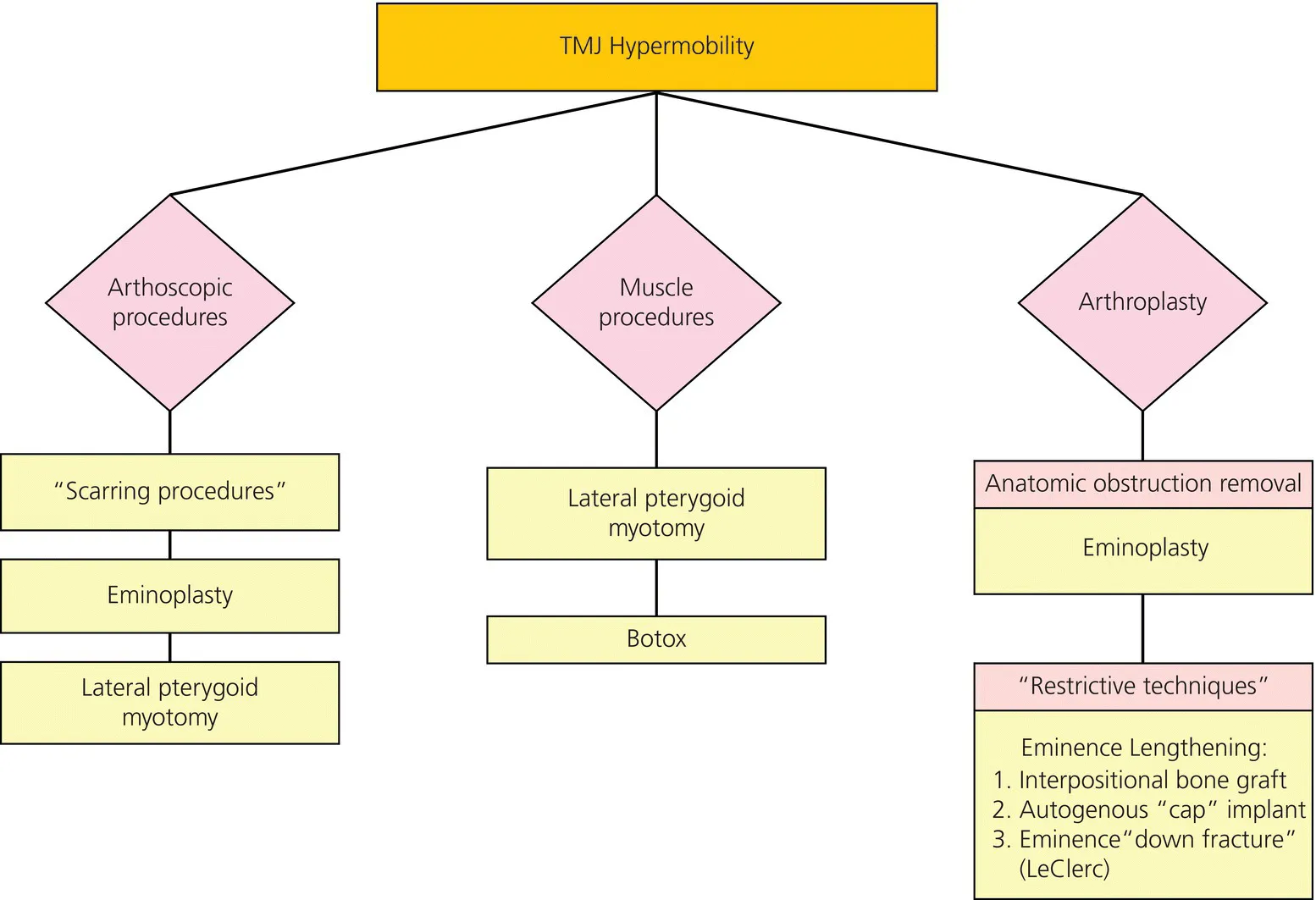
This text is based on the assumption that primarily extra-articular conditions are most amenable to nonsurgical care. Patients with true internal derangements may benefit from nonsurgical care, and all these modalities should be exhausted before proceeding with any surgical option. The following algorithms are useful as guidelines but must always be modified according to the needs of the individual patient. These algorithms list only current acceptable surgical techniques for various conditions and make no attempt to advocate one surgical procedure over another one. Because several excellent comprehensive texts dealing with arthroscopic techniques are available, this book deals only with open-joint surgical procedures.
CHAPTER 2
Diagnostic imaging of the temporomandibular joint
Because of the anatomic complexity of the temporomandibular joint (TMJ) and its proximity to the base of the skull, temporal bone, mastoid air cells, and auditory structures, imaging of the joint structures can be problematic. Imaging studies should aid the clinician in diagnosis and surgical planning. The choice of imaging modality should be based on history and physical exam. Consideration should be given to the amount of radiation, invasiveness of the exam, ability to obtain the study, and cost. The study that is able to best answer the clinical question while maximizing cost effectiveness should be utilized.
Plain film, tomograms, and orthopantogram radiography
Plain films, tomograms, and orthopantogram (panoramic) studies provide good osseous detail of the TMJ, with minimal radiation, and are easily obtained. As such, they are often an excellent choice for initial evaluation of TMJ pathology.
Standard transcranial (lateral oblique) views provide a global view of bony architecture of the articular surfaces. If possible, a submental vertex film can be taken to allow the lateral oblique transcranial projection to b...
Table of contents
- Cover
- Title page
- Table of Contents
- Contributors list
- Preface
- Acknowledgments
- About the companion website
- CHAPTER 1: Surgical decision making for temporomandibular joint surgery
- CHAPTER 2: Diagnostic imaging of the temporomandibular joint
- CHAPTER 3: Surgical approaches to the temporomandibular joint
- CHAPTER 4: Surgery for internal derangements
- CHAPTER 5: Osseous surgery of the temporomandibular joint
- CHAPTER 6: Trauma
- CHAPTER 7: Autogenous reconstruction of the temporomandibular joint
- CHAPTER 8: Stock alloplastic reconstruction of the temporomandibular joint
- CHAPTER 9: Custom alloplastic reconstruction of the temporomandibular joint
- CHAPTER 10: Pathology of the temporomandibular joint
- CHAPTER 11: Complications
- Index
- End User License Agreement
Trusted by 375,005 students
Access to over 1.5 million titles for a fair monthly price.
Study more efficiently using our study tools.
Frequently asked questions
Yes, you can cancel anytime from the Subscription tab in your account settings on the Perlego website. Your subscription will stay active until the end of your current billing period. Learn how to cancel your subscription
No, books cannot be downloaded as external files, such as PDFs, for use outside of Perlego. However, you can download books within the Perlego app for offline reading on mobile or tablet. Learn how to download books offline
Perlego offers two plans: Essential and Complete
- Essential is ideal for learners and professionals who enjoy exploring a wide range of subjects. Access the Essential Library with 800,000+ trusted titles and best-sellers across business, personal growth, and the humanities. Includes unlimited reading time and Standard Read Aloud voice.
- Complete: Perfect for advanced learners and researchers needing full, unrestricted access. Unlock 1.5M+ books across hundreds of subjects, including academic and specialized titles. The Complete Plan also includes advanced features like Premium Read Aloud and Research Assistant.
We are an online textbook subscription service, where you can get access to an entire online library for less than the price of a single book per month. With over 1.5 million books across 990+ topics, we’ve got you covered! Learn about our mission
Look out for the read-aloud symbol on your next book to see if you can listen to it. The read-aloud tool reads text aloud for you, highlighting the text as it is being read. You can pause it, speed it up and slow it down. Learn more about Read Aloud
Yes! You can use the Perlego app on both iOS and Android devices to read anytime, anywhere — even offline. Perfect for commutes or when you’re on the go.
Please note we cannot support devices running on iOS 13 and Android 7 or earlier. Learn more about using the app
Please note we cannot support devices running on iOS 13 and Android 7 or earlier. Learn more about using the app
Yes, you can access Atlas of Temporomandibular Joint Surgery by Peter D. Quinn, Eric J. Granquist, Peter D. Quinn,Eric J. Granquist in PDF and/or ePUB format, as well as other popular books in Medicine & Surgery & Surgical Medicine. We have over 1.5 million books available in our catalogue for you to explore.