Presents the fundamentals and calculation of transmission line losses, their reduction, and economic implications
• Written by a very experienced expert in this field • Introduces various technical measures for loss reduction, and appended with a large number of examples • Offers a progressive and systematic approach to various aspects of the problems • A timely and original book to meet the challenges of power and grid industry development
In an electric supply area, electric energy is supplied to customers through transmission, substation, and power grid distribution. During the transmission and distribution of electric energy, a certain quantity of active power loss and electric energy loss will be generated in all units of the power grids.
1.1.1 Main Types of Active Power Loss
According to the analysis based on electromagnetic field theory, the energy of an electromagnetic field is transmitted from the power source to the loads through the dielectric space of the electromagnetic field, and wires lead the energy of the electromagnetic field. The electric energy loss that goes into the wires and is then converted into heat energy is also supplied by the electromagnetic field.
According to the results of the analysis of a single core coaxial cable by using the Poynting vector of energy flow density in the case of AC transmission, while power is needed to transmit loads in the dielectric space, four types of active power loss are produced in the cable:
Resistance heat loss ∆P1(W)
This is in direct proportion to the square of current, that is
(1.1)
Wherein:
I – current passing the cable core (A);
R – the sum of resistance of both the cable core and tegmen (Ω).
Leakage loss ∆P2(W)
This is in direct proportion to the square of voltage, that is
(1.2)
(1.3)
Wherein:
U – voltage between the cable core and tegmen (V);
G – leakage conductance of dielectric (1/Ω);
r – conductivity [1/(Ω∙m)];
l – length of the cable (m);
r1 – radius of the cable core (cm);
r2 – inside radius of the cable tegmen (cm).
Dielectric magnetizing loss ∆P3 (W)
This is in direct proportion to the square of current and the frequency, that is
(1.4)
(1.5)
Wherein:
ω – AC angular frequency (1/s);
L – inductance of the cable (Wb/A);
μ – magnetic conductivity of the cable dielectric (Ω∙s/m);
tanδ – repeated magnetizing loss tangent of the cable dielectric.
Dielectric polarization loss ∆P4 (W)
This is in direct proportion to the square of voltage and the frequency, that is
(1.6)
(1.7)
Wherein:
C – capacitance of the cable (F);
ε – dielectric constant of the cable dielectric (F/m);
tanδ – repeated magnetizing loss tangent of the cable dielectric.
The above four types of active power loss represent the basic types of active power loss in the electric power system. In addition, corona loss may occur in high-voltage lines and high-voltage motors. This is a special type of active power loss caused by ionization of dielectric particles outside a conductor when the electric field intensity is too high in the surface of the conductor. It is related to the surface field intensity of the conductor and the air density. See Chapter 8, Section 8.2 for details.
1.1.2 Calculation of Electric Energy Loss
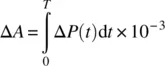
Electric energy loss ∆A (kW∙h) is the integral of active power loss to time within a period, that is
(1.8)
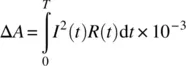
For resistance heat loss, Formula (1.8) can be rewritten to
(1.9)
Within the period T, the load current and conductor resistance may va...
Table of contents
Cover
Title Page
Table of Contents
Foreword
Preface
Introduction
1 Overview
2 Calculation of Line Loss by Current Load Curve
3 Probability Theory Analysis of Current Load Curve
4 Calculation of Line Loss by Power Load Curve
5 Line Loss Calculation after Reactive Compensation
6 Change Law for the Electric Energy Losses of Power Grids
7 Analysis and Control of Line Loss Rate Indicators of Power Grids
8 Theoretical Calculation of Electric Energy Losses of Power Grid Units
9 Calculation of Electric Energy Losses of Multi-branch Lines
10 Calculation of High-voltage Power Grid Losses
11 Analysis and Calculation of Loss Allocation
12 Technical Measures for the Reduction of Line Losses
13 Line Loss Prediction and Loss Reduction Plan for Power Grids
14 Analysis of the Influence of Power Grid Line Losses on Power Grid Enterprises
15 Management and Utilization of Line Loss Mass Information for an Electric Power System
Appendix A Calculation Curve of Corona Loss Power ΔPcor
Appendix B Calculation of Electrical Parameters of Power Grid Units
Appendix C Derivation of Loss Factor Formula by Subsection Integration Method
Appendix D Actual Measurement Analysis of No-load Power Losses and Relationship between No-load Current and Voltage of Distribution Transformers
References
Index
End User License Agreement
Trusted by 375,005 students
Access to over 1.5 million titles for a fair monthly price.
Study more efficiently using our study tools.
Frequently asked questions
Yes, you can cancel anytime from the Subscription tab in your account settings on the Perlego website. Your subscription will stay active until the end of your current billing period. Learn how to cancel your subscription
No, books cannot be downloaded as external files, such as PDFs, for use outside of Perlego. However, you can download books within the Perlego app for offline reading on mobile or tablet. Learn how to download books offline
Perlego offers two plans: Essential and Complete
Essential is ideal for learners and professionals who enjoy exploring a wide range of subjects. Access the Essential Library with 800,000+ trusted titles and best-sellers across business, personal growth, and the humanities. Includes unlimited reading time and Standard Read Aloud voice.
Complete: Perfect for advanced learners and researchers needing full, unrestricted access. Unlock 1.5M+ books across hundreds of subjects, including academic and specialized titles. The Complete Plan also includes advanced features like Premium Read Aloud and Research Assistant.
Both plans are available with monthly, semester, or annual billing cycles.
We are an online textbook subscription service, where you can get access to an entire online library for less than the price of a single book per month. With over 1.5 million books across 990+ topics, we’ve got you covered! Learn about our mission
Look out for the read-aloud symbol on your next book to see if you can listen to it. The read-aloud tool reads text aloud for you, highlighting the text as it is being read. You can pause it, speed it up and slow it down. Learn more about Read Aloud
Yes! You can use the Perlego app on both iOS and Android devices to read anytime, anywhere — even offline. Perfect for commutes or when you’re on the go. Please note we cannot support devices running on iOS 13 and Android 7 or earlier. Learn more about using the app
Yes, you can access Line Loss Analysis and Calculation of Electric Power Systems by Anguan Wu,Baoshan Ni in PDF and/or ePUB format, as well as other popular books in Technology & Engineering & Power Resources. We have over 1.5 million books available in our catalogue for you to explore.
 Wherein:
 (1.3)
(1.3) Wherein:
 (1.5)
(1.5) Wherein:
 (1.7)
(1.7) Wherein: