The Customer-Funded Business
eBook - ePub

The Customer-Funded Business

Start, Finance, or Grow Your Company with Your Customers' Cash

  1. English
  2. ePUB (mobile friendly)
  3. Available on iOS & Android
eBook - ePub

The Customer-Funded Business

Start, Finance, or Grow Your Company with Your Customers' Cash

About this book

Who needs investors?

More than two generations ago, the venture capital community – VCs, business angels, incubators and others – convinced the entrepreneurial world that writing business plans and raising venture capital constituted the twin centerpieces of entrepreneurial endeavor. They did so for good reasons: the sometimes astonishing returns they've delivered to their investors and the astonishingly large companies that their ecosystem has created.

But the vast majority of fast-growing companies never take any venture capital. So where does the money come from to start and grow their companies? From a much more agreeable and hospitable source, their customers. That's exactly what Michael Dell, Bill Gates and Banana Republic's Mel and Patricia Ziegler did to get their companies up and running and turn them into iconic brands.

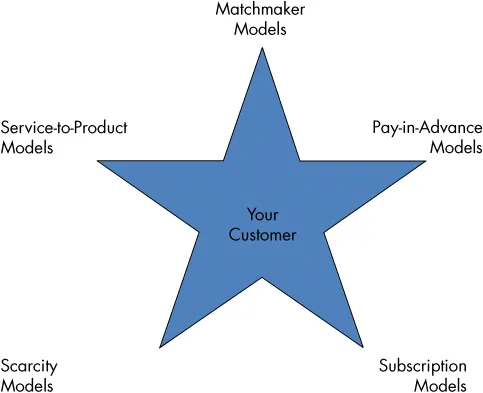
In The Customer Funded Business, best-selling author John Mullins uncovers five novel approaches that scrappy and innovative 21st century entrepreneurs working in companies large and small have ingeniously adapted from their predecessors like Dell, Gates, and the Zieglers:

  • Matchmaker models (Airbnb)
  • Pay-in-advance models (Threadless)
  • Subscription models (TutorVista)
  • Scarcity models (Vente Privee)
  • Service-to-product models (GoViral)

Through the captivating stories of these and other inspiring companies from around the world, Mullins brings to life the five models and identifies the questions that angel or other investors will – and should! – ask of entrepreneurs or corporate innovators seeking to apply them. Drawing on in-depth interviews with entrepreneurs and investors who have actually put these models to use, Mullins goes on to address the key implementation issues that characterize each of the models: when to apply them, how best to apply them, and the pitfalls to watch out for.

Whether you're an aspiring entrepreneur lacking the start-up capital you need, an early-stage entrepreneur trying to get your cash-starved venture into take-off mode, an intrapreneur seeking funding within an established company, or an angel investor or mentor who supports high-potential ventures, this book offers the most sure-footed path to starting, financing, or growing your venture.

John Mullins is the author of The New Business Road Test and, with Randy Komisar, the widely acclaimed Getting to Plan B.
Frequently asked questions

Yes, you can cancel anytime from the Subscription tab in your account settings on the Perlego website. Your subscription will stay active until the end of your current billing period. Learn how to cancel your subscription.
At the moment all of our mobile-responsive ePub books are available to download via the app. Most of our PDFs are also available to download and we're working on making the final remaining ones downloadable now. Learn more here.
Perlego offers two plans: Essential and Complete
  • Essential is ideal for learners and professionals who enjoy exploring a wide range of subjects. Access the Essential Library with 800,000+ trusted titles and best-sellers across business, personal growth, and the humanities. Includes unlimited reading time and Standard Read Aloud voice.
  • Complete: Perfect for advanced learners and researchers needing full, unrestricted access. Unlock 1.4M+ books across hundreds of subjects, including academic and specialized titles. The Complete Plan also includes advanced features like Premium Read Aloud and Research Assistant.
Both plans are available with monthly, semester, or annual billing cycles.
We are an online textbook subscription service, where you can get access to an entire online library for less than the price of a single book per month. With over 1 million books across 1000+ topics, we’ve got you covered! Learn more here.
Look out for the read-aloud symbol on your next book to see if you can listen to it. The read-aloud tool reads text aloud for you, highlighting the text as it is being read. You can pause it, speed it up and slow it down. Learn more here.
Yes! You can use the Perlego app on both iOS or Android devices to read anytime, anywhere — even offline. Perfect for commutes or when you’re on the go.
Please note we cannot support devices running on iOS 13 and Android 7 or earlier. Learn more about using the app.
Yes, you can access The Customer-Funded Business by John Mullins in PDF and/or ePUB format, as well as other popular books in Business & Entrepreneurship. We have over one million books available in our catalogue for you to explore.

Information

Publisher
Wiley
Year
2014
Print ISBN
9781118878859
eBook ISBN
9781118879139
Edition
1

1
Craving Crowdfunding? Pandering to VCs? Groveling to Your CFO?: The Magic of Traction and the Customer-Funded Revolution

img
Imagine this. It was 1995, and the Coca-Cola Company had just reentered India after an aborted earlier effort, this time by acquiring the maker of Thums Up, India's leading cola. Along with the deal came a thick book describing each of the Thums Up bottlers' territories in plenty of legal jargon, but without a single map. Coke needed a way to find and understand its newly acquired territories.
Alas, no one had maps that could show Coke where its bottlers were located. Until the mid-1960s, maps had been largely unavailable in India, at least for anyone not in the military. Even 30 years later, a mapping culture and map-reading ethos simply did not exist, perhaps in part because there were very few accurate Indian maps.
Into the breach stepped Rakesh and Rashmi Verma, who had started a small IT training business in India, CE Info Systems, serving blue-chip clients like IBM. Their company also licensed American digital mapping software to aid India's nascent mapmaking industry.1 Saying to Coke, “We can give you the maps you need” (even though they had not actually ever produced a single map!), the Vermas began to build a digital mapping business. First, they bought an ordinary office scanner and took out the kitchen scissors. Next, using their native Indian ingenuity, they began cutting what rudimentary paper maps they could find into A4 size and scanning them to make them “digital.” Using Rashmi's software and programming skills together with the American software they had been licensing to others, they then overlaid demographic and other data to enable Coke—and soon other commercial customers—to do in India what they took for granted in other parts of the world.
“We can give you the maps you need.”
CellularOne, entering India in a joint venture with Essar as the Indian telecommunications industry was liberalized, was their next client. “Where should we put our mobile phone towers?” CellularOne asked, from both a technical perspective (Where is the high ground? How do we achieve uncluttered line-of-sight coverage in Bombay, a city of high rises?) and from a marketing perspective (Where are there sufficiently dense concentrations of customers with the right demographics whom we can economically serve?). Once again, the Vermas delivered.

A Customer-Funded Model

So, did the Vermas need venture capital to start, finance, and grow their business? No. Instead, they identified customer after customer—even the Indian Navy—who could benefit from digital maps, charging the customers fees to cover most of the development costs of creating additional maps or applying additional demographic or other information to maps they had already created. Over the next 10 years, their mapping business grew slowly but steadily, funded by one customer assignment after another, and they became the dominant digital mapmaker in India. And they did so without raising a single rupee of venture capital.
The Vermas weren't doing anything radically new in shunning venture capital. To be realistic, such capital probably would not even have been available in India in the mid-1990s. But by funding the early growth of their business with their customers' cash, they were simply doing what most entrepreneurs did before business angels and venture capital investors grabbed the entrepreneurial finance spotlight more than a generation ago in the West, and today nearly everywhere else.
“The Vermas weren't doing anything radically new in shunning venture capital.”

Customer Funding: The Vermas Are Not Alone

What the Vermas accomplished with customer funding is neither unique to India nor to the 1990s. Anyone who has booked a hotel room on Expedia.com, for example, might be surprised at the role they were playing in funding Expedia's operations and growth. Not only didn't Expedia pay the hotel for your stay until after you arrived—despite the fact that you probably paid Expedia when you booked the room—but in many cases they paid the hotel as many as six weeks after your stay. What is Expedia doing with your money—their customers' money—for all those weeks, or sometimes months? Running and growing their business, of course! “Sitting on the float” with the customer's money is a time-honored principle that runs throughout this book.
As we'll see in Chapter 2, starting, financing, or growing your business with your customers' cash isn't novel. It's a fundamental principle—a mind-set, really—by which many entrepreneurs live. It's how Michael Dell created one of the twentieth century's most prominent success stories and how Mel and Patricia Ziegler created Banana Republic, another customer-funded phenomenon. In the five chapters that then follow, equally remarkable are the stories, all customer funded, of Airbnb (Chapter 3), Threadless (Chapter 4), India's TutorVista (Chapter 5), Gilt Group (Chapter 6), Denmark's GoViral (Chapter 7), and nearly a dozen other inspiring companies—plus some failures as well—and the entrepreneurs who created and drove them. Whether you're an entrepreneur or a leader in an established business that wants to grow faster, you get the drift: The customer-funded business has been a widely practiced phenomenon, but has been underobserved and underdiscussed. But not any more!

A Problem: Financing Your Startup

Later in this chapter, I'll explore in some depth why I believe raising equity at the outset of a new venture's journey is, at least most of the time, an exceedingly bad idea—for both entrepreneurs and investors alike. For now, though, think of it this way:
  • Most of the time, the Plan A that you have so lovingly conceived is unlikely to work, as most any experienced early-stage investor, whether a VC or a business angel, will tell you. Do you look forward to explaining to your investors why your Plan A didn't work, as you ask them for more money for your newer, brighter, and inevitably still-optimistic Plan B? I don't think so! As Peter Drucker, arguably the leading management thinker of the twentieth century, observed, “If a new venture does succeed, more often than not it is
    • in a market other than the one it was originally intended to serve
    • with products and services not quite those with which it had set out
    • bought in large part by customers it did not even think of when it started
    • and used for a host of purposes besides the ones for which the products were first designed.”2
  • There are material drawbacks to raising capital too early. Among the most daunting of them is that raising capital—whether by pandering to VCs or groveling to your CFO, if you're seeking to start something inside an established company—is a full-time job. Getting your venture underway is a full-time job, too. If you try to do both, one of them will inevitably suffer.
  • As you'll see later in this chapter, the evidence is compelling that the odds of success for VC-backed companies are far worse than most entrepreneurs realize. Is joining tomorrow's failure statistics what you had in mind in pursuing your venture? Definitely not!
“Do you look forward to explaining to your investors why your Plan A didn't work?”

A Solution: The Magic of Traction

Fortunately, with the cost of technology declining ever more rapidly, it's easier and cheaper to get into a customer-funded business than ever before. As this book will make clear through the companies whose stories it tells, there are numerous benefits that all five customer-funded models provide, to entrepreneurs and their backers alike.
  • First, waiting to raise capital forces the entrepreneur's attention toward his or her customers, where it should be in the first place. Customers matter, and as Peter Drucker also noted,...

Table of contents

  1. Cover
  2. Praise for The Customer-Funded Business
  3. Title Page
  4. Copyright
  5. Why This Book?
  6. Chapter 1: Craving Crowdfunding? Pandering to VCs? Groveling to Your CFO?: The Magic of Traction and the Customer-Funded Revolution
  7. Chapter 2: Customer-Funded Models: Mirage or Mind-Set? Old or New?
  8. Chapter 3: Buyers and Sellers, but Not Your Goods: Matchmaker Models
  9. Chapter 4: Ask for the Cash: Pay-in-Advance Models
  10. Chapter 5: Recurring Revenue: Subscription and SaaS Models
  11. Chapter 6: Sell Less, Earn More: Scarcity and Flash Sales Models
  12. Chapter 7: Build It for One, Then Sell It to All: Service-to-Product Models
  13. Chapter 8: Make It Happen: Put a Customer-Funded Model to Work in Your Business
  14. Acknowledgments
  15. Notes
  16. About the Research
  17. About the Author
  18. Index
  19. End User License Agreement