The Handbook of Clinical Techniques in Pediatric Dentistry provides the clinician with an increased level of expertise and skills for timely identification and intervention for various presentations in the developing dentition. It also clearly describes procedures for treatment in the primary and young permanent dentitions, including pulp therapy for primary and young permanent molars, extractions, space maintenance, and more. The most commonly encountered treatment needs are discussed with the goal of increasing clinician and staff confidence while decreasing chair-time and stress.
With an emphasis on practical instruction, The Handbook of Clinical Techniques in Pediatric Dentistry is ideal for pediatric and general dentists, pediatric residents, and dental students taking clinical pediatric courses.
- English
- ePUB (mobile friendly)
- Available on iOS & Android
eBook - ePub
Handbook of Clinical Techniques in Pediatric Dentistry
About this book
Information
Chapter 1
Interim therapeutic restoration in the primary dentition
Jane A. Soxman
Interim therapeutic restoration (ITR) may be the procedure of choice for restoration in uncooperative children, young children, or children with special needs when definitive restorative treatment cannot be performed. ITR avoids the use of sedation or general anesthesia until a child is old enough to cooperate or curtails caries progression and/or emergency care, while awaiting availability of sedation or general anesthesia services (Kateeb et al., 2013).
Indications
Alterative/atraumatic restorative technique (ART) is performed with similar indications and techniques as ITR; however, ART restorations have been traditionally placed where people have limited ability to obtain dental treatment and without a plan for future replacement (American Academy of Pediatric Dentistry, 2014a; AAPD Reference Manual, pp. 48–49). ART was first introduced 26 years ago in Tanzania and has developed into an accepted protocol for caries management to improve quality and access to dental treatment over the world (Frencken et al., 2012). Mahoney et al. (2008) state that ART should be used only when the restoration can be periodically evaluated to insure integrity of the restoration.
ITR is minimally invasive and includes only asymptomatic primary incisors or molars with lesions confined to dentin with sound enamel margins, along with a plan for future follow-up and final restoration (Amini & Casamassimo, 2012). Two surfaces may be treated, but the use of a matrix and rubber dam increases the complexity of the procedure, and the longevity of a multisurface glass ionomer restoration is reduced compared to a one-surface restoration. Survival rates over the first 2 years of 93% for single surface and 62% for multiple surface primary molar restorations are reported (de Amorim et al., 2012). Carious lesions ideal for ITR are mesial caries on maxillary incisors, facial caries, cervical caries, and occlusal caries in the primary dentition (Figures 1.1–1.4).
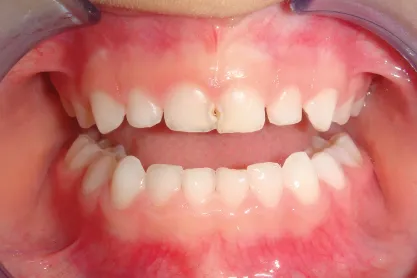
Figure 1.1 Mesial caries maxillary primary central incisors.

Figure 1.2 Facial caries maxillary primary central incisors.
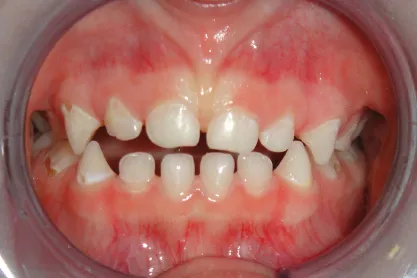
Figure 1.3 Cervical caries primary canines and first primary molars.
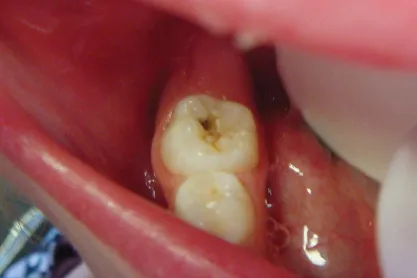
Figure 1.4 Occlusal caries mandibular right second primary molar.
Stepwise excavation of open carious lesions is another indication for ITR (American Academy of Pediatric Dentistry, 2014b; AAPD Reference Manual, pp. 48–49). Partial removal of carious dentin avoids pulpotomy. Microbial counts of bacteria are reduced under the restoration with or without complete removal of the carious dentin (Lula et al., 2009).
Procedure
The procedure can be performed in 5 min or less without the use of local anesthesia or a rubber dam. The nonpainful carious dentin is removed with a large round bur in a slow-speed rotary instrument (Figure 1.5). A spoon excavator may also be used, but cautiously, due to the risk of unroofing the pulp chamber with a large mass of carious dentin (Figure 1.6). A dri-angle or dri-aid is used to cover Stensen's duct and provide cheek retraction for a posterior restoration. When restoring a mandibular primary molar, a second dri-angle/dri-aid may be placed on the lingual to retract the tongue, while placing the glass ionomer restoration (Figure 1.7).
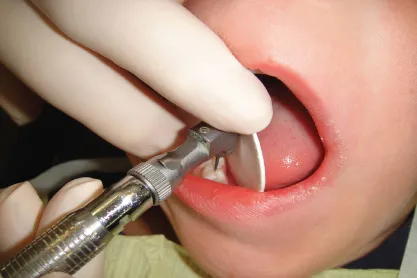
Figure 1.5 Slow speed with round bur to remove superficial caries.
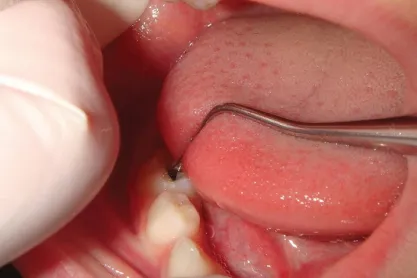
Figure 1.6 Spoon excavator to remove superficial caries.

Figure 1.7 Dri-angles to retract cheek and tongue while placing glass ionomer.
Materials
A high-viscosity glass ionomer is the material of choice for restoration owing to the ease of use and physical properties. Glass ionomer is fluoride releasing, esthetically acceptable, tolerates some moisture contamination, chemically bonds to the tooth, and chemically cure...
Table of contents
- Cover
- Title Page
- Copyright
- Table of Contents
- List of contributors
- Foreword
- Preface
- Acknowledgments
- About the companion website
- Chapter 1: Interim therapeutic restoration in the primary dentition
- Chapter 2: Local anesthesia for the pediatric patient
- Chapter 3: Primary incisor restoration
- Chapter 4: Primary molar adhesive tooth restoration
- Chapter 5: Full coverage restoration for primary molars
- Chapter 6: Vital pulp therapy for primary molars
- Chapter 7: Pulpectomy for primary teeth
- Chapter 8: Extraction of primary dentition
- Chapter 9: Sealants
- Chapter 10: Indirect pulp therapy for young permanent molars
- Chapter 11: Direct pulp therapy for young permanent molars
- Chapter 12: Diagnosis and treatment of molar–incisor hypomineralization
- Chapter 13: Ectopic eruption of maxillary first permanent molar
- Chapter 14: Ectopic eruption of maxillary permanent canines
- Chapter 15: Infraocclusion of mandibular primary molars
- Chapter 16: Space maintenance
- Chapter 17: Pulpal treatment in young permanent incisors following traumatic injuries
- Chapter 18: Reattachment of permanent incisor enamel fragments
- Chapter 19: Non-nutritive sucking and parafunctional habits
- Chapter 20: Behavior guidance
- Index
- End User License Agreement
Trusted by 375,005 students
Access to over 1.5 million titles for a fair monthly price.
Study more efficiently using our study tools.
Frequently asked questions
Yes, you can cancel anytime from the Subscription tab in your account settings on the Perlego website. Your subscription will stay active until the end of your current billing period. Learn how to cancel your subscription
No, books cannot be downloaded as external files, such as PDFs, for use outside of Perlego. However, you can download books within the Perlego app for offline reading on mobile or tablet. Learn how to download books offline
Perlego offers two plans: Essential and Complete
- Essential is ideal for learners and professionals who enjoy exploring a wide range of subjects. Access the Essential Library with 800,000+ trusted titles and best-sellers across business, personal growth, and the humanities. Includes unlimited reading time and Standard Read Aloud voice.
- Complete: Perfect for advanced learners and researchers needing full, unrestricted access. Unlock 1.5M+ books across hundreds of subjects, including academic and specialized titles. The Complete Plan also includes advanced features like Premium Read Aloud and Research Assistant.
We are an online textbook subscription service, where you can get access to an entire online library for less than the price of a single book per month. With over 1.5 million books across 990+ topics, we’ve got you covered! Learn about our mission
Look out for the read-aloud symbol on your next book to see if you can listen to it. The read-aloud tool reads text aloud for you, highlighting the text as it is being read. You can pause it, speed it up and slow it down. Learn more about Read Aloud
Yes! You can use the Perlego app on both iOS and Android devices to read anytime, anywhere — even offline. Perfect for commutes or when you’re on the go.
Please note we cannot support devices running on iOS 13 and Android 7 or earlier. Learn more about using the app
Please note we cannot support devices running on iOS 13 and Android 7 or earlier. Learn more about using the app
Yes, you can access Handbook of Clinical Techniques in Pediatric Dentistry by Jane A. Soxman in PDF and/or ePUB format, as well as other popular books in Medicina & Odontología. We have over 1.5 million books available in our catalogue for you to explore.