Landing a job in graphic design or multimedia starts with the creation of a portfolio that showcases a student's best work. With sample portfolios, interviews with leaders in graphic design and advertising industries, and step-by-step instruction for creating professional print and digital portfolios, this book helps students successfully transition from design student to design professional. Now fully updated, it is the only guide to creating job-winning print-based and digital portfolios specifically for graphic designers.
- English
- ePUB (mobile friendly)
- Available on iOS & Android
eBook - ePub
The Graphic Designer's Guide to Portfolio Design
About this book
Information
Chapter 1
The Portfolio Process—Start to Finish
“Can you start on Wednesday?” The words floated across the table. I paused for a moment before answering. “I believe I can free up the remainder of the week.” (Not that I had had anything lined up.) The dean of education handed me a completed teaching schedule, shook my hand, and said, “The meetings are all day Wednesday. You start teaching on the following Monday. I’ll need all of your syllabi by next week.” I nodded and mumbled, “No problem.” As I stood up, the dean spoke once more. “We’re taking a chance on you, so don’t let us down.” Taking a slow breath so as not to hyperventilate, I said, “I’ll do my best.” I picked up my portfolio, walked out of the office, and headed back to my car.
This certainly wasn’t my first job interview. I had completed the interviewing process many times before. What made this interview so nerve-racking was that I wanted the job so desperately. The expression “Never let them see you sweat” came to my mind as the adrenaline finally gave out. Then it hit me: “I’m teaching college!” I hurried to the nearest phone to call home. I couldn’t wait to break the news about my new position.
So why was I offered that job? Was it my interview skills? My attire? My positive attitude? Nope! It was my portfolio—plain and simple. I had brought to the interview a portfolio of design projects that I had completed in college, plus a number of projects that I had created in my freelance business. Those pieces, together with my ability to discuss the portfolio projects and what they represented, were what got me the job.
Building a portfolio and interviewing for jobs is possibly the most intense process you will ever undertake as you begin or advance your career. Your portfolio must reflect the very best of what you can contribute to a potential employer as an artist/designer. And the pivotal moment in your interview process begins as the employer slowly opens your portfolio, allowing it to reveal the best of what you have to offer (figs. 1-1 and 1-2).
You Need a Portfolio
As you arrive for your job interview, you notice that another applicant is leaving. And when your interview concludes and you are departing, you see that yet another applicant is waiting. Assume that each of these three candidates has equal qualifications for this job, a similar college degree, and an excellent interview. How does the company make a decision?

Fig. 1–1: Preparation is the key to a successful portfolio.
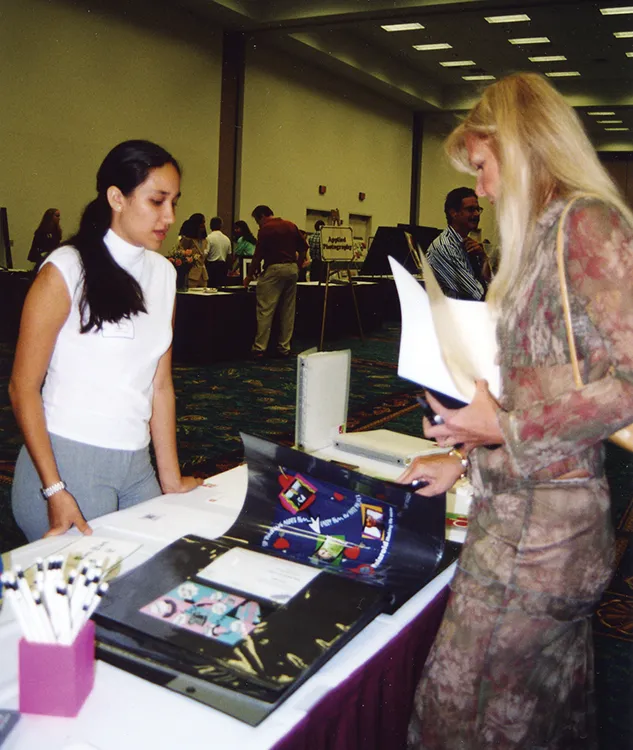
Fig. 1–2: Be prepared to discuss your art. You will be asked to explain why you created a piece in a certain way. Your ability to articulate an answer can influence how you are perceived as an artist and Web designer.
No doubt about it, the competition is tough in today’s job market. So you cannot just say that you are an extraordinary designer. You must provide proof of your qualifications. That’s the purpose of your portfolio: it demonstrates your skills and abilities. Instead of just talking during a job interview about what you have done or can do, you can show samples of your work. Your professional portfolio showcases your talents. In this way, a well-designed portfolio can help you stand out from the other candidates. It gives you the edge.
It was once thought that only fine artists, graphic designers, architects, and fashion designers needed a portfolio to get a job. Not anymore. Today, portfolios are used to secure jobs in many different areas. Teachers, interior designers, multimedia and Web designers, engineers, and journalists can all make use of a professional portfolio to advance their careers. A portfolio for each of these professionals will be unique to his or her field of specialization. The overall purpose, however, is to present a unified body of work that represents what the candidate can offer. Thus, regardless of your design background, you can develop a portfolio that highlights your accomplishments and shows off your talent. Portfolios are especially necessary for people seeking a new job, changing career fields, or negotiating for a promotion or raise.
It’s one thing to say, “I have great organizational skills.” But when you can back up that statement with examples, you’re demonstrating that you can do the job. It’s the difference between saying, “I can do it . . . really!” and showing that you can—the difference between talk and action.
Obviously, you need to feel comfortable in the job environment, and the company must have confidence in you as well. A job almost always requires a match of personalities—yours and the potential employer’s. I once took an interview at a community college. I had made the initial cut from 175 applicants to the final 5 who would be interviewed. The unusual thing about this particular interview was that about 20 minutes into the session, I began to notice a pattern to the questioning: certain individuals on the interviewing committee would ask certain questions. It really surprised them when I turned to the next person, smiled, and said, “I believe the next question is yours.” They were slightly taken aback, then started laughing. That interview, scheduled for 45 minutes, was really good and ended up lasting almost two hours! Only a few days later, I was offered the job.

Fig. 1–3: Michel Khalil’s design skills are clearly apparent; hence, this piece would be an excellent way to showcase his ability to design logos.
If you look up portfolio in a dictionary, you’ll probably read something like “a portable collection of paper and artifacts that demonstrates one’s experience and skills.” That’s pretty vague, considering that these materials can be made up of almost anything—artwork, writing samples, award certificates, even performance reviews. Other samples might include customer-satisfaction surveys or graphs that chart improvements in products or se...
Table of contents
- Cover
- Table of Contents
- Title
- Copyright
- Preface
- Acknowledgments
- Chapter 1: The Portfolio Process—Start to Finish
- Chapter 2: Planning Your Portfolio
- Chapter 3: The Traditional Portfolio
- Chapter 4: The Traditional Portfolio
- Chapter 5: The Digital Portfolio
- Chapter 6: The Digital Portfolio
- Chapter 7: The Design Phase
- Chapter 8: Working with Type
- Chapter 9: Maneuvering around Your Site
- Chapter 10: The Web-Based Portfolio
- Chapter 11: The Web-Based Portfolio
- Chapter 12: Multimedia and Your Interface
- Chapter 13: Designer Checklists
- Chapter 14: Using Social Media to Land a Great Job
- Chapter 15: Taking Interviews and Presenting Your Portfolio
- Glossary
- BIBLIOGRAPHY
- INDEX
- End User License Agreement
Trusted by 375,005 students
Access to over 1.5 million titles for a fair monthly price.
Study more efficiently using our study tools.
Frequently asked questions
Yes, you can cancel anytime from the Subscription tab in your account settings on the Perlego website. Your subscription will stay active until the end of your current billing period. Learn how to cancel your subscription
No, books cannot be downloaded as external files, such as PDFs, for use outside of Perlego. However, you can download books within the Perlego app for offline reading on mobile or tablet. Learn how to download books offline
We are an online textbook subscription service, where you can get access to an entire online library for less than the price of a single book per month. With over 1.5 million books across 990+ topics, we’ve got you covered! Learn about our mission
Look out for the read-aloud symbol on your next book to see if you can listen to it. The read-aloud tool reads text aloud for you, highlighting the text as it is being read. You can pause it, speed it up and slow it down. Learn more about Read Aloud
Yes! You can use the Perlego app on both iOS and Android devices to read anytime, anywhere — even offline. Perfect for commutes or when you’re on the go.
Please note we cannot support devices running on iOS 13 and Android 7 or earlier. Learn more about using the app
Please note we cannot support devices running on iOS 13 and Android 7 or earlier. Learn more about using the app
Yes, you can access The Graphic Designer's Guide to Portfolio Design by Debbie Rose Myers in PDF and/or ePUB format, as well as other popular books in Design & Graphic Design. We have over 1.5 million books available in our catalogue for you to explore.