![]()
I Have a Strategy (No You Don't)
Strategy.
It's an interesting word, isn't it?
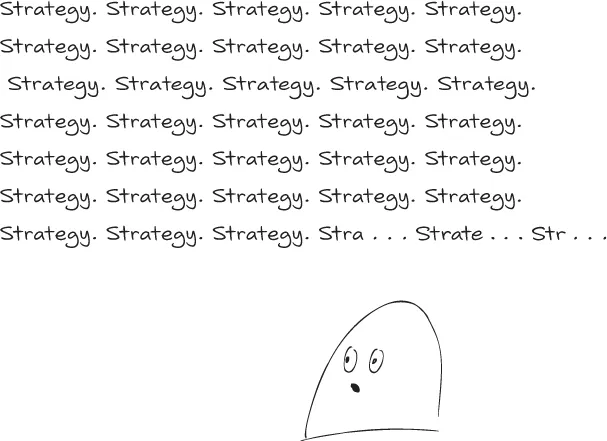
If you say it over and over, it starts to sound really strange.
(Try it.)
It's a military term derived from the Greek word
(
stratgia) meaning “generalship” or “the art of the general.”
Sun Tzu—the great Chinese general who authored The Art of War more than two thousand years ago—gave a great deal of thought to strategy.
He said, “All men can see these tactics whereby I conquer, but what none can see is the strategy out of which victory is evolved.”
Carl von Clausewitz thought a lot about it, too.
He was a Prussian military strategist who fought against Napoleon Bonaparte I, emperor of the French.
In his famous book, On War, Clausewitz defined strategy as “the use of engagements for the object of war.”
These days, you hear the word strategy in business. You hear it a lot.
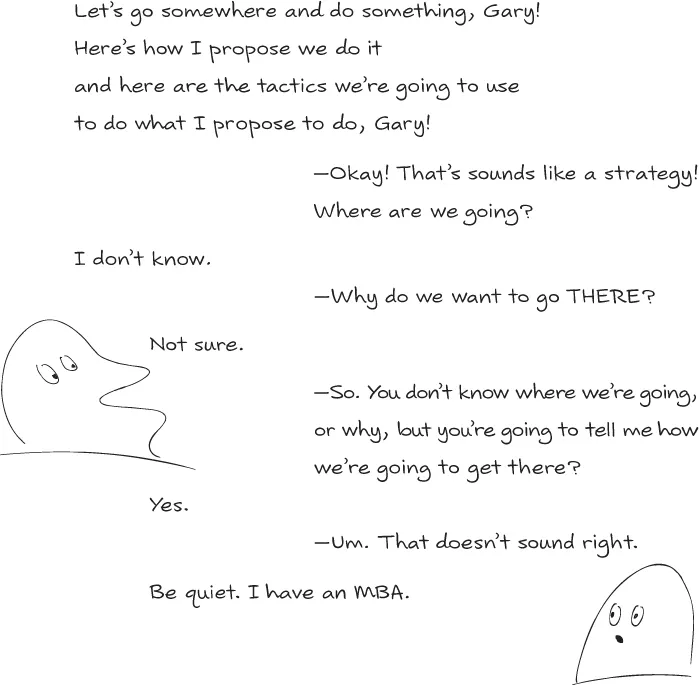
Problem is, most people in business don't know what it means.
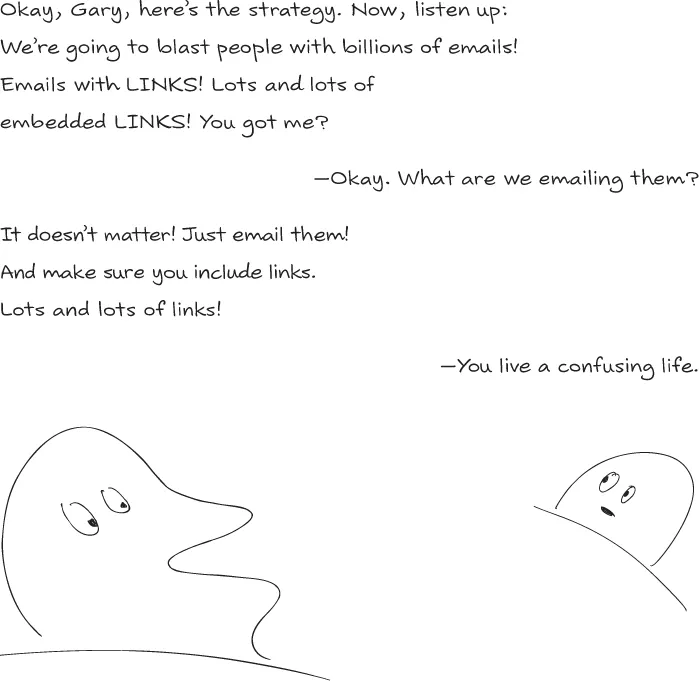
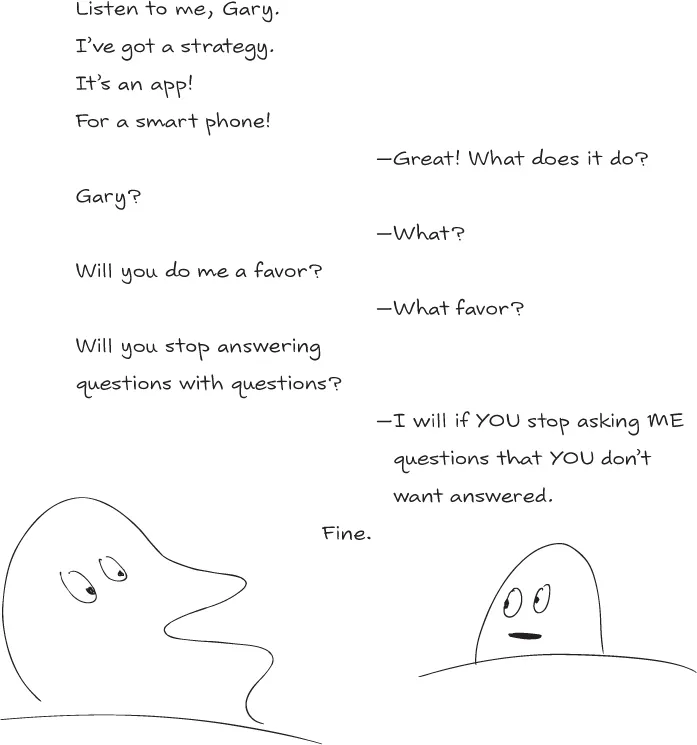
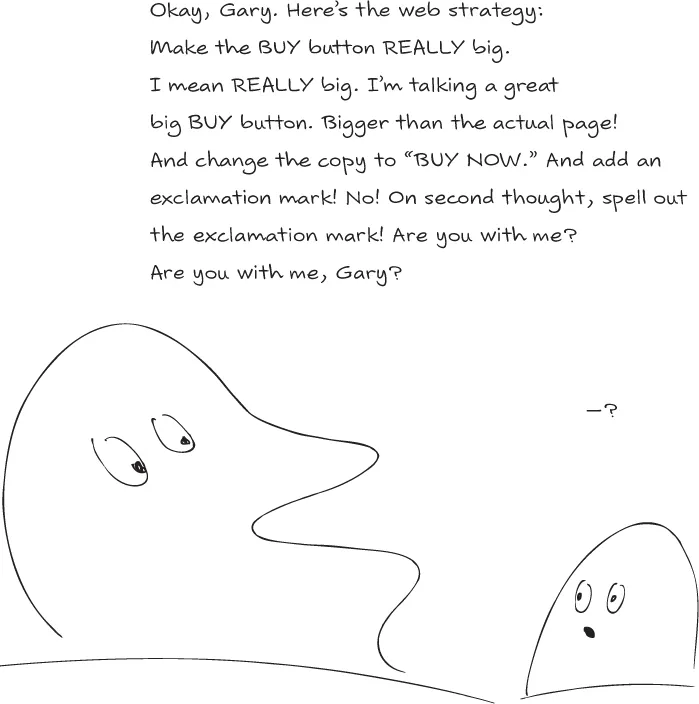
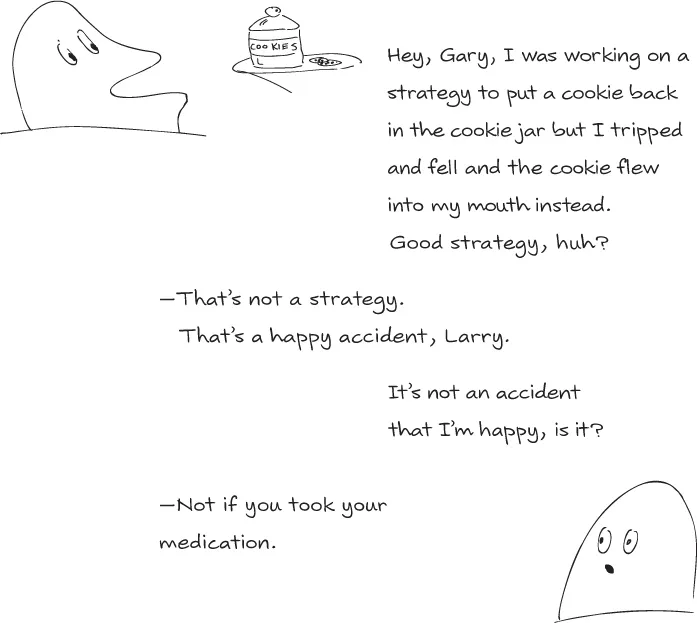
Most people confuse a strategy with a tactic. That's a very common mistake.
A single tactic is not a strategy.
People who believe that are confused.
My father would encourage all of us to “pray for them.”
Some think strategy is a tool. That's another mistake.
They're confused, too.
Or they never had an opportunity to learn about strategy.
Or they're just lazy.
We pray for them as well.
(We pray they go away.)
Others think strategy is visual design.
Those people are very creative.
And have a really good eye.
And may very well understand the principles of design.
But graphic design alone is not a strategy.
Here's the simplest way to define strategy:
A planned, doable sequence of actions designed to achieve a distinct, measurable goal.
That's it.
Pretty simple, really. (But simple isn't easy.)
From this point on, promise yourself you will never take another meeting to discuss strategy until everybody in the meeting is clear on the definition of “strategy.”
(It will be a better meeting, I promise.)
Spending time and money in meetings to develop a strategy without a distinct, measurable goal is not smart.
(By the way, it's not strategizing either.)
It's called something else.
It's called f#@king off.
On company time.
(There's a lot of that going around these days.)
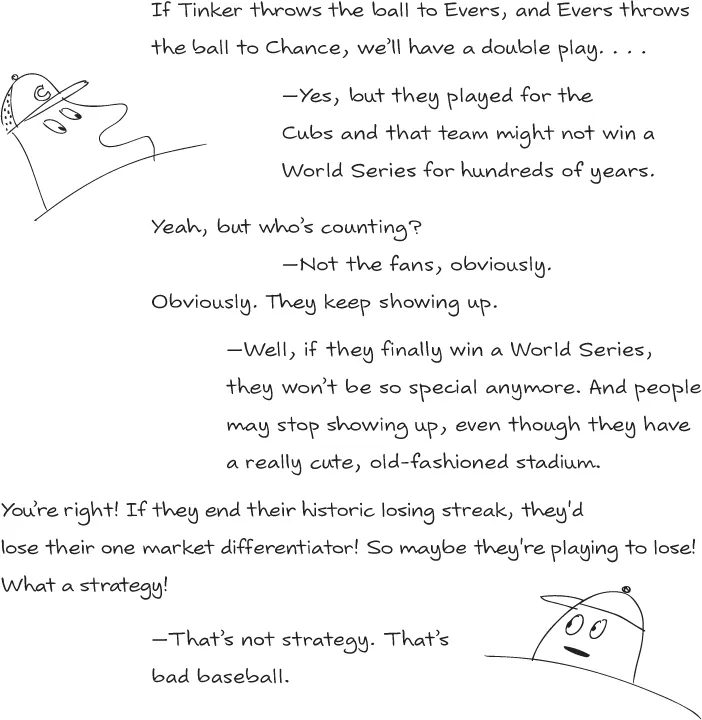
Business is full of “strategists” who don't know how to strategize, developing strategies for clients who don't know what strategy means.
After months and months, and hours and hours, self-proclaimed “strategists” deliver a big, fat PowerPoint with lots of charts and graphs. And then present very large bills.
Those folks are not really strategists. They're time wasters. Worse—you now think you have a strategy when you don't. (Remember The Emperor's New Clothes?)
So, when is a strategy really a strategy?
A strategy is a strategy if:
1. It has an intended purpose.
A strategy is a strategy if:
A strategy is a strategy if:
3. There is a sequence of actions.
A strategy is a strategy if:
4. There is a distinct, measurable goal.
Those are the elements of strategy.
Let's recap. A strategy is a strategy if it has:
1. A purpose
2. A plan
3. A sequence of actions or tactics
4. A distinct, measurable goal
Every strategy needs at least one, essential tactic—that is, an action or device to help achieve a measurable goal.
It needs a narrative.
The story.
It's how to package and sell your strategy.
It's how to create buy-in and inspire others to understand, maybe even love your strategy.
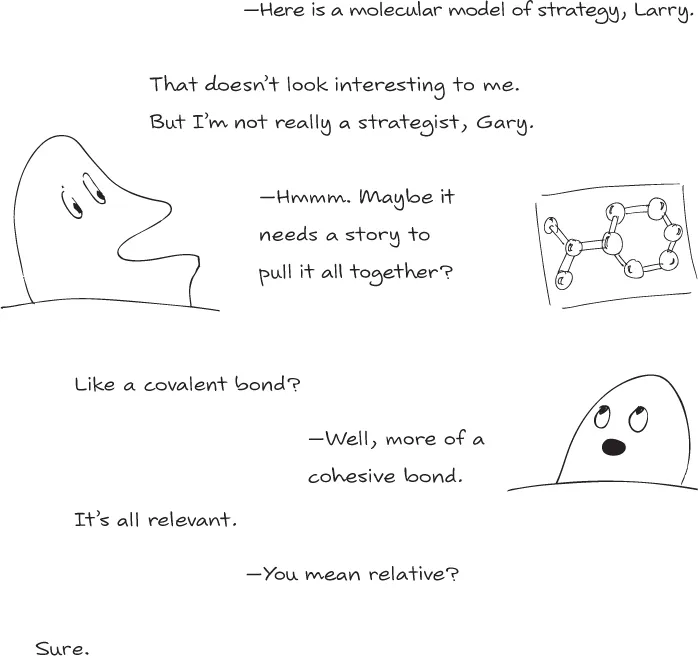
Without a narrative, you can only sell strategy to strategists, which is like selling chemistry to chemists.
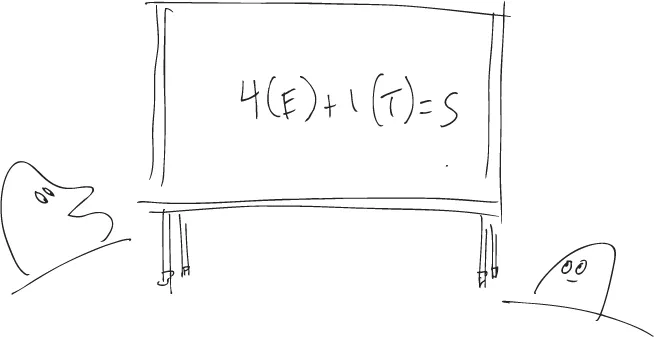
Four main elements and one, essential megatactic. That's a strategy.
If strategy were a mathematical equation it might look like this:
Let's look at strategy in action:
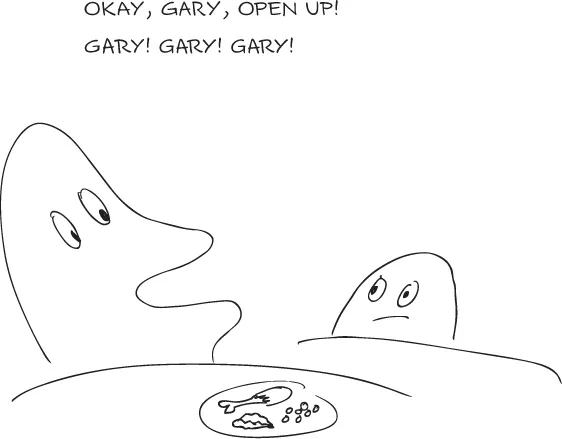
Like the strategy that parents use to get kids to eat vegetables they don't want to eat.
Combining a sense of play and imagination, parents develop a strategy t...