![]()
1
Brain Signals, Their Generation, Acquisition and Properties
1.1 Introduction
The brain is the most astonishing and complicated part of the human body and is naturally responsible for controlling all other organs. The neural activity of the human brain starts between the 17th and 23rd weeks of prenatal development. It is believed that from this early stage and throughout life electrical signals generated by the brain represent not only the brain function but also the status of the whole body. This assumption provides the motivation to apply advanced digital signal processing methods to the brain functional data, including electroencephalogram (EEG), magnetoencephalogram (MEG), and functional magnetic resonance image (fMRI) sequences. Although the emphasis in this book is on EEG and MEG, there will be some analysis of simultaneously recorded EEG-fMRI sequences too. Other functional brain information, such as that obtained by near-infrared spectroscopy (NIRS) recently developed for recording movement=related cortical potentials and some under-developing imaging systems, such as ultrawideband or microwave brain imaging are rarely referred to.
Nowhere in this book does the author attempt to comment on the physiological aspects of brain activities. However, there are several issues related to the nature of the original sources, their generation, their actual patterns, and the characteristics of the propagating environment.
Understanding of neuronal functions and neurophysiological properties of the brain, together with the mechanisms underlying the generation of signals and their recordings is, however, vital for those who deal with these signals for detection, diagnosis, and treatment of brain disorders and the related diseases. We begin by providing a brief history of EEG recording.
1.2 Historical Review of the Brain
EEG history goes back to the time when, for the first time, some activity of the brain was recorded or displayed. Carlo Matteucci (1811–1868) and Emil Du Bois-Reymond (1818–1896) were the first people to register the electrical signals emitted from muscle nerves using a galvanometer and establish the concept of neurophysiology [1, 2]. However, the concept of action current, introduced by Hermann Von Helmholz [3], clarified and confirmed the negative variations which occur during muscle contraction.
Richard Caton (1842–1926) a scientist from Liverpool, England, used a galvanometer and placed two electrodes over the scalp of a human subject and thereby first recorded brain activity in the form of electrical signals in 1875. Since then, the concepts of electro-(referring to registration of brain electrical activities) encephal-(referring to emitting the signals from the head) and gram (or graphy), meaning drawing or writing, were combined so that the term EEG was henceforth used to denote electrical neural activity of the brain.
Fritsch (1838–1927) and Hitzig (1838–1907) discovered that the human cerebrum can be electrically stimulated. Vasili Yakovlevich Danilevsky (1852–1939) followed Caton's work and finished his PhD thesis in the investigation of brain physiology in 1877 [4]. In this work he investigated the activity of the brain following electrical stimulation as well as spontaneous electrical activity in the brain of animals.
The cerebral electrical activity observed over the visual cortex of different species of animals was reported by Ernst von Fleischl-Marxow (1845–1891). Napoleon Cybulski (1854–1919) provided EEG evidence of an epileptic seizure in a dog caused by electrical stimulation.
The idea of association of epileptic attacks with abnormal electrical discharges was expressed by Kaufman [5]. Pravidch-Neminsky (1879–1952) a Russian physiologist, recorded the EEG from the brain, termed dura, and the intact skull of a dog in 1912. He observed a 12–14 cycle s–1 rhythm under normal conditions which slowed under asphyxia. He later called it the electrocerebrogram.
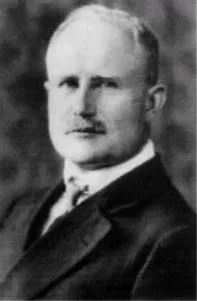
The discoverer of the existence of human EEG signals was Hans Berger (1873–1941); see Figure 1.1. He began his study of human EEGs in 1920 [6]. Berger is well known by almost all electroencephalographers. He started working with a string galvanometer in 1910, then migrated to a smaller Edelmann model and, after 1924, to a larger Edelmann model. In 1926, Berger started to use a more powerful Siemens double coil galvanometer (attaining a sensitivity of 130 μV cm–1) [7]. His first report of human EEG recordings of 1–3 min duration on photographic paper was in 1929. In this recording he only used a one-channel bipolar method with fronto-occipital leads. Recording of the EEG became popular in 1924. The first report of 1929 by Berger included the alpha rhythm, as the major component of the EEG signals, as described later in this chapter, and the alpha blocking response.
During the 1930s the first EEG recording of sleep spindles was undertaken by Berger. He then reported the effect of hypoxia on the human brain, the nature of several diffuse and localized brain disorders, and gave an inkling of epileptic discharges [8]. During this time another group, established in Berlin-Buch and led by Kornmüller, provided more precise recording of the EEG [9]. Berger was also interested in cerebral localization and particularly in the localization of brain tumours. He also found some correlation between mental activities and the changes in the EEG signals.
Toennies (1902–1970) from the group in Berlin built the first biological amplifier for recording brain potentials. A differential amplifier for recording EEGs was later produced by the Rockefeller foundation in 1932.
The importance of multichannel recordings and using a large number of electrodes to cover a wider brain region was recognised by Kornmüller [10]. The first EEG work focusing on epileptic manifestation and the first demonstration of epileptic spikes were presented by Fischer and Löwenbach [11–13].
In England, W. Gray Walter became the pioneer of clinical EEG. He discovered the foci of slow brain activity (delta waves), which initiated enormous clinical interest in the diagnosis of brain abnormalities. In Brussels, Fredric Bremer (1892–1982) discovered the influence of afferent signals on the state of vigilance [14].
Research activities related to EEGs started in North America in around 1934. In this year, Hallowell Davis illustrated a good alpha rhythm for himself. A cathode ray oscilloscope was used around this date by the group in St. Louis University in Washington, in the study of peripheral nerve potentials. The work on human EEGs started at Harward in Boston and the University of Iowa in the 1930s. The study of epileptic seizure, developed by Fredric Gibbs, was the major work on EEGs during these years, as the realm of epileptic seizure disorders was the domain of their greatest effectiveness. Epileptology may be divided historically into two periods [15]: before and after the advent of EEG. Gibbs and Lennox applied Fischer's idea and the effect of picrotoxin on the cortical EEG in animal and human epileptology. Berger [16] showed a few examples of paroxysmal EEG discharges in a case of presumed petit mal attacks and during a focal motor seizure in a patient with general paresis. For a couple of decades the EEG work focused on the study of epilepsy.
As the other great pioneers of EEG in North America, Hallowel and Pauline Davis were the earliest investigators of the nature of EEG during human sleep. A. L. Loomis, E. N. Harvey, and G. A. Hobart were the first who mathematically studied the human sleep EEG patterns and the stages of sleep. At McGill University, Jasper studied the related behavioural disorder before he found his niche in basic and clinical epileptology [17].
The American EEG society was founded in 1947 and the first international EEG Congress was held in London, U K, around this time. While the EEG studies in Germany were still limited to Berlin, Japan gained attention by the work of Motokawa, a researcher of EEG rhythms [18]. During these years the neurophysiologists demonstrated the thalamocortical relationship through anatomical methods. This led to the development of the concept of centrencephalic epilepsy [19].
Throughout the 1950s the work on EEGs expanded in many different places. During this time surgical operation to remove the epileptic foci became popular and the book entitled Epilepsy and the Functional Anatomy of the Human Brain (Penfield and Jasper) was published. During this time microelectrodes were invented. They were made of metals such as tungsten, or glass, filled with electrolytes, such as potassium chloride, with diameters of less than 3 μm.
Recordings of deep brain EEG sources of a human were first obtained with implanted intracerebral electrodes by Mayer and Hayne (1948). Invention of intracellular microelectrode technology revolutionarized this method and was used in the spinal cord by Brock et al. in 1952 [20], and in the cortex by Phillips in 1961 [21].
Analysis of EEG signals started during the early days of EEG measurement. Berger assisted by Dietch (1932) applied Fourier analysis to EEG sequences which was rapidly developed during the 1950s. Analysis of sleep disorders with EEGs started its development in the 1950s through the work of Kleitman at the University of Chicago.
In the 1960s analysis of the EEGs of full-term and premature newborns began its development [22]. Investigation of evoked potentials (EPs), especially visual EPs, as commonly used for monitoring mental illnesses, progressed during the 1970s.
MEG signals, on the other hand were first measured by David Cohen, a University of Illinois physicist, in 1968 [23] before the availability of the superconducting quantum interference device (SQUID), using a copper induction coil as the detector. To reduce the magnetic background noise, the measurements were made in a magnetically shielded room. The coil detector was barely sensitive enough, resulting in poor, noisy MEG measurements that were difficult to use. Later, Cohen built a better shielded room at Massachusetts Institute of Technology (MIT), and used one of the first SQUID detectors, just developed by James E. Zimmerman, a researcher at Ford Motor Company [24], to again measure MEG signals [1003]. This time the signals were almost as clear as those of EEG. Subsequently, various types of spontaneous and evoked MEGs began to be measured.
Using a single SQUID detector to successively measure the magnetic field at a number of points around the human head was cumbersome. Therefore, in the 1980s, MEG manufacturers began to fabricate multiple sensors into arrays to cover a larger area of the head. Present-day MEG arrays are set in a helmet-shaped dewar that typically contains 300 sensors, covering most of the head. In this way, MEG signals can be recorded much faster.
One advantage of MEG over EEG signals is their much lower sensitivity to the nonlinearity and non-uniformity in brain tissues. EEG on the other hand, is less noisy and much cheaper than MEG.
The history of EEG and MEG, however, has been a continuous process which started from the early 1800s and has brought daily development of clinical, experimental, and computational studies for discovery, recognition, diagnosis, and treatment of a vast number of neurological and physiological abnormalities of the brain and the rest of the central neural system (CNS) of human beings. Nowadays, EEGs are recorded invasively and non-invasively using fully computerised systems. The EEG machines are equipped with many signal processing tools, delicate and accurate measurement electrodes, and enough memory for very long-term recordings of several hours. Although the MEG machines are expensive due to the technology involved and the requirement for low noise SQUIDs and amplifiers, they are being used as an effective tool for brain source localization. EEG or MEG machines may be...