Biological Sciences

Species Diversity
Species diversity refers to the variety of different species within a specific ecosystem or geographical area. It encompasses both the number of species present and their relative abundance. High species diversity is indicative of a healthy and resilient ecosystem, as it can provide a wider range of ecological services and contribute to overall ecosystem stability.
Written by Perlego with AI-assistance
Related key terms
1 of 5
11 Key excerpts on "Species Diversity"
 eBook - PDF
- Christian Lévêque, Jean-Claude Mounolou(Authors)
- 2004(Publication Date)
- Wiley(Publisher)
Species exist in a large variety of forms, with different sizes and biological characteristics. Operating individually or in groups within trophic webs, these properties influence the nature Biodiversity Christian Le ´ve ˆque and Jean-Claude Mounolou # 2004 John Wiley & Sons, Ltd ISBN 0 470 84956 8 (Hbk) ISBN 0 470 84957 6 (pbk) and magnitude of the flow of matter and energy within the ecosystem. The different interactions among species, not only competition but also mutualism and symbioses, contribute collectively to the dynam- ics of an ecosystem. . Ecosystem diversity, corresponding to the variety of habitats and their variability over time. Specific richness is usually considered a function of the diversity of habitats and the number of potentially available ecological niches. Owing to their biological diversity, ecosystems play a global role in the regulation of geochemical cycles (fixation, storage, transfer, recycling of nutrients, etc.) and the water cycle. In the ecological sense of the term, biological diversity results from dynamic interactions within and among the levels of organisation of the living world, as well as with the physical and chemical environment that it contributes towards modifying (Figure 5.1). The functioning of ecosystems and their flows of matter and energy are thus reciprocally controlled by physical, chemical and biological processes. BIODIVERSITY Species Diversity Ecological diversity Genetic Diversity Figure 5.1 The concept of biodiversity involves all the interactions between the diversity of species, their genetic diversity and the diversity of ecological systems (based on di Castri and Youne `s, 1996) 98 5 BIOLOGICAL DIVERSITY AND FUNCTIONING 5. 2 The Ecosystem Approach The Convention on Biological Diversity defines an ecosystem as ‘a dynamic complex of plant, animal and micro-organism communities and their non-living environment interacting as a functional unit’. eBook - PDF
- W. Johnny Wilson, Richard Primack(Authors)
- 2019(Publication Date)
- Open Book Publishers(Publisher)
3.5 Summary 1. Earth’s biodiversity includes the entire range of living species (Species Diversity), the genetic variation that occurs among individuals within a 86 Conservation Biology in Sub-Saharan Africa species (genetic diversity), and, at a higher level, the biological communities in which species live and their associations with the physical and chemical environment (ecosystem diversity). 2. For practical purposes, most ecologists and conservationists identify species in the field according to their morphology, although improvements in genetic techniques are allowing more species to be identified according to their evolutionary past, revealing many cryptic species that people did not realise were there. 3. There are several ways to measure and compare biodiversity. The most popular measurement is species richness in a particular community, such as a forest or grassland (alpha diversity), species richness across a larger landscape, such as a mountain range (gamma diversity), and the rate of change of species composition as one crosses a large region (beta diversity). 4. It is estimated that there may be as many as 2 billion species on Earth. Most species already described are insects, while the best-known species include birds and mammals. The majority of species still need to be discovered. 5. Variation in climate, topography, and geological age are all factors that affect patterns of species richness. Geological age and complexity provide environmental variation, which in turn allows opportunities for genetic isolation, local adaptation, and speciation, given enough time. Tropical forests, coral reefs, and Mediterranean-type ecosystems host a disproportionately large amount of the world’s biodiversity. 3.6 Topics for Discussion 1. Think of any group of species (birds, trees, or maybe insects) that can be found in the area where you live.
- Sharangi, Amit Baran(Authors)
- 2021(Publication Date)
- Daya Publishing House(Publisher)
3 Biological diversity = biodiversity –The variability among living organisms from all sources and the ecological complexes of which they are part; this includes: Ecosystem diversity: the variety and frequency of different ecosystems. Species Diversity: the frequency and diversity of different species. Genetic diversity: the frequency and diversity of different genes and/or genomes. It includes the variation within a population and between populations. ( Source : Schmidt, L. 1997. Tree Improvement This ebook is exclusively for this university only. Cannot be resold/distributed. Glossary. Technical Note 46. Danida Forest Seed Centre). 4 Biological diversity –The full range of genetic diversity (species, subspecies, and distinct biological populations of plants and animals) as well as the full variety of ecosystems in which the plants and animals occur. ( Source : Koski, V.; Skroppa, T.; Paule, L.; Turok, J. 1997. Technical guidelines for genetic conservation of Norway spruce ( Picea abies (L.) Karst.). EUFORGEN. IPGRI). 5 Biological diversity –The variety and complexity of species that are present and that interact in an ecosystem, plus the relative abundance of each. ( Source : Temperate Forest Foundation. Glossary. USA. http://forestinfo.org/Glossary ). 6 Biological diversity or “biodiversity” –It is the totality of genes, species, and ecosystems in a region. The wealth of life on earth today is the product of hundreds of millions of years of evolutionary history. Over the course of time, human cultures have emerged and adapted to the local environment, discovering, using, and altering local biotic resources. Many areas that now seem „natural” bear the marks of millennia of human habitation, crop cultivation, and resource harvesting. The domestication and breeding of local varieties of crops and livestock have further shaped biodiversity.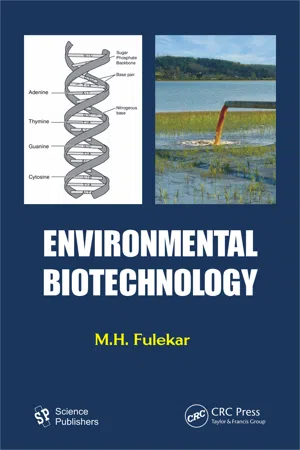 eBook - PDF
- M. H. Fulekar(Author)
- 2010(Publication Date)
- CRC Press(Publisher)
The convention on biological diversity defines biodiversity as: “the variability among living organisms from all sources, including inter alia terrestrial, marine and other aquatic ecosystems and the ecological complexes of which they are part, this includes diversity within species, between species and of ecosystems . ” 2.1 BIODIVERSITY Biodiversity (L: bias = life; diversitas = variety) the variety that exists among organisms and their environments. Biodiversity is a better word than biological diversity, which literally means variety in the knowledge of life. The term, short for biological diversity, is used mainly by scientists, conservationists and others interested in the study, protection and sustainable use of living things (Gaston and Spicer 2004). The United Nations define biodiversity as the variability among living organisms from all sources, including terrestrial, marine, and other aquatic ecosystems and the ecological complexes of which they are part (Wilson 1992). It includes diversity within species (genetic diversity), between species (Species Diversity), and between ecosystems (ecosystem diversity). It provides mankind with a wide range of benefits, such as important goods (like timber and medicinal products) and essential services (like carbon cycling and storage, clean water, climate and natural hazards mitigation). Diversity is one of nature’s important strategies to create stable ecosystems. CHAPTER CHAPTER BIODIVERSITY 2 Nature’s strategies for resistance are: over- capacity + replication + diversity + connectivity (functionality) + adaptability. It achieves this by genetic variation and by recording successful information in species and ecosystems. Nature’s biodiversity corresponds to the sciences of genetics + ecology + biogeography. eBook - ePub
Challenges in the Conservation of Biological Resources
A Practitioner’s Guide
- Daniel J. Decker(Author)
- 2019(Publication Date)
- Routledge(Publisher)
The conservation and management of biological resources have recently entered a period of uncharacteristic change. After decades of isolated refinement of management policies and practices within narrow, traditionally defined disciplines—such as land-use planning, agriculture, silviculture, fishery management, wildlife management—the broader, interdisciplinary field of conservation is now providing a new synthetic vision in which these often isolated, specialized fields work together to achieve broad, ecosystem-level goals. Such systemwide goals have taken a surprisingly long time to emerge, by consensus, from the sometimes conflicting goals of managers of different resources. Among the broad goals that have emerged, preserving biological diversity appears to be common to a new, unified mission for biological resource conservationists and managers.Biological diversity (or biodiversity) refers to the variety among living organisms and the complexity of the ecological systems in which they live. Diversity is defined by the number of different types of items in a system and the relative frequency of these different types. Biodiversity encompasses genetic diversity, Species Diversity, and ecosystem diversity (Fig. 4.1 ). Genetic diversity is the variation in genetic composition within and among species. It is composed of the various genes and alleles that exist within and among different populations and species. Species Diversity is the variety of different species found in an area, including the distribution and abundance of species. Ecosystem diversity is the variety of physical environments and biotic communities in an area. It represents the heterogeneity or patchiness of natural environments on scales from local to regional to global.This new focus on preserving biological diversity as a common goal for resource managers has stimulated much thoughtful self-examination of conservation's mission within the professional journals of the traditional natural resource fields (e.g., Wildlife Society Bulletin eBook - ePub
- Michael J. Jeffries(Author)
- 2006(Publication Date)
- Routledge(Publisher)
concept with species defined as the smallest population (sexual) or lineage (asexual) diagnostically distinct from other such populations and with a discrete lineage. The diagnostic characters are often genetic. When applied to species recognised by morphological or biological concept criteria, the sheer genetic diversity within species often suggests they should be splintered into many separate lineages. The evolutionary concept defines a species by a single, distinct lineage with an identifiable evolutionary history and fate.Ecological diversity
Taxonomic diversity classifies types of organisms and their relatedness but organisms do not live in isolation from one another or the physical world. Humans have long recognised different ecosystems of apparently interdependent life. Ecological science focuses on these patterns and processes, hence ecological diversity is the inclusive term for this third category.Ecological diversity covers a host of concepts; ecosystems, communities, assemblages, habitats, biomes and biogeographical regions. These are not one and the same, indeed some may not be biodiversity proper. The term ecosystem embraces the living organisms and non-living (abiotic) features such as climate and geology of a site. Some have argued that the inclusion of abiotic components excludes ecosystems from biodiversity. A community refers to organisms living together, essentially the live component of an ecosystem. Again this deceptively simple idea is problematic. The term implies a linkage, an interdependence of species that may not exist. Even tightly linked communities will harbour fleeting tourist species, moving through without necessarily playing any role whilst other communities may be very loosely tied assortments, often described as an assemblage. Habitat conjures up precise images such as the giant panda habitat, but the term may not mean anything if the species is not present; does giant panda habitat cease to exist should the giant panda become extinct? Biome is the term associated with global or continental scale, regional ecosystems defined by vegetation and fauna, in its turn largely determined by climate. A formation eBook - ePub
- Roger A. Professor Sedjo, Roger A. Sedjo(Authors)
- 2010(Publication Date)
- Routledge(Publisher)
The number of species in a given area, known as species richness, is the simplest and arguably most commonly used measure of biodiversity. Species are the central unit in biodiversity studies and conservation, at least in part because ecosystems are hard to delimit and genes have until recently been difficult to count and identify. A species is the basic unit of organism classification. It is typically defined as a group of similar organisms that interbreed in nature or share a common, genetically distinct lineage of descent. However, each species consists of subspecies (i. e., geographical races), populations, and individuals, each possessing its own levels of genetic distinctiveness. A population is a geographically distinct group of individuals of a particular species. An evolutionarily significant unit (ESU) is a population or group of populations that is substantially reproductively isolated and is sufficiently genetically unique from other populations to make it an important evolutionary component of the species. Although biodiversity is often measured using species richness, practical species management and conservation efforts often target populations and ESUs rather than entire species. 2 Genetic diversity refers to genetic variation within species, both among distinct populations and among the individuals within a population. Genes are the chromosomal units that code for the unique morphological and biochemical characteristics of an organism and are passed down along generations of organisms. Variation arises from mutations in genes, and natural selection of these characteristics within a population is the primary mechanism of biological evolution. In sexually reproducing species, genetic diversity also comes from recombination that occurs when genes are exchanged. Ecosystem diversity refers to the variation within and between communities and their associations with the physical environment
- Singh, M P, Soma Dey(Authors)
- 2021(Publication Date)
- Daya Publishing House(Publisher)
General Introduction The term biodiversity is formed by a contraction of the term biological diversity. The term biodiversity was coined by Walter and Rosen in 1985. There are many definitions available for biodiversity. Biological diversity means the variability among living organisms from all sources. Biodiversity refers to the variety among living organisms and the This ebook is exclusively for this university only. Cannot be resold/distributed. ecosystem complexes in which they live. It includes diversity of forms right from the molecular unit to the individual organism and biosperic levels. In the simplest sense, biodiversity, may be defined as the sum total of species richness, i.e. the number of species of plants, animals and micro-organisms inhabiting in a given habitat. Types of Biodiversity Broadly speaking, the term biodiversity includes three different but closely related aspects. They are genetic, species and ecosystem level diversities. Genetic Diversity It refers to the variation of genes within species. This constitutes distinct population of the same species or genetic variation within population or varieties within a species. Genetic diversity resides in the variation in the sequence of the four base pairs, such as components of nucleic acids constitute the genetic code. Other kinds of genetic diversity can be identified at all levels of organizations, including the amount of DNA per cell, chromosome structure and number. New genetic variations arise in individuals by gene and chromosomal mutations, and in organisms with sexual reproductions, these variations are spread through the population by recombination. Only a small fraction of the genetic material (less than 1%) of the higher organisms is outwardly expressed in form, function and variation. The purpose of Junk DNA which not expressed is still unclear. It is estimated that there are 10 –9 different genes distributed across the worlds biota. eBook - PDF
- Bosworth Andrew, Chaipraditkul Napat, MingMing Cheng, Gupta Abhik, Junmookda Kimberly, Kadam Parag, Macer Darryl R.J., Millet Charlotte, Sangaroonthong Jennifer, Waller Alexander(Authors)
- 2011(Publication Date)
- UNESCO Office Bangkok(Publisher)
Systems as a whole are perhaps more delicate than species, as slight variations reverberated through interconnected relationships to alter the whole. This can affect ethical responsibilities and differentiate those towards ecosystem than towards species, for example zoos can protect against species loss, but ecosystems cannot be replicated. When considering ecosystem diversity, it is important to understand the uniqueness of each equilibrium (or non-equilibrium) amongst the range of possibilities. To conceptualize the range of diverse balances 5 For a d debate over a phenotype is is refer to R. Dawkins, 1999, Extended Phenotype . 5 ECCAP WG16 Report: Ethics and Biodiversity and interdependent relationships amongst species possible within an ecosystem, consider these factors of dynamics; each species and accompanying genetics posses functional traits that represent tolerances, responses and impacts to and on its surrounding environment (Garnier, 2002), species relate to one another through their traits (Naeem, 1998), those relationship may have homologous origins and significance (Ackerly, 2004), and the web of interactions may compose of parasitic, predatory, competitive or facilitative relationships that vary in intensity (Thébault, 2006). Furthermore, the density and mass of biodiversity is dependent on factors such as a species’ growth rate, body size, metabolism and life history (Brown, 2004), resource availability (Tilman, 1982) stoichiometry (Elser, 2002), interactions within the food chain (McCann, 2005), and spatial factors (Loreau, 2003). And finally biogeographic processes are responsible for the genetic populations of an ecosystem (Lomolino, 2004). And in addition to the special factors, the temporal issue of which species develop first also affect the biodiversity of an ecosystem (Larsen, 2005). Fluctuations in any of these variables of dynamics result in differing states of biodiversity and thusly reflect the diversity of ecosystems as a whole. eBook - PDF
Surveying Natural Populations
Quantitative Tools for Assessing Biodiversity
- Lee-Ann Hayek, Martin Buzas(Authors)
- 2010(Publication Date)
- Columbia University Press(Publisher)
12 Species Diversity: THE NUMBER OF SPECIES T hose who gather samples of natural populations for biodiversity purposes always want to know how many species actually occur in their study area. For nearly all groups of organisms, it appears that fewer species occur in the Arctic than in the tropics. The classic increase in the number of species occurring with decreas-ing latitude is used as the rationale for scientific investigation. Such simple but in-triguing observations have led to innumerable studies and papers concerned with the number of species occurring in different areas. On grand scales covering entire regions, the number of species encountered is often referred to as gamma ( γ ) diversity (Whittaker 1972). However, simple patterns often disappear as the number of studies increases and as the geographic area under consideration, as well as the methodology used to determine the number of species present, begin to vary greatly. When examin-ing a single habitat, such as the Bolivian plot 01, the term alpha ( α ) diversity (Whit-taker 1972) is frequently used to convey the notion that within-habitat diversity is being examined. In the past, investigations examining the number of species were called studies of Species Diversity . Over the years a growing number of researchers included in such studies not only the number of species observed but also information on species abundances. This tendency has caused some anxiety among researchers. This is so because a number of different indices or measures are used to describe and measure Species Diversity when abundances are considered. A good deal of the literature con-sists of trying to determine which measure is “best” (see Magurran 1988; Hayek 1994, for a review). Consequently, in an attempt to avoid confusion, the number of species recorded in a study area is now often referred to as species richness , abbreviated S . eBook - PDF
- Bryan G. Norton(Author)
- 2014(Publication Date)
- Princeton University Press(Publisher)
VII. TOTAL DIVERSITY AND H U M A N UTILITY Each species contributes to total diversity in two senses. It constitutes one unit of total diversity, and it also contributes causally to the gen- eration and protection of other species with which it interacts. The final argument for preserving species derives from a list of benefits to humans of living in an area of great total diversity. Argument 5 Because total diversity is a function of within-habitat diversity and be- tween-habitat diversity, the most diverse areas will contain habitats and ecosystems with very different structures. They will, in other words, be 127 Bryan G. Norton very patterned, patchy environments. At least some of these ecosystems will also be very diverse, with a large number of species packed into highly specialized niches. These very diverse ecosystems will be the com- paratively mature systems, as diversity increases during ecological time, especially in the early stages of succession. The most mature systems may, in fact, be somewhat less diverse than those in slightly earlier stages, as the greatest diversity often occurs before climax species have fully exerted their dominance by eliminating all species characteristic of earlier stages. Nevertheless, the existence of some mature communities in an area must contribute to its total diversity, as some species occur only in them. An area with maximal or near maximal total diversity will also be characterized by intense competition between species as each species attempts to colonize and occupy new areas. And, as habitats become saturated, niches will be partitioned. This partitioning may occur in re- sponse to existing abiotic structures such as slopes, rock formations, or soil conditions which encourage species to segregate themselves, with each species occupying only its ideal sites. Differential disturbance also adds to the texture of an area.
Index pages curate the most relevant extracts from our library of academic textbooks. They’ve been created using an in-house natural language model (NLM), each adding context and meaning to key research topics.

