Biological Sciences

T Cell Immunity
T cell immunity refers to the body's defense mechanism mediated by T lymphocytes, a type of white blood cell. T cells play a crucial role in recognizing and destroying infected or abnormal cells, as well as coordinating the immune response. This process is essential for protecting the body against pathogens and for maintaining overall immune system function.
Written by Perlego with AI-assistance
Related key terms
1 of 5
12 Key excerpts on "T Cell Immunity"
 eBook - ePub
- Constantin A. Bona, Francisco A. Bonilla(Authors)
- 2019(Publication Date)
- CRC Press(Publisher)
Chapter 6T Cells:Regulation and Cellular Immunity
T lymphocytes mature in the thymus. T cells regulate the development, proliferation and activity of B cells, T cells, and other cells participating in immune responses; they are also effectors of antigen-specific cell-mediated immunity (CMI). CMI is important in the elimination of cells infected with pathogens which replicate intracellularly (e.g., viruses, rickettsia, and some bacteria) and cells exhibiting aberrant cytodifferentiation (neoplastic cells). CMI also destroys allogeneic cells (graft rejection).Several important characteristics distinguish T and B cells. First, B cell receptors exist both on the cell surface, where they generate activating signals, and are secreted as soluble effector molecules. T cell receptors do not exist intact in soluble form. (Fragments may be components of soluble suppressor factors, see below.) Second, B cell immunoglobulin recognizes native macromolecules free in solution, and may bind to protein, glycoprotein, polysaccharide, nucleic acid, or lipid antigens. T cell receptors require a cognate interaction, and recognize only fragments (peptides) of (glyco)protein antigens on the surfaces of antigen presenting cells (APCs), also called accessory cells. With respect to T cell antigen recognition, APCs have at least two main functions: they ingest antigen and process it; they then form a complex of peptide fragments with major histocompatibility complex (MHC) antigens and present it to T cells. Note the distinction between the processed antigen (peptides), and the histocompatibility antigen with which it becomes associated in order to be recognized. This association is the basis of the MHC restriction of antigen recognition. The genetics and structure of MHC antigens, and details of antigen presentation are discussed in Chapter 8 .Expression of the T cell receptor and several associated molecules on the cell surface is essential to the process of T cell development. We will first examine the structure and genetics of the receptor and its companion surface proteins, before entering a detailed discussion of T cell differentiation. eBook - ePub
- Xian C. Li, Anthony M. Jevnikar, Xian C. Li, Anthony M. Jevnikar(Authors)
- 2015(Publication Date)
- Wiley-Blackwell(Publisher)
CHAPTER 6 T cells and the principles of immune responsesJonathan S. Maltzman1 , Angus Thomson2 , and David M. Rothstein21 Department of Medicine, University of Pennsylvania, Philadelphia, PA, USA 2 Department of Medicine, Surgery and Immunology, Starzl Transplant Institute, University Pittsburgh, Pittsburgh, USACHAPTER OVERVIEW
- T cells must be activated first before becoming effector cells.
- T cell activation is controlled by multiple signals, which include signals from the TCR, costimulatory molecules, and cytokine receptors.
- There are distinct phases of T cell response including proliferation, differentiation, apoptosis, and memory generation, all of which are tightly regulated by multiple mechanisms.
- T cells exhibit either effector or regulatory properties, both are required for immunity and homeostasis of the immune system.
- The balance of effector and regulatory responses determines outcomes of organ transplants.
Introduction
T cells are central to productive immune responses. The importance of T cells is underscored by the fact that mice lacking T cells exhibit gross immunodeficiency and fail acutely to reject allografts. In general, productive T cell activation is controlled by three distinct sets of signaling pathways, which are delivered by T cell receptors (TCRs), costimulation, and cytokine receptors. These signaling pathways collectively control activation, differentiation, and effector function of T cells during primary immune responses. Activated T cells then undergo phases of contraction and memory transition in which most activated T cells die of apoptosis, leaving behind a small proportion of cells as memory cells. This transition from short-lived effector T cells to long-lived memory T cells is tightly regulated by selective cytokines, costimulatory molecules, and certain metabolic pathways. Some activated T cells are also converted to regulatory cells that prevent overstimulation of the immune system and maintain immune homeostasis. This chapter will describe the principles of T cell responses and how such responses are targeted to promote transplant survival. eBook - PDF
- Nina Parker, Mark Schneegurt, Anh-Hue Thi Tu, Brian M. Forster, Philip Lister(Authors)
- 2016(Publication Date)
- Openstax(Publisher)
Their role in peripheral tolerance, for example, protects against autoimmune disorders, as discussed earlier. Finally, cytotoxic T cells are the primary effector cells for cellular immunity. They recognize and target cells that have been infected by intracellular pathogens, destroying infected cells along with the pathogens inside. Classes of T Cells Class Surface CD Molecules Activation Functions Orchestrate humoral and cellular immunity Helper T cells CD4 APCs presenting antigens associated with MHC II Involved in the activation of macrophages and NK cells Regulatory T cells CD4 APCs presenting antigens associated with MHC II Involved in peripheral tolerance and prevention of autoimmune responses Cytotoxic T cells CD8 APCs or infected nucleated cells presenting antigens associated with MHC I Destroy cells infected with intracellular pathogens Table 18.1 788 Chapter 18 | Adaptive Specific Host Defenses This OpenStax book is available for free at http://cnx.org/content/col12087/1.4 • What are the unique functions of the three classes of T cells? • Which T cells can be activated by antigens presented by cells other than APCs? T-Cell Receptors For both helper T cells and cytotoxic T cells, activation is a complex process that requires the interactions of multiple molecules and exposure to cytokines. The T-cell receptor (TCR) is involved in the first step of pathogen epitope recognition during the activation process. The TCR comes from the same receptor family as the antibodies IgD and IgM, the antigen receptors on the B cell membrane surface, and thus shares common structural elements. Similar to antibodies, the TCR has a variable region and a constant region, and the variable region provides the antigen-binding site (Figure 18.16). However, the structure of TCR is smaller and less complex than the immunoglobulin molecules (Figure 18.5).
- Gerard J. Tortora, Bryan H. Derrickson, Brendan Burkett, Gregory Peoples, Danielle Dye, Julie Cooke, Tara Diversi, Mark McKean, Simon Summers, Flavia Di Pietro, Alex Engel, Michael Macartney, Hayley Green(Authors)
- 2021(Publication Date)
- Wiley(Publisher)
This means the immune system has actually ‘selected for’ a population of tumour cells capable of evading the immune system, and these tumours must be treated by surgery and other therapies. Recently, the term ‘immunoediting’ has replaced immunosurveillance, as it is now clear that there is a complex interaction between the immune system and a tumour. Moreover, the tumour is not a bystander in this process, and can also activate and/or suppress the activity of immune cells. 20 Pdf_Folio:1065 CHAPTER 22 The lymphatic system and immunity 1065 ....................................................................................................................................................................................... CHECKPOINT 17. What are the functions of helper, cytotoxic, and memory T cells? 18. How do cytotoxic T cells kill infected target cells? 19. How is immunological surveillance useful? 22.6 Antibody-mediated immunity LEARNING OBJECTIVE 22.6 Understand the components and functions of the antibody-mediated immune response. The body contains not only millions of different T cells but also millions of different B cells, each capable of responding to a specific antigen. Cytotoxic T cells leave lymphatic tissues to seek out and destroy a foreign antigen, but B cells stay put. In the presence of a foreign antigen, a specific B cell in a lymph node, the spleen, or mucosa-associated lymphatic tissue becomes activated. Then it undergoes clonal selection, forming a clone of plasma cells and memory cells. Plasma cells are the effector cells of a B cell clone; they secrete specific antibodies, which in turn circulate in the lymph and blood to reach the site of invasion. Activation and clonal selection of B cells During activation of a B cell, an antigen binds to B-cell receptors (BCRs) (figure 22.18). These integral transmembrane proteins are chemically similar to the antibodies that eventually are secreted by plasma cells.
- Ian Peate, Muralitharan Nair, Professor Ian Peate, OBE, Professor Muralitharan Nair, Ian Peate, Muralitharan Nair(Authors)
- 2011(Publication Date)
- Wiley-Blackwell(Publisher)
Figure 3.11 ).Memory cells are long-lived and also, regardless of cell division, there is always a constant number of T-memory cells for a given antigen in circulation (Janeway et al . 2005).Humoral immunity (B-cell lymphocytes)This second type of acquired immunity is known as humoral immunity because the components effective in the immune system are soluble in fluids (and so is called humoral immunity from the old English term ‘humours’).B-cell lymphocytes originate in the bone marrow where they also mature.As with the T-cell lymphocytes, the B-cells need to undergo a maturation process in which they have to survive a negative selection process. This is an attempt to ensure that the antigen receptors on their surface membrane do not display self-reactivity (i.e. do not react against our own cells) (Nairn and Helbert 2007).During this process, those B-cell lymphocytes that are auto-reactive to the host cells and tissues are destroyed, leaving only non-auto-reactive naive lymphocytes behind which will then be ableFigure 3.10Cellular and humoral immune responses (Tortora and Derrickson 2009)Figure 3.11Process of teaching T-cells and B-cells to recognise pathogens (infectious organisms) (Tortora and Derrickson 2009)to go on to the next stage of maturation and selection (Figure 3.10 ). This is a very important process because if there should be any self-reactivity of the B-cells, as with T-cell self-reactivity, then autoimmunity may be the result.The actual mechanism of the B-cell negative selection process within the bone marrow is similar to that process which is undergone by T-cells during their maturation and differentiation within the thymus (Figure 3.11 ). However, in addition, B-cells undergo a positive selection process in which those lymphocytes that are able to respond to non-self antigens are preserved, whilst those that are not are left to die. The B-cells that have survived this negative selection find their way to the peripheral lymphoid organs where they may encounter actual non-self antigens for which they have specificity. It is thought that more than 108 eBook - ePub
Understanding Cancer
An Introduction to the Biology, Medicine, and Societal Implications of this Disease
- J. Richard McIntosh(Author)
- 2019(Publication Date)
- Garland Science(Publisher)
Cellular adaptive immunity does not rely on antibodies but instead on analogous, highly variable protein molecules called T-cell receptors (TCRs). These molecules are proteins exposed on the plasma membranes of T lymphocytes, commonly known as T cells. Like antibodies, TCRs come in a huge range of structures, generated by manipulations of DNA and RNA analogous to the ones that generate antibody diversity. This structural variety is at the heart of the specificity shown by cellular adaptive immunity. As with antibody–antigen interactions, the binding of a TCR to the molecule it recognizes is highly specific, and when a tight bond it formed, it initiates a chain of events important for the elimination of that pathogen. T-cell responses are, however, more complex than B-cell responses, because there are several kinds of T cells that accomplish quite different functions. Thus, to understand cellular adaptive immunity, we must take things step by step. Only then will you able to appreciate the importance of cellular adaptive immunity and the ways in which the cellular and humoral adaptive responses cooperate to control both pathogens and cancers. FIGURE 9.15 The migrations taken by different kinds of lymphocytes. All immune cells originate through the division of blood-forming stem cells in bone marrow. They begin life as lymphoid progenitor cells that could become either B or T cells. B cells begin to differentiate in the marrow, first going through the DNA rearrangements that generate antibody diversity and the culling that eliminates them if they make antibodies against self-antigens. Then they migrate to a peripheral lymphoid organ, such as a lymph node, for further differentiation as needed. T cells go directly to the thymus for their further steps of differentiation. (Adapted from Alberts B, Johnson AD, Lewis J et al [2015] Molecular Biology of the Cell, 6th ed eBook - ePub
- Philias R. Garant(Author)
- 2020(Publication Date)
- Quintessence Publishing Co, Inc(Publisher)
The T cells are involved in the cell-mediated immune response, while the B cells are responsible for the humoral immune response. The T cells interact with other cells over short distances, performing either a stimulating (helper T [T H ] cells) or killing (cytolytic T cells) function. The humoral system involves secretion of large amounts of antibodies into the extracellular fluid by plasma cells. The B lymphocytes bind intact antigens on cell membrane antibody, while the T cells bind antigenic peptides processed and displayed on MHC molecules on the surface of target cells and antigen-presenting cells. Initiation of Immune Response The immune response is initiated by molecules (immunogens) recognized to be foreign by the cellular components of the immune system. The term antigen is commonly used as a synonym for immunogen. The two terms are not exactly equal, because not all antigens are capable of initiating an immune response, although they both bind to antibodies. Despite this difference, in this discussion the term antigen will be used to describe a molecule that generates an immune reaction. Antigens are typically complex proteins and/or polysaccharides. The “foreignness” of an antigen is subdivided into units of variable size, called antigenic determinants or epitopes. Epitopes are short, linear chains of amino acids on proteins or mono-saccharides on polysaccharide antigens. Usually polysaccharides must be bound to a carrier protein to become immunogenic. Epitopes can also be formed nonlinearly by protein folding; in that case, they are known as conformational determinants. Large proteins have many epitopes; each epitope, recognized by its shape and charge as a foreign entity, engages a separate and specific antibody and/or T-cell receptor. A single immunogen may contain epitopes that activate both T cells (cell-mediated immune response) and B cells (humoral immune response). Not all antigens act in a similar manner when activating an immune response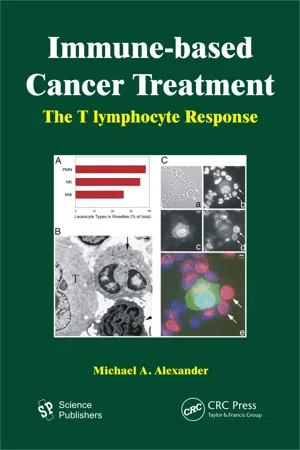 eBook - PDF
Immune-based Cancer Treatment
The T Iymphocyte Response
- Michael A. Alexander(Author)
- 2011(Publication Date)
- CRC Press(Publisher)
Chapter 1 Which Cells Control the Anti-cancer T cell Immune Response? Immunologists down the years have asked which cells control the anti-cancer T cell immune response. The answer is quite perplexing. The response to cancer is probably the most complicated function of the immune system. An army of immune cells and the tumor cell itself are involved. Immunologists have not completely determined the role of these cells in eradicating the tumor. There is a “pecking order” of immune cells involved, but which one or ones can scientists rely on to do what we all want? Namely, cure us of the cancer and never let it return. Our investigation will delve into this problem. We will examine each cell that has a major role in the T cell response to cancer. We will examine the particular attributes a cell possesses that enable it to positively or negatively affect the anti-cancer T cell response. It is important to understand how each cell involved in the T cell anti-cancer response functions because those are the very cells scientists are going to manipulate to treat cancer. That is what immunotherapy for cancer is about. It channels the function of immune cells toward the inevitable destruction of the cancer. In the future, cancer treatment will be quite different. It should be much less painful and have fewer side effects because the elements used to treat it will come from our own bodies. These are the cells of the immune system that naturally protect us from cancer as well as many other infectious diseases and organisms. In the immune system, you may have one type of immune cell, but because of the expression of one or more genes in that cell, it behaves differently. In other words, it’s like a room full of people all wearing identical clothes, except that groups of them are wearing the same hats. In this case, the same hat denotes a specialized function that that cell performs. This will become clear as these cells are described. eBook - ePub
- Adam Feather, David Randall, Mona Waterhouse, Adam Feather, David Randall, Mona Waterhouse(Authors)
- 2020(Publication Date)
- Elsevier(Publisher)
licensing of B lymphocytes to initiate and mature antibody responses, leading to class switching, affinity maturation of antibodies, and generation of plasma cells or memory cells- •
secretion of cytokinesresponsible for growth and differentiation of a range of cell types, especially other T lymphocytes, macrophages and eosinophils- •
regulation of immune reactions.T helper 1 cells
T helper 1 cells (Th1) are the main effector subtype of CD4 T lymphocytes. In physiology, they drive activation of monocytes/macrophages and CTLs. In pathology, they have a key role in protection against intracellular pathogens such as viruses and mycobacteria. Th1 cells are recognized by secretion of the pro-inflammatory cytokines IFN-γ and TNF-α (Box 3.13).T helper 2 cells
In physiology, Th2 cells drive antibody responses, especially IgE, and also promote eosinophil granulocyte functions. In pathology, they have a key role in protection from extracellular parasites (helminths) and also in the immune responses that underlie allergic disease. Th2 cells are recognized by secretion of IL-4, IL-5 and IL-13.T helper 17 cells
In physiology, Th17 cells drive inflammatory responses, especially via recruitment of neutrophil granulocytes. In pathology, they are necessary for protection from fungal infections, and are increasingly recognized as having a role in chronic inflammatory diseases such as multiple sclerosis, rheumatoid arthritis and inflammatory bowel disease. They are recognized by secretion of IL-17. eBook - PDF
- Gerald Karp, Janet Iwasa, Wallace Marshall(Authors)
- 2018(Publication Date)
- Wiley(Publisher)
Resistance to viral infection induced by interferons (page 713) is mediated through the phosphorylation of STAT1. Phosphorylation of other STATs may lead to the progression of the target cell through the cell cycle. THE HUMAN PERSPECTIVE Autoimmune Diseases The immune system requires complex and highly specific interactions between many different types of cells and mol- ecules. Numerous events must take place before a humoral or cell‐mediated immune response can be initiated, which makes these processes vulnerable to disruption at various stages by numerous factors. Included among the various types of immune dysfunction are autoimmune diseases, which result when the body mounts an immune response against part of itself. More than 80 different autoimmune diseases have been character- ized, affecting approximately 5 percent of the population. Because the specificity of the antigen receptors of both T and B cells is determined by a process of random gene rearrangement, it is inevitable that some members of these cell populations possess receptors directed against the body’s own proteins (self‐antigens). Lymphocytes that bind self‐antigens with high affinity tend to be removed from the lymphocyte population, making the immune system tolerant toward self. However, some of the self‐reactive lymphocytes generated in the thymus and bone marrow escape the body’s negative selection processes, giving them the potential to attack normal body tissues. The presence of B and T lym- phocytes capable of reacting against the body’s tissues is readily demonstrated in healthy individuals. For example, when T cells are isolated from the blood and treated in vitro with a normal self‐protein, together with the cytokine IL‐2, a small number of cells in the population are likely to proliferate to form a clone of cells that can react to that self‐antigen. eBook - ePub
Basic Immunology E-Book
Basic Immunology E-Book
- Abul K. Abbas, Andrew H. Lichtman, Shiv Pillai(Authors)
- 2023(Publication Date)
- Elsevier(Publisher)
Lymphocyte activation is associated with profound changes in cellular metabolism. In naive (resting) T cells, low levels of glucose are taken up and used to generate energy in the form of adenosine triphosphate (ATP) by mitochondrial oxidative phosphorylation. Upon activation, glucose uptake increases markedly, and the cells switch to aerobic glycolysis. This process generates less ATP but facilitates the synthesis of more amino acids, lipids, and other molecules that provide building blocks for organelles and for producing new cells. As a result, it is possible for activated T cells to more efficiently manufacture the cellular constituents that are needed for their rapid increase in size and for producing daughter cells.Having described the stimuli and biochemical pathways in T cell activation, we now discuss how T cells respond to antigens and differentiate into effector cells capable of combating microbes.Functional Responses of T Lymphocytes to Antigen and Costimulation
The recognition of antigen and costimulators by naive T cells initiates a set of responses that culminate in the expansion of the antigen-specific clones of lymphocytes and the differentiation of the naive T cells into effector cells and memory cells (see Fig. 5.3 ). Many of these changes in T cells are mediated by cytokines that are secreted by the T cells and act on the T cells themselves and on many other cells involved in immune defenses.Secretion of Cytokines and Expression of Cytokine Receptors
In response to antigen and costimulators, T lymphocytes, especially CD4+T cells, rapidly secrete the cytokine IL-2. We have already discussed cytokines in innate immune responses, which are produced mainly by dendritic cells and macrophages (see Chapter 2 ). In adaptive immunity, cytokines are mainly secreted by CD4+ T cells. Most of the cytokines of adaptive immunity, other than IL-2, are produced by effector T cells, serve diverse roles in host defense, and are described in Chapter 6 when we discuss the effector mechanisms of cell-mediated immunity.IL-2 is produced within 1 to 2 hours after antigen stimulation of CD4+ T cells. Activation also transiently increases the expression of the high-affinity IL-2 receptor, thus rapidly enhancing the ability of the T cells to bind and respond to IL-2 (Fig. 5.11 eBook - PDF
- Roy Fuller, Gabriela Peridigón, Roy Fuller, Gabriela Peridigón(Authors)
- 2008(Publication Date)
- Wiley-Blackwell(Publisher)
One of the most important mechanisms is the elimination from circulation of activated T cells by induction of apoptosis. This occurs via Fas and Fas ligand (Fas-L) interaction. Another fraction of activated T cells will form the memory T cell pool. Memory T cells are longer lived and have reduced requirements for co-stimulation than naive T cells. Cell-mediated immune response: generation of armed effector T cells After antigen and co-stimulatory signals activate naive T cells, they begin to synthesize and secrete IL-2, increasing the expression of high affinity IL-2R. These signals cause T cells to divide and differentiate into clones of armed effector cells that do not need further co-stimulation to provide their function. The type of activated armed effector cells that will be generated depends on the mechanism used by the immune system to control and eliminate the foreign antigen. Two major categories of effector cells can be defined. One group contains effector cells that have direct cytotoxicity activity and their target are allogeneic cells, malignant cells and virus infected cells. Most of the specific cytotoxic T lymphocytes (CTL) are CD8+ and express ab TCR. The other subpopulation of effector T cells is constituted by CD4+ lymphocytes, which also express mainly ab TCR and are usually designated as helper T cells. They can be further subdivided into inflammatory T helper 1 (Th1) cells or T helper (Th2) cells. Generation of Th1 and Th2 cells Once a naive CD4 T cell contacts the peptide/MHC class II complex appropriately, they are thought to go through an intermediate stage, known as Th0 (Fig 5.9). Th0 cells express some differentiated effector functions shared by both the inflammatory and helper T cells. The factors that determine whether proliferating CD4 T cells will differentiate into the two 122 Gut Flora, Nutrition, Immunity and Health alternative subpopulations mentioned above are not fully understood.
Index pages curate the most relevant extracts from our library of academic textbooks. They’ve been created using an in-house natural language model (NLM), each adding context and meaning to key research topics.

