Business

Corporate Income Tax
Corporate income tax is a tax levied on the profits of corporations. It is based on the net income of the company and is typically calculated by applying a specific tax rate to the taxable income. Corporations are required to file annual tax returns and pay the applicable corporate income tax to the government.
Written by Perlego with AI-assistance
Related key terms
1 of 5

12 Key excerpts on "Corporate Income Tax"
 eBook - PDF
Comparative Taxation
Why tax systems differ
- Chris Evans, John Hasseldine, Andy Lymer, Robert Ricketts, Cedric Sandford(Authors)
- 2017(Publication Date)
- Fiscal Publications(Publisher)
5 Corporate Income Taxes 5.1 Introduction Corporate Income Taxes are an integral part of most countries’ tax systems, averaging about 9% of total tax revenues across OECD countries. But they are not without controversy. Critics charge that because corporations are owned by individuals, their income is ultimately subject to the individual income tax so that the corporate tax represents double taxation of the same income. Double taxation of the same income raises objections based on both fairness and economic efficiency—the corporate tax may impact business decisions ranging from which organisational form to use for their business to whether and how often to distribute business earnings to owners. Thus, the question naturally arises, “Why do we need a Corporate Income Tax?” As it happens, there are a number of reasons countries choose to tax corporate income. As a matter of administrative efficiency, it may be sensible for the tax on corporate income to be deducted at the source, i.e., at the company level, just as it is administratively efficient for employers to deduct income tax from the wages and salaries of their employees. But that is a different matter, not affecting the amount which individuals would pay. At first glance, treating the profits of corporations exactly like the business profits of individuals or partnerships would seem to be both more equitable, and also more efficient. To this proposition, however, there are a number of objections. First, collecting the tax at the business level is not practical, or more accurately, is practical only for distributed profits. But what about undistributed profits? These are, in principle, the property of the shareholders. When, and at what rate, should they be taxed? Second, there is the “entity” question: there are those who regard the corporation as a tax entity in its own right, which should be taxed as such regardless of concerns over double taxation.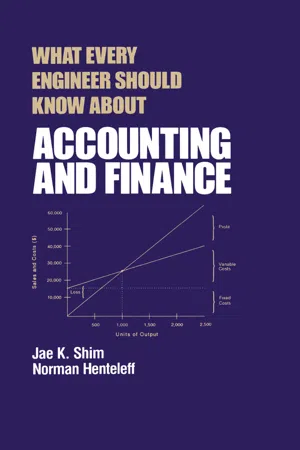
- Norman Henteleff, Jae K. Shim, Shim(Authors)
- 1994(Publication Date)
- CRC Press(Publisher)
13 HOW TAXES AFFECT BUSINESS DECISIONS A corporation is recognized as a separate legal and taxable entity, and it pays its own taxes to many federal, state, and local taxing agencies. If the corporation is operating internationally, it has the additional problem of complying with the tax laws of foreign countries. Taxes may be levied on income, sales, and property. The federal Corporate Income Tax (filed on Form 1120) is the most important because it often represents the largest tax liability. Thus, it can have a major effect on your financial decisions. To make sound financial and investment decisions, you must have an under-standing of the basic concepts underlying the U.S. tax structure and how they affect your decisions. This chapter first discusses the general structure of the Corporate Income Tax, such as taxable income, capital gains and losses, deductible expenses, net oper-ating loss carrybacks and carryforwards, tax rates, and tax prepayments and credits. Then, it reviews various tax planning strategies to help minimize your company's income tax liability in the current year and postpone the payment of taxes to later years. The advantages of electing S corporation status will also be discussed. NOTE: The tax rules discussed in this chapter have been updated for changes brought about by the Revenue Reconciliation Act of 1993. The purpose of this chapter is to provide a brief introduction to Corporate Income Taxation and help the reader (engineer) develop a framework for under-standing the pervasive effects of taxation on business decisions. For clarity of presentation, only important concepts and general tax rules will be emphasized, leaving out many complex details and special applications. The reader should be aware that tax laws must necessarily be very complex to deal with the myriad of possible situations in actual practice. Also, since tax laws are man made and are This chapter was written by Loc T. eBook - PDF
The Silence of Congress
State Taxation of Interstate Commerce
- Joseph F. Zimmerman(Author)
- 2012(Publication Date)
- SUNY Press(Publisher)
Chapter 5 Corporate Income Taxation I ncome taxes were levied by states during the nineteenth century, but generally were unsatisfactory in terms of administration. The modern state income tax dates to a 1911 Wisconsin statute levying such a tax at a graduated rate on corporate and personal income. 1 The U.S. Supreme Court during the latter decades of the nineteenth century struck down state taxes on interstate commerce as violative of the dormant interstate commerce clause, thereby insulating a foreign corporation (chartered in another state) engaged only in interstate commerce from taxation by a state. 2 The court, however, in Western Live Stock v. Bureau of Revenue in 1938 abandoned the position corporations engaged exclusively in interstate commerce were exempt from state taxation: “It was not the purpose of the commerce clause to relieve those engaged in interstate commerce from their just share of state tax burden even though it increases the cost of doing business.” 3 The increase in the number of multistate corporations in the nine- teenth and twentieth centuries and the appearance of numerous multina- tional corporations during the latter half of the twentieth century generated the need for employment of a nondiscriminatory Corporate Income Tax system. 4 Currently, forty-five states and the District of 79 Columbia levy a corporate income, business profits, or franchise tax. The differences between these taxes are technical. A Corporate Income Tax is a direct tax on the net income of a corporation as is the business profits tax. A franchise tax, considered to be an indirect tax, is levied on the franchise of a domestic corporation (chartered in the state) granting the privilege of a corporate existence and on the franchise granted to a foreign corporation (chartered in a sister state) or alien corporation (chartered in a foreign nation) for the privilege of conducting business in the state. eBook - ePub
- Raghbendra Jha(Author)
- 2009(Publication Date)
- Routledge(Publisher)
19 Tax incentives and corporate taxation DOI: 10.4324/9780203870044-19Key concepts: Corporate tax policy; tax competition, tax incentives; tax holidays; effective tax rates.19.1 Introduction
This chapter deals with some issues relating to corporate taxation in a modern open economy. We first discuss the broad rationale for a corporation tax. Then we discuss various tax incentives that have been studied in the context of corporate profits. Finally, we compute effective tax rates in the context of modern tax structures designed to stimulate investment.Corporate taxation is a key element of modern tax structures. However, in a distinct sense the rationale for a corporation tax is tenuous. If corporations are ultimately owned by shareholders then corporate profits should not be taxed separately as these are taxed as dividend and/or income tax. Two justifications for a separate corporate tax have been discussed in the literature: first, a considerable fraction of profits are retained by the corporations and are not taxed (at least in the same period as the profits are realized) at the level of the individual since these profits do not accrue to individuals; and, second, there may be monopoly elements in the corporate sector necessitating corrective taxation on their own.The corporate tax or Corporate Income Tax differs from the individual income tax in two major ways. First, it is a tax not on gross income but on net income, or profits, with permissible deductions for most costs of doing business. Second, in many countries it applies only to businesses that are chartered as corporations – not to partnerships or sole proprietorships. In some countries the corporate tax is a flat percentage amount whereas in some other countries (e.g., USA) different tax rates apply to different profit brackets. The rationale for this is that the lower tax rate is supposed to benefit small corporations. However, the overwhelming bulk of corporate tax receipts in the US come from the top 1.5 per cent (in terms of assets) of corporations. No longer available |Learn more
Public Finance
A Contemporary Application of Theory to Policy
- David Hyman(Author)
- 2013(Publication Date)
- Cengage Learning EMEA(Publisher)
Corporate Income Tax in the 1970s concluded that it was quite high at the time. A number of studies suggest that the excess burden of the combined distortion in the pattern of investment and reduction in total investment was between one-third and two-thirds of revenues collected. 14 The preceding analysis presumes that the short-run impact of the tax is such as to decrease the return to capital invested in the corporate sector in the first place. If, however, the tax is shifted forward to consumers in the form of higher prices, or if it is capitalized into lower stock prices, the long-run adjustment process described by the model would not take place. When the supply of savings is not perfectly inelastic, the Corporate Income Tax results in a decline in annual investment from I 1 to I 2 . The gross return to invest-ment increases, whereas the after-tax return declines. The excess burden of the tax is the area when income effects are negligible. P U B L I C P O L I C Y P E R S P E C T I V E A New Way to Tax Corporate Income—The Corporate Cash Flow Tax A major criticism of the Corporate Income Tax is that it distorts the pattern of investment between corpo-rate and noncorporate uses and that it also reduces the return to capital in general, possibly reducing national investment. One way to avoid the distor-tions of the Corporate Income Tax while still making corporations and their stockholders pay a fair share of taxes on corporate income is a corporate cash flow tax. This type of tax would tax the difference between a corporation’s revenues and its expendi-tures on both current and capital inputs except that the cost of financial resources as measured by inter-est payments on debt would not be deductible. This simple tax eliminates the bias toward debt finance inherent in the current Corporate Income Tax, which allows interest payments as tax deductible but not dividends paid on stock. Let’s see how the corporate cash flow tax would work.
- Alan Combs, Ricky Tutin(Authors)
- 2021(Publication Date)
- Fiscal Publications(Publisher)
Part III Corporation Tax 18 General principles of corporation tax 18.1 Introduction Corporation Tax is a direct tax on the income and capital gains of companies and other corporate bodies. In this chapter the main elements of the corporation tax system are outlined. It begins with some basic expressions, then forms of organisation liable and exempt from corporation tax are examined, followed by corporation tax self-assessment. The remainder of the chapter deals with the corporation tax accounting periods, and the rates of tax. A summary of corporation tax rates and a specimen computation are provided at the end. Subsequent chapters in this part look in more detail at the measurement of the various categories of a company’s income, and available reliefs, finishing with a chapter on special tax provisions for corporate groups and one summarising the most common international corporation tax issues which commonly affect a UK company which also has non-UK profits. Detailed rules for computing the chargeable (capital) gains or allowable capital losses of a company are covered in Part IV, “Taxation of chargeable gains”. 18.2 Development of Corporation Tax Corporation tax as a separate form of business taxation was introduced by the Finance Act 1965. However, an entirely new set of rules for the determination of business income was not provided, and the substance of the income tax system was preserved, especially in the original rules for measuring companies’ taxable income, and recognition of interest paid and received. From the 1990s, company tax was reformed, so that the rules for certain types of transaction (such as borrowing for trade purposes) no longer mirror the income tax rules for the same type of transaction carried out by an individual. No longer available |Learn more
Incorporate Your Business
A Step-by-Step Guide to Forming a Corporation in Any State
- Anthony Mancuso(Author)
- 2021(Publication Date)
- NOLO(Publisher)
Changes to individual, corporate, dividend, capital gain, and/or estate tax rules and rates occur regularly. To keep up to date, see the most recent IRS and state tax publications, available from your state tax office website and from the IRS at www.irs.gov. Also, consult a tax adviser with small business experience on a regular basis to make sure you understand how to apply the latest tax rules to your corporation. Federal Corporate Income Tax Treatment In this section we look at federal Corporate Income Tax rate and compare it to individual income tax rates. We also show you how to enjoy one of the best built-in benefits of forming a corporation: the ability to split income between the corporate and individual income tax brackets to achieve an overall income tax savings for the owners of the business. Federal Corporate Income Tax Rates The current federal Corporate Income Tax rate is 21%. This rate is imposed on corporate taxable income—that is, corporate net income computed by subtracting the cost of goods sold, depreciation of business assets, salaries, necessary business expenses, and other allowable credits, exclusions, and deductions from corporate gross income. Corporations don’t have special capital gains tax rates like individuals. In fact, it’s more difficult for corporations to generate capital gains than it is for individuals. TIP Tax update. Under the 2018 federal “Tax Cuts and Jobs Act,” owners of sole proprietorships, partnerships, LLCs, and S corporations may be eligi-ble to deduct up to 20% of business income on their federal tax returns. There are a number of definitions, exceptions, and limitations associated with the 20% pass-through deduction. Here are some of the important ones: • You can deduct 20% of “qualified business income” that is passed through to you from your unincorporated business on your individual federal income tax return. The IRS is expected to issue regulations to indicate eBook - ePub
International Corporate Reporting
Global and Diverse
- Pauline Weetman, Ioannis Tsalavoutas, Paul Gordon(Authors)
- 2020(Publication Date)
- Routledge(Publisher)
- Explain how company profits are used as a tax base, and discuss the factors that affect corporate tax rates in a jurisdiction.
- Explain the main requirements of IAS 12.
- Discuss the ways in which MNCs may shift profit, including by transfer pricing.
- Explain the significance of country-by-country reporting and the extent of public information.
- Discuss research evidence based on company tax reporting.
16.1 IntroductionThis chapter explains and comments on how the reported tax information in companies’ annual financial statements is affected by international factors and influences (see also Chapter 2 Section 2.5). Corporate Income Tax, as a source of revenue to a country, is regarded as being highly significant politically, although the revenue flows are often less significant than those of other taxes in the country. There is a strong emphasis on the social responsibility of companies to the countries in which they operate. This responsibility has received most attention through the demands for country-by-country reporting (see also Chapter 13 Section 13.4.3).16.2 Tax systems
A system for corporate tax defines the tax base and sets corporate tax rates, as explained in this section.16.2.1 Tax base
The tax base is the economic measure that is used in a tax jurisdiction as the starting point for raising taxation. It could be the assets owned by an individual or business, or it could be the income earned by an individual, the investment income of an individual, the profits of a business, the sales, or the labour costs. The choices can be as imaginative as a tax regulator can identify, and may reflect political judgements as well as economic factors. This chapter focuses on issues where the tax base is the profit reported by a company. The profit reported for tax purposes may not always be the same as that reported for accounting purposes, depending on how the jurisdiction defines taxable profit.The rules applied in the calculation of taxable profits may be subject to substantial variations across jurisdictions. They may also differ significantly from accounting principles as applied in International Financial Reporting Standards (IFRS Standards). Companies undertaking identical transactions from different countries that both report under IFRS Standards could have the same accounting profit but might have substantially different taxable profits. Some of the significant differences can be associated with: eBook - ePub
Controversies in Tax Law
A Matter of Perspective
- Anthony C. Infanti(Author)
- 2016(Publication Date)
- Routledge(Publisher)
1514 See, e.g., Bank, supra note 8; Avi-Yonah, supra note 6, at 1212–31.15 See Steven A. Bank, Entity Theory as Myth in the US Corporate Excise Tax of 1909, in 2 Studies in the History of Tax Law 393 (John Tiley ed., 2007).The stated justifications for enactment of the Corporate Income Tax included:16 (1) a benefits theory, viewing the tax as one that is imposed on the distinct privilege of doing business in the special corporate form (limiting the liability of shareholders); (2) administrative convenience—the ease of collection at the “source” of income and from a “person” that is able (at that time) to pay the tax; and (3) the federal government's desire to regulate corporations.17 An important aspect of this desire was the understanding that corporate tax returns would be public.18 Nonetheless, this crucial element in the compromise was violated—except for a short period, corporate tax returns have not been made public in the United States. The compromise was further violated when this temporary proxy tax was not abolished upon the enactment of the individual income tax in 1913. Again, corporate interests worried about the regulatory power that might be given to the federal government if undistributed earnings were subject to income tax and the executive branch focused on keeping a façade of regulatory monitoring of corporations, even if not very effective in practice.19 This formula—established by an ill-studied, very time- and situation-specific political compromise—still serves as the backbone of the U.S. income tax system, despite tremendous changes in circumstance. Needless to say, such historical analysis cannot assist in present-day normative research of the Corporate Income Tax.2016 See Avi-Yonah, supra note 6, at 1218–20.17 Id.; see also Marjorie E. Kornhauser, Corporate Regulation and the Origins of the Corporate Income Tax eBook - PDF
- Jolanta Iwin-Garzy?ska(Author)
- 2018(Publication Date)
- IntechOpen(Publisher)
The tax base will therefore be the differ -ence between taxable income, minus income exempt from taxation and deductible costs. Thus, to determine the tax base, it is important to indicate the notion of tax revenues, income exempt from income tax and deductible costs. Defining these categories in the system of a common consolidated corporate tax base should include a set of common rules for calculating the corpo-rate tax base, without prejudice to the provisions laid down in Council Directives 78/660/EEC and 83/349/EEC and Regulation of the European Parliament and of the Council 1606/2002/EC. The analysis of the tax base for Corporate Income Tax in the Polish legislation in the context of the CCCTB concept should start with defining the tax base, i.e., taxable income. In the simplest terms, this is defined as a difference between tax revenues and the costs of obtaining them. In accordance with the provisions of Polish law on Corporate Income Tax, income tax repre-sents the excess of the sum of revenues over costs to obtain them achieved in the fiscal year, subject to the special rules for determining the income (revenue) from participation in profits of legal persons and transactions between related parties and entities residing in tax havens. 1 If the deductible costs exceed the amount of revenue, the difference is a loss. In certain situ -ations, the tax base is the income without taking into account tax-deductible expenses. The income indicated in the act is the basis of income taxation regardless of the type of revenue sources from which it accrues. The Polish law on Corporate Income Tax does not explicitly specify the definition of “income”. The rules for the generation of income are defined in Art. 12 of the Act on Corporate Income Tax. Art. 12, par. 1, only contains a catalogue of examples of taxable income subject to cor-porate income tax. This is indicated by the legislator with the phrase “income particularly includes”. eBook - ePub
- Joseph A. Pechman(Author)
- 2019(Publication Date)
- Routledge(Publisher)
The personal income tax is still in the process of development. Methods of differentiating tax liabilities of single persons and families of different size are unsatisfactory. There is increasing recognition that capital gains and losses should enter the tax base, but the equity, economic and administrative objectives of capital gains taxation are difficult to reconcile. The appropriate relationship between the personal and the Corporate Income Tax continues to be disputed. Little progress has been made to alleviate the excessive burden of the income tax on fluctuating income. Finally, the concept of income subject to tax departs considerably in most countries from an economic definition of income, and too many special allowances are made for specific sources and uses of income.Despite all these problems, the personal income tax is the best tax yet devised, and it will continue to be an indispensable and significant element of all modern tax systems for the indefinite future.Note
* Adapted from ‘Taxation: Personal Income Taxes’, International Encyclopedia of Social Sciences (Crowell Collier and Free Press, 1968), Vol. 15, pp. 529–37. Passage contains an image
4.Comprehensive Income Tax Reform *
A modern tax system for an advanced industrial nation has a heavy load to carry. It first must raise the right amount of revenue, which depends not only on the size of the budget, but also on the state of the economy. In addition, the modern tax system should distribute the required revenues fairly among the citizens, promote economic growth and stability, and be as simple as possible to understand and to comply with. Frequently, some of these objectives conflict, and one must be sacrificed for another to be realised. Current disagreements over tax policy reflect differences of opinion regarding the impact of taxes and relative weight attached to the various objectives.Unfortunately, the taxes we are now paying are neither sufficient to cover the legitimate costs of the federal government nor are they levied fairly and efficiently. There also is widespread agreement that the tax system has become much too complicated and that it is time to simplify it. There is considerable support for what may be called ‘comprehensive tax reform’, but few people understand what such reform really means and how it would affect them. The purpose of this chapter is to explain what is wrong with the income tax system and how it could be revised to meet the USA’s future needs. eBook - PDF
China's Public Finance
Reforms, Challenges, and Options
- Shuanglin Lin(Author)
- 2022(Publication Date)
- Cambridge University Press(Publisher)
Some countries even allow losses to be deducted from previous years’ profits. For example, in France, losses are available for carryback to the year immediately preceding that in which the losses arise and up to a maximum of EUR 1 million (Santander, 2021). Deduction of donations is more restrictive in China than in other countries. In China, enterprises must donate to designated organiza- tions (such as education funds, public welfare funds, etc.) in order for those donations to be deducted from corporate income. Direct dona- tions to a school, a hospital, or a poor family are not tax-deductible. Each year, the central and local governments announce a list of organizations qualifying for tax-deductible donations. Fewer deduc- tions leads to a larger tax base and therefore to higher tax payment from enterprises. 5.4 Sources of Corporate Income Tax Corporate Income Tax revenue varies substantially across regions, some with large shares of Corporate Income Tax in total tax revenue and some with small shares. Also, the Corporate Income Tax burden is shared disproportionately by SOEs, domestic private enterprises, and foreign enterprises, with some paying much more relative to their investment share in total investment and others paying much less. In addition, revenue from Corporate Income Tax varies dramatically among primary, secondary, and tertiary industries. Which regions collect more Corporate Income Tax? What types of enterprises pay more Corporate Income Taxes: SOEs, domestic private enterprises, or foreign enterprises? Which industries pay more Corporate Income Tax? This section addresses these issues. 5.4 Sources of Corporate Income Tax 143 5.4.1 Corporate Income Tax in Each Region Corporate Income Tax revenue in China has been shared by the central and local governments at 60 percent and 40 percent, respectively, since the early 2000s. In each region, there were two tax collectors after the 1994 tax reforms: a state tax bureau and a local tax bureau.
Index pages curate the most relevant extracts from our library of academic textbooks. They’ve been created using an in-house natural language model (NLM), each adding context and meaning to key research topics.

