Literature

San Francisco Renaissance
The San Francisco Renaissance was a literary movement that emerged in the 1950s and 1960s in San Francisco, California. It was characterized by a focus on experimental writing, non-conformity, and a rejection of mainstream culture. Key figures of the movement included poets such as Allen Ginsberg and Lawrence Ferlinghetti.
Written by Perlego with AI-assistance
Related key terms
1 of 5

3 Key excerpts on "San Francisco Renaissance"
- Harilaos Stecopoulos(Author)
- 2021(Publication Date)
- Cambridge University Press(Publisher)
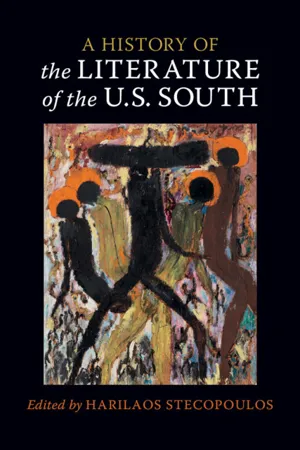
chapter 14 Women Writers and the Southern Renaissance; or, the Work of Gender in Literary Periodization Jay Watson From the mid-nineteenth century to the mid-twentieth, the intellectual culture of Euro-American modernism saw an outbreak of a phenomenon we could call renaissancing. Historian Jules Michelet introduced the term “renaissance” in his 1855 History of France to distinguish the artistic and intellectual culture of early modern Europe from the medieval period. Michelet’s Swiss contemporary Jacob Burckhardt employed the French nomenclature in The Civilization of the Renaissance in Italy (1860), which helped install the concept in the study of history, art, and literature. For these pioneers, “renaissance” denoted an era of cultural “rebirth” kindled by the European rediscovery of the artistic and intellectual legacies of ancient Greece and Rome. By century’s end, however, the concept was being applied to a variety of periods and movements. In Ireland, for instance, the “Celtic Twilight” era christened by W. B. Yeats in the 1890s drew on the cultural politics of nationalism and linguistic revival to promote indigenous traditions in the country’s struggle for independence from England. As writers embraced native materials to reinvigorate and politicize their work, Yeats’s crepuscular image yielded to one of an Irish literary “Revival” or “Renaissance. ” Meanwhile, in his Literary History of America, published in 1900, Harvard professor Barrett Wendell coined the phrase “New England Renaissance” to make a case for the “outburst . . . of intellectual life” around antebellum Boston as the center of gravity for a U.S. eBook - PDF
Other Renaissances
A New Approach to World Literature
- B. Schildgen, Z. Gang, S. Gilman, B. Schildgen, Z. Gang, S. Gilman(Authors)
- 2006(Publication Date)
- Palgrave Macmillan(Publisher)
It has been an atti- tude of condescension, of patronizing counsel, of mild surprise that a region so far removed from the centre of the intellectual system should venture to have such things as literary aspirations. 9 In arguing against the notion of western literature, then, the editors nevertheless reinforce the idea that the west must throw off discouraging eastern dominance. The label Chicago Renaissance can therefore be understood as an assertion of independence but this gesture is only meaningful within a pattern that includes the American Renaissance. F. O. Matthiessen writes that Emerson, Hawthorne, Thoreau, Melville, and Whitman “felt that it was incumbent upon their generation to give fulfillment to the potentialities freed by the Revolution, to provide a culture commensu- rate with America’s political opportunity.” 10 William Dean Howells says of the Chicago writers: This is the really valuable contribution of the West, and of that Chicago in which the West has come to its consciousness, toward that poor American condition of English literature which has long been trying so hard to be itself in the face of such sore temptations to be something else. The democracy which was the faith of New England became the life of the West, and now it is the Western voice in our literary art. 11 The label Chicago Renaissance implies that the mid-western/western region has found its literary identity but simultaneously that the impor- tance of that identity rests on its best representing American ideals. 230 ● Lisa Woolley The Harlem Renaissance At almost the same time that Chicago was producing its celebrated burst of writing, Harlem was having its own surge of activity. A brief exami- nation of this literary period is crucial in explaining why there are two Chicago Renaissances within half a century. After World War I, Harlem became the focal point of a national movement to highlight and encour- age African-American achievement in the arts and letters.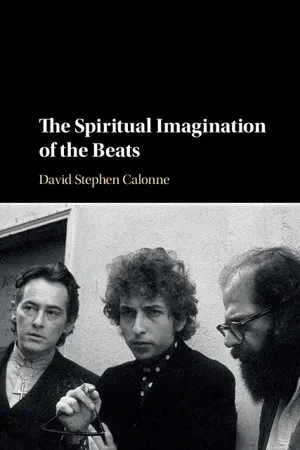 eBook - PDF
- David Stephen Calonne(Author)
- 2017(Publication Date)
- Cambridge University Press(Publisher)
16 16 Chapter 1 San Francisco Renaissance: Kenneth Rexroth and Robert Duncan My purpose in this chapter is twofold: first, to provide an overview of Beat heterodoxies as exemplified in writings by Kenneth Rexroth (1905– 1982) and Robert Duncan (1919–1988), authors who – while not Beats themselves – in their wide-ranging philosophical interests created a frame- work for countercultural exploration; and second, to sketch out how the Beat movement gathered momentum during the critical period following World War II through a lively synergy of literary experimentation by art- ists on both the East and West Coasts. During what has become known as the “San Francisco Renaissance” – the creative efflorescence of poetry and arts in California’s Bay Area – Kenneth Rexroth was a central person- ality: Lawrence Ferlinghetti considered him the most significant “father figure” and “elder statesman” for the Beats. Rexroth’s polymathic knowl- edge of mystical experience, Native American culture, alchemy, and Buddhism prefigured Beat engagement with these subjects. He was also significant because he clearly articulated the ruptures in post–World War II American society: he acted as a transition figure between anarchistic, communitarian philosophies of the 1920s and 1930s and emerging radical youth who opposed individual dehumanization at the hands of contem- porary technocracy, capitalism, consumerism, and militarism. In his essay “Revolt True and False,” Rexroth declared that “disaffiliation from the inhuman means affiliation with the truly human,” which precisely defines Beat sensibility. 1 Born in South Bend, Indiana, he had a troubled child- hood, was orphaned at age twelve, and became an autodidact. Rexroth had been living in San Francisco since 1927 with his wife Andree; following her death, he spent his time with his second wife, Marie, writing, painting, and continuing his involvement with anarchist politics.
Index pages curate the most relevant extracts from our library of academic textbooks. They’ve been created using an in-house natural language model (NLM), each adding context and meaning to key research topics.

