Psychology

Freud Wolfman Study
The Freud Wolfman Study refers to Sigmund Freud's famous case study of a patient known as the "Wolf Man." This study is a significant contribution to psychoanalytic theory and clinical practice, as it provided insights into the treatment of neuroses and the interpretation of dreams. The case study focused on the patient's childhood experiences and their impact on his psychological development and symptoms.
Written by Perlego with AI-assistance
Related key terms
1 of 5
10 Key excerpts on "Freud Wolfman Study"
 eBook - ePub
Reading Freud’s Patients
Memoir, Narrative and the Analysand
- Anat Tzur Mahalel(Author)
- 2020(Publication Date)
- Routledge(Publisher)
Glückshaube (German for “caul,” literally a “lucky hood”). The veil is represented as an ambivalent object both for Freud and for Pankejeff, who are enticed by the sense of a final truth behind the veil yet constantly doubt the possibility of grasping it. For Freud, psychoanalysis is the very process of lifting the veil, yet his analysand remained for him an unsolved riddle. Pankejeff, in a volume dedicated to the story of the Wolf Man, created an autobiographical text that deliberately avoids telling the story of the analysand, thus drawing a veil over his story. The paradox embodied in lifting the veil is discussed in relation to Walter Benjamin’s distinction between materiality and truth and his notion of the inherent unity of the veil and the veiled.The Wolf Man’s case occupied Freud his entire writing life and continued to occupy psychoanalytic literature throughout the years to an unprecedented degree. From the History of an Infantile Neurosis was the last case study Freud wrote and one of the most detailed. Not only the case study but also the patient himself who was known as the Wolf Man occupied the psychoanalytic community throughout the years (Abraham and Torok 1986 [1976]; Brooks 1984; Loughman 1984; Mahony 1984; Offenkrantz 1973; Werbert 1998). Ongoing interest in the Wolf Man has produced new examinations of his pathology and the analytic work with Freud, as well as new interpretations of works about him. This continuous interest can be explained by the obscurities and contradictions surrounding his character. In the concluding remarks of the case study, Freud discusses the Wolf Man’s complexity and resistance to interpretation as a riddle as-yet-unsolved: “Personal peculiarities in the patient and a national character that was foreign to ours made the task of feeling one’s way into his mind a laborious one” (Freud 1918, 104).A bond was forged between Freud’s text and the subject who was given a pseudonym in that text, a person who became a persona and lived his adult life with the dual identity of Russian émigré and the subject of Freud’s famous case. Approximately five decades after Freud’s case study appeared, the patient at its center published a memoir telling his life story and a separate essay offering recollections of his analytic encounter with Freud. The two pieces (Pankejeff 1971a, 1971b) were first published in English and German in 1971 in a volume edited by the American psychoanalyst Muriel Gardiner. In addition to the texts written by the Wolf Man, the volume also reprints Freud’s famous case study about him; an additional case study written by the analyst Ruth Mack Brunswick, originally published in 1928 (Mack Brunswick 1928); the editor’s own recollections of the Wolf Man, based on their long relationship; a selection of Pankejeff’s letters to her; and her diagnostic impression of his personality. Thus, the texts collected in this volume were written by four different authors at various times. Freud first published his case study after World War I, approximately five years after the analysis ended. Mack Brunswick published her paper about a year after the Wolf Man’s second analysis ended. Gardiner published her own recollections of the famous patient in various journals from the 1950 until the book was published. eBook - ePub
- Jeffrey Berman(Author)
- 2022(Publication Date)
- Bloomsbury Academic(Publisher)
The bewildering story of the Wolf-Man, narrated by four different people over a period spanning nearly seven decades, has a Rashomon-like quality, offering conflicting interpretations of the same enigmatic person. The stories are strikingly different in what they reveal and conceal. For Freud, Gardiner, Brunswick, and Anna Freud, who wrote the foreword to The Wolf-Man by the Wolf-Man, the case history is irrefutable proof of the validity of psychoanalytic science. As Anna Freud writes, “The Wolf-Man stands out among his fellow figures by virtue of the fact that he is the only one able and willing to cooperate actively in the reconstruction and follow-up of his own case” (x). Other, more dispassionate readers, however, will see a psychoanalytic ideology in the Wolf-Man’s story that is far from scientific. There is little question that the Wolf-Man was convinced, as Anna Freud observed, that he would have been condemned to lifelong suffering without psychoanalysis. But the question remains: what most benefited him from his analysis with Freud? The answer, if we are to believe the Wolf-Man’s conversations with Obholzer, is not what was most obvious to Freud and the orthodox psychoanalytic community. Freud’s Case Study We begin with From the History of an Infantile Neurosis, described by James Strachey as the “most elaborate and no doubt the most important of all Freud’s case histories” (SE, vol. 17, 3). Freud’s first analysis began in February 1910, when the patient was twenty-three, and lasted until July 1914. The patient entered a second analysis with Freud for another four months from November 1919 to February 1920. Prior to the first analysis, the patient’s health had broken down, Freud tells us, when he was eighteen as a result of a gonorrheal infection contracted from a peasant woman that left him entirely incapacitated and dependent upon others eBook - PDF
Literature in Psychoanalysis
A Reader
- Steven Vine(Author)
- 2017(Publication Date)
- Red Globe Press(Publisher)
Part III Sigmund Freud, The “ Wolf Man” Introductory Note CONSTRUCTING AND DECONSTRUCTING THE WOLF MAN Sergei Constantinovitch Pankeiev: the “Wolf Man”. He was Freud’s most celebrated, perhaps most enigmatic patient. Freud called him the “Wolf Man” after a dream the boy had when he was 4. Little Sergei dreamed that he woke one summer night, watched his window open by itself and saw a group of white wolves sitting in a walnut tree outside, looking at him fixedly. Terrified, he screamed and woke up. The wolf dream became the analytic centre-piece of Freud’s most elaborate and theoretically revealing case history, From the History of an Infantile Neurosis (completed in 1914, and published in 1918). The Wolf Man was analyzed by Freud from 1910–1914, and again from 1919–20. He arrived in Freud’s consulting room at the age of 23 in a state of crippling dependency; he needed an enema every day from a valet in permanent attendance on him, and was attended by a private doctor. As Peter Brooks points out in Essay 7, Pankeiev had been in and out of sanatoria from the age of 21, but had gained no relief from his obsessive and hysterical symp-toms. He had suffered and manifested symptoms, in fact, all his life. His family reported that at the age of 3 1 / 2 his behaviour changed from docility to difficulty and fits of screaming, and Freud records that at 4 the dream of the wolves led to an animal phobia that, after a period of schooling in the Bible from his mother, produced a full-scale obsessional neurosis with a religious basis that lasted until the boy was 10. The obsessional neurosis subsequently modulated into a devotion to all things military, and the Wolf Man’s health col-112 lapsed finally when he suffered a breakdown precipitated by gonor-rhoea at the age of 17. Freud interprets the Wolf Man’s neuroses and phobias as symp-toms of his disturbed sexual life, and charts his history in relation to what he sees as the traumatic sexual meaning of the wolf dream. eBook - PDF
- Robert Morley(Author)
- 2018(Publication Date)
- Routledge(Publisher)
PART II PATIENTS OF FREUD AND JUNG WRITE 49 CHAPTER FIVE Prelude B y contrast with the patients in the first section, whose analysts were anonymous or relatively unknown, in this section I bring together patients analysed by Freud and Jung. Both were charismatic founders of important, rival schools of analysis, resting on different concepts about the contents of the unconscious and its relationship with other parts of the psyche, and also with very different ideas about what was therapeutically effective. The three patients of Freud considered here were not formally in any kind of training as psychoanalysts, although Dr Wortis presented himself for an educational rather than a therapeutic expe-rience. Accounts by patients of Jung and other Jungians are far fewer than patients of Freud and other psychoanalytic practition-ers. According to Bair (2004), Jung took a very pronounced view about confidentiality and privacy, believing that what happened in the analytic session was sacrosanct and never to be revealed even after the analyst and analysand had died. The Wolf-Man is unique as the only one about whom Freud himself had written publicly, so that it is possible to set his views in contrast to those of the Wolf-Man. Freud’s paper, entitled From the History of an Infantile Neurosis 51 (1918), also makes the Wolf-Man the most well known of the three. His associations to the famous Wolf Dream were used by Freud to demonstrate that his theories of infantile sexuality and, in particu-lar, his theory of the primal scene, were validated by the reality of the patient’s repressed unconscious memories of early and sig-nificant events in his life. Those unconscious memories, Freud believed, could be recovered by the technique of free association. He thought that he had demonstrated this most effectively in his paper . That view was endorsed for many years by the developing psychoanalytic community, which kept the Wolf-Man under its wing until his death. eBook - ePub
- Muriel Gardiner(Author)
- 2018(Publication Date)
- Routledge(Publisher)
Part II Psychoanalysis and the Wolf-Man My Recollections of Sigmund Freud by Wolf Man I first met Freud in the year 1910. At that time psychoanalysis and the name of its founder were practically unknown beyond the borders of Austria. Before I report on how I came into analysis with Freud, however, I should like to recall to you the desolate situation in which a neurotic found himself at that period before psychoanalysis. A sufferer from neurosis is trying to find his way back into normal life, as he has come into conflict with his environment and then lost contact with it. His emotional life has become “inadequate,’ ‘inappropriate to outer reality. His goal is not a real known object, but rather some other object, hidden in his unconscious, unknown to himself. His affect by-passes the real object, accessible to his consciousness. As long as nothing was known of this state of affairs, only two explanations were possible: one, that of the layman, concerned itself with the increase in intensity of affect, which was out of proportion to the real situation; it was said that the neurotic exaggerated everything. The other explanation, that of the neurologist or psychiatrist, derived the mental and emotional from the physical, and sought to persuade the patient that his trouble was due to a functional disorder of the nervous system. The neurotic went to a physician with the wish to pour out his heart to him, and was bitterly disappointed when the physician would scarcely listen to the problems which so troubled him, much less try to understand them. But that which to the doctor was only an unimportant by-product of a serious objective condition was for the neurotic himself a profound inner experience. So there could be no real contact between patient and physician eBook - ePub
- Barbara Creed(Author)
- 2015(Publication Date)
- Melbourne University Press Digital(Publisher)
5 FREUD’S WOLF MAN, OR THE TALE OF GRANNY’S FURRY PHALLUS Unheimliche... infiltrates the interstices of the narrative and points to the gaps we need to explain. HÉLÈNE CIXOUS 1 P ublished in 1918 under the title ‘From the History of an Infantile Neurosis’, The Wolf Man’ is Freud’s most famous and fascinating case study. However, his interpretation of the Wolf Man’s personal history has always been controversial. This is because Freud drew on his analysis to propose a number of psychoanalytic theories central to his own views, with which a number of theorists disagreed. 2 These included his theory of the primal scene—that is, the child’s observation of parental intercourse, in which the child interprets the scene as an act of aggression by the father towards the mother. Freud argued that the child, ignorant of the anatomical differences between men and women, also interprets the primal scene as representing castration. He argued that a scene of parental sex, which the Wolf Man witnessed as an infant, traumatised him later in life—even though it actually occurred when he was eighteen months old and was unable to understand its significance at the time. Critics disagree as to whether the primal scene should be viewed as a memory of an actual event, witnessed by the child, or as phantasy. Freud also used his analysis to support his theory that children are more frightened of the castrating father than the maternal figure whom Freud designated as uncanny in relation to her genital organs and womb. 3 Freud elevated the figure of the castrating father in causing the Wolf Man’s neurosis while downplaying the role(s) of the incorporating/castrating woman and the terrifying wolf, both of which I argue constitute figures of the ‘primal uncanny’ eBook - PDF
Inside the Freud Museums
History, Memory and Site-Responsive Art
- Joanne Morra(Author)
- 2017(Publication Date)
- I.B. Tauris(Publisher)
Travelling in order to follow eclectic dreams, from those of the Wolf Man to Jelly Roll Morton, to those belonging to Freud, these three artistic interventions enable us to understand what author Siri Hustvedt has pointed out, namely that ‘the dream and art form a natural alliance, and that pictures dominate the grammar of the unconscious’. Moreover, the site‑responsive implication of these exhibitions inside the Freud Museum provides an important insight: as images that belong to the past, present and future are brought together, often simultaneously, we come to see that the time of art and dreams is out of joint. THE WOLF MAN Harasymowicz’s show Wolf Man (2012), curated by Sarah Jury, was concerned with Freud’s most significant case history involving a dream: the story of the Wolf Man. Among other things, the analysis of Sergei Pankejeff provided Freud with a comprehensive understanding of the formation and function of dreams, and the way in which dreams can become lodged in the unconscious and prohibit the everyday functioning of an individual. Freud’s case history entitled ‘From the History of an Infantile Neurosis’ was written in 1914/15 at the end of the first phase of the analysis, which had lasted for four years. It was not published until 1918. Although in it Freud claims that he had cured his patient, Pankejeff returned to see Freud in 1919, this time for a short treatment, and unfortunately continued to suffer with depression and phobias throughout his life. 6 travelling through the unconscious 125 In the 1918 publication, Freud records the work that he and Pankejeff had undertaken in the first and more lengthy part of the analysis. In order to narrate the treatment, Freud turns the non‑ chronological ideas and historical events that his patient uncovered and discussed during his psychoanalysis into a linear story of the Wolf Man’s life. The core of the psychoanalysis rests on an event that took place in Pankejeff’s childhood.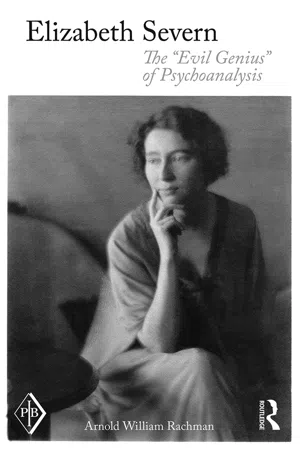 eBook - ePub
Elizabeth Severn
The "Evil Genius" of Psychoanalysis
- Arnold Rachman, Arnold WM Rachman(Authors)
- 2017(Publication Date)
- Routledge(Publisher)
I believe Freud’s clinical behavior with the Rat Man, which was non-interpretative, was an indication that his clinical self was outpacing his theoretical self. He was willing to let the analytic method be open to change, but he maintained the Oedipal complex as the cornerstone of psychoanalysis, even though the clinical data did not fit the theory. For example, in the first pillar of Freud’s iconic case histories, the case of Dora (Freud, 1955d), there is an issue of Freud’s imposing the Oedipal theory on the adolescent girl, Dora (Ida Bauer), even though the clinical data indicates that sexual trauma had occurred and was a more relevant disorder to treat than an Oedipal complex (Rachman & Mattick, 2009, 2012).Freud’s designation of the Wolf Man as a difficult caseIn his introduction to discussion of the case of the Wolf Man (Sergei Pankejeff ) Freud spelled out that he considered Pankejeff a difficult case, but he also announced that it was only through the analysis of difficult cases that psychoanalysis can be changed:Something new can only be gained from analysis that presents special difficulties , and to the overcoming of these a great deal of time has to be devoted. Only in such cases do we succeed in descending into the deepest and most primitive strata of mental development and in gaining from these solutions for the problems of the later formulations and we feel afterwards that, strictly speaking, only an analysis which has penetrated so far deserves the name … As regards these fertile difficulties the case I am about to discuss left nothing to be desired .(Freud, 1955b, p. 20 – Sigmund Freud’s introduction to the Case of The Wolf Man, italics added) Freud Passed the mantle to FerencziBy the time Freud had established his method for analyzing neurotic conflicts by the use of free association, interpretation, and the development of insight as the standard procedure for conducting an analysis, both he and his heir apparent, Ferenczi, began to examine how an analysis should be conducted. In 1918, Freud and Ferenczi presented papers at the Budapest Analytic Congress on the formal introduction of deviations in analytic technique. This became the beginning of a new development in psychoanalysis: the examination of clinical psychoanalysis in order to creatively adjust to changing patient populations, clinical realities, and theoretical changes for the analytic encounter. At the same time, Freud realized that Ferenczi should lead the evolution in clinical psychoanalysis (Freud, 1955c), and in 1918 the center of psychoanalysis moved from Vienna to Budapest. At the Budapest Congress, Freud made two important statements about the evolution of psychoanalytic technique. First, he said that psychoanalysis must change in the willingness to go beyond interpretative behavior: eBook - ePub
The Analytical Process
Journeys and Pathways
- Thierry Bokanowski(Author)
- 2018(Publication Date)
- Routledge(Publisher)
Chapter Fourteen A historical example of negativising transference: the “young Russian” known as “the Wolf Man”“At that time I had taken on the case of a young Russian, a man spoilt by wealth, who had come to Vienna in a state of complete helplessness, accompanied by a private doctor and an attendant. In the course of the few years it was possible to give him back a large amount of his independence, to awaken his interest in life and to adjust his relation to the people most important to him. But there progress came to a stop”(Freud, 1937c, p. 217)We are nowadays in a position to assert that his treatment of “the Wolf Man” (1918b) marked an epistemic break in Freud’s system with regard to the concepts of infantile neurosis and transference neurosis, and the way he developed them, due, among other factors, to the vicissitudes of the negativising (destructive) transference that occurred. It would appear that the numerous advances Freud made before and after this treatment and that are now referred to as the “1920s turning point” stem directly from the theoretical and practical difficulties he encountered.26We can now understand what these difficulties were about when we read the Wolf Man’s memories in the interview he gave to Obholzer:What ultimately has been explained by dreams in my history? I’m not sure. Freud relates everything to the primal scene that he derives from the dream. But that scene does not occur in the dream. When he interprets the white wolves as nighshirts or something like that, for example, linen sheets or clothes, that is somehow far-fetched, I think. That scene in the dream with the windows open and so on and the wolves are sitting there, and his interpretation, I don’t know – I find it very far-fetched. (Obholzer, 1982, p. 35) eBook - PDF
Deconstruction
A Reader
- Martin McQuillan(Author)
- 2001(Publication Date)
- Edinburgh University Press(Publisher)
He went to see the Master once more. He let him know that he had not been cured, and especially not of this constipation that Freud so proudly claimed to have alleviated. Moreover, being financially ruined as he was, he could not afford another analysis. That should not stand in the way! the Professor said with sympathy. And then came free analysis, donations. Wages for not being himself. For the Wolf Man, the apparently happy situation revived a latent despair: Stanko misunderstood, castrated, disposed of. Father giving money to Tierka . . . When in October 1923, the seriousness of Freud's illness became common knowledge, the horizon blackened even more. If Father disappeared, who would ever free S. P.'s desire? We know the rest. Forever he will keep his love in his own possession, his Objects which are words. Unable to convert these word-objects into words for the object, his life remains, for himself and for us all, an enigma. Yet, in all this life, unfurling the flag of enigma, the Wolf Man has never left us. He remains with us analysts, to quicken our desire to know. Whether he appears to us as a living support for our projections and resistances or as an ever-renewing source of inspiration, we owe him a character: The Wolf Man, an intuition: Mourning and Melancholia, an anthropology: the second topography. Ever bent on offering a new element in order to clear up his mystery, he further obscures it. Our companion of misfortune in no-knowledge, he has become the symbol of a mirage ± haunting every analyst ± the mirage of understanding. After so many others, we too have succumbed to it. Let him be thanked for it! And let us be forgiven for it! September 27, 1970 Postscript . It should be clear that the preceding considerations relate to the Wolf Man only as a mythical person. Their wholly fictitious ± though not 349 FROM T HE W OLF M AN ' S M AGIC W ORD gratuitous ± nature illustrates an approach that can be of clinical use.
Index pages curate the most relevant extracts from our library of academic textbooks. They’ve been created using an in-house natural language model (NLM), each adding context and meaning to key research topics.

