Psychology

Problem Solving and Decision Making
Problem solving and decision making involve the process of identifying, analyzing, and resolving issues or choosing between alternatives. It encompasses cognitive, emotional, and behavioral aspects, and can be influenced by individual differences, environmental factors, and situational constraints. Effective problem solving and decision making often require critical thinking, creativity, and the ability to weigh potential outcomes.
Written by Perlego with AI-assistance
Related key terms
1 of 5

11 Key excerpts on "Problem Solving and Decision Making"
 eBook - PDF
- Jean Nitzke(Author)
- 2019(Publication Date)
- Language Science Press(Publisher)
53 5 Problem solving in psychology and translation studies Te Oxford Dictionary of Psychology provides more detailed defnitions for the two terms with an increased focus on the feld o f psychology. Decision making is defned as [t]he act or process of choosing a preferred option or course of action from a set of alternatives. It precedes and underpins almost all deliberate or vol-untary behaviour. Tree major classes of theories have guided research into decision making: normative, descriptive (or positive), and prescriptive the-ories (Colman 2009: 217). while problem solving is described as [c]ognitive processing directed at fnding solutions to well-defned prob-lems, such as the Tower of Hanoi, Wason selection task, or a water-jar prob-lem, by performing a sequence of operations. Problem solving by means of logic or logical analysis is usually called reasoning. 2 (ibid.: 693). Te later defni tion signalises that logical problem solving is called reasoning . Reasoning , in turn, is defned as the “[c]ognitive processing directed at fnding solutions to problems by applying formal rules of logics or some other ratio-nal procedure” (ibid.: 620). If one atends translation classes at an undergradu-ate level, one ofen hears that a translation solution was selected, because “it sounds fting” or some times, that something was disregarded, because the per-son “sensed it was not correct due to a feeling for the language”. However, these seemingly intuitive arguments decline with growing experience and knowledge about translation and language, because professional translators know the rules of language and translation. Tey know about grammar, registers, text type and domain conventions, etc. Tey can, hence, tackle a problem through reasoning. Returning to the diference between decision making and problem solving: Te main diference that becomes clear in these de fnitions is that decision mak-ing is ofen a one-step operation while problem solving embodies more than one operation. eBook - PDF
Social Problem Solving and Offending
Evidence, Evaluation and Evolution
- Mary McMurran, James McGuire, Mary McMurran, James McGuire(Authors)
- 2005(Publication Date)
- Wiley(Publisher)
DEFINITIONS AND BASIC CONCEPTS In the sense that will concern us here, problem solving has been defined as ‘‘the self-directed cognitive-behavioral process by which a person attempts to identify or discover effective or adaptive solutions for specific problems encountered in everyday living’’ (D’Zurilla & Nezu, 2001, p. 212). Alternatively it may be conceptualised as ‘‘a goal-directed sequence of cognitive and affective operations as well as behavioral responses for the purpose of adapting to internal or external demands or challenges’’ (Heppner & Krauskopf, 1987, p. 375). In this respect the terms problem solving and coping have sometimes been viewed as synonymous (Heppner & Hillerbrand, 1991). Engaging in this process inevitably activates some of the routines involved in other types of reasoning and typically studied in cognitive psychology research. It has been widely recognised, however, that there are additional activities involved in attempting to solve problems in the inter-personal domain. While practical, mechanical problem solving is an intrinsic part of healthy adjustment and everyday functioning, it may be insufficient for adaptive behaviour in complex social environments. Another way to characterise this difference is in terms of a distinction between the ‘‘well-structured’’ tasks that are customarily used in cognitive psychology experiments, versus the more ‘‘ill-structured’’ problems encountered in daily life (ibid.) In these contexts, therefore, other procedures are called into play. Problem solving self-evidently links two elements: the problem with which the individual begins and which leads to engaging in the exercise; and the solution which presumably is an objective or desired outcome of that effort. It is important therefore to clarify what we mean by these terms. eBook - ePub
- Sergio Barile(Author)
- 2024(Publication Date)
- Routledge(Publisher)
Although attributable by analogy to experiences with historically already practiced conditions, the decisions manifest themselves with specific characteristics such as to represent innovative variants of known problems. This concept, albeit elusive, introduces the distinction between Decision Making and Problem Solving. 13 13 An example of the difference between Decision Making and Problem Solving can be drawn from the game of chess: the problem of opening is certainly to be considered a Problem-Solving issue, while the need to escape from a position of check must be considered a case of Decision Making. The difference consists in noting that, in the case of the opening, the player must decide his move and with it, despite the various possible openings, try to achieve the following objectives: a) control and occupation of the center; b) development of the pieces. In the case of checkmate during the game, the problem is epistemic, that is, cognitive. Avoiding checkmate, therefore, requires an adequate strategy to correctly define the move to be adopted. Based on these ideas and through a constant observation and experimentation of decision-making behaviours, Simon (1967) arrives at a “heretical” conception with respect to consolidated knowledge. He is convinced that the rational process is based on articulated and little explored “intellectual” aspects, on specific skills rather than on specific knowledge, both factual and procedural. On the one hand, he argues that the individual endowment, the intelligence, of the decision maker is relevant for determining the path of choice, on the other, consequently, he recovers and reevaluates the meaning of “intellectual skills” such as intuition, induction, deduction, logical reasoning, etc eBook - ePub
Companion Encyclopedia of Psychology
Volume One
- Andrew M. Colman(Author)
- 2018(Publication Date)
- Routledge(Publisher)
creative thinking. In this chapter we shall focus on directed thinking: thought aimed at achieving specific goals. This is an area in which reasonable theoretical progress has been made, and for which there are clear practical applications in everyday life.Studies of directed thinking fall broadly into three main areas which are described as problem solving, reasoning, and decision-making. We shall consider each in turn.Problem Solving
A person has a problem whenever he or she wishes to achieve a goal and is unable to proceed immediately to do so. Problem solving consists of finding a method of getting from where you are to where you want to be, using such resources and knowledge as you have available. This definition obviously covers a vast range of human activity; problem solving is clearly involved in solving crossword puzzles and choosing chess moves, but it is equally involved in finding your way to a new destination, obtaining a ticket for a sold-out sporting contest, or working out how to persuade your boss to give you a pay rise.One distinction which has helped psychologists think about the vast range of behaviours involved in problem solving is that between well-defined and ill-defined problems. In a well-defined problem, all the information needed and the means of solution are available at the outset. This is typical of things that are set as "problems" in newspapers, and so on, and also typical of much research in the psychological laboratory. An anagram is an example of a well-defined problem. You know the letters that constitute the solution word and also the means of solving the problem-rearrangement of the order of letters-at the outset. Well-defined problem solving thus consists of applying known rules to known information in order to transform the situation and achieve the goal.Some of the most famous studies of well-defined problem solving were conducted by Newell and Simon (1972). An example of one of their problems is cryptarithmetic, in which subjects were given the following problem: eBook - ePub
- Mehmet Eskin(Author)
- 2012(Publication Date)
- Elsevier(Publisher)
3 Components of Problem Solving Introduction As a complex human behavior process, developing problem-solving skills requires a series of mental processes. What are the components of human problem solving? What are the mental and psychological processes involved in problem solving? What are the processes or the components of processes that help us understand problem solving? Problem solving consists of three important components: These are cognitive, metacognitive, and motivational in nature. The term “problem-solving components” refers to the nature of skills and abilities the individual is able to use during problem solving. For example, the cognitive component of problem solving refers to the skills and abilities that belong to the cognitive domain. Similarly, the motivational component refers to the motivational aspects of skills and abilities an individual can employ during problem solving. The cognitive, metacognitive, and motivational components of problem solving will be discussed in this chapter. Cognitive Components of Problem Solving The cognitive component of problem solving is related to whether or not the individual perceives the problems correctly. In order to be able to solve the problem, the individual needs to perceive it correctly in the first place. This perception is closely related to the way the individual processes information. Founded on the knowledge base within the field of academic psychology, Mayer (1998) categorizes cognitive skills in problem solving into three groups. The first group is comprised of the skills needed for the resolution of the instructional objectives. The second group of skills is related to the learning hierarchy. Here the individual needs to learn a skill in a lower level of the hierarchy and move to the next level in order to reach the targeted skill at the top
- Kären Hess, Christine Hess Orthmann, Shaun LaDue, , Kären Hess, Christine Hess Orthmann, Shaun LaDue(Authors)
- 2015(Publication Date)
- Cengage Learning EMEA(Publisher)
Have the chief or upper management hold back opinions until others have a chance to present their ideas. Brainstorm. Beware of premature decisions—have sepa-rate meetings for identifying alternatives and making the final decision. More Complex Decision-Making and Problem-Solving Processes Whether decisions are made by a group or an individual, often a more com-plex process is used. More complex decision-making and problem-solving processes include the seven-step decision-making/problem-solving approach, force-field analysis, the nominal group technique, the Delphi technique, and a modified form of the Delphi technique. These approaches often include brainstorming. The Seven-Step Decision-Making/Problem-Solving Process Many decisions can be effectively made and many problems effectively solved through a seven-step process. Decision making often follows these seven steps: 1. Define the specific problem. 2. Gather all facts concerning the problem. 3. Generate alternatives. 4. Analyze the alternatives. 5. Select the best alternative. 6. Implement the alternative. 7. Evaluate the decision. Define the Problem The logical first step is to identify the problem. It must be located, defined, and limited before you can seek solutions. Those involved need to agree it is a priority problem that needs to be solved. Take care not to confuse a problem with its symptoms . For example, patrol officers may be coming to work late or calling in sick more often. These could be symptoms of a deeper problem— low morale. The problem, not the symptoms, must be addressed. 142 ■ Part II Leadership Fundamentals Copyright 2016 Cengage Learning. All Rights Reserved. May not be copied, scanned, or duplicated, in whole or in part. Due to electronic rights, some third party content may be suppressed from the eBook and/or eChapter(s). Editorial review has deemed that any suppressed content does not materially affect the overall learning experience. eBook - PDF
- Michel Meyer(Author)
- 2011(Publication Date)
- De Gruyter(Publisher)
5. Aspects of Problem Solving b y F. H . GEORGE In this note I wish to reconsider problem solving, and its scope and methods (1980). Problem solving as has been asserted by Newell, Shaw and Simons, is equivalent to both planning and decision making. Decision making is largely treated as an offshoot of probability theory, whether explicitly or implicitly. We shall accept the fact that while probability is also relevant to problem solving, the subject can also be seen as fundamental to all of science, whether deterministic or otherwise, also to philosophy and indeed to all aspects of life. In a sense, science is problem solving, where hypotheses are set up by induction or abduction and tested directly by experiment or by deduction and either by further experiment, or, in formal science, for consistency. Whichever approach is required the need for thinking is paramount; a matter that is underlined by Sir Isaac Newton who apparently watched an apple fall to the ground and, as a result, devel-oped the theory of gravitation. On being asked what led from one to the other, he answered I thought very hard about it. The word 'problem' is not to be found in the indices of many philosophical books, although Wittgenstein (1953) is certainly an ex-ception to this rule and we shall shortly look at what he says. Perhaps more noteable is G. E. Moore. In his best known book Some Main Problems of Philosophy , (1953) the word 'problem' actually appeared in the title. This, of course, is the give-away, since it is being made clear that all philosophical issues are really problems. There is the problem of ontology, of epistemology, of meaning and truth, and more partic-ularly following Moore, of sense-data, propositions, material things, reality and the meaning of 'real' and so on and so forth. There is one thing that stands out is this brief list and it is that philosophy is concerned with conceptual issues, at least primarily, and only incidentally with empirical facts and theories. eBook - PDF
Making Decisions
Expert Solutions to Everyday Challenges
- (Author)
- 2008(Publication Date)
- Harvard Business Review Press(Publisher)
Making Decisions: The Basics What Is Decision Making? 3 4 Making Decisions A s a manager, you are faced with decisions every day. Some decisions are straightforward, such as deciding which team member to assign to a specific project. Others are more complex, such as selecting a new vendor or deciding to dis-continue a product due to weak sales. Many managers tend to view decision making as an event—a choice to be made at a single point in time, usually by an individ-ual or a small group. In reality, however, significant decisions are seldom made in the moment by one manager or in one meeting. Simply put, decision making is a social or group process that un-folds over time. “Effective executives know that decision making has its own systemic process and its own clearly defined elements.” —Peter Drucker Decision making as a group process Important decisions, such as changing the strategic direction of a group or hiring a new manager, typically require time and input from many individuals and sources of information throughout an organization. Hence, decision making can more accurately be viewed as a group process . Managers who recognize decision making as a group process increase their likelihood of making more effective decisions. Why? By taking time, they are able to identify and assess the issues asso-ciated with making the decision. By involving others, they weigh different perspectives and deepen the discussion. Perhaps most important, taking a process-driven approach is more likely to lead to broader acceptance of the decision—which in turn leads to more effective implementation. Making decisions: eight steps We can think of the decision-making process as consisting of eight steps: 1.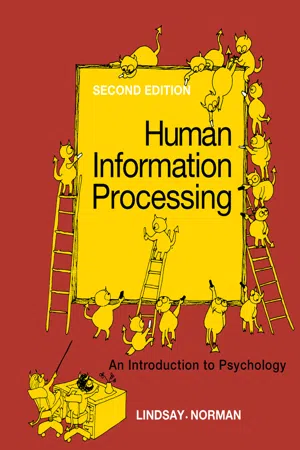 eBook - PDF
Human Information Processing
An Introduction to Psychology
- Peter H. Lindsay, Donald A. Norman(Authors)
- 2013(Publication Date)
- Academic Press(Publisher)
The book by Davis (1973) is entitled The psychology of prob-lem solving, but it has surprisingly little overlap with the approach we take. One of the major concepts in problem solving not covered in this chapter is that of set, sometimes called fixation. An excellent introduction to this topic can be found in the Scientific American article Problem-Solving by Scheerer (1963). Some classic studies on problem solving are the book Productive thinking by Wertheimer (1945), the semihandbook How to solve it by Polya (1945), and the study The mentality of apes by Köhler (1925). Some symposia on problem solving have been printed as books: Green (1966), Kleinmuntz (1966-1968), and Voss (1969). A review of the effects that groups have upon problem solving can be found in Hoffman's article Group Problem Solving in the book edited by Berkowitz ( 1965). Much of the literature on decision making is mathematical, requiring some knowledge of probability theory (although a little bit will go a surpris-ingly long way, if you simply refuse to be intimidated by the apparent complexity of the equations). An excellent introduction to mathematical decision theory is provided in the book, Mathematical psychology: an introduction, by Coombs, Dawes, and Tversky (1970). For anyone who is seriously interested in the material discussed here, it is a valuable intro-584 14. Problem Solving and Decision Making Decision making Suggested readings 5S5 duction. For those less mathematically inclined, there are a number of Scientific American articles relevant. Most of the good ones are included in the book edited by Messick, Mathematical thinking in behavioral sci-ences: Readings from Scientific American (1968). The analysis of the per-ceptual and mental abilities of chess players comes from DeGroot ( 1965, 1966). eBook - PDF
Supervisory Management
The Art of Inspiring, Empowering, and Developing
- Donald Mosley, Donald Mosley, Jr., Paul Pietri, , Donald Mosley, Donald Mosley, Jr., Paul Pietri(Authors)
- 2018(Publication Date)
- Cengage Learning EMEA(Publisher)
Many good supervisory decisions are ineffective because of the way they’re implemented. risk The possibility of defeat, disadvantage, injury, or loss. Copyright 2019 Cengage Learning. All Rights Reserved. May not be copied, scanned, or duplicated, in whole or in part. Due to electronic rights, some third party content may be suppressed from the eBook and/or eChapter(s). Editorial review has deemed that any suppressed content does not materially affect the overall learning experience. Cengage Learning reserves the right to remove additional content at any time if subsequent rights restrictions require it. Chapter 3: Decision Making, Problem Solving, and Ethics 69 Step 6: Follow Up, Evaluate, and Make Changes—If Needed This last step in the decision-making process involves exercising management’s control function. It determines whether the implementation of the decision is proceeding smoothly and achieving the desired results. If not, and the decision can be changed or modified, it should be. If it can’t be changed, then you must live with it and try to make it succeed. Approaches to Decision Making and Problem Solving Two approaches that are particularly useful in both decision making and problem solving are the Myers–Briggs Type Indicator and the Vroom–Yetton model. The Myers–Briggs Type Indicator is the better known and is used throughout the world. The Myers–Briggs Type Indicator The 126-item Myers–Briggs Type Indicator® (MBTI®) helps to identify an individual’s personal style. 2 Although it measures eight dichotomies of personality types, we will con- cern ourselves with only the four internal dimensions: (1) sensing versus (2) intuition and (3) thinking versus (4) feeling. These four are directly related to decision making and prob- lem solving. eBook - PDF
- Ricky Griffin(Author)
- 2021(Publication Date)
- Cengage Learning EMEA(Publisher)
Enhanced communication of the decision may result. Better decisions generally emerge. The process takes longer than individual decision making, so it is costlier. Compromise decisions resulting from indecisiveness may emerge. One person may dominate the group. Groupthink may occur. Copyright 2022 Cengage Learning. All Rights Reserved. May not be copied, scanned, or duplicated, in whole or in part. Due to electronic rights, some third party content may be suppressed from the eBook and/or eChapter(s). Editorial review has deemed that any suppressed content does not materially affect the overall learning experience. Cengage Learning reserves the right to remove additional content at any time if subsequent rights restrictions require it. 236 SUMMARY OF LEARNING OUTCOMES AND KEY POINTS 8-1. Discuss the meaning of decision making, types of decisions, and decision-making conditions. • Decision making is the act of choosing one alternative from among a set of alternatives. • The decision-making process includes recognizing and defining the nature of a decision situation, identifying alternatives, choosing the “best” alternative, and putting it into practice. • Two common types of decisions are programmed and nonprogrammed. • Decisions may be made under states of certainty, risk, or uncertainty. 8-2. Discuss rational perspectives on decision making, including the steps in rational decision making. • Rational perspectives on decision making rest on the classical model. • This model assumes that managers have complete information and that they will behave rationally. The primary steps in rational decision making are: • Recognizing and defining the situation • Identifying alternatives • Evaluating alternatives • Selecting the best alternative • Implementing the chosen alternative • Following up and evaluating the effectiveness of the alternative after it is implemented. 8-3. Describe the behavioral aspects of decision making.
Index pages curate the most relevant extracts from our library of academic textbooks. They’ve been created using an in-house natural language model (NLM), each adding context and meaning to key research topics.

