![]()
Chapter 1
PERFORMING OBSERVATIONS
LEARNING OUTCOMES
By the end of this chapter you will have an understanding of the theory and practice of performing respiration, temperature, heart rate and blood pressure clinical observations.
Performing observations of vital signs on patients is a fundamental healthcare task. Every time a set of observations are taken, valid consent must be obtained from the patient.
CONSENT
When a patient lacks the capacity to consent, as with all clinical skills, observations can be made if it is in the patient’s best interests. This is part of the UK Mental Capacity Act 2005, which is an Act of Parliament. Its primary purpose is to provide a legal framework for acting and making decisions on behalf of adults who lack the capacity to make particular decisions for themselves.
The three key factors when testing for valid consent are:
- does the patient have enough information to make the decision?
- does the patient have enough capacity to make the decision?
- has the patient made a free choice?
All three tests must be met for you to have obtained valid consent.
OBSERVATION CHARTS
Observation charts have changed considerably over time, since the introduction of the Early Warning Score, whereby we are able to assess our patients and care for them before their condition becomes critical. We will look at Early Patient Assessment and Response (EPAR) in Chapter 10, but for now we will start with the basic vital signs, looking at how to perform these tasks.
All patients admitted to hospital should have a ‘manual’ set of essential observations recorded; this is known as a baseline. Any changes to this norm will trigger action. Of course, the patient could be so ill as to present with a set of abnormal readings, but it is still useful to monitor the patient on admission so that we can see when progress is being made with the patient’s condition.
BODY TEMPERATURE
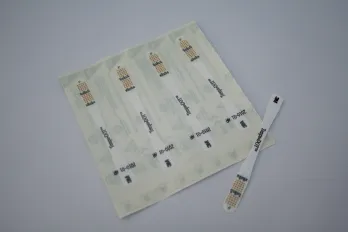
Body temperature is measured using a calibrated clinical electronic thermometer or tympanic thermometer. In children’s nursing, ‘smart-material’ tempo dot thermometer strips are often used (see overleaf). Mercury glass thermometers are used very rarely in hospitals today. It is considered best practice to document the temperature recording on the observation chart as a solid dot, connecting these dots with a straight line. This is the same procedure as for documented recordings of all vital signs.
The membrane in the eardrum separating the outer and middle ears.
The sites for recording body temperature are described below.
- Oral: the thermometer is placed in the posterior sublingual pocket, situated at the base of the tongue.
- Axilla: the thermometer is placed in the centre of the armpit, with the patient’s arm lying across their chest. The same site should be used for all recordings; that is, do not change armpits.
- Rectum: a special thermometer is inserted at least 4 cm into the anus of an adult, or 2–3 cm in infants. This provides the most accurate reading of all sites. Rectal temperature readings are usually about 1°C higher than readings taken in the ear.
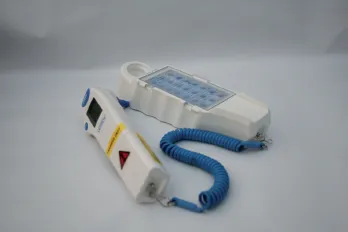
- Ear: to take a temperature reading in the ear a device known as a tympanic membrane thermometer, which is covered with a disposable cuff, is inserted snugly into the ear canal (Figure 1.1). These devices use infrared light to measure body temperature. The same ear should be used each time for consistent results. Some clinical areas have reconfigured the display screen to show the oral temperature, but the device must still be placed in the ear.
Single-use plastic-coated ‘smart-material’ strips are also used, often in paediatric care, which have heat-sensitive dots that change colour to indicate the temperature. The strip can be placed across the forehead or in the mouth as shown in Figure 1.2.
Question 1.1 What are the reasons for recording an individual’s body temperature? List five, if you can. Body Temperature Physiology
Body temperature is usually maintained between 36 and 37.5°C. A body temperature well above the normal range (41°C) is called hyperthermia and can result in convulsions. A temperature below normal temperature (35°C) is called hypothermia (Table 1.1).
Table 1.1 Hyperthermia and hypothermia
| Condition | Possible causes |
| Hyperthermia | Heat stroke, malignancy, stroke or central nervous system damage |
| Hypothermia | Environmental exposure, medication and exposure of body and internal organs during surgery |
Pyrexia is defined as a ...