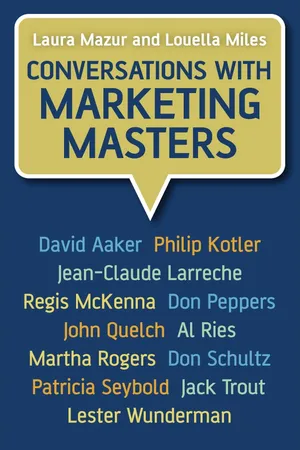
The Marketing Masters featured are Philip Kotler, David Aaker, Jean-Claude Larreche, Regis McKenna, Don Peppers, John Quelch, Al Ries, Martha Rogers, Don Schultz, Patricia Seybold, Jack Trout and Lester Wunderman. The conversations are free-flowing dialogues in which each personality is allowed to shine through.
- English
- ePUB (mobile friendly)
- Available on iOS & Android
eBook - ePub
Conversations with Marketing Masters
About this book
Conversations with Marketing Masters offers new insights by gathering the collected wisdom of the most influential marketing thinkers of our age, each of whom has given a structured interview. Covering a wide range of issues and illustrating concepts with cases of success and failure, these seminal dialogues offer a rare look at what made each master great – and a glimpse of the marketing future.
1
Philip Kotler
The founding father
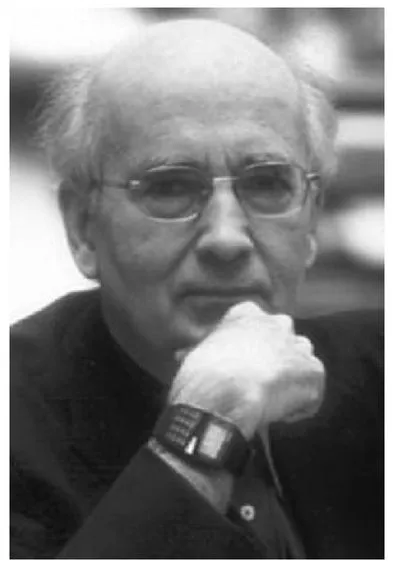
Philip Kotler is the S.C. Johnson & Son Distinguished Professor of International Marketing at the Kellogg School of Management, Northwestern University, Evanston, Illinois. He received his master’s degree at the University of Chicago and his PhD Degree at Massachusetts Institute of Technology (MIT), both in economics. He did postdoctoral work in mathematics at Harvard University and in behavioural science at the University of Chicago.
Kotler is the author of Marketing Management: Analysis, Planning, Implementation and Control, the most widely used marketing book in graduate business schools worldwide; Principles of Marketing; Marketing Models; Strategic Marketing for Nonprofit Organizations; The New Competition; High Visibility; Social Marketing; Marketing Places; Marketing for Congregations; Marketing for Hospitality and Tourism; The Marketing of Nations; Kotler on Marketing; Building Global Biobrands; Attracting Investors; Ten Deadly Marketing Sins; Marketing Moves; Corporate Social Responsibility; Lateral Marketing and Marketing Insights from A to Z. He has published over 100 articles in leading journals, several of which have received best-article awards.
He was the first recipient of the American Marketing Association’s (AMA) ‘Distinguished Marketing Educator Award’ (1985). The European Association of Marketing Consultants and Sales Trainers awarded Kotler its prize for ‘Marketing Excellence’.
He was chosen as the ‘Leader in Marketing Thought’ by the Academic Members of the AMA in a 1975 survey. He also received the 1978 ‘Paul Converse Award’ of the AMA, honouring his original contribution to marketing. In 1989, he received the Annual Charles Coolidge Parlin Marketing Research Award. In 1995, the Sales and Marketing Executives International (SMEI) named him ‘Marketer of the Year’.
He has consulted for such companies as IBM, General Electric, AT&T, Honeywell, Bank of America, Merck and others in the areas of marketing strategy and planning, marketing organization and international marketing.
He has been Chairman of the College of Marketing of the Institute of Management Sciences, a director of the American Marketing Association, a trustee of the Marketing Science Institute, a director of the MAC Group, a former member of the Yankelovich Advisory Board, and a member of the Copernicus Advisory Board. He has been a trustee of the Board of Governors of the School of the Art Institute of Chicago and a member of the Advisory Board of the Drucker Foundation. He has received honorary doctoral degrees from Stockholm University, University of Zurich, Athens University of Economics and Business, DePaul University, the Cracow School of Business and Economics, Groupe H.E.C. in Paris, the University of Economics and Business Administration in Vienna, Budapest University of Economic Science and Public Administration, and the Catholic University of Santo Domingo.
He has travelled extensively throughout Europe, Asia and South America, advising and lecturing to many companies about how to apply sound economic and marketing science principles to increase their competitiveness. He has also advised governments on how to develop stronger public agencies to further the development of the nation’s economic well-being.
The professional journey
What, in your view, are you most famous for? This might seem an almost impossible question considering your career, but are there a few particular areas you feel are inextricably linked with your name?
My name is closely linked with the discipline of marketing. When I first examined marketing textbooks in the 1960s, I was appalled by their descriptiveness and lack of theory. They contained lists of the traits of good salespeople, the role of warehouses, a description of consumer demographics, and other definitions and lists. This was market anatomy but not market physiology.
I wanted to offer a different view of marketing and wrote my first book, Marketing Management, in 1967. It differed from previous books by applying economic, behavioural, organizational and mathematical theory to show how markets work and how marketing mix tools work.
Subsequently I introduced new concepts such as demarketing, social marketing, societal marketing and megamarketing. I also broadened marketing to include the marketing of persons, places, ideas, causes and organizations.
What was your thinking behind your first book?
I think part of the breakthrough was that I hadn’t worked enough in marketing to develop a conventional mindset about marketing. I wanted to understand it better and, coming to the subject with a training in economics, organizational theory and social sciences, I felt that the books at the time were devoid of any scientific basis, or of any effort to focus on decision-making and marketing strategy.
I had already done a lot of work on game theory and decision trees and Markov processes and none of that was there. Yet I knew that marketing was really a set of decisions that would affect demand and revenue. And so, in writing Marketing Management: Analysis, Planning and Control, I would put marketing on a more systematic and scientific foundation. I was surprised and very pleased with the success of the book.
What else was around at the time?
Jerry McCarthy’s book was the most popular one at the time. It was called Basic Marketing. Jerry had introduced a ‘4Ps’ framework. He’d studied with Professor Richard Clewett at Kellogg, who talked about product, price, promotion and distribution. Jerry renamed distribution as place. Most other books talked a lot about distribution channels, sales force, price and advertising but Jerry offered a useful framework.
How did you start getting involved with marketing as a discipline?
I am trained as an economist. I studied under Milton Friedman at the University of Chicago for my MBA and emerged as a free market thinker. Then I studied under Paul Samuelson and Robert Solow at MIT and went Keynesian. All three won Nobel Prizes in economic science. But I found their explanations too simplified in terms of marketplace real phenomena. I always wanted to understand how people spent their money and made their choices.
To say that consumers make product choices that would maximize their utility doesn’t say much. To say that producers make product and production choices to maximize their profits doesn’t say much. Economists focus very much on prices and much less on other strong influences on demand such as advertising and personal selling. Economists ignore the complicated distribution system through which many products pass and where prices are set at different stages as the product passes from the manufacturer to the distributor to the dealers. I have great respect for the effort of economists to theorize but they do this by oversimplifying the complex dynamics of the actual marketplace and players. I believe that marketing is part of economics and enriches economic theory.
I became enamoured of several marketing questions, such as how many sales persons should a firm hire, what is the best way to compensate them, how to determine how much to spend on advertising, and other questions. When I was offered a position at Northwestern University in 1962 to teach marketing, I decided that this was the opportunity to address the questions that had been haunting me in economics.
My active involvement in marketing had actually started a year before joining Northwestern. I had been selected as one of 50 business school professors to spend a year at Harvard in a Ford Foundation program to study higher mathematics as they apply to making better business decisions. The 50 participants fell into some natural groupings: professors of accounting, of finance, of manufacturing, of marketing, etc. I fell in with the marketing group that included such people as Frank Bass, Edgar Pessemier, Jerry McCarthy and Robert Buzzell. The group worked on applying the mathematics they were learning to marketing decisions and I participated. The contrast between this quantitative approach and the normal textbooks in marketing was extreme.
This was a period of gestation for me. One of the persons whom I worked with in this program, Donald Jacobs, was one of the 50 and when he went back to his university, Northwestern, he told his colleagues that he had spotted me in the group and that they should recruit me. They interviewed me and hired me. I was given a choice to teach either managerial economics or marketing at Northwestern in 1962.
Don advised me to teach marketing on the grounds that managerial economics was a well-settled field but marketing was in a bad state and provided a lot of room for new theory. He had the feeling that with my theoretical cast of mind I could make a fresh contribution to marketing. So this was the triggering event. Don went on to become the visionary dean of Kellogg and his 25-year tenure led us to become one of the leading business schools in the nation.
What had you been doing before joining Northwestern?
I was teaching managerial economics, not marketing, at Roosevelt University in Chicago. I had wanted to stay in Chicago because of family.
Roosevelt University, which was started in 1946 after the war, was named after Franklin D. Roosevelt. It was a very interesting and seminal place because a lot of the faculty were eminent scholars who had fled Europe and needed a place to work. Roosevelt University hired them. I was there for about four years and then the Northwestern opportunity came along and I decided to move there.
Why do you think your ideas have caught on and become the basis of modern marketing?
After publishing the first edition of Marketing Management in 1967, I received a great amount of positive feedback to the effect that I had put marketing on a more scientific and decision-making basis. This was amplified a few years later when I published Marketing Decision Making: A Model Building Approach. Shortly thereafter I published a series of articles in the Journal of Marketing, three of which were voted the best article of the year in their respective years.
This was followed by eight articles published in the Harvard Business Review over several years that increased my visibility among practitioners. I had also added consulting to major companies and alerted them to the need to segment, target and position better and to become customer-centric. I would guess that by 1975 my reputation was well established.
And when did you begin to realize that you were becoming a name that was resonating all over the world?
I didn’t consciously use marketing to market my ideas. They spread without assistance. Marketing Management became the gold standard throughout the world. When I meet managers in China, India, Germany, Brazil and elsewhere, it seems that they all studied marketing with my book. Today Marketing Management is in its 12th edition and Principles of Marketing is in its 11th edition. I did a lot of speaking at academic, corporate and public events and published a lot of papers and this contributed to the interest in my ideas.
I was invited to seminars and debates and put forth my strong views about what marketing should be. If you call that marketing my views, then yes, of course I did. But it wasn’t like I had a Kotler brand development plan in mind. I did realize that I didn’t want to just be in teaching - I wanted to be out there researching, writing and consulting. And that meant being not only in the USA but abroad. The opportunities came along to consult and teach in Europe, later in South America, and later still in Asia. I was becoming a brand largely by spreading my views.
How did organizations react initially to the ideas? Was there any resistance, and why, in your view?
My mark...
Table of contents
- Title Page
- Copyright Page
- Dedication
- Acknowledgements
- About the Authors
- Introduction
- Chapter 1 - Philip Kotler
- Chapter 2 - David Aaker
- Chapter 3 - Jean-Claude Larreche
- Chapter 4 - Regis McKenna
- Chapter 5 - Don Peppers and Martha Rogers
- Chapter 6 - John Quelch
- Chapter 7 - Al Ries
- Chapter 8 - Don Schultz
- Chapter 9 - Patricia Seybold
- Chapter 10 - Jack Trout
- Chapter 11 - Lester Wunderman
- Index
Trusted by 375,005 students
Access to over 1.5 million titles for a fair monthly price.
Study more efficiently using our study tools.
Frequently asked questions
Yes, you can cancel anytime from the Subscription tab in your account settings on the Perlego website. Your subscription will stay active until the end of your current billing period. Learn how to cancel your subscription
No, books cannot be downloaded as external files, such as PDFs, for use outside of Perlego. However, you can download books within the Perlego app for offline reading on mobile or tablet. Learn how to download books offline
We are an online textbook subscription service, where you can get access to an entire online library for less than the price of a single book per month. With over 1.5 million books across 990+ topics, we’ve got you covered! Learn about our mission
Look out for the read-aloud symbol on your next book to see if you can listen to it. The read-aloud tool reads text aloud for you, highlighting the text as it is being read. You can pause it, speed it up and slow it down. Learn more about Read Aloud
Yes! You can use the Perlego app on both iOS and Android devices to read anytime, anywhere — even offline. Perfect for commutes or when you’re on the go.
Please note we cannot support devices running on iOS 13 and Android 7 or earlier. Learn more about using the app
Please note we cannot support devices running on iOS 13 and Android 7 or earlier. Learn more about using the app
Yes, you can access Conversations with Marketing Masters by Laura Mazur,Louella Miles in PDF and/or ePUB format, as well as other popular books in Business & Marketing. We have over 1.5 million books available in our catalogue for you to explore.